Artist Valie Export, Who Saw Right Through the Male Gaze, Dies at 85
Her performances and filmed media works reclaimed the female body through guerrilla modes of delivery that bypassed institutional restrictions.

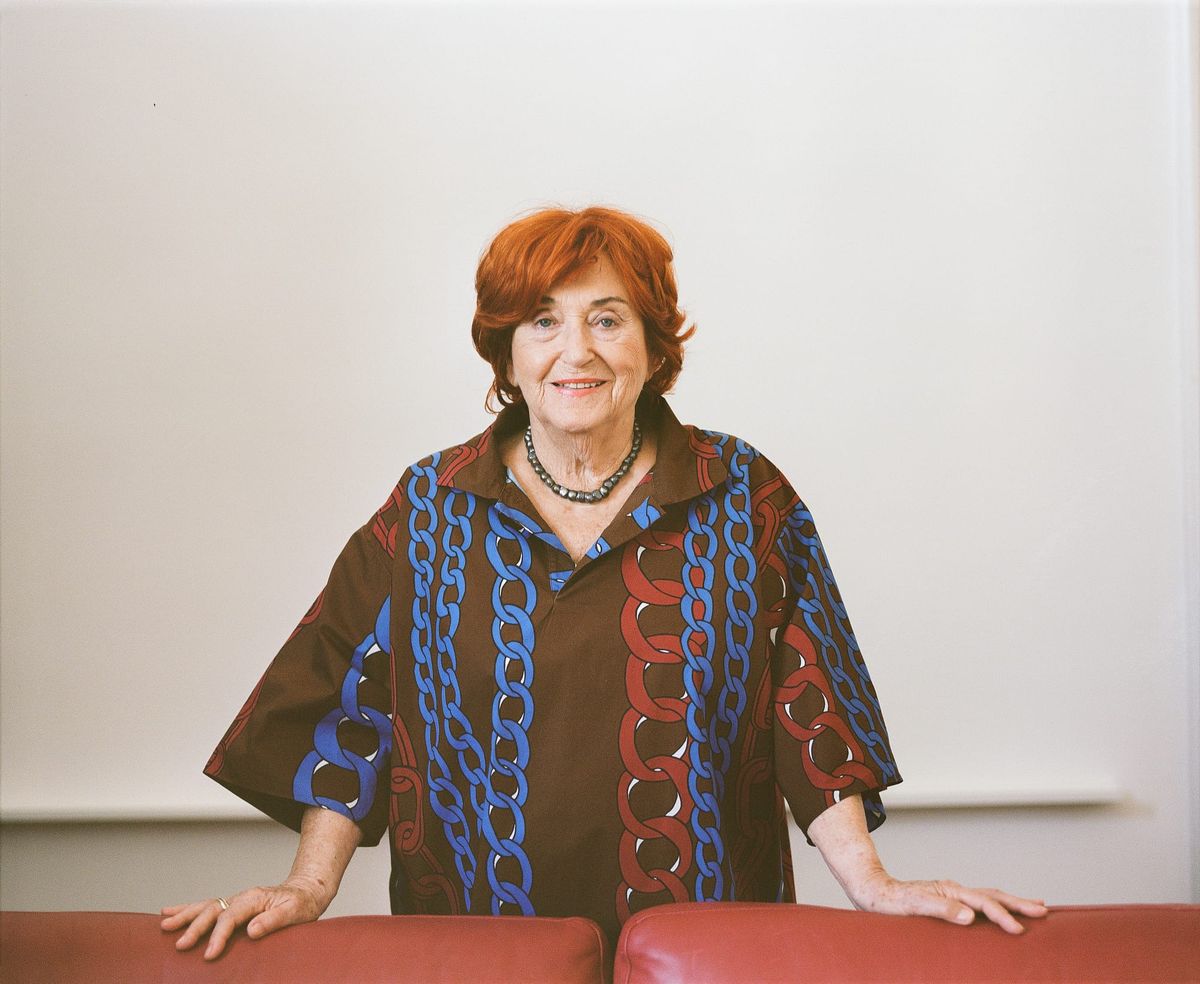
Austrian artist Valie Export, a powerfully provocative yet playful force in feminist art, died on May 14, three days before her 86th birthday. The news of her passing was confirmed by Thaddaeus Ropac Gallery.
Export's performances and filmed media works subverted — nay, stomped on — notions of the male gaze and patriarchal society, reclaiming and reinterpreting the female body through guerrilla modes of delivery that bypassed the restrictions of institutional spaces. Her contributions greatly impacted a Viennese society that Export saw as tainted by the remnants of fascism and its regressive attitudes towards the role of women.
Born Waltraud Lehner in 1940 in Linz, Austria, Export felt these attitudes keenly in the stigma she experienced for marrying young and having a daughter at 18. She rejected the role of traditional housewife, placed her daughter in the temporary care of her sister, and moved to Vienna to create a new identity, adopting the all-uppercase name VALIE EXPORT. The moniker, taken from the Austrian Smart Export cigarettes, not only rejected the traditional conventions of adopting a husband or father's name but also established her as an independent and unique brand.
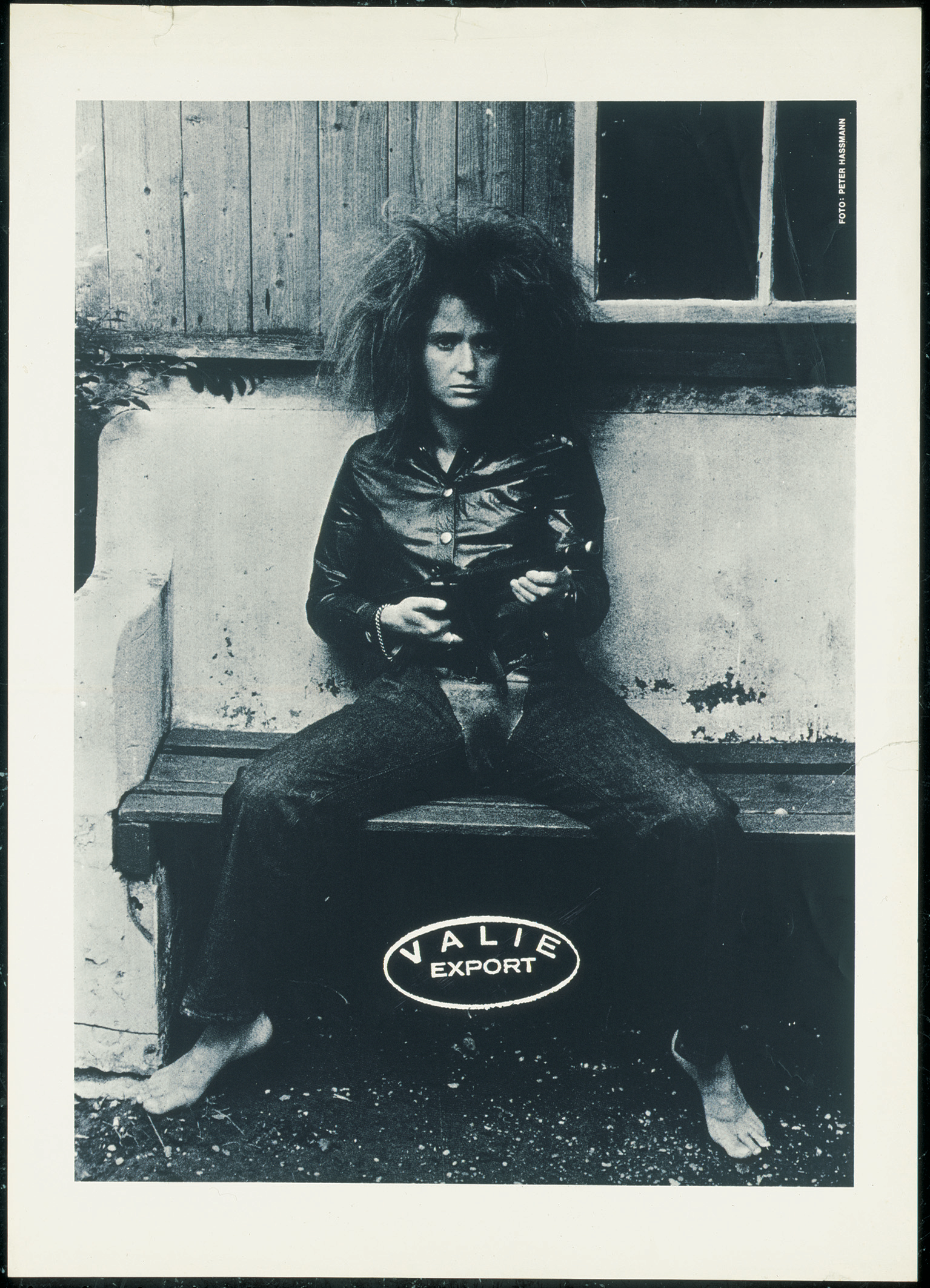
She studied painting, drawing, and design at the National School for Textile Industry in Vienna in the 1960s, amid the rise of the Viennese Actionism movement. While inspired by its guttural rejections of a sleepwalking Viennese society in its use of blood, bodily fluids, and taboo, Export pursued her own adjacent and independent role of “Feminist Actionist,” using her own body to confront accepted political and societal norms. In 1968, she performed “Genital Panic,” in which she walked among the aisles of an arthouse cinema in Munich dressed in crotchless pants so that her genitalia were at eye level with spectators, subverting the experience of safe, distanced viewing on screen to actual bodily proximity. In photos of the performance taken by Peter Hassmann the following year, Export also holds a machine gun, simulating how the screen, dominated by the ideals and intentions of men, holds the audience's gaze captive.
“VALIE was the one who coined the term ‘actionism’: these are not performances, but actions,” wrote Pussy Riot's Nadya Tolokonnikova in a tribute to the artist on Instagram. “Changing the way people speak and perceive reality is the highest achievement of them all.”
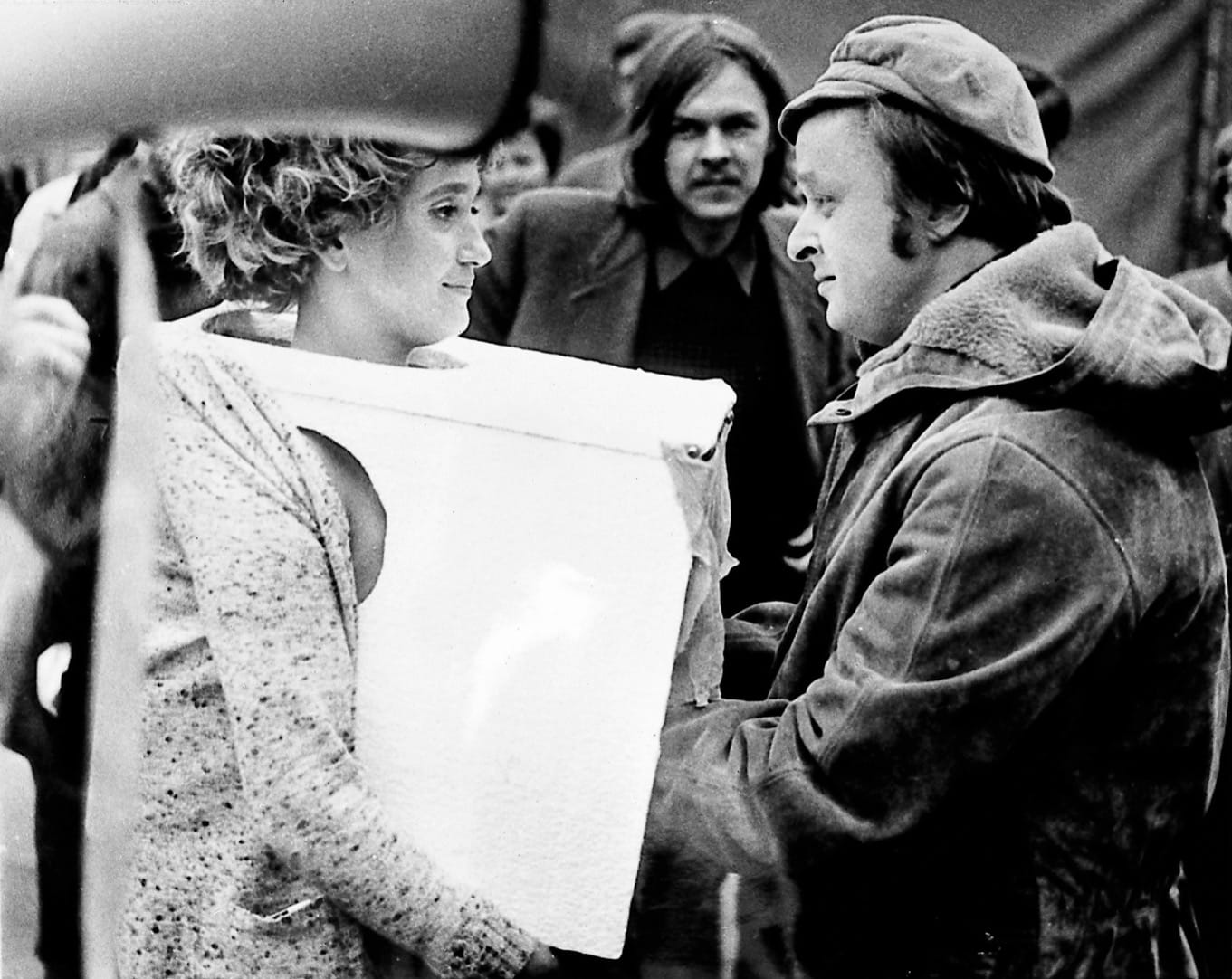
Export further blurred the lines between passive spectatorship and enforced bodily contact in “Tapp und Tastkino (Tap and Touch Cinema)” (1968). In Vienna’s city center, she strapped a model theatre stage to her chest and invited passers by to touch her bare breasts through its curtains, while her colleague Peter Weibel, brandishing a megaphone, logged each interaction with a stopwatch. The performance prompted outrage.
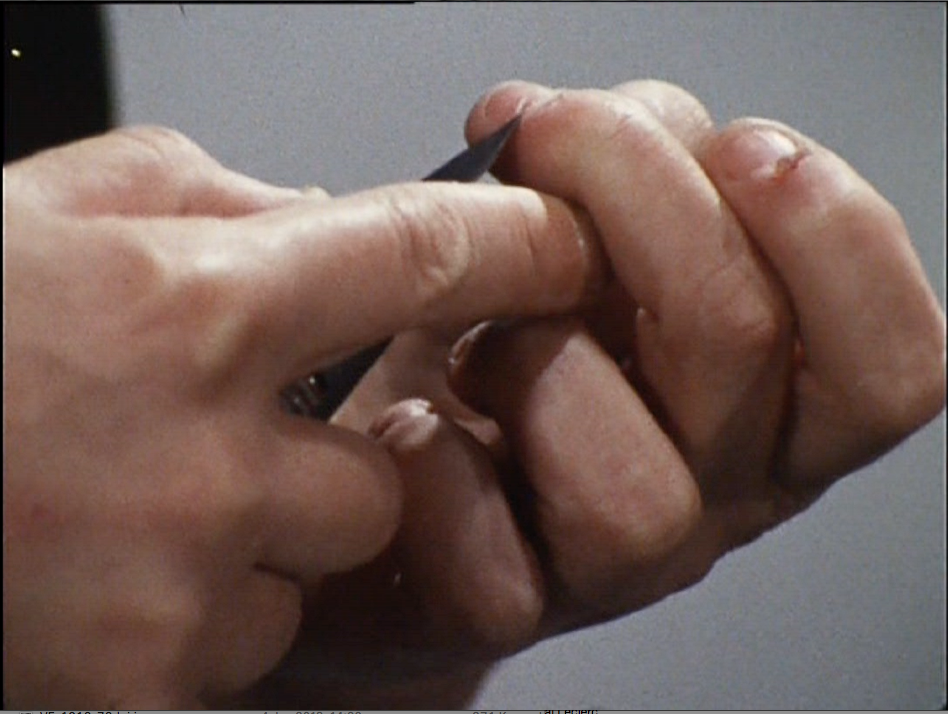
Further experiments with time-based media continued to challenge the role of women and their bodies in society, reclaiming the female voice in works that reflect an interest in language and semantics. In “Visual Text: Finger Poem” (1968–73), Export used her fingers to trace phrases letter by letter, such as “I say the sign with signals in the sign of the saying,” a nod to Martin Heidegger. In “... Remote .... Remote ...” (1973), the artist mutilates her cuticles with a knife for 12 minutes as a condemnation of societal beauty standards. “Facing a Family” (1971) broadcast the image of a bourgeois Austrian household eating dinner and watching TV to Austrian families at home who were likely doing just that, holding a mirror to domestic roles.
Her practice of making the physical female voice heard, unconstrained and independent, remained a constant throughout her practice: In 2008, she inserted a microscopic camera up her nose to capture the internal machinations of her body as she recited her written words.
Export's influences extend far beyond the fields of performance and conceptual art. In 1972, the artist published “Women’s Art: A Manifesto,” which encouraged women to find an alternative way of living outside the dictates of patriarchal norms. “If reality is a social construction and men its engineers, we are dealing with a male reality. Women have not yet come to themselves, because they have not had a chance to speak insofar as they had no access to the media,” Export wrote.
She co-founded the Austrian Filmmakers Cooperative in 1968 and released her first feature film, “Invisible Adversaries,” in 1977, which follows a young woman photographer who discovers that the people around her are being controlled by a hostile alien force. At the Galerie nächst St. Stephan in Vienna in 1975, Export took on the role of curator and art historian with the exhibition MAGNA. Feminism: Art and Creativity, a pioneering show of women artists. In 1980, Export and Maria Lassnig became the first women artists to represent Austria at the Venice Biennale.
She was a professor of multimedia and performance at the Academy of Media Arts in Cologne from 1995 to 2005, and in 2016, the Valie Export Centre opened in Linz, based on her archives and promoting research on international and interdisciplinary performance art.
Toward the end of her life, Export noted that her work would likely face greater suppression and outrage today, arguing that despite making huge developments for the voice and representation of women, it is a minute progression in the longer timeline of oppression.
“I have to say that, despite everything that's changed, for me it's still a struggle. I'm not just fighting for myself or my art: I continue to fight for a true, authentic representation of women,” she said in an interview with Il Giornale dell'Arte this year. “Working women, women at home, young, old. There are many images of women, and all of them must be seen, recognized, accepted.”