Photos About Mental Health
Maybe there's something to Lana Del Rey's "Summertime Sadness" song: summer can sometimes be an intense, heavy season, so perhaps that is why two recent articles have been dipping their toes into the pool of complex emotion that is contemporary life.


Maybe there’s something to Lana Del Rey’s “Summertime Sadness” song: summer can sometimes be an intense, heavy season, so perhaps that is why two recent articles have been dipping their toes into the pool of complex emotion that is contemporary life. The first, which appeared in Salon, has an intense title: “Living in America will drive you insane — literally.” Here’s what writer Bruce E. Levine had to say:
The reality is that with enough helplessness, hopelessness, passivity, boredom, fear, isolation, and dehumanization, we rebel and refuse to comply. Some of us rebel by becoming inattentive. Others become aggressive. In large numbers we eat, drink and gamble too much. Still others become addicted to drugs, illicit and prescription. Millions work slavishly at dissatisfying jobs, become depressed and passive aggressive, while no small number of us can’t cut it and become homeless and appear crazy. Feeling misunderstood and uncared about, millions of us ultimately rebel against societal demands, however, given our wherewithal, our rebellions are often passive and disorganized, and routinely futile and self-destructive.
And then the New York Times came out with an even more depressing exploration of the topic simply titled, “The Trauma of Being Alive.” According to the author Mark Epstein:
Trauma is not just the result of major disasters. It does not happen to only some people. An undercurrent of trauma runs through ordinary life, shot through as it is with the poignancy of impermanence. I like to say that if we are not suffering from post-traumatic stress disorder, we are suffering from pre-traumatic stress disorder. There is no way to be alive without being conscious of the potential for disaster.
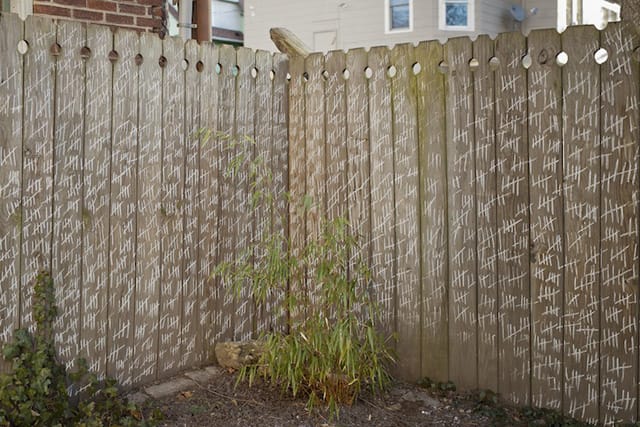
So perhaps it should be no surprise then that I’ve also been seeing more art related to mental health floating around the web. Two recent projects — both highlighted by My Modern Met — explore the issue through photography. They shed light on the experience of depression and anxiety, both of which are apparently on the rise in the United States. The images speak to just what Levine described: a crippling sense of “feeling misunderstood and uncared about.”
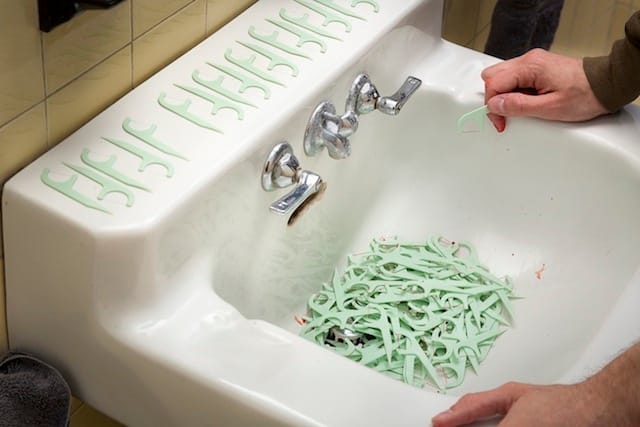
The most striking to me are John William Keedy‘s photos of endless tick marks on a fence, or flossing sticks in a sink — beautiful in their broken order, but much more difficult when you contemplate the mental state of the person who made them.
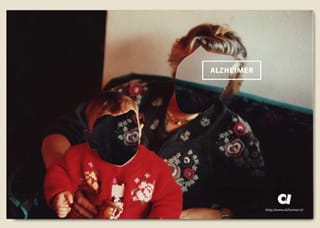
And then there’s the work of Domenico Liberti, a design project aiming to raise awareness of Alzheimer’s and the experience of face blindness. While it’s easy to read some of these works as blunt and melodramatic, it’s also important to keep them in their context.
Photography feels apropos for exploring contemporary mental health issues. While films like A Beautiful Mind and even The Wolverine have tackled mental illness (Wolverine’s constant nightmares read like classic PTSD to me), small photos viewed on a computer screen speak in the vernacular of the internet today. These photos are intimate and personal, viewed in isolation rather than amongst friends. They feel very much of our time, in form, content, and presentation.