Required Reading
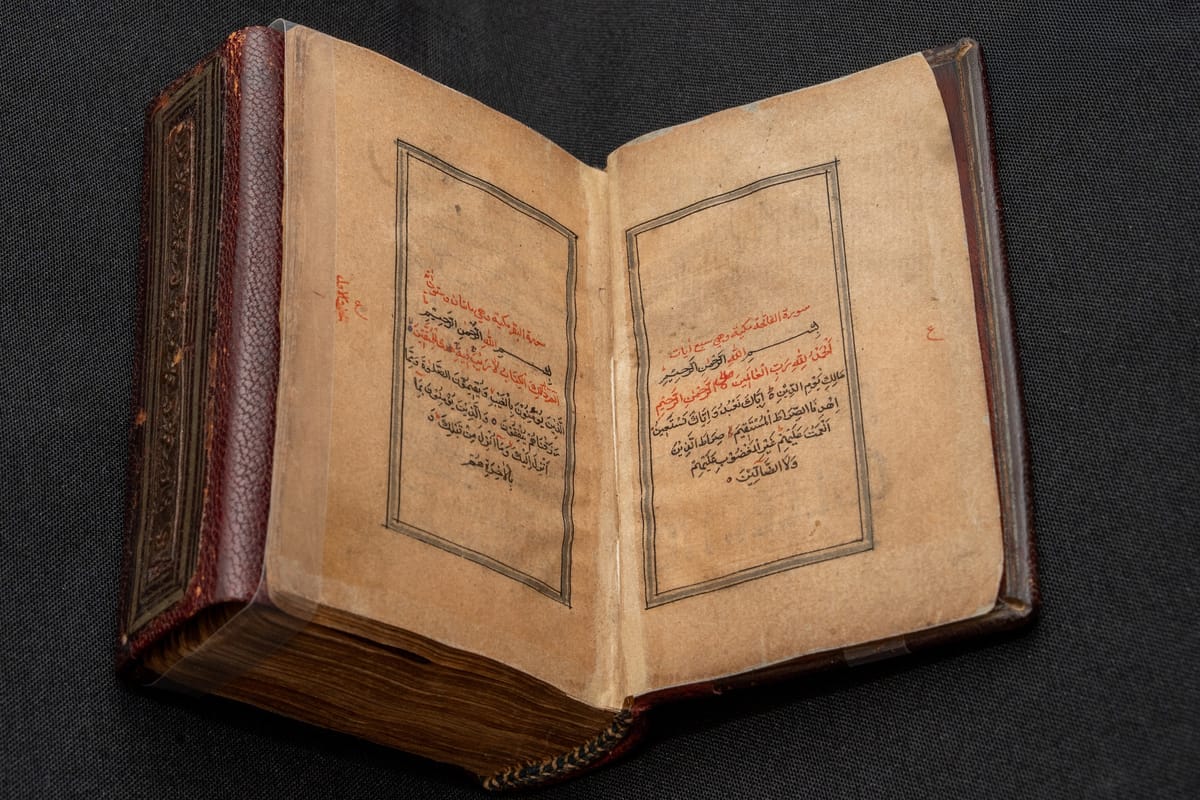
The Schomburg Qur’an, Auudi Dorsey’s paintings of Black community at the beach, an unsolved Pollock theft, remembering Claudette Colvin, dollhouse furniture, and more.

For Essence, Jasmine Weber considers Auudi Dorsey's painterly visions of a New Orleans beach that served as a hub of Black community during the height of segregation:
Born and raised in the Crescent City, artist Auudi Dorsey first learned of the beach in 2013, hopping trains and passing through forests to reach its then-dilapidated grounds. He was amazed to realize its Black history and began researching the waterfront, asking community elders to share stories and seeking out archival images and documents, subsequently sketching imagined scenes from its heyday. He discovered photographs of Black New Orleanians diving and swimming by the coast, fitted in retro gear. These images stood in contrast with the New Orleans that he knew. “I’m looking at these kids approaching water from a different experience, versus how people look at water during post-Katrina,” he explained. A picture of youthful students donning wraparound swim caps, ready for lessons, especially struck him. “I was like, ‘I want to recreate that feeling.’ … That was a very beautiful moment to see these kids in such confidence.”
The Washington Post's Sebastian Smee reports on one family's decades-long quest to find a stolen Pollock painting, which they acquired before the artist's rise to fame:
Isaacs didn’t have an elaborate insurance policy. He was an academic who happened to have made friends with an artist before he became famous. Three of the works he had acquired from Pollock, having shot up in value, were now gone.
For the next 10 years, Isaacs thrashed about in a snake pit of legal and financial woes relating to insurance and liability. His notes from this decade resemble the drawings and paintings of Cy Twombly — scattered with sequences of numbers and crossed-out lists and half-formed, semi-legible sentences that peter out into nothing. They look like the traces of a man struggling to cling to sanity.
As Trump continues his fascistic crusade against the Smithsonian, Charlotte Higgins details museums' insidious decision to obey in advance for the Guardian:
“People are acquiescing in advance as a way to stay under the radar,” said Steven Nelson, who recently stepped down from a senior position at the National Gallery of Art. “Very quickly, things that would not have been considered DEI began being considered DEI, which was almost anything not white.” No one currently in post at the Smithsonian or the National Gallery of Art spoke to me on the record about such matters, fearing for their jobs and for those of their colleagues. The less attention from the White House, the better. “Don’t poke at it,” was the phrase one museum director used.
Renee Nicole Good is one of at least six people who have been killed by ICE or died in its detention in the last two weeks. But as Katelyn Burns explains for Xtra, the role of homophobia is in danger of being erased from the narrative:
We can’t ignore the outright misogyny and homophobia baked into this incident—and yes, erasing Good’s wife from the story of her life and death is also misogyny and homophobia. The same homophobia that drove Good and her wife from Missouri is the same homophobia on display all over conservative social media today.
The message is clear: looking wrong to a conservative, speaking wrong to a conservative man, not bowing and scraping to conservatives, or even just loving the “wrong” gender, means you are an enemy. An enemy that should be put down.
Scholar Felix Pal has been conducting research on the global Hindu nationalist movement for years. For the Caravan, they detail the staggering scope and momentum of the largest far-right network in history:
These elaborate but covert divisions of labour are critical parts of how the RSS expands into society. They ensure far-right presence in many sectors simultaneously, reaching diverse audiences, opening opportunities for constituency expansion and carving out new terrain for the Sangh.
But the mystique of the Sangh also serves a second, mirrored purpose: to inflate its aura and to exaggerate its size. It creates the impression that the political power of the Hindu Right today is the natural expression of an organic, bottom-up upsurge. What is being hidden is not the support for the Sangh’s project, nor the organisations themselves, but the fact of its coordination. The evidence suggests we are not witnessing an organic upsurge of Hindu nationalist feeling that has magically organised itself but, rather, the deliberate cultivation of an immense bureaucratic network. When the Sangh’s hand is unseen, it is easy to conclude—prematurely, and incorrectly—that it is everywhere.
The 19th's Eden Turner memorializes Claudette Colvin, a Civil Rights activist who was arrested at age 15 for protesting bus segregation in Montgomery:
“I could not move because history had me glued to the seat,” she later said about her pivotal moment in Black history. “It felt like Sojourner Truth’s hands were pushing me down on one shoulder and Harriet Tubman’s hands were pushing me down on another shoulder.”
Colvin told news outlets that the leaders of the Civil Rights Movement decided she couldn’t be the face of the boycott for many reasons, including her age, darker skin color, class status and pregnancy a few months following her arrest.
Terry Facey, who makes miniatures for a living, brings us into his studio and process in this delightful video by the Victoria and Albert Museum:
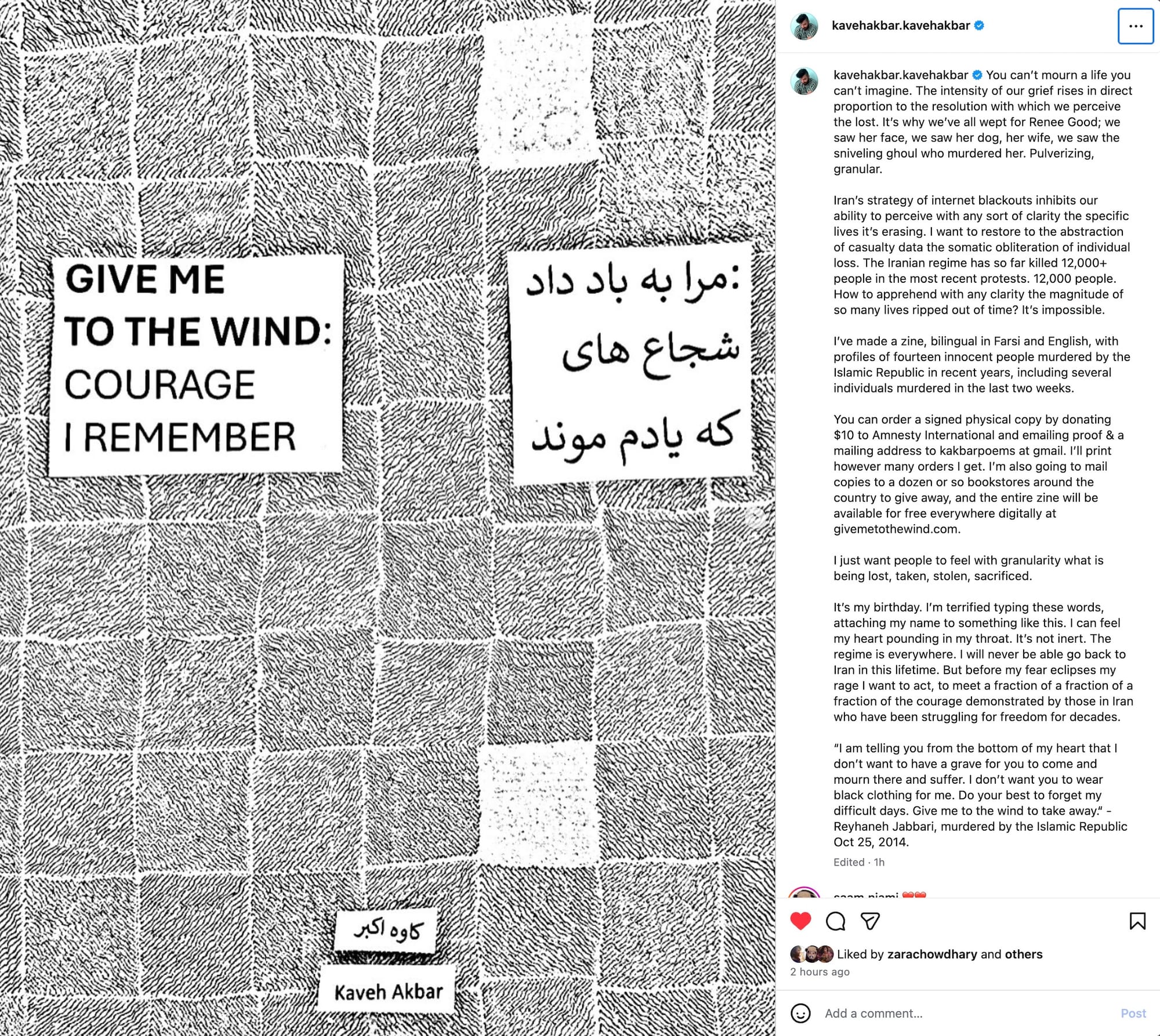
In exchange for a $10 donation to Amnesty International, poet Kaveh Akbar is sharing his zine honoring 14 of the 2,000 (plus) people who have been killed by Iranian police during the uprising:
Leaked footage of Sotheby’s auctioneer training:
@theauctioneer #auctioneer #school #day1 ♬ original sound - Auctioneer
Just when we thought America couldn't get any scarier ...
@pang__bang I know you’re wondering so the the best presidents according to sculpture size are: Thomas Jefferson Theodore Roosevelt Woodrow Wilson Abraham Lincoln Franklin D Roosevelt George Washington Andrew Jackson The Presidents heads are located on private property and you cannot access them without a tour guide so please don’t show up thinking you can see them anytime because you will be turned away!! This area gets really muddy so make sure to wear water resistant shoes like my favorite @blundstoneusa (I wear the Chelsea’s in rustic brown)! They do have some loaner rain boots on site that you can use if you do forget. Is this your type of attraction or would you pass on something eerie and unsettling like this? Things to do in Virginia | Things to do if you love history | Things to do in Williamsburg Virginia #presidentsheads #williamsburgvirginia ♬ Luminary - Joel Sunny
@nabeela.digital No dishwasher tho so might reconsider… #nyc #nychousing #tenementmuseum #streeteasy ♬ original sound - prodsegway