Required Reading
Roxane Gay on the Guerrilla Girls, the uncertain future of the dictionary, Trump’s attacks on Venezuela and manufacturing consent, anti-ICE whistles, Snoopy turns 75, and more.

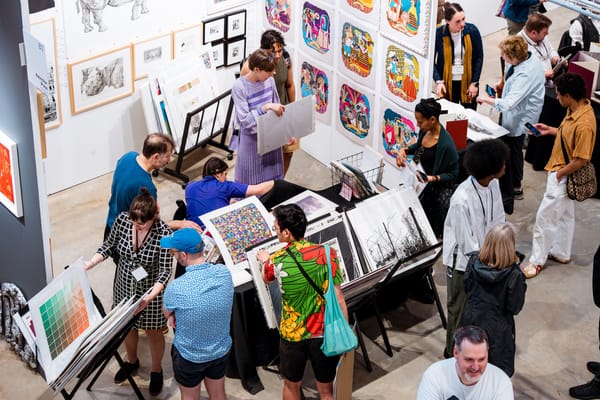
It turns out that Roxane Gay, celebrated author and critic, also collects art. Stacey Suaya of Getty News interviewed her about lessons from the Guerrilla Girls on disruption and resistance:
How do you regard the Guerrilla Girls’ role in the canon of influential feminist thinkers?
RG: They brought attention to many things. Certainly, feminists had been agitating for women artists to be treated more equitably before the Guerrilla Girls, but it’s remarkable to recognize how long they have sustained their campaign and how consistently they show up. Their work is always thoughtful, and they bring an intersectional ethos while doing it with style. They are artists, not just activists, and even if they were only activists, that would be enough. But combining the two roles? They do it so very well.
They’ve also prioritized the message over the messenger. Because they’re anonymous, instead what matters is what they’re saying and how they’re saying it. We’re not focused on their identities, politics, et cetera. Those things matter, but they don’t allow any individual to supersede the message, which is admirable.
In the age of the internet, what's next for the dictionary? Critic Louis Mennand considers a new book on its history and future in the New Yorker:
Most free online dictionaries (the free merriam-webster.com was originally based on the eleventh edition of Merriam-Webster’s Collegiate; the company also has a subscription site) are not heavy on lexicographic detail. They are mainly for people who enjoy playing with words. Definitions and correct spellings are no longer the principal attraction. Websites feature a “word of the day,” crossword puzzles and word games, lists of emojis, trending slang, usage tips (“Is it ‘nip it in the butt’ or ‘nip it in the bud?’ ”), translation programs, and, of course, ads. Poets and professors are still seduced by the Oxford English Dictionary’s supercalifragilisticexpialidocious (which is considered a word by the O.E.D.) etymologies, constructed from a database that dates back to 1857. W. H. Auden is supposed to have worn out his first copy of the O.E.D. from consulting it so often.
But the O.E.D. is subsidized. Merriam-webster.com is not. It needs eyeballs to survive. Merriam-Webster is now owned by Encyclopædia Britannica, another big print-era brand—the original edition was published in Scotland in 1768—that is struggling to compete in an online realm dominated by the nonprofit Wikipedia. Britannica has been losing market share since 1993, when Microsoft released its digital encyclopedia, Encarta. Fatsis quotes a Britannica editor comparing Wikipedia, disparagingly, to a public rest room—a comparison that’s not entirely wrong. It’s not the most elegant website, but everyone uses it. Britannica stopped printing its physical volumes in 2012.
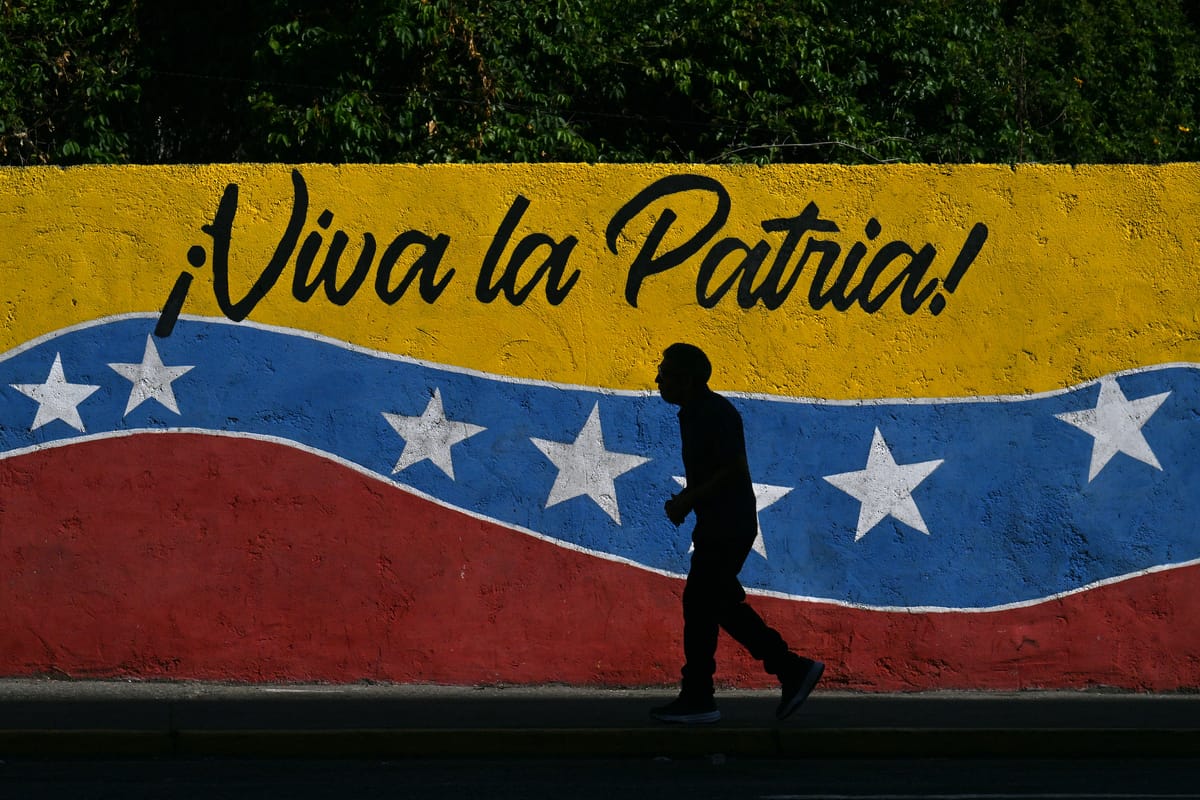
For the Intercept, reporter Adam Johnson explains how mainstream media has manufactured consent for Trump's attack on Venezuela and questions what it would take for them to call it an "act of war":
For the past several months, U.S. media has been working overtime to provide pseudo-legal cover for Trump’s aggression against Venezuela, a task the White House itself has barely bothered to feign interest in. It began last month when both the New York Times and CNN referred to “international sanctions” on Venezuelan oil in their reporting of Trump’s hijacking and theft of Venezuelan oil ships. But there was only one problem: There are no international sanctions on the Venezuelan oil trade, only U.S. sanctions.
The New York Times even cited Mark Nevitt, a professor of law at Emory University and a former Navy lawyer, to say the U.S. hijacking Venezuelan oil tankers was legal because they were enforcing the United Nations Convention on the Law of the Sea without noting, rather importantly, that the U.S. never signed the United Nations Convention on the Law of the Sea. But it needed to feel vaguely rules-based and international-y, so unilateral U.S. dictates were passed off as ersatz international law.
Sebastián Sturla writes for Documented about the rise of the whistle as an anti-ICE tool (best Christmas gift I received this year) and its role in other movements:
A profound example comes from Thailand, just one decade ago. Accused of being a puppet for her billionaire brother, Thailand’s prime minister Yingluck Shinawatra faced massive protests led by the country’s Democratic Party in 2014. The protests, 200,000 strong at their height, consisted of “whistle-blowing mobs” making incredible amounts of noise to garner the attention of Thailand’s ruling class. The demonstrations eventually resulted in the ousting of Shinawatra.
In 2016, protesters across Chad, upset with president Idriss Derby’s attempt to extend his 26-year tenure in power, leveraged what they called the “citizen’s whistle.” The whistle provided a particular advantage given the government’s harsh punishments for dissent. Rather than taking to the streets, disgruntled citizens remained home and blew whistles to disrupt daily life without exposing their identity.
LA Times's Malia Mendez reports on the Peanuts turning 75 years old and why Snoopy merch is popping up around the world:
Caryn Iwakiri, a speech and language pathologist at Sunnyvale’s Lakewood Tech EQ Elementary School whose classroom is Snoopy-themed, recently took an impromptu trip to the Charles M. Schulz Museum in Santa Rosa after seeing its welcome center decked out with Snoopy decor on TikTok. Once she arrived, she realized the museum was celebrating the “Peanuts” 75th anniversary.
It’s a familiar story for Schulz Museum director Gina Huntsinger.
“Last December, we were packed, and I was at the front talking to people, and I just randomly asked this group, ‘Why are you here?’”
It turned out that the friends had traveled from Washington, D.C., and Las Vegas to meet in Santa Rosa and visit the museum after seeing it on TikTok.
According to Stephanie King, marketing director at the Schulz Museum, the establishment is experiencing its highest-ever admissions since opening in 2002. In the 2024–2025 season, the museum increased its attendance by nearly 45% from the previous year.
Raven Schwam-Curtis on the blueprint of fascism that ICE is following in the murder of Renée Nicole Good, along with the dozens of migrants it has killed and kidnapped:
This artist is collecting choking hazard signs from restaurants across New York City, and stumbled across one that unmistakably bears the new first lady's signature:
@culturalfingerprints yessss this one was designed by none other than First Lady of NYC rama duwaji ❤️ one of my favorite finds!! ty @Bayann Amer for the recommendation, tag Rama in my IG comments (culturalfingerprints) so she sees this!!! #nyc #restaurants #zohranmamdani #ramaduwaji #signs ♬ Falling Angel - HCTM
Obsessed with this woodworker's inventive cabinet-easel hybrid:
@brooklynsethharris Here’s my December update on the #cabeasel #woodworking ♬ original sound - Seth Harris
I, too, hail from the late 1900s:
@chasitayyy @IHOP ♬ original sound - Chasity
And it probably still costs $10!
@keilanitruett Sometimes you just need a little pick me up 🤭@Black Elm Coffee ♬ original sound keilanitruett