Required Reading
This week, the winners of the Venice Biennale, cat selfies, controversy in Poland, Abramović loves New York, a short history of the Bauhaus, questions for the Warhol Foundation, free PDF downloads of Wolfgang Tillmans books, and more.

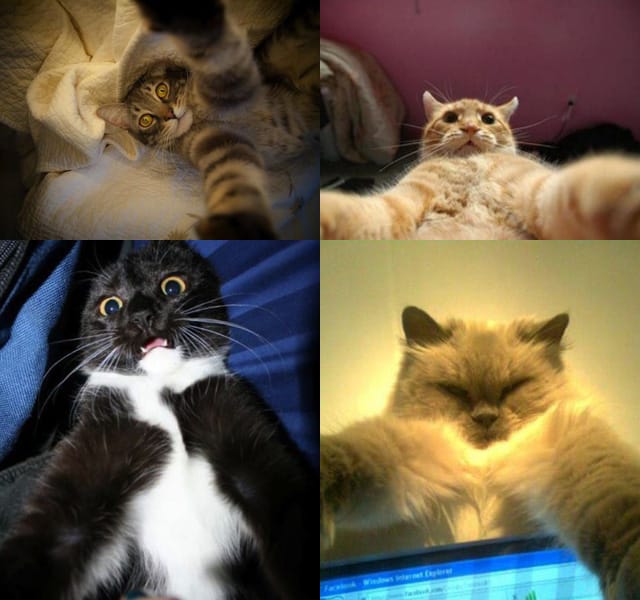
This week, the winners of the Venice Biennale, cat selfies, controversy in Poland, Abramović <3 New York, a short history of the Bauhaus, questions for the Warhol Foundation, free PDF downloads of Wolfgang Tillmans books, and more.
The official winners for this year’s Venice Biennale have been announced:
- Golden Lion for Best National Participation to Angola (Edson Chagas’s “Luanda, Encyclopedic City”)
- Golden Lion for the best artist in the International Exhibition Il Palazzo Enciclopedico to Tino Sehgal (Great Britain)
- Silver Lion for a promising young artist in the International Exhibition Il Palazzo Enciclopedico to Camille Henrot (France)
A few weeks ago, I slammed the new Whitney Museum logo, but then this week I saw this lovely design by another Dutch firm for an Utrecht museum that was worth linking to. This is a simple, clean, and successful design that is appropriate to the institute it was commissioned for.
A controversy is brewing in Poland’s art community:
On a foggy April morning in 2010, the Polish president’s plane crashed over Smolensk in western Russia, killing him and 95 other members of Poland’s political and military elite, traumatizing the nation and opening a bitter political divide over what caused the disaster. Now the fissures have spread to the cultural realm, as filmmakers, writers and artists fiercely debate how — or even whether — to portray this still-visceral history.
Gerry Visco, who is also a Hyperallergic contributor, interviewed Marina Abramović for Interview Magazine about her new performance institute and upcoming projects. Here are some snippets:
Gerry Visco: Now that you live in New York City, do you miss living in Europe?
Marina Abramović: Once you live in New York, you can’t live anywhere else. Living in Paris is like going in slow motion. It’s so bourgeois. I get so bored.
…
MA: I’m interested in utopian communities of the past. Many of them didn’t survive and I’m examining closely the reasons they failed. I’m inspired by Buckminster Fuller. I want to support the opportunity to create things, a sort of laboratory. You know, Andy Warhol was a genius…
GV: The Factory.
MA: Yes, The Factory. We really have to create something like this in the 21st century. Because now people are so alone.
The history of the Bauhaus in two minutes.
While we’re on the topic of Modernism, check out graphic artist Grant Snider’s amazing comic about Futurism. The future never looks quite as we expect it to.
Accolades to photographer Wolfgang Tilmans for allowing for free PDF downloads of his books.
More tough questions for the Warhol Foundation:
The Andy Warhol Art Foundation has always presented itself as operating independently from the Andy Warhol Art Authentication Board. This made sense. The very fact that a dealer or museum bought a work directly from the foundation was considered a guarantee of authenticity. Paintings sold by the foundation were usually stamped on the reverse with a “PA” (i.e., painting) or a “PO” (i.e., portrait) number, as for example “PA81.014.” Such works normally did not need further authentication by the board.
But on some occasions, the authentication board did pass judgment on pictures owned by the foundation. When that happened, it was essential that the authentication board be seen to operate independently. Only then could the foundation sell the work as an authentic Warhol in good faith.
In reality, however, distinctions between the foundation and the authentication board are hard to detect.
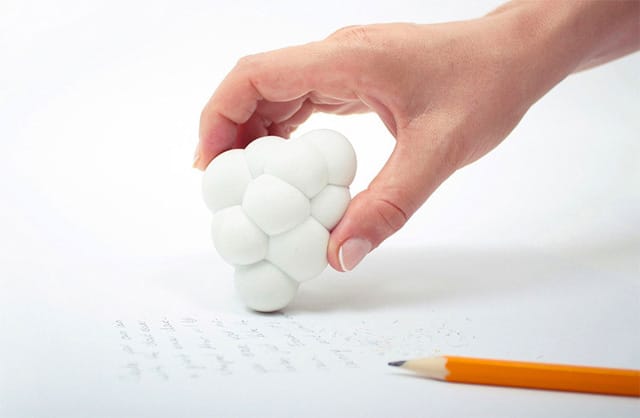
Our blogging pal, Colossal, has launched a lovely little design shop. My personal favorite is the cloud eraser — pure heaven:
A recent article in the DePaul Journal of Art, Technology and Intellectual Property Law says “it is ok for museums to sue Jews make sure that their rights to reclaim stolen artworks in museum collections are cut off.” The Copyright Litigation Blog disagrees, though their post is full of hyperbole, like “the museums can hire expensive lawyers to deny that the Holocaust ever happened.” Seems like a silly statement that doesn’t really deserve to be in a post about such a serious topic.
And a tumblelog titled #OccupyGezi is collecting images from across the web related to the protests in Turkey. Sadly, they are not crediting or linking to the sources of the images but it is still a powerful thing to behold.
Required Reading is published every Sunday morning EST, and it is comprised of a short list of art-related links to long-form articles, videos, blog posts or photo essays worth a second look.