Required Reading
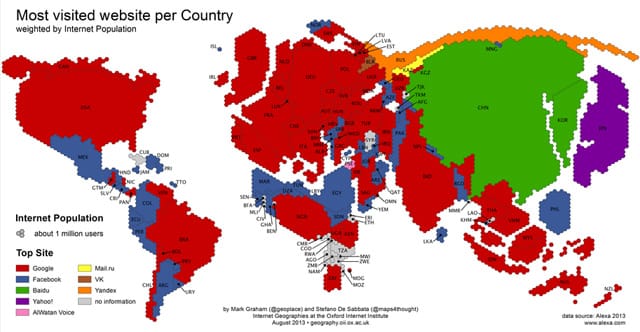
This week, Jeffrey Deitch talks street art and his future, architecture and design award winners, "average" women around the world, internet empires, Native American symbols, photography in museums, and more.

This week, Jeffrey Deitch talks street art and his future, architecture and design award winners, “average” women around the world, internet empires, Native American symbols, photography in museums, and more.
The Brooklyn Rail spoke to Jeffrey Deitch, and while the Rail didn’t really ask any challenging questions (NONE) about any of the many controversies he’s been involved in (a real miss opportunity), the former MOCA director has a lot to say about street art:
But I wouldn’t exclude a consciousness of conceptual art on the part of street artists. A lot of these artists looked at conceptual art — and in fact a number of the artists we think of as street artists, or graffiti artists, are very well-versed in the history of conceptual art. And so someone like Shepard Fairey, for instance, points particularly to Barbara Kruger as one of his biggest influences.
Why is the art fund industry struggling or is it?
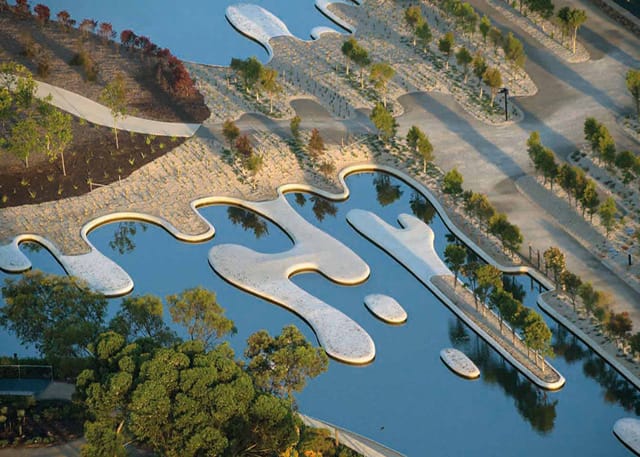
Singapore’s Inside Festival awarded a Barcelona apartment World Interior of the Year 2013, while Singapore’s World Architecture Festival awarded a Auckland Art Gallery World Building of the Year 2013 and a botanical garden in Australia the World Landscape of the Year 2013
There’s a short and interesting post over at Art F City about Digital Art World’s Secret Feminism:
The major issues facing feminism and digital art go far beyond a numbers game. Seeking a male-female ratio in exhibitions is just one part of an overarching discussion that’s centered around how to present femininity within digital art and how to carve out a space online and IRL, in-print and on blogs, about feminism’s future.
Is the debate around the use of Native American symbols in American pop culture, particularly sports, really about white privilege? Writing on Salon, Steven Salaita explains:
Whiteness has always been defined in contradistinction to the invented authenticity of the Indian, who is typecast as barbaric but romanticized as the shamanistic guide to North America’s indigenous spaces, those mystical geographies of the settler’s overactive imagination. (We see the same phenomenon in the Zionist appropriation of ostensibly Oriental culture, as when an Israel Day celebration on my campus featured traditional Arabic food and a live camel.) The historical Indian, then, was dispossessed and has been retrofitted to Hollywood specifications, repatriated only to the extent that he can serve as a passive emblem of American identity.
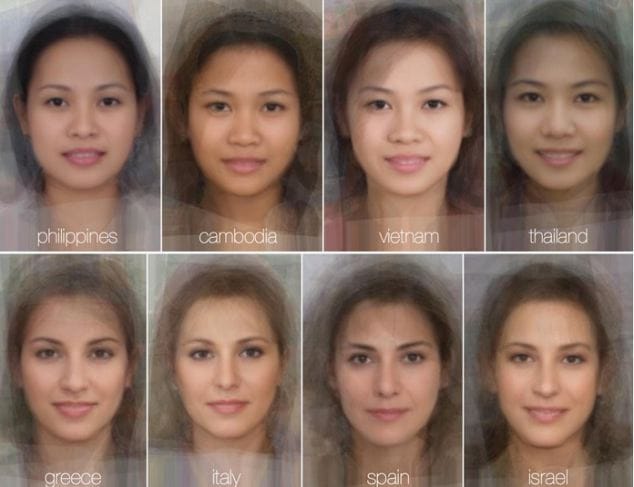
EDITOR’S NOTE: It has been brought to our attention that this story is not a “scientific” study at all by an art project by artist Colin Spears from over two years ago.
Using a face-averaging tool hosted online by experimental psychologists at University of Glasgow, scientists has blended together thousands of female faces to render what they consider the typical woman’s face looks like in 41 different countries around the world. The remarkable thing is that they are all quite beautiful. For instance:
Last week, we linked to Popular Science’s decision to ban comments on their site because of the unwarranted influence it has in skewing real scientific understanding and debate. But this week, the New York Times asks if that’s really the solution, and they took a look at the backlash:
Still, the move to silence what many online readers consider a digital town square has ignited a burst of reaction from bloggers and commentators on science and the media, as well as editors at other science magazines.
After 20-year-old pop start Miley Cyrus claimed that her song “Wrecking Ball”‘s controversial video was inspired by Sinéad O’Connor’s “Nothing Compares 2 U” video from 1989, the Irish singer wrote a blog post to warn Cyrus that she is being ‘pimped’ by the pop industry. She writes:
I am extremely concerned for you that those around you have led you to believe, or encouraged you in your own belief, that it is in any way ‘cool’ to be naked and licking sledgehammers in your videos. It is in fact the case that you will obscure your talent by allowing yourself to be pimped, whether its the music business or yourself doing the pimping.
Deborah Soloman wades into the debate about photography in museums and art spaces. She writes:
I say hooray. When we photograph, e-mail, tweet and Instagram paintings, we capitalize on technological innovation to expand familiarity with an ancient form. So, too, we increase the visual literacy of this country. Much can be gained. Nothing can be lost. A photograph of a painting can no more destroy a masterpiece than it can create one.
The Calder Foundation is not happy with Art Prize’s decision to use Alexander Calder’s “La Grande Vitesse” public art work in Grand Rapids. The letter, from Calder Foundation President Alexander Rower, is rather nasty (and sounds pompous):
The public “discussion” surrounding this abomination, which you mention as an element of the project’s success, fails to address these issues.
We had chosen to remain silent about this provincial happenstance, as the initiative is luckily temporary and reflects an utter lack of understanding and respect of Calder’s genius.
Required Reading is published every Sunday morning EST, and it is comprised of a short list of art-related links to long-form articles, videos, blog posts or photo essays worth a second look.