Required Reading
This week, UK's scary internet filter, more on Nazi-era art dealer Hildebrand Gurlitt, a London church builds a replica of Israeli's West Bank barrier, ridiculous moments from Pussy Riot's first TV interview, James Franco on celebrity selfies, and more.

This week, UK’s scary internet filter, more on Nazi-era art dealer Hildebrand Gurlitt, a London church builds a replica of Israeli’s West Bank barrier, ridiculous moments from Pussy Riot’s first TV interview, James Franco on celebrity selfies, and more.
UK Prime Minister David Cameron wants to create an internet filter, but though he says it is to block porn, in reality the intentions go far beyond that, as Martin Robbins writes in The New Statesman:
The language of the mythical ‘porn filter’ is so insidious, so pervasive, that even those of us opposed to it have been sucked into its slippery embrace. And so even when it turns out that O2 are blocking the Childline and Refuge websites, or that BT are blocking gay and lesbian content, we tend to regard them as collateral damage — accidental victims of a well-meaning (if misguided) attempt to protect out children from the evils of cock.
But this was never the case. As Wired reported back in July, Cameron’s ambitions extended far beyond porn. Working through secretive negotiations with ISPs, the coalition has put in place a set of filters and restrictions as ambitious as anything this side of China, dividing the internet into ‘acceptable’ and ‘unacceptable’ categories, and cutting people off from huge swathes of it at the stroke of a key.
From Spiegel Online, more about Nazi-era art dealer Hildebrand Gurlitt, who appears to have been more involved in the trade of looted art than previously assumed:
… American art investigators wrote letters, memos, inventory lists, reports and dossiers to clear up the origins of the art. With regard to Haberstock, they wrote: “Mr. Karl Haberstock, from Berlin, is the most notorious art collector in Europe. He was Hitler’s private art collector and, for years, seized art treasures in France, Holland, Belgium and even Switzerland and Italy, using illegal, unscrupulous and even brutal methods. His name is infamous among all honest collectors in Europe.”
Gurlitt, they wrote, was “an art collector from Hamburg with connections within high-level Nazi circles. He acted on behalf of other Nazi officials and made many trips to France, from where he brought home art collections. There is reason to believe that these private art collections consist of looted art from other countries.” For the Monuments Men, Gurlitt was also an “art dealer to the Führer.”
Who said the holidays aren’t a time to highlight political issues impacting millions? Electronic Intifada wrote about St. James’ Church in central London, which unveiled an eight-meter-high replica of the Israeli-built concrete wall that surrounds the Palestinian city of Bethlehem in the occupied West Bank, the traditional birthplace of Jesus:
The wall deliberately obscures the facade of the historic St. James’ Church “because that is what has happened to Bethlehem’s holy sites and historic places.”
“This Christmas we’ve built a huge wall across the front of our church. We’d really like you to come and see it because it’s what the people of Bethlehem are experiencing today,” explains Reverend Lucy Winkett, rector of the church, in the brief video …
Critic Roberta Smith smacks down the Metropolitan Museum’s current exhibition, Jewels by JAR:
… it is dicey for a major museum to celebrate the often frivolous objects on which the rich spend their ever increasing surplus income. Such a show must be beyond reproach in every way: transparent in organization, impeccable in exhibition design, illuminating in catalog and labeling and, most of all, self-evidently excellent in the quality of the objects on display.
Unfortunately, the exhibition “Jewels by JAR,” at the Metropolitan Museum of Art, largely falls short in every respect. It is one of the most superficial shows I have ever seen at this great museum.
Buzzfeed’s Miriam Elder has compiled “12 Ridiculous Moments From Pussy Riot’s First TV Interview” with Ksenia Sobchak and the questions are bizarre (obviously the reporter was out of her league). Her first question (incredibly) was, “You got out of prison famous and wealthy. So here’s the question: How much is the Pussy Riot brand worth?” and later she asked, “I can’t not ask the most important question — what’s up with your eyebrows?”
Following the demise of social network Friendster, computer scientists have carried out a digital autopsy to find out what went wrong:
They say that when the costs — the time and effort — associated with being a member of a social network outweigh the benefits, then the conditions are ripe for a general exodus. The thinking is that if one person leaves, then his or her friends become more likely to leave as well and this can cascade through the network causing a collapse in membership.
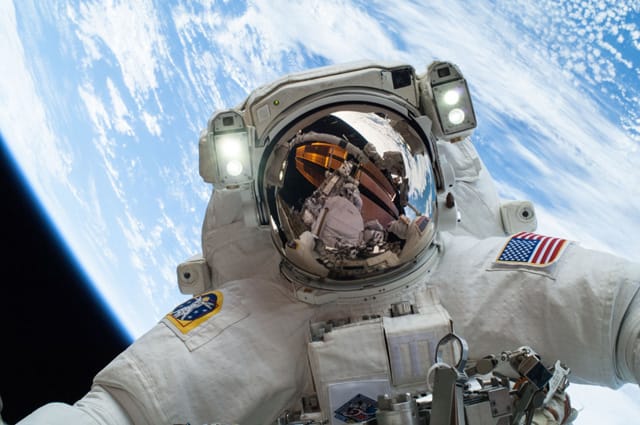
Hollywood star James Franco reflects on the “celebrity selfie“:
Now, while the celebrity selfie is most powerful as a pseudo-personal moment, the noncelebrity selfie is a chance for subjects to glam it up, to show off a special side of themselves — dressing up for a special occasion, or not dressing, which is a kind of preening that says, “There is something important about me that clothes hide, and I don’t want to hide.”
Of course, the self-portrait is an easy target for charges of self-involvement, but, in a visual culture, the selfie quickly and easily shows, not tells, how you’re feeling, where you are, what you’re doing.
Music critic Grady Smith made a video titled “Why Country Music Was Awful in 2013,” and it lampoons the similarities in the genre:
Mike Allen’s Politico Playbook email on December 27, included this interesting tidbit about Arianna Huffington’s holiday response to emails:
ARIANNA HUFFINGTON’S out-of-office message: “I’m sorry I can’t respond to your email right away. For the holidays I’ve put myself on a seven-day digital diet, unplugging and disconnecting from my devices so I can recharge and reconnect with myself and my family. I promise to get back to you as soon as I break the fast. In the meantime, happy holidays.”
And some top lists that might interest you:
- the staff at Architect magazine pick their favorite buildings and structures of 2013
- the most viral YouTube videos of 2013
- New Yorker critic Peter Schjeldahl offers his best of art in 2013
- Wired posted the top 10 science discoveries of the year
- the top pins of 2013 on Pinterest in each category (the art category is very weak)
- 50 “stunning” sports photos from 2013
- Kate Wadkin picks her “10 Favorite Moments in the Year of Bad Luck“
Required Reading is published every Sunday morning EST, and it is comprised of a short list of art-related links to long-form articles, videos, blog posts or photo essays worth a second look.