Required Reading
This week: The Bushwick aesthetic goes global, common misconceptions about the Palestinian keffiyeh, Edna Mode is brat, and who can really walk on water?

‣ Hong Kong Trade Development Council told local indie publisher Bbluesky to remove supposedly "sensitive" titles from display at the region's book fair last week, failing to specify what "sensitive" actually means. James Lee spoke with the publisher about censorship and compliance for Hong Kong Free Press:
Three of the five books were by written by Au: Turbulence, a travelogue; The Last Faith, which discusses media ethics; and 2047 Nights, a collection of essays. The remaining two were by convicted former pro-democracy lawmaker Shiu Ka-chun, both of which recounted his time in prison five years ago.
Au was arrested in 2022 for allegedly publishing seditious materials but released without charge. Shiu was sentenced to eight months in prison in April 2019 on public nuisance charges over protests in 2014.
Ng said that HKTDC staff had not mentioned any consequences for not complying with their advice. He added that there was no event-wide notice to pull certain titles, adding that he believed the statutory trade body was handling complaints on a case by case basis.
“There aren’t adequate conditions for us to make a judgement,” Ng said, adding that he had concerns Bbluesky would not be allowed to participate in next year’s fair.
‣ Art and design related to Palestinian identity are increasingly disparaged as antisemitic, none so viciously as the keffiyeh. But as journalist Samaa Khullar explains in an essay for the Nation, the scarf's history and deep-seated symbolism can't be dislodged so easily:
Much like the art of tatreez—Palestinian cross-stitched clothing that often represents specific tribes and villages—the keffiyeh speaks to Palestinian Indigenous identity, solidarity, and resistance against colonial forces. That is one of the reasons it has been so hated for so long.
It’s not enough for our identities to be erased and vilified—our cultural items are also stolen, appropriated, or desecrated in the public view.
In May, Israeli worshippers cheered as a doll wearing a keffiyeh hung from the ceiling of a synagogue in Jaffa during a Purim service. In the video, the noose was wrapped around the neck of the doll as the keffiyeh sways back and forth in a clear mockery of the mass killings of Palestinians. The scene is reminiscent of “mock-lynchings” of Black people which have happened in the United States for decades.
So when people go on the air and compare the keffiyeh to the hoods of Klan members, we should not take anything they say seriously; it no longer is worthy of a response. Leaders in the United States have actively funded and cheered on a genocide for the past nine months—why should we look to them to guide our moral compass?
‣ Bangladeshi photographer Shahidul Alam pens a series of dispatches from the capital city of Dhaka, where the government is carrying out a brutal crackdown on student protesters. For the South Asian Avant Garde Anthology, he writes:
It was reminiscent of 2018. The police van with water cannons and the long line of policemen standing at the Nilkhet corner on Monday made it abundantly clear that they were prepared. What were they prepared for? Certainly not the defence of unarmed students or the general public. They failed to lift a finger when the students were being attacked. The armed goons of the Chhatra League (CL, the ruling party’s student organisation) had been bussed in the previous night along with, apparently, youth gangs and leaders for hire. Their leaders had openly threatened the protesting students. CL was clearly the one the police were on standby to defend. It was CL that quota backdoors were designed to favour.
As it turned out, there was little the unarmed students could do against the helmeted, armed, pro-government forces let loose. The police were content to let the mayhem continue, stepping in only when the ferocity of people’s power took the goons aback. We walked past blood and strewn sandals in the streets. People stopped us to say the injured had been taken to Dhaka Medical College Emergency Ward.
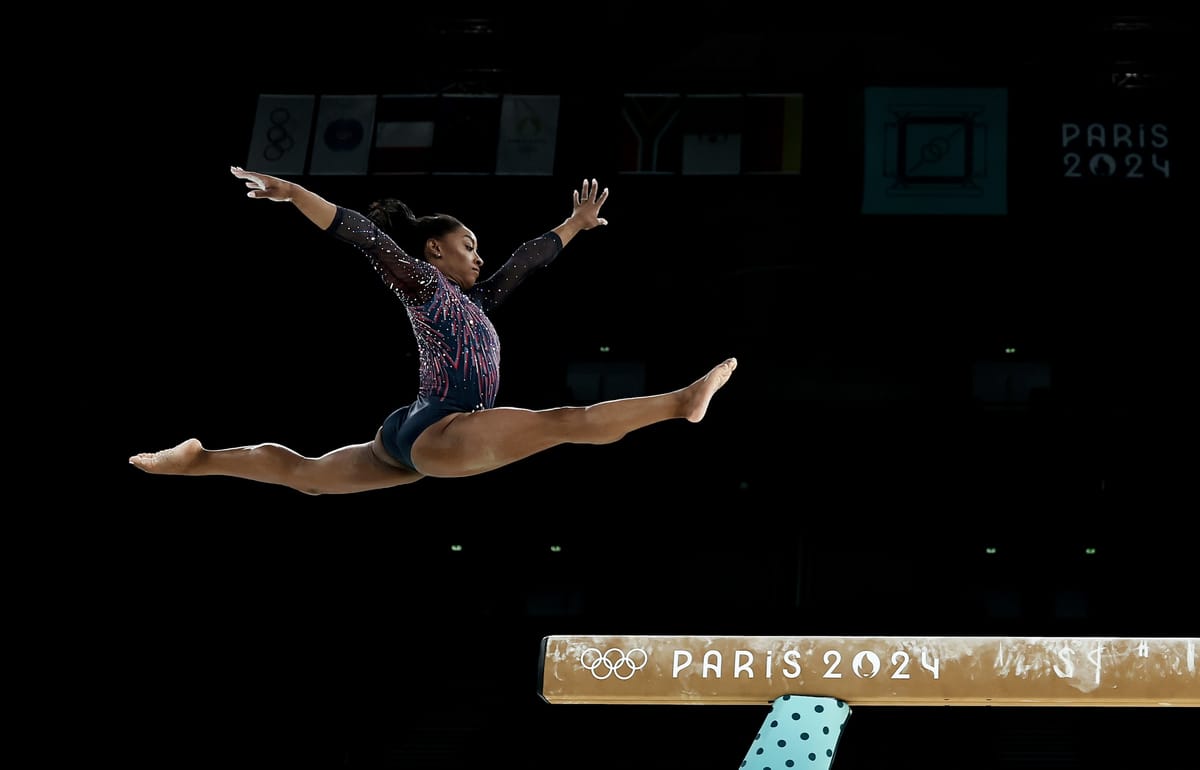
‣ Ahead of the Summer Olympics, Physics World discusses a question as old as time: Could humans ever walk on water? Their answer: If anyone could, it's American sprinter and the current fastest woman in the world Sha'Carri Richardson. Give their fascinating podcast a listen — run, don't walk!
‣ Author Neema Avashia, born to Indian immigrant parents in Virginia, criticizes the false narrative of Appalachia spewed by Republican Vice Presidential candidate JD Vance. Her Guardian essay is an especially important read as some South Asians across the political spectrum lionize Usha Vance, his wife:
To the outside world, Vance is sure to appear far more Appalachian than I do. He is white, Christian, and has longstanding generational ties to the region. I, on the other hand, am south Asian, the child of Indian immigrants who settled in Appalachia in the 1970s, because work in the chemical industry brought them there, and left in the early 2000s, because work disappeared.
We do have this in common, though: both of us left Appalachia in pursuit of higher education, and have lived away for as long as we lived within the region. But while Vance uses the story of his upbringing to perpetuate a flat, stereotyped representation of Appalachia, my identity, that of my family and community, complicates the narrative in ways that are politically inconvenient.
My friends with generational ties to Appalachia experienced the book much as I did. They felt misrepresented. Misunderstood. Scapegoated for the result of the 2016 election. Many wrote pieces in direct response. Elizabeth Catte’s What You’re Getting Wrong About Appalachia is an absolute must-read in this regard.
‣ In a tender report for Them, writer Michael Love Michael chronicles her experience attending a community dinner for Black trans people hosted in a Brooklyn garden:
Nineties R&B jams play on low volume as Demí guides me to a seat in the shade, tucked away in the back of the garden. I watch as women in summer dresses sprawl serenely along the garden’s benches. The gentle hum of their chatter and the snaps of their paper fans add to the soothing atmosphere. I’m struck by the stark contrast from the occasionally chaotic energy of other trans gatherings. “Sometimes nightlife is the only offering [within our community],” Demí tells me. “[We’re] really thinking about how to still take the beautiful elements that nightlife does have of the congregation of [the] community, bringing art into the space, bringing gathering. ” At that, Demí takes a moment to look out lovingly at the 40 or so girls making herbal concoctions, taking Polaroids in the idyllic garden. A more intimate setting, they add, removes certain social pressures for Black trans women to perform, allowing for greater authenticity.
‣ Mina Le, everyone's favorite fashion YouTuber, is back with an in-depth video on the history of merch, its social implications, and why it's reached a tipping point:
‣ How did Vice fall so far, and why is it such a satisfying collapse? YouTuber Moon breaks it down:
‣ The Bushwick early aughts aesthetic is experiencing its own global Renaissance:
https://www.tiktok.com/@boysclubworld/video/7385250287943994654
‣ Visiting the British Museum but make it decolonial:
https://www.instagram.com/reel/C9PL6q5q0nn/?utm_source=ig_web_copy_link
‣ Edna Mode IS brat! I'm with her:
https://www.instagram.com/reel/C9VkcyZvxqU/?utm_source=ig_web_copy_link
Required Reading is published every Thursday afternoon, and it is comprised of a short list of art-related links to long-form articles, videos, blog posts, or photo essays worth a second look.