Required Reading
This week, a lost Raphael may be found, Ai Weiwei gives London Olympics a thumbs up, the Tea Party's favorite artist, Iran's amazing modern and contemporary art collections and more.

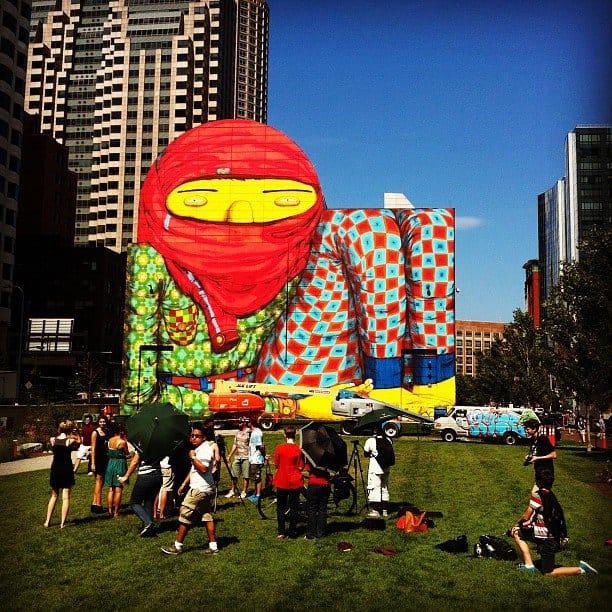
This week, a lost Raphael may be found, Ai Weiwei gives London Olympics a thumbs up, the Tea Party’s favorite artist, Iran’s amazing modern and contemporary art collections and more.
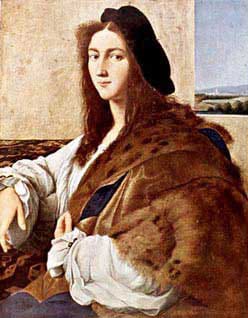

One of the greatest art mysteries of the Second World War, Raphael’s “Portrait of a Young Man” (1513–14), may have a happy ending … we think. Believed to have been stolen by the Nazis and possibly destroyed, Polish officials now say they have information that it hidden in a bank vault, but they’re not sure where … huh?
Today is the 50th anniversary of US starlet Marilyn Monroe’s death. To celebrate the occasion, may I suggest you watch artist Scott Blake’s supercut video that includes 100 scenes of Monroe walking and running in, out and through doors. It includes clips from every movie she was in except Let’s Make it Legal (1951).
Chinese dissident artist Ai Weiwei was very critical of the opening ceremony of the 2008 Beijing Olympic games, now four years later he has very different words for the London incarnation:
Because Great Britain has self-confidence, it doesn’t need a monumental Olympics. But for China that was the only imaginable kind of international event. Beijing’s Olympics were very grand – they were trying to throw a party for the world, but the hosts didn’t enjoy it. The government didn’t care about people’s feelings because it was trying to create an image.
Critic Jed Perl has written a fascinating piece in The New Republic that explores a number of what at first appear to be rather unrelated shows (the 2012 New York Frieze Fair, the 2012 Brucennial and shows by Jeff Wall, Stanley Whitney and Owen Gray). He writes:
Art fair bashing, in any event, is as ubiquitous as the art fairs. In the catalogue of this spring’s Whitney Biennial, the curator Elisabeth Sussman was anxious to announce that the 2012 Biennial would be nothing like an art fair. She explained in a transcript of a conversation with her fellow curators that “you walk around those big art fairs, and it’s like product, product, product. I think we were really tired of that and felt like we had to interrupt it.” Sussman went on to say her goal was “to present something that was exciting in the moment but that couldn’t be bought, couldn’t generate a new trend in sculpture, say, or a new this or that — something that was just exciting in and of itself.” Am I the only one who hears a note of desperation in these comments? The need to explain where one stands — or does not stand — threatens to eclipse the experience of art itself.
Seven academics (Frazer Ward, Michael Leja, Charles Palermo, Lisa Siraganian, Rachael DeLue and Brigid Doherty) grapple with the newly released book A House Divided: American Art since 1955 by Anne M. Wagner. Most of the discussion centers around Jasper Johns’s iconic flag paintings:
It makes sense that Jasper Johns’s flag paintings should be Wagner’s entry point. A lot is known about them, yet those paintings have maintained a reserve, which isn’t opened out by “critical and complicit,” or by “indifference.” Their abstract expressionist/Cold War contexts, the overdetermined yet commonplace aspect of the flag itself, and Johns’s laborious methods, with their formal elements that meet some modernist imperatives, and their countermanding, domestic elements (newspapers, the bedsheet), seem to require a reading of the flag paintings as political statements, but such readings — where they have not seen the work as a sign of surrender to the “order of total administration” — have remained largely in suspension.
Art historian and Duke University professor of religion David Morgan examines the work of the Tea Party’s favorite painter, Jon McNaughton, whose kitschy paintings filled with images of Jesus, the US Constitution, a sinister Obama and heroic white people have generated many laughs in the art world. He writes in Religion & Politics:
It is tempting to say that such images are more ideogram than objet d’art. Their task is to transmit ideas and points of view — ideology, we might say, worldviews or bodies of thought performing as tableau vivants, theatrical renditions of Great Moments. But the history of Christian art also includes such visual sermons.
Tehran is finally dusting off their fantastic collection of contemporary Western Art and putting some of it on display. As the Guardian writes:
It is the finest collection of modern art anywhere outside Europe and the US, boasting works by Jackson Pollock, Francis Bacon, Andy Warhol,Edvard Munch, René Magritte and Mark Rothko.
… the collection includes Pollock’s “Mural on Indian Red Ground” [(1950)], considered to be one of his most important works and estimated to be worth more than $250m, as well as important pieces by Picasso, Van Gogh, Monet, Pissarro, Renoir, Gauguin, Toulouse-Lautrec, Degas, Whistler and Marcel Duchamp.
Photographer Thomas Hawk’s portraits from the 2012 Holi Festival of Colors in Spanish Fork, Utah are a delight to behold.
Have you ever perused Abe Books’ Weird Book Room. The titles are uncommon … and somewhat bizarre … like How to Date a White Woman, How to Live in Your Van and Love It, The Art of Painting Animals on Rocks, How to Make Love While Conscious and Electricity in Gynecology.
And finally, perspective is everything but sports photographers seem to enjoy lingering on the sexier parts of feamle beach volleyball atheletes … so, the Philadelphia edition of the free daily Metro newspaper asks “What if every Olympic sport was photographed like beach volleyball?” The photo essay of male athletes is, well, awesome.