Required Reading
This week: Lauren Halsey’s love letter to South Central, James Baldwin’s sartorial revolution, car-free neighborhood design, painterly book covers, and much more.

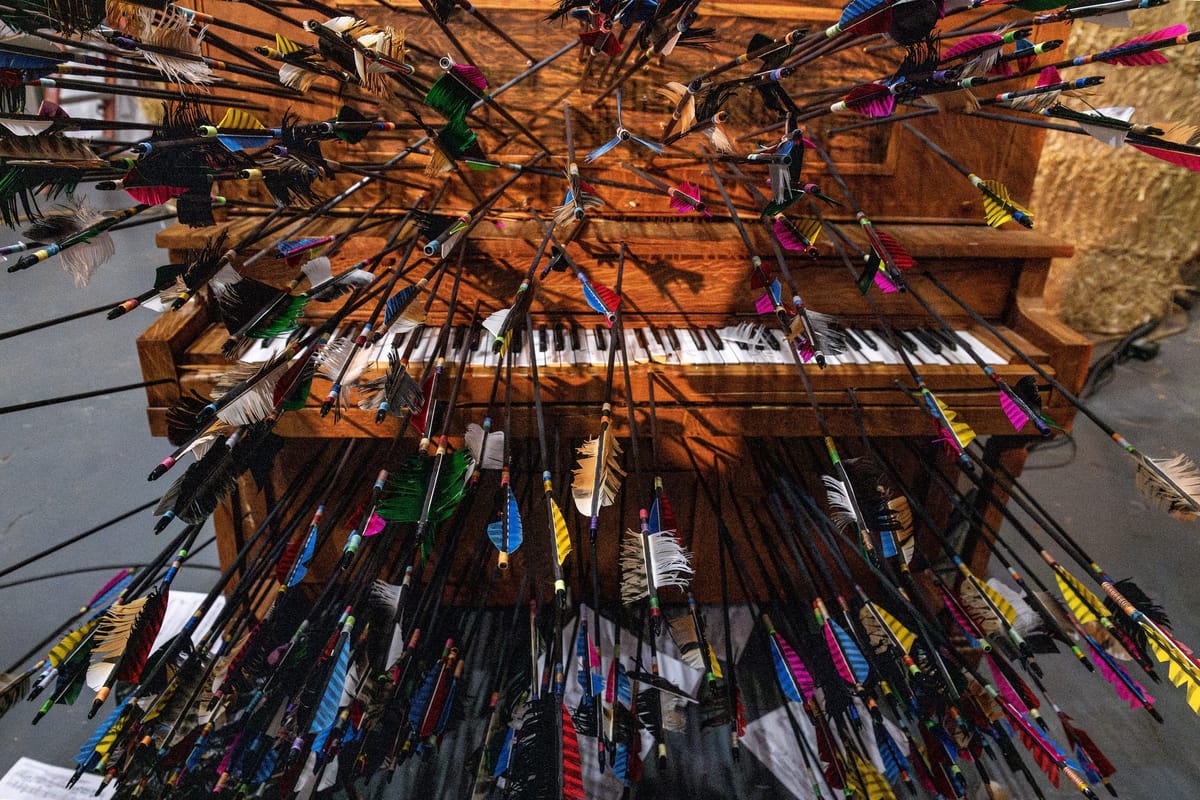
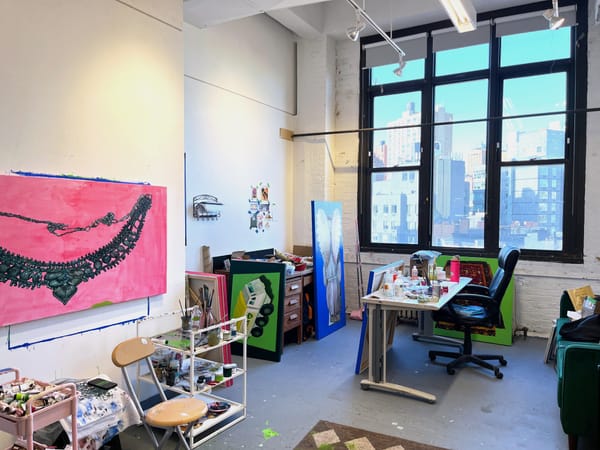
‣ This year's LA art week felt different for a few reasons, including a renewed emphasis on community after the recent wildfires. Fittingly, artist Lauren Halsey teamed up with the Los Angeles Times’s Image magazine (led by former Hyperallergic Senior Editor Elisa Wouk Almino) on a Frieze zine dedicated to her South Central community. Staff Writer Julissa James reports:
It was a vision that was never not living somewhere in Lauren Halsey’s mind, just waiting for the right moment to come to fruition. The Summaeverythang Community Center, a space bringing art, health and wellness, and education to kids in South Central sometime in 2028, is the kind of community work that has always been present in Halsey’s art practice, of course. But this center is also a physical manifestation of a way of being, an ethos integral to Halsey as the person, not just the artist, which is: “You serve.” Halsey received a living roadmap of care from the history of her neighborhood, her family and community that sparked inspiration for the center early on, even if she didn’t know it was happening yet.
‣ A car-free neighborhood sounds dubiously implausible, but it turns out there's one in the United States already. Ben Ikenson has the story on the new Arizona haven and how it's going so far for Dwell:
Studios start at around $1,300 per month and three-bedroom units around $2,700, an average-to-slightly high rental fee for the market, and many lessees were incentivized by perks like the ones Murdock describes. (The median rent for a studio in Tempe is $1,375, while three-beds go for $2,341, according to Apartments.com.)
Murdock was also struck by the distinctive sense of place, the product of not only its desert-modern aesthetics but of building strategies that mitigate heat, promote wind flow and cross-ventilation, and encourage social interaction. Architect and urban planner Daniel Parolek, of Berkeley, California, firm Opticos Design, led the project’s architectural design and wrote that "not needing to accommodate spaces for car storage or circulation…opened up the opportunity to focus on creating people-oriented spaces."
Instead of broad asphalt streets, a series of paseos between 10- and 15-feet wide stretch between clusters of flat-topped, irregularly situated two- and three-story buildings coated in heat-deflecting white stucco and sporadically adorned with vibrant murals. Walkways open onto brick courtyards and communal spaces ornamented with public art.
‣ James Baldwin's personal style wasn't just a reflection of his incisive politics — it was a tool. Derek Guy writes for PBS about the role of the writer's clothing in critiquing white supremacy:
Baldwin wasn’t the only Civil Rights activist who knew how to speak through his clothes. Dr. Martin Luther King Jr. and Student Nonviolent Coordinating Committee (SNCC) members wore their “Sunday Best” when protesting racial injustice because they knew the images would play better on the evening news. But when they went into the rural south to register Black voters, many ditched their collegiate blazers and button-downs in favor of jeans and overalls to gain trust. Similarly, the Black Panthers strategically created a uniform involving leather jackets, dark sunglasses, turtlenecks and black berets to project a sense of discipline and solidarity. Their dress borrowed on an aesthetic language spoken by revolutionary movements abroad, which linked the cause of Black empowerment to broader anti-imperialism struggles.
‣ The Indypendent's Theodore Hamm covers new revelations about the American government's surveillance of Malcolm X leading up to his assasination 60 years ago this week:
Nine days before X’s assassination, Hoover sent a memo to Helms and other influential federal law enforcement leaders regarding Malcolm’s itinerary. FBI sources informed Hoover that in the wake of France’s refusal in early February 1965 to allow the Black nationalist leader to enter the country, X and his supporters planned to protest outside the French consulate in New York City.
Hoover’s memo is significant because it clearly demonstrates that Malcolm X was on many radars at the time of his death. In addition to Helms, Hoover looped in CIA Director John McCone, the Department of Justice’s John Doar (who oversaw the civil rights division), and Thomas Hughes, the State Department’s director of intelligence.
Less than ten days later, X was gunned down. In the Netflix series Who Killed Malcolm X? (2020), retired FBI agent Arthur Fulton stated that he supervised a team of nine undercover agents inside the Audubon Ballroom that Sunday afternoon. The NYPD had at least a half-dozen more undercovers at the event, including Gene Roberts, a member of Malcolm’s security detail.
‣ The International Fact-Checking Network released a statement after police raided a fact-checking organization in Serbia, connecting it to the American government's dismantling of USAID and the global rise of fascism:
Claims from Trump, Musk and other administration members about corruption within USAID have lacked evidence and been widely reported as baseless by the American press. Former USAID staff and other officials have asked repeatedly for evidence without receiving it.
This is not the first time that government institutions in Serbia have attempted to intimidate independent media and civil society organizations, but it is an unprecedented escalation of government repression, meant to silence independent voices and using the pretext of baseless accusations from the current U.S. administration for the suppression of independent media.
‣ Writer Kaitlyn Greenidge shares a beautiful note on her Substack about her family, the true impetus behind Black History Month, and why the rollback of DEI initiatives cannot snuff out justice movements:
I asked my mother once how the Afro-American Society of Arlington found members before social media. “Oh,” she said, “Grandma made business cards and printed a bunch. Whenever she saw a Black person anywhere in town–at the grocery store, at the gas station, in a parking lot–she’d hand one to them or slip one on their windshield. Didn’t matter if they were just passing through. And that’s how she let people know we were here.”
Black History Month began not as a business move or a way to build monetary wealth or a desire for white American understanding or a marketing push. It was an effort of Black librarians and researchers to preserve memory and build self. It was started not by CEOs or “disrupters” but by the people who keep and safeguard our archives. Before the concept of affinity history, before the idea of American counter histories was normalized, those people understood and codified this practice. It’s one many cultures have bitten from us since. The intentions of Black History month have nothing to do with a multinational corporation’s shareholders or a tech CEO who has never been more curious about anything other than himself. It’s reminding us that even when the dominant narrative insists that Blackness is on the outs (an absurd belief) that “DEI” has been eliminated, we keep creating and building and planning and making.
‣ Rhiannon Russel reports for the Walrus about the First Nation School Board of Yukon, which is rewriting the script on Indigenous education:
Improving educational outcomes starts with embedding First Nations world views across subjects, incorporating First Nations language instruction, and inviting Elders into the classroom. This will look different at each school, with committees to tailor operations to the specific community. In Haines Junction, located an hour and a half west of Whitehorse, a local First Nations language teacher partnered with a high school teacher to co-teach grade eleven and twelve classes. Instead of dividing subjects like science and social studies into separate periods, they integrated them into a cohesive, interdisciplinary approach. Six hours northeast, at Ross River School, elementary students studied math in the woods, pretending to be forest biologists conducting plant surveys as they learned how to calculate and represent data. The idea is to help children understand that everything is connected.
As Melissa Flynn, executive director of the First Nations School Board, puts it, First Nations world views go beyond “beads and bannock.” Instead of following a top-down hierarchy, the board’s organizational chart places students at the centre, surrounded by parents, teachers, support staff, and the broader community. For instance, when Flynn started her job, she knew she wanted to improve the literacy skills of First Nations children. She spoke to experts, speech language pathologists, and teachers in the territory—as well as communities—about what needed to change.
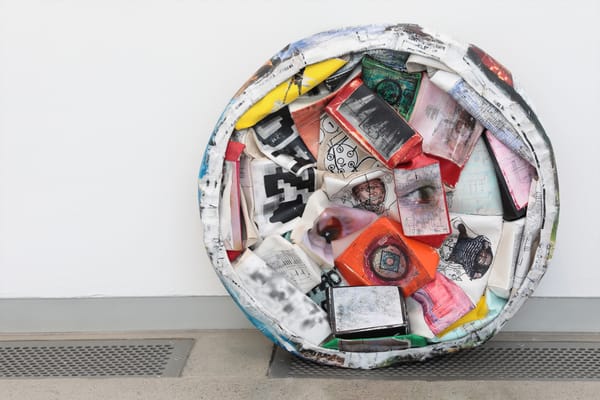
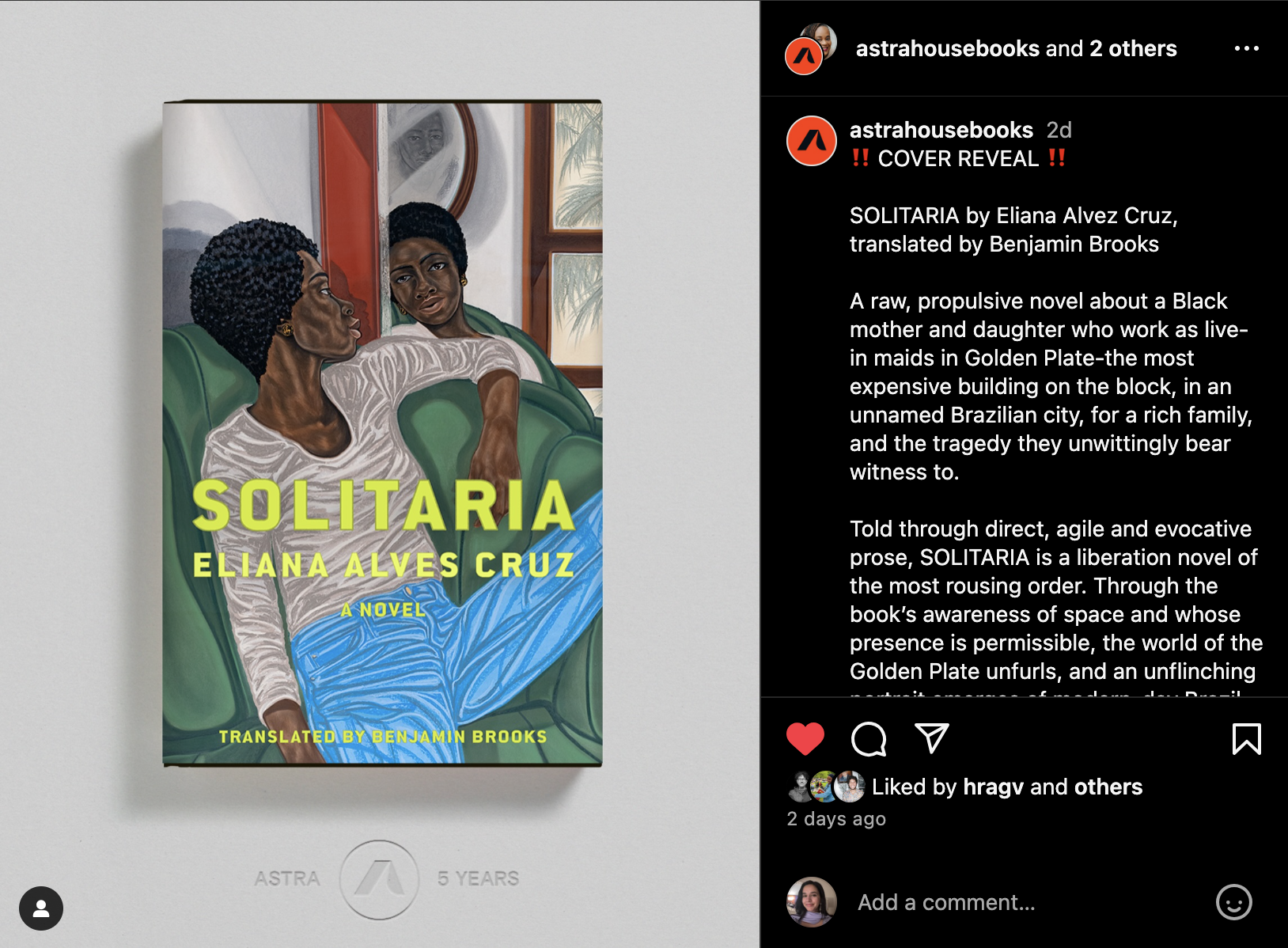
‣ Artist Toyin Ojih Odutola created a painting for the cover of this forthcoming Eliana Alves Cruz translation by Ben Brooks. We are entering a new era of book covers, and I'm so here for it:
‣ So much to learn about solidarity from Korean protest culture, courtesy reporter Anna Kook, including lessons on how to engage even if you aren't able to participate in person:
https://www.instagram.com/reel/DDXJYnPTACd/?utm_source=ig_web_copy_link
‣ Brown boys who love Drake should not be allowed onstage, ever:
https://www.tiktok.com/@dilnextdoor_/video/7474064233987050782
‣ Animosity at first sight 🥰:
https://www.tiktok.com/@cyrusveyssi/video/7474761077767621918
Required Reading is published every Thursday afternoon, and it is comprised of a short list of art-related links to long-form articles, videos, blog posts, or photo essays worth a second look.