Saad Khan Archives the Detritus of Censored Culture
Since 2019, the New York-based archivist has cultivated a digital and physical menagerie of censored mass media spanning South Asia to the Maghreb known as Khajistan.

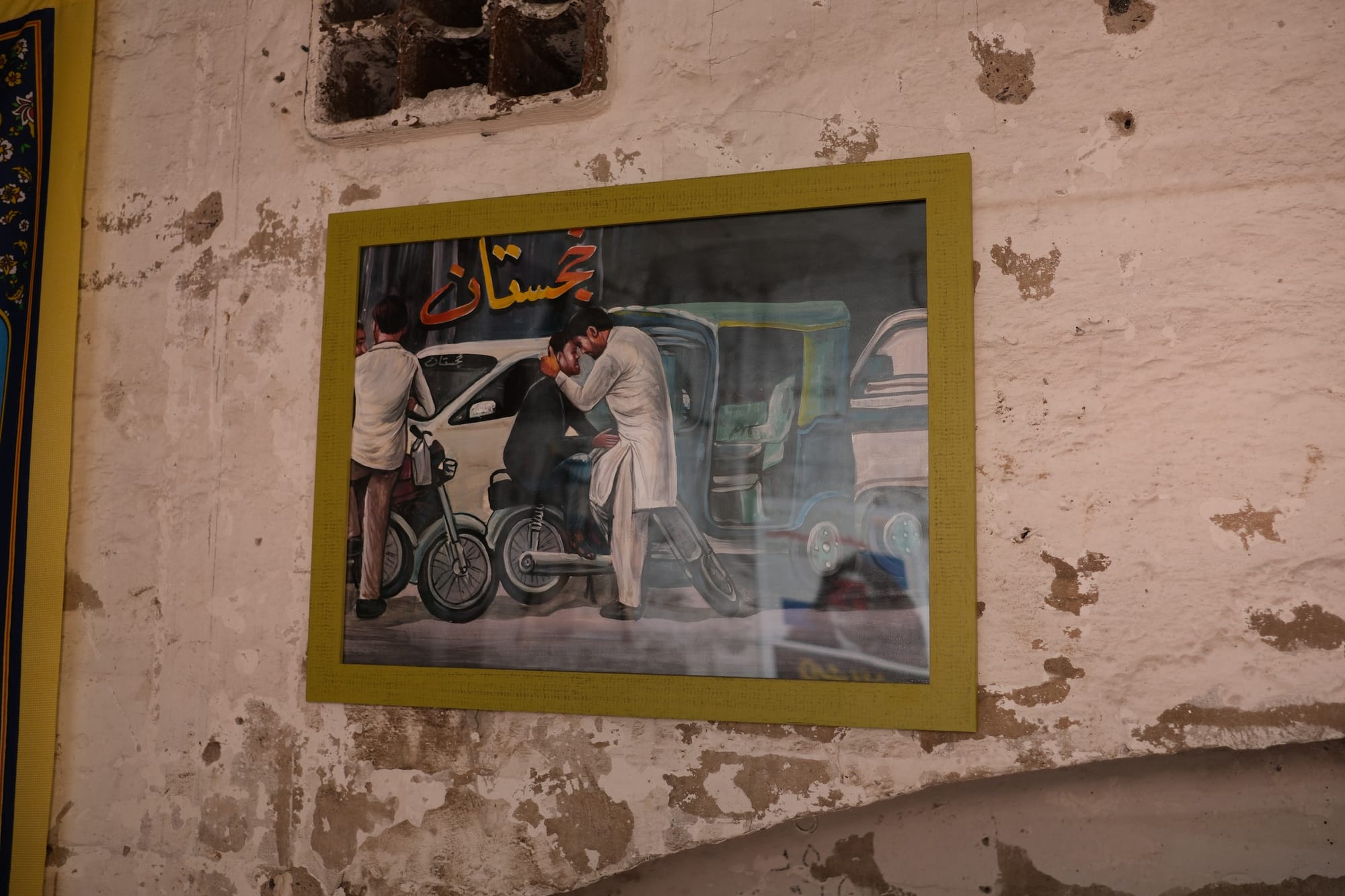
Encountering Khajistan on Instagram is both amusing and perplexing. That’s by design. The grid is an array of meme-like visuals and found photography: WhatsApp forwards, domestic interiors, feet, half-nude hairy athletes, over-sexualized showgirls, men in shalwar kameez locked in intimate embraces or exchanging lip-to-lip kisses. The entire account is tinged with an air of “if you know, you know.” And if you do indeed know, there’s a cheekiness to these images, imbued with double entendre.
Behind this bizarre and enigmatic menagerie is an expansive archive of censored, banned, and overlooked media from South Asia to the Maghreb. The project sets out to “preserve real life that somehow disappears from the official record,” founder Saad Khan writes in its manifesto, explaining that its holdings range from “leaflets that fell from the sky” to “pictures pulled from your uncle’s porn stash.”
Founded in 2019 out of a vast collection of social media images and videos Khan had gathered for his film projects, Khajistan has expanded into a digital and physical archive and an independent press. But for Khan, it’s also been a lifelong process of collecting as a way of affirming his own existence.
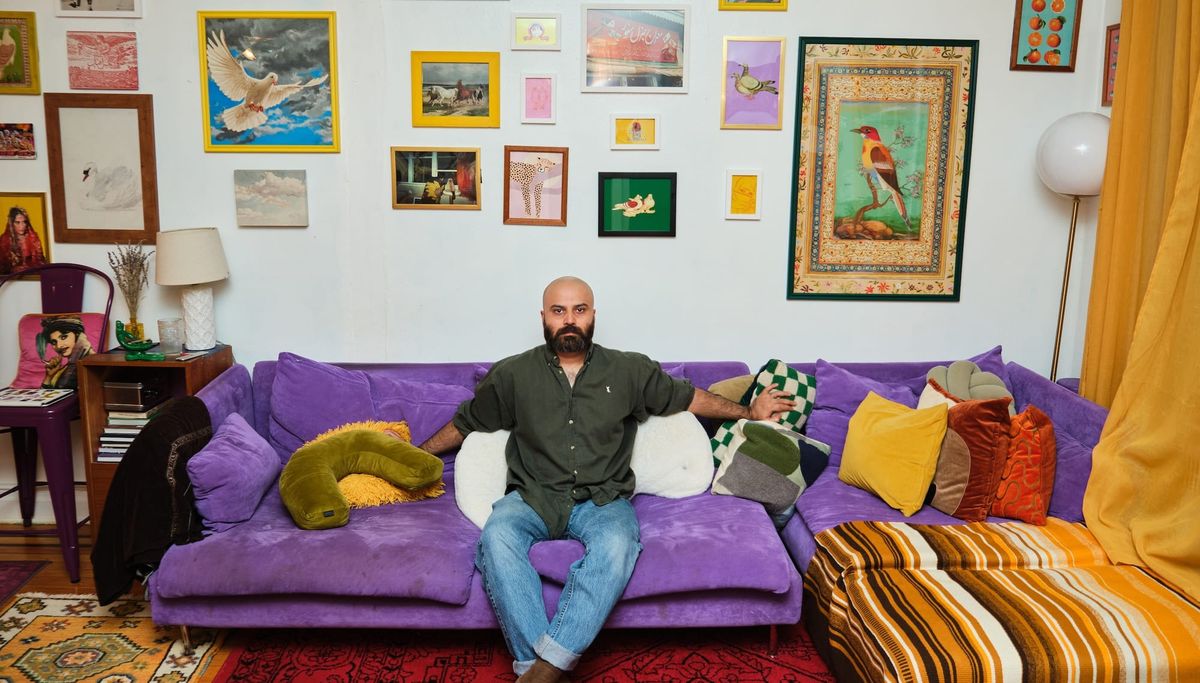
I visited him in his Queens apartment last fall, cocooned by walls adorned with film posters, homoerotic memes, and buxom Pakistani actresses spreading their legs — a physical manifestation of the Instagram page — where he recounted the deeply personal origins of his collecting.
Growing up in Lahore in the ’90s and early 2000s, Khan was surrounded by this ephemera, which simply reflected the mass material culture of Pakistan’s working-class neighborhoods.
“I remember my brother reading those sex stories. My dad had a sexology book in Urdu. It’s hypervisible,” he told me. “You can call it ‘subculture,’ but let's talk about numbers. People living there are consuming this.”
But Khan was keenly aware of how working-class cultural expression, especially that of queer and trans people, was relegated to the margins. Arriving in the United States in 2014, his only way of contextualizing his own existence was by surrounding himself with the kinds of memes, images, social media, and ephemera that reflected the world he came from. “You want to be seen; you want your humor to be heard; you want your jokes to be understood,” he said.
That experience has resonated, spawning a tight but cult-like following.
“People started sending stuff that’s so bang on the buck,” Khan said, recounting messages he’s received from young people in Pakistan or Iran. “That gaze — it’s an unspeakable thing. It’s just a feeling; it’s how you see the world.”
Some 85,000 community contributions largely make up Khajistan’s social media presence. Khan has also turned to collectors, artists, and researchers to gather popular visual and material culture: found imagery, film posters, old radio programs and music mixes, government propaganda, discontinued or censored magazines and films. Many of the visuals captured by Khajistan are commonplace among working-class communities, whose cultural expression is often ubiquitous in public space or exchanged on free or cheap social media platforms. Men, walking hand in hand, pinkies entangled, will pass these posters, wheatpasted on their local storefronts, slipping into the cinemas or dance halls to attend the advertised stage shows. But these everyday scenes have been concealed from the eyes of upwardly mobile groups — massive infrastructural development and housing societies partition them physically, while censor boards and the weaponization of vulgarity shield them from working-class aesthetics and culture.
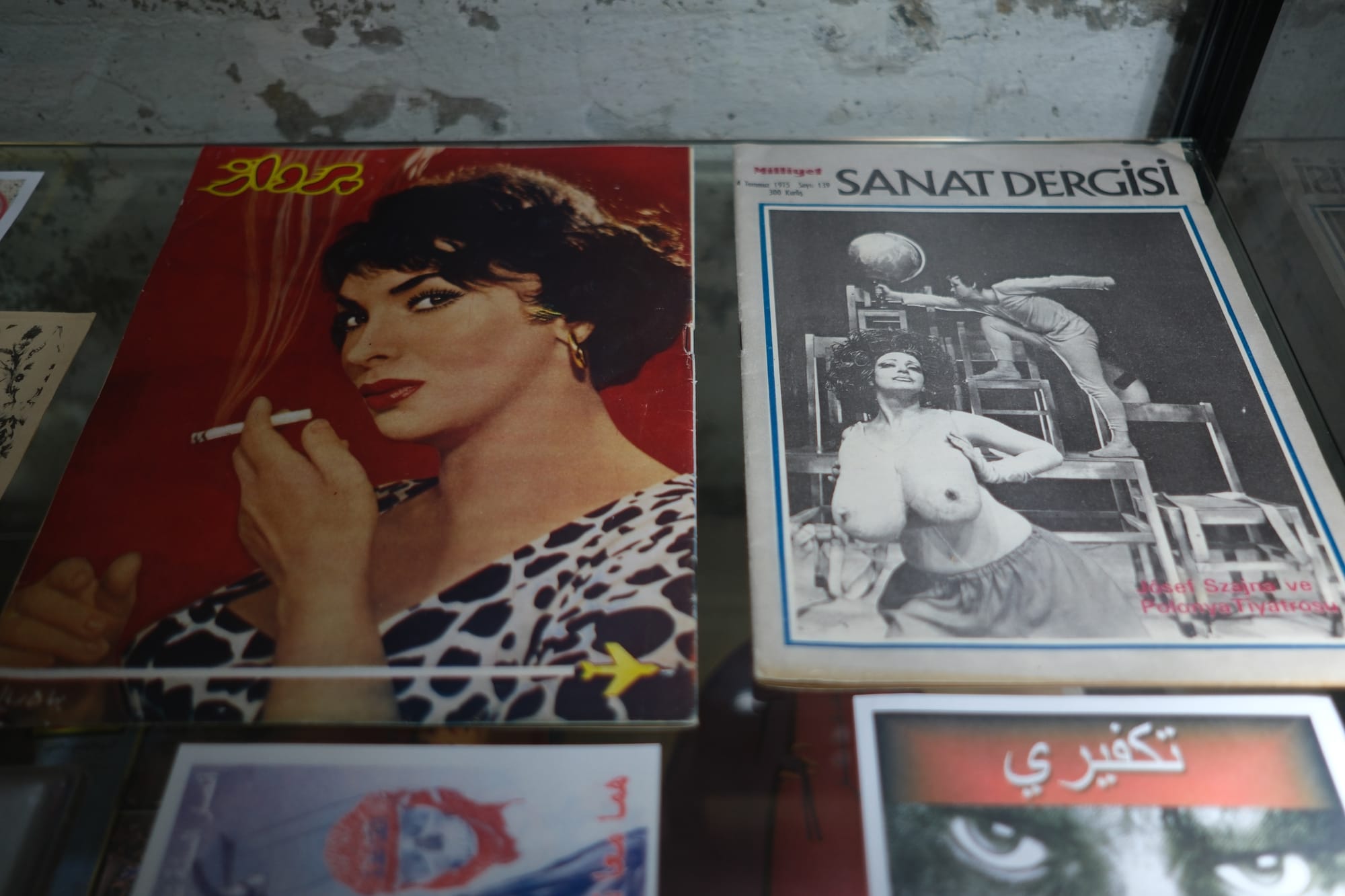
Held in Brooklyn, Khajistan’s physical archive, known as Toshakhana, aims to challenge the selective preservation of visual culture and unsettle our understanding of censorship. Its holdings reveal a historiography of colonialism, state-building projects, and globalization, forces that have flattened and obscured countless forms of vernacular culture. Cold War-era American and Soviet propaganda, pre-revolutionary Iranian periodicals, Ottoman erotica, rare Islamicate Judaica from Tunisia and Iraq — these artifacts inconvenience national and class interests and have largely faded from our collective imagination. They document a parallel history of localized cultures, simultaneously popular and censored or forgotten.
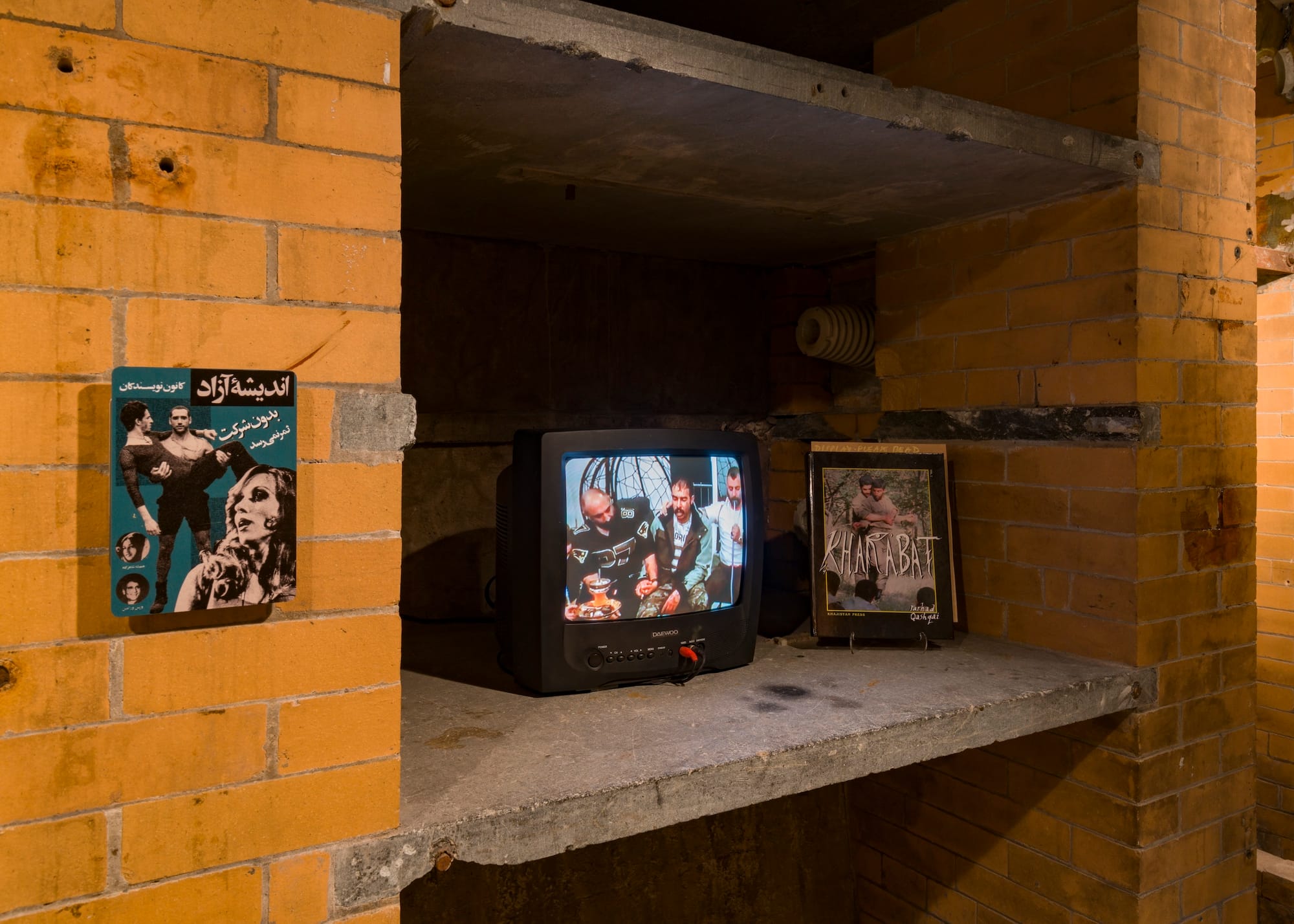
Risqué, out-of-print texts find a home within the archive to survive for future generations. One is Humayun Iqbal’s 1970 novel Challawa, the story of a brandy-obsessed, middle-aged Pakistani female detective who sleeps with younger women. Khajistan Press has given new life to many of these materials, as well; American War Propaganda Leaflets collects printed matter distributed by the American military and CIA in Afghanistan, Libya, and Iraq between 1990 and 2022, while Loose Cannons and Dangerous Curves anthologizes five decades of film reviews of popular cinema and the Lollywood industry. Homosexual Desires in Madrassas translates a 1986 sermon from its original Urdu that instructed Islamic school teachers on how to avoid desiring their young students.
These materials, simultaneously reifying and transgressing the social order, surface the underside of a male-dominated public space and its attendant gaze. Women, scarcely seen in the streets, are found sexualized in pop ephemera and entertainment where desire easily slips into violence. Young boys, who at times fill the absence of women in public space, are often framed in ways that blur the lines between homoerotic encounters and sexual abuse.
Most recently, Khajistan Press published Karachi, After Midnight, reproducing in print an anonymous gay Pakistani man’s blog from 2003. Preserving the language of every post, the writing is unfiltered, capturing the innocence of blogging oneself into existence on the early days of the internet — funny, heartbreaking, searching — unsure if anyone out there is listening.
Over his years of collecting, Khan has also filled gaps in institutional archives by digitizing his collection and selling originals to universities with the facilities, resources, and technological infrastructure to preserve them, including the Kislak Center for Special Collections, Rare Books and Manuscripts at the University of Pennsylvania, as well as the Princeton and Stanford University libraries.
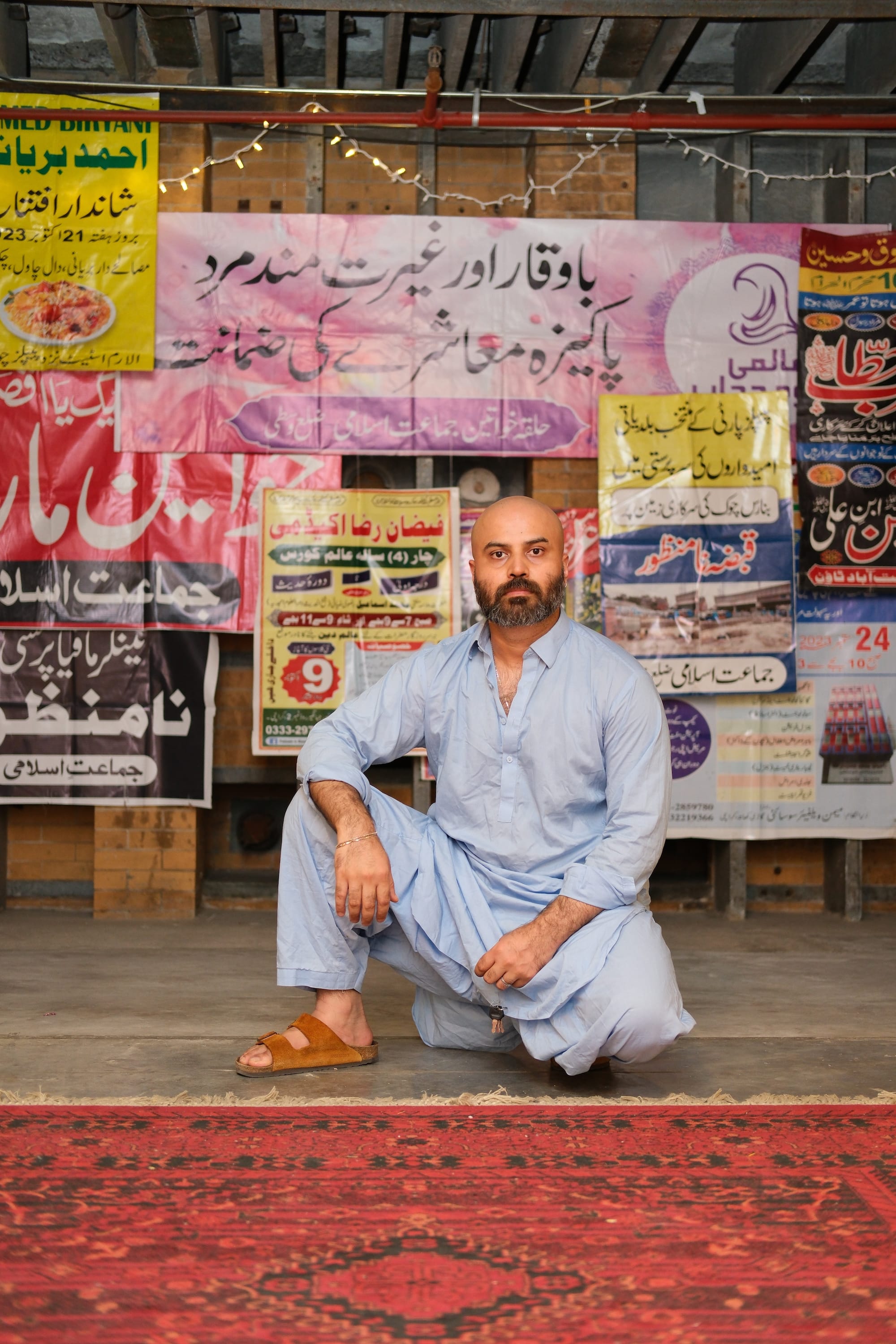
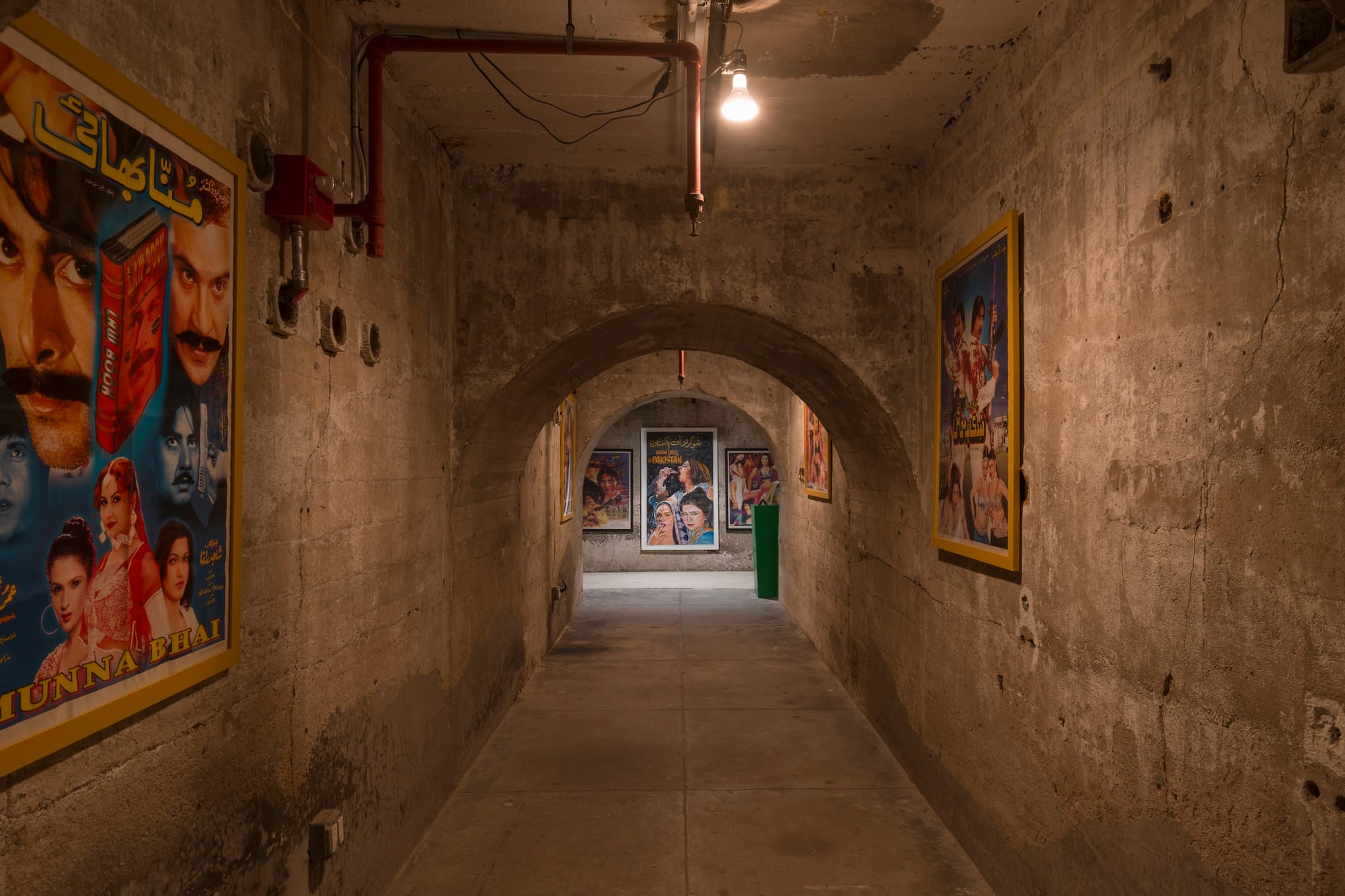
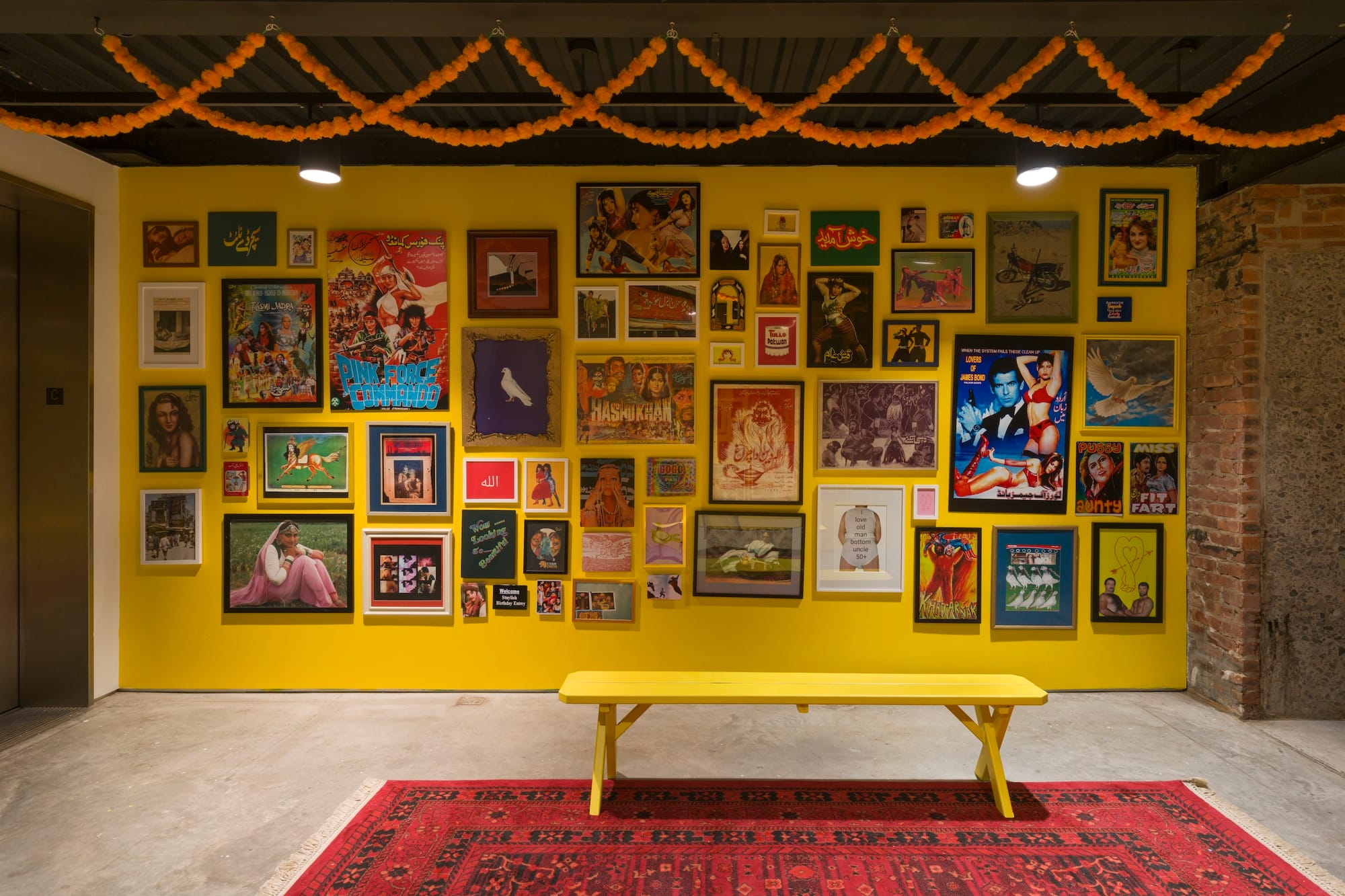
Last summer, Khan translated the project into a physical exhibition for the public: Spasial Program, housed in the dimly lit, labyrinthine basement of SculptureCenter in Long Island City. Campy film memorabilia, memes, and censored street art covered two bright yellow walls. A vaulted corridor was lined with massive film posters and lewd Frankensteined collages intended to lure passersby into bootleg porn screenings. Erotic videos and political cartoons were tucked in cramped nooks. A vitrine held “The Alphabet of Jehaad Literacy,” a propaganda pamphlet designed at the Universities of Nebraska and Wisconsin and distributed in Afghanistan in the ’80s to promote anti-Soviet resistance. A makeshift theater screened archival films, like Zinda Laash (1967), Pakistan’s first X-rated horror that went out of circulation in the ’70s during Zia-ul-Haq’s notoriously censorial regime.
Censorship demarcates “legitimate” culture — the kind that enjoys state funding and can be exported to international festivals and biennales, that helps establish a sanitized national culture legible to a global, Western audience. It shields the "respectable" consumer from the "underclasses"; what those classes see is of lesser concern. This censorship is not only a tool in the arsenal of authoritarian states, but also of corporate social media giants. According to Khan, Khajistan’s accounts have been flagged and shut down over six times on Instagram. In the global market, only a narrow fraction of cultural production is allowed to define our understanding of other societies — and our own.
Mass culture, then, has been rendered niche and in need of conservation.
Khajistan prods these class tensions, forcing a confrontation with the kind of class morality that marginalizes these images. If we are not scandalized by visuals often perceived as crude or obscene, then we might be amused or consume them as comedic relief, something to mock. But humor is also contested in these images, Khan explains. It both exposes classism and represents the experiences of the communities who create and consume them, embracing the absurdity of their own memes, art, and popular media.
“There’s an Urdu word: ‘bunawat,’” Khan said. “The weaving of, let’s say, the social tapestry. And everything is involved in it: propaganda, humor, sexual exploitation, power dynamics, all of it.”
Khajistan, in many ways, is a gaze. It embraces those contradictions, representing a kind of way of seeing that captures life “as it exists, not as it should exist,” as Khan put it. In resisting the moral lens that determines what is valued and, therefore, what is preserved, it also surfaces the more uncomfortable realities of these divisions.
For Khan, the unsettling realities, the contradictions between the moral and the obscene, are the most honest and holistic way of capturing where he comes from.
“I went to the mosque every Friday to basically seat myself behind the hottest uncle so that he could go down, and I could see his ass,” he told me. “Khajistan tries to represent those inner worlds, in which contradictions live side by side.”
For all of the project’s interventions, it still revels in its own irreverence. It does not evoke sympathy but simply asserts itself in the face of the forces that have sought its erasure, be it the state, the algorithm, or our collective valuation of certain forms of culture.
“We were not meant to survive, yet we did, and so did those before us,” Khan writes in his manifesto. “They left proof that people like us were here: they lived, they made, they played. Khajistan gathers that proof. Collecting it is our joy, and our proof that life insists on itself, even when others try to stop it. Let’s play.”