Should We See Peter Hujar’s Contact Sheets?
Though not made for public consumption, the darkroom work prints reveal his portraits as excerpts of a conversation, rather than memories snatched from the ether.

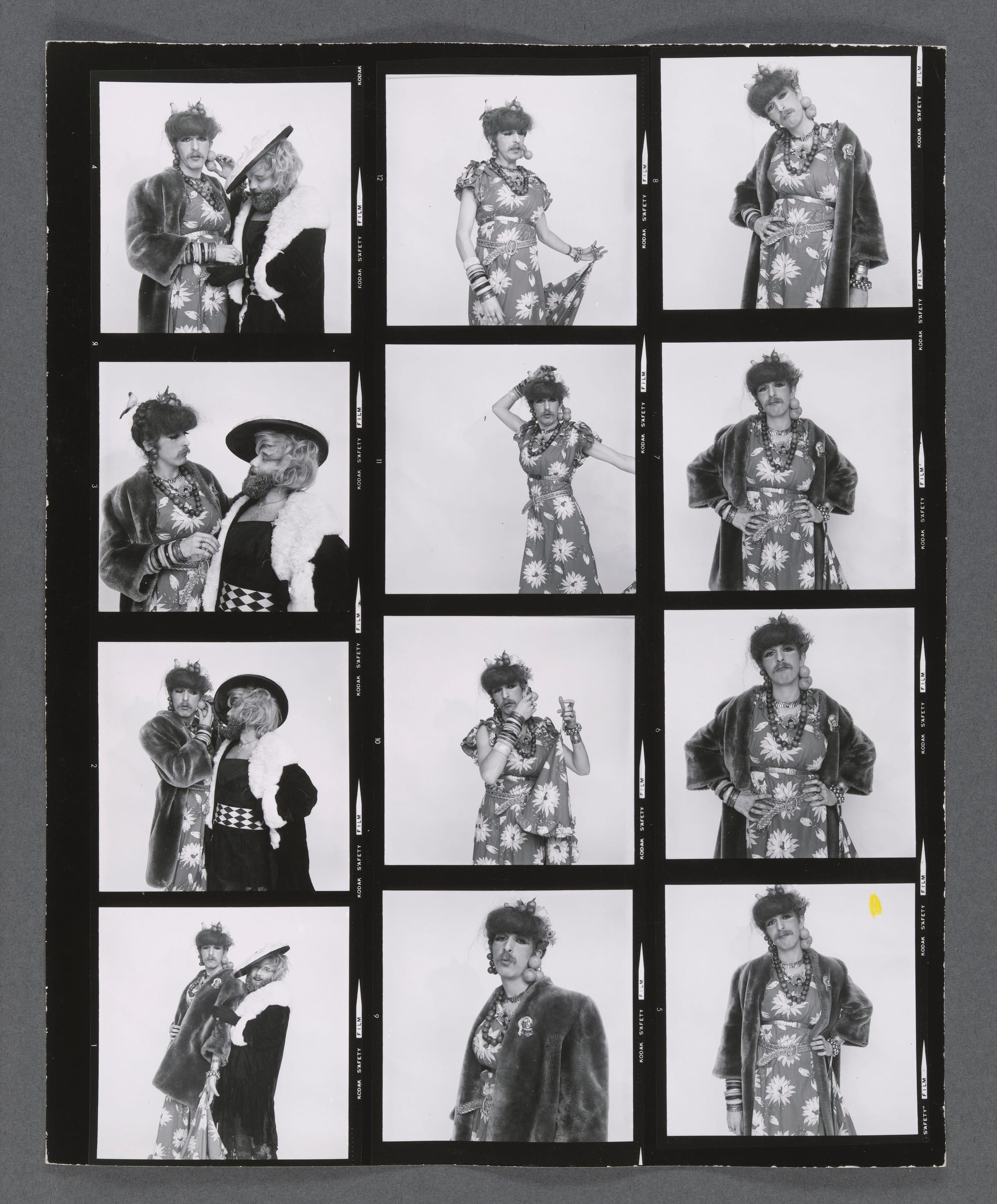
The Morgan Library & Museum might be milking its Peter Hujar collection, but I’m not complaining. Hujar:Contact is the Morgan’s second solo exhibition of the photographer’s work, coming on the heels of its 2013 acquisition of his archive and a sweeping 2018 retrospective, Peter Hujar: Speed of Life. That exhibition was always going to be a tough act to follow, given the scale of the show, the impact of its reception, and Hujar’s importance as a key portraitist of New York City’s before-they-were-famous queer art scene. Nevertheless, it’s an unusual choice to mount an exhibition entirely dedicated to a photographer’s contact sheets, which by nature are not made for public consumption.
For those of us more fluent in digital culture, contact sheets are darkroom work prints that allow photographers to see all the images on a roll of film and select which ones are worthy of printing, given the time and expense that full-size printing requires — essentially, it’s the equivalent of showing us screenshots of Hujar’s camera roll. As eager as I am for a nerdy deep dive into his process, which the exhibition undoubtedly is, I’m left wrestling with the vague unease that it might also be an opportunistic mining of the photographer’s archive for all its worth. But I’ll check my paranoia at the door, because either way, the show’s outcome is good.