Simone Forti Talks Yoko Ono, Dance, and Aging in Never-Before-Published Interview
“I remember sitting with Yoko on a ledge on the PS1 roof and talking together comfortably,” said the late performance artist. “It was restful.”

About a dozen years ago, I happened to be simultaneously writing two different essays about two of the most influential artists of the 20th century who are almost exact contemporaries: Simone Forti (born in Italy in 1935) and Yoko Ono (born in Japan in 1933). Only two years apart, these women had many other things in common besides age: They were both transcultural migrants whose early lives were shaped by the deprivations of fascism and war. Both experienced discrimination — Forti’s Jewish family left Italy as a result of Mussolini’s Racial Laws, while Ono was (and still is) by turns exoticized and vilified as an Asian woman.
As cross-disciplinary groundbreakers, both Forti and Ono transgress the boundaries between sound, drawing, poetry, participation, movement, new media, and sculpture. They continually invoked touch as mode of connection, and they both incorporated everyday objects as charged collaborators. Often, their art manifests a sly irreverence towards physical decorum, from Forti’s seething mound of limbs in Huddle (1961) to Ono’s satirical 1971 Museum of Modern (F)Art. Ono radically shifted the terrain of art and music through works like her conceptual instruction paintings; likewise, Forti’s works based on captive animals — the subject of my 2015 essay “Simone Forti Goes to the Zoo” — forever reshaped how we think bodies should be and move.
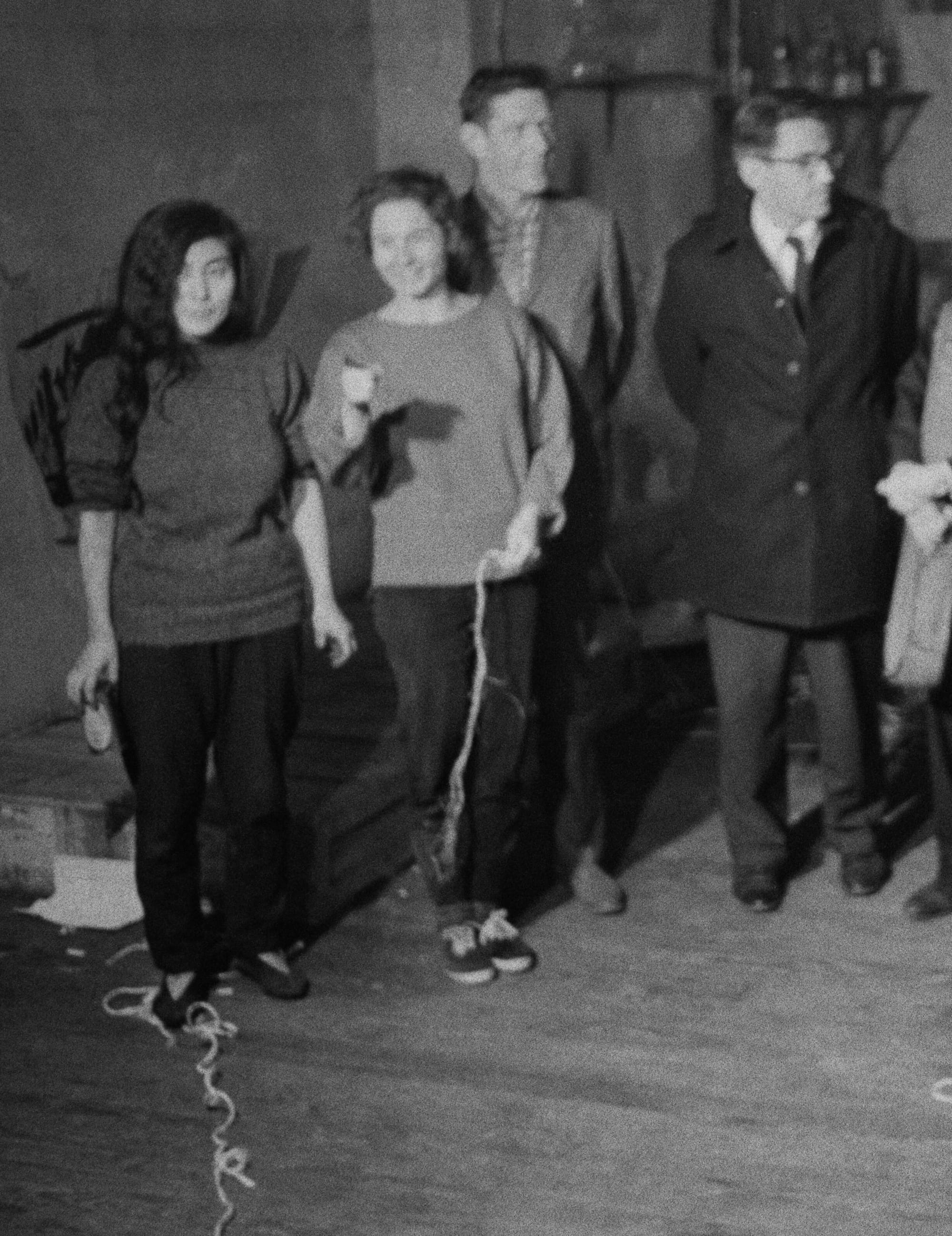
I had long been intrigued by a 1961 Ono screaming piece dedicated to Simone — "Voice Piece for Soprano, to Simone Morris” (Forti was then married to Robert Morris). At that time, no one had yet asked Forti about her reactions to this, nor specifically about her encounters with Ono in the 1960s and beyond. There is photo-documentation of them standing together in Ono’s legendary Chambers Street Loft, with John Cage in the background, possibly chatting. Forti’s Five Dance Constructions and Some Other Things debuted in Ono’s loft that same year. Maybe a brief interview would illuminate new aspects of what I perceived as their kinship?
So along with having her perform her delightful elephant walk, in 2014 I asked Forti directly. She confessed to not having the best memory, but her recollections are still valuable. In honor of Forti’s passing last week at 91, which has prompted an outpouring of admiration for her decades of innovation, I unearthed this never-before-published exchange from my archives.
Simone Forti performing her elephant dance in 2014 (courtesy Julia Bryan-Wilson)
Julia Bryan-Wilson: When did you first meet Yoko Ono? What were some of your initial impressions of her?
Simone Forti: I must have started hearing Yoko's name around 1960. I knew that she was married to Toshi Ichiyanagi and that they both were doing interesting work in the larger artistic community that I shared with La Monte Young.