Speed Art Museum Returns 24 Native Artifacts to Oklahoma Tribes
The culturally significant objects include a turtle amulet, a Cheyenne cradle board, and a slate of beaded bags.

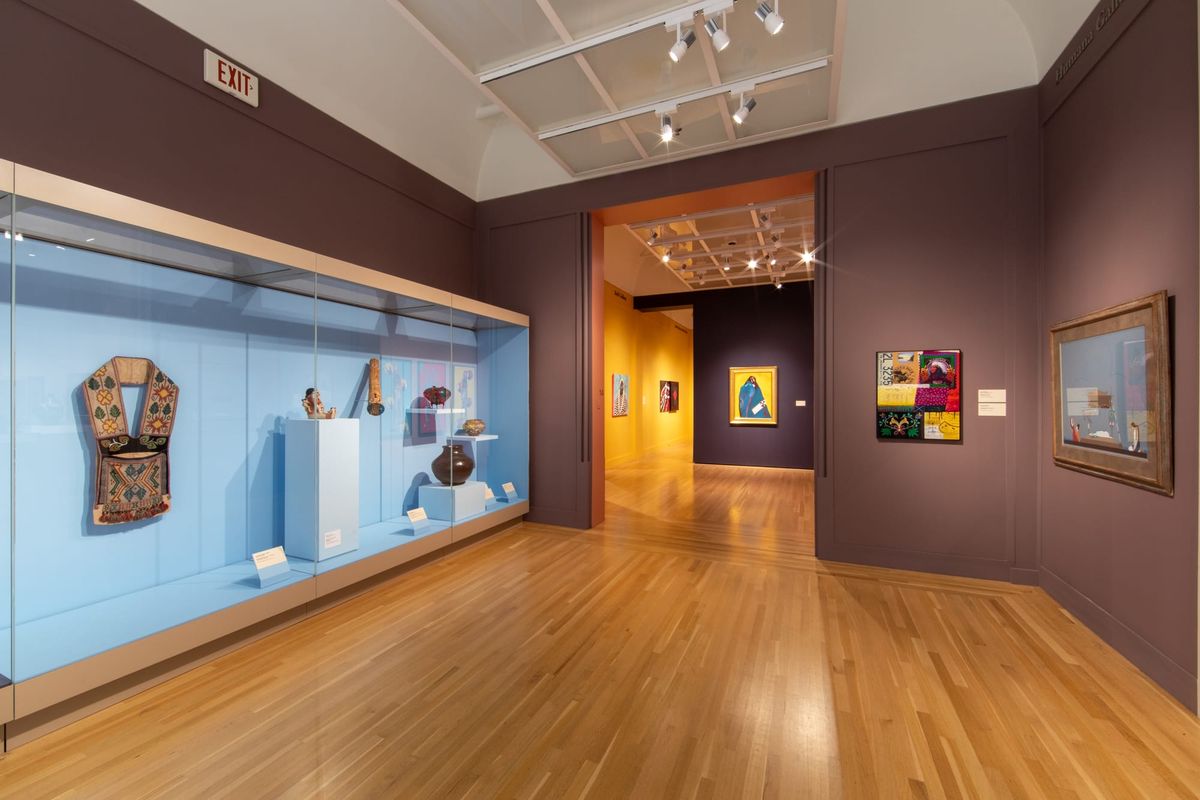
Two dozen cultural treasures will head home to Native American communities tonight, August 19, following a ceremony at the Speed Art Museum in Kentucky, where they are currently housed. The Louisville museum’s first repatriation under the 1990 Native American Graves Protection and Repatriation Act (NAGPRA) includes artifacts that belong to the Southern Cheyenne and Arapaho Tribes, such as beaded bags, a turtle amulet, and a cradle board.
In 2023, Speed curators connected with tribal representatives to determine which items in the museum’s collection were due for repatriation under NAGPRA. The act stipulates that items associated with a "particular Indian tribe or Native Hawaiian organization" must be repatriated upon the request of a representative or descendant of that group. During a site visit the following year, the team found that 24 out of nearly 100 possible objects were eligible for return, as first reported by Louisville’s Courier Journal.
"Family members can now come back and say, 'wow, my great grandpa made this,'" Fred Mosqueda, a representative of the Cheyenne & Arapaho Tribes of Oklahoma, told Hyperallergic. "These items are sacred."
One such item in the collection is a sundance rattle, a Native ceremonial instrument used in rituals across North America. Traditionally made of animal leather, bird feathers, and claws, the rattle mimics the plodding of a herd of buffalo. Another artifact set for repatriation is a Cheyenne cradle board, an object traditionally made by a community of women and used in perpetuity for the tribe’s next expecting mother.
The items originally came to the museum in 1930 as a gift from German-American photographer Frederick Weygold, said Speed Museum Assistant Curator and NAGPRA coordinator Sirene Martin.
NAGPRA guidelines were updated in 2024, strengthening tribal authority in the repatriation process and requiring museums to update their inventories of Native objects. Chester Whiteman, another representative of the Cheyenne & Arapaho Tribes of Oklahoma, told Hyperallergic that before the changes, museums and institutions "would only let us see what they wanted us to see."
Following the revisions, the American Museum of Natural History in New York returned the remains of 124 Native people and 90 Native cultural artifacts in July 2024 (the museum still holds thousands of human remains in its collection). Later that year, the National Park Service awarded $3 million in grants toward Native repatriation efforts across the country.
“So much of the repatriation is invisible to the public,” Martin told Hyperallergic. “This asks us to bring the human back to the humanities.”
The repatriation is a welcome break from a challenging year at the institution, which dissolved its educational department and laid off nine employees last October, citing financial challenges.
The Speed Museum’s chief curator Erika Holmquist-Wall will moderate a panel discussion on NAGPRA and the repatriation process with Mosqueda, Whiteman, and Martin at this evening’s event. Following the conversation and a recessional ceremony, the tribal representatives Mosqueda and Whiteman will load the sacred objects into a vehicle and begin driving them back to their rightful homes in Oklahoma. Mosqueda and Whiteman said they plan to keep the items in their offices until they can secure a dedicated storage area.
"All these articles should be in Native hands," Whiteman added. "They weren't made to be put on display. They weren't made to make money off of. They belong to somebody."