Step Into the World of Studio Ghibli's “Ponyo”
A new exhibition at the Academy Museum in Los Angeles conveys the film’s whimsy and wonder through interactive elements.

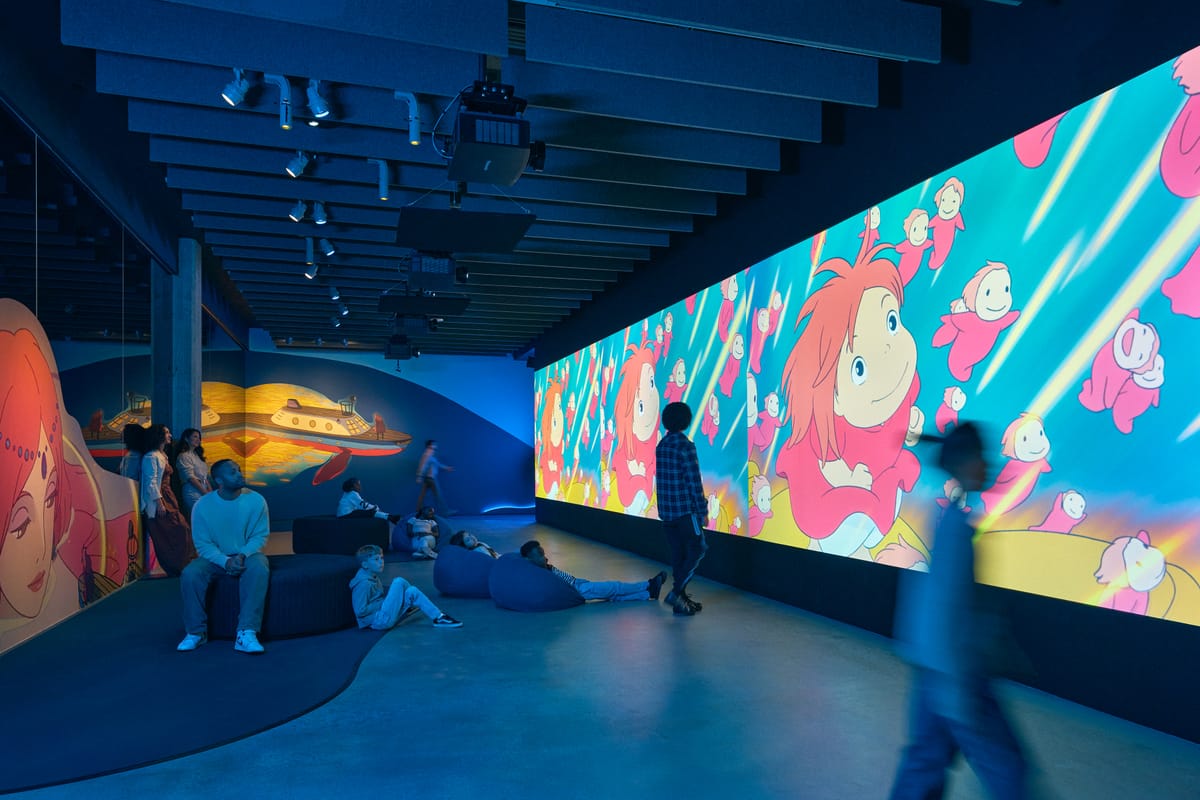
LOS ANGELES — The fantastical 2008 film Ponyo by celebrated Japanese animator Hayao Miyazaki and Studio Ghibli tells the story of a fish-like creature, Ponyo, who dreams of becoming a human girl after befriending a young boy named Sosuke, much to the dismay of her wizard father.
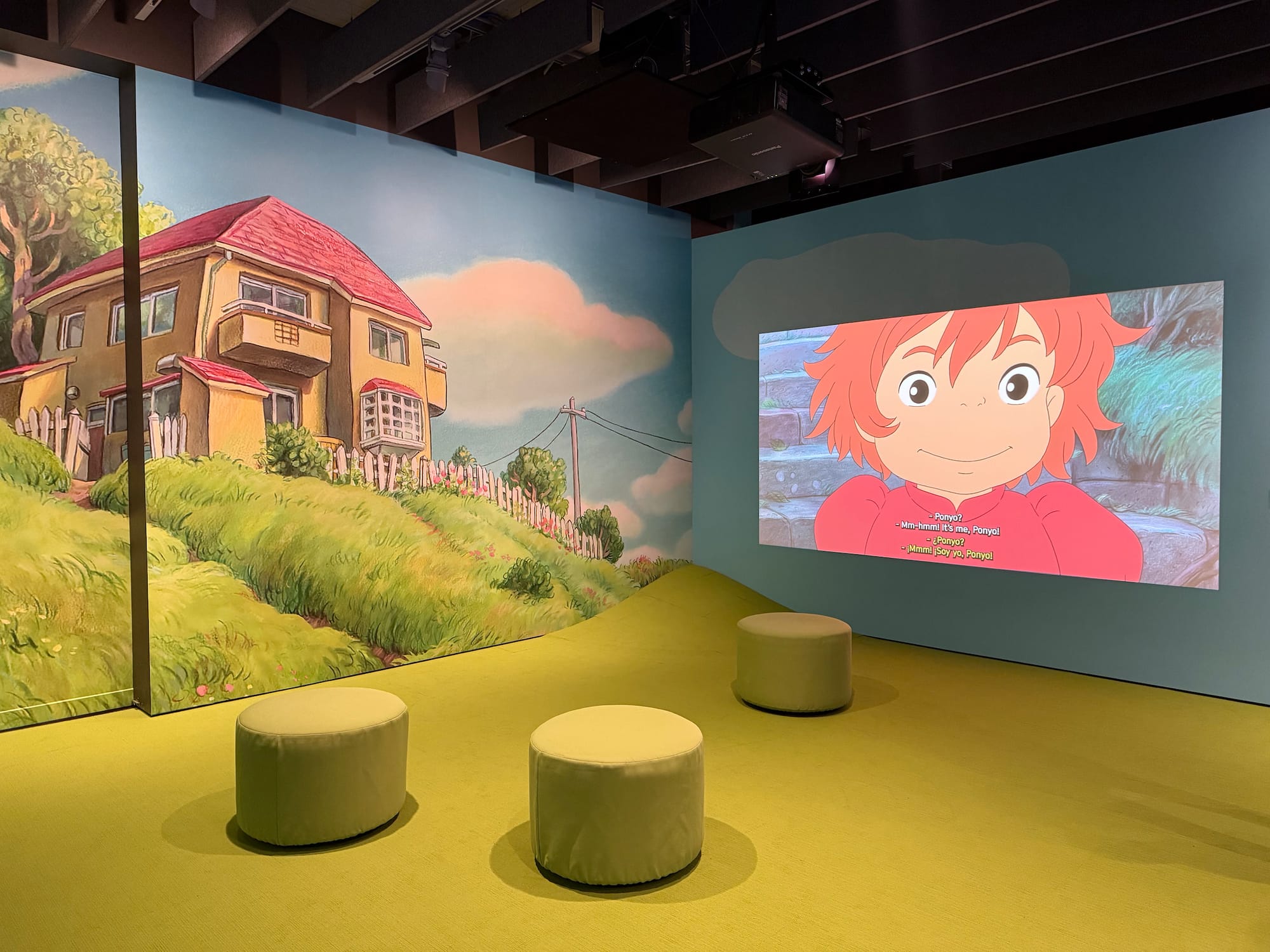
Nearly two decades after its release, the film is being reexamined in a new interactive exhibition. Studio Ghibli’s PONYO debuts February 14 at the Academy Museum of Motion Pictures in Los Angeles, which opened in 2021 with a Miyazaki retrospective. This show aims to convey the film’s whimsy and wonder while examining its profound significance through Miyazaki’s drawings and other elements behind its production.
“He set out to do a simple film with a simple storyline for young children,” exhibition curator Jessica Niebel told Hyperallergic. “He achieved that, but Ponyo is also very multi-layered and complex.”
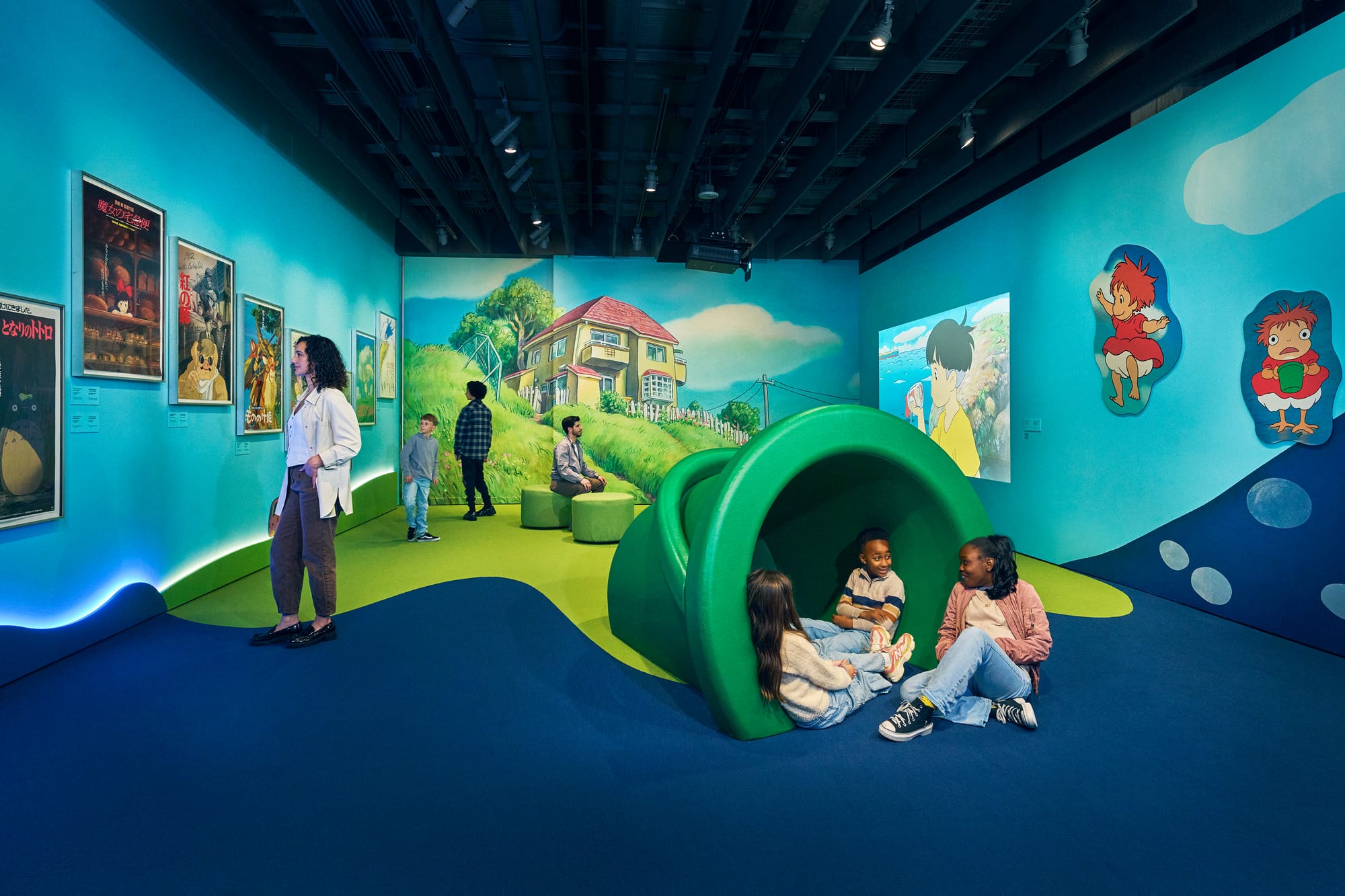
After creating films for a slightly older audience, such as Princess Mononoke (1997) and Spirited Away (2001), Miyazaki had younger children in mind with Ponyo, which was inspired by Hans Christian Andersen's fairy tale The Little Mermaid. In keeping with this, the sight lines of much of the exhibition are intentionally lowered, said Shraddha Aryal, executive VP of exhibitions at the Academy Museum.
She and her team also designed interactive elements, such as a movable figure of Ponyo running across the waves and a large-scale green bucket based on the one that Sosuke keeps Ponyo in, which smaller visitors can crawl into.
There is also an interactive animation table, featuring colorful sea-creature cut-outs designed by Studio Ghibli. Using their phone and an app, guests can rearrange squid, crabs, sharks, and a pufferfish to create their own stop-motion film.
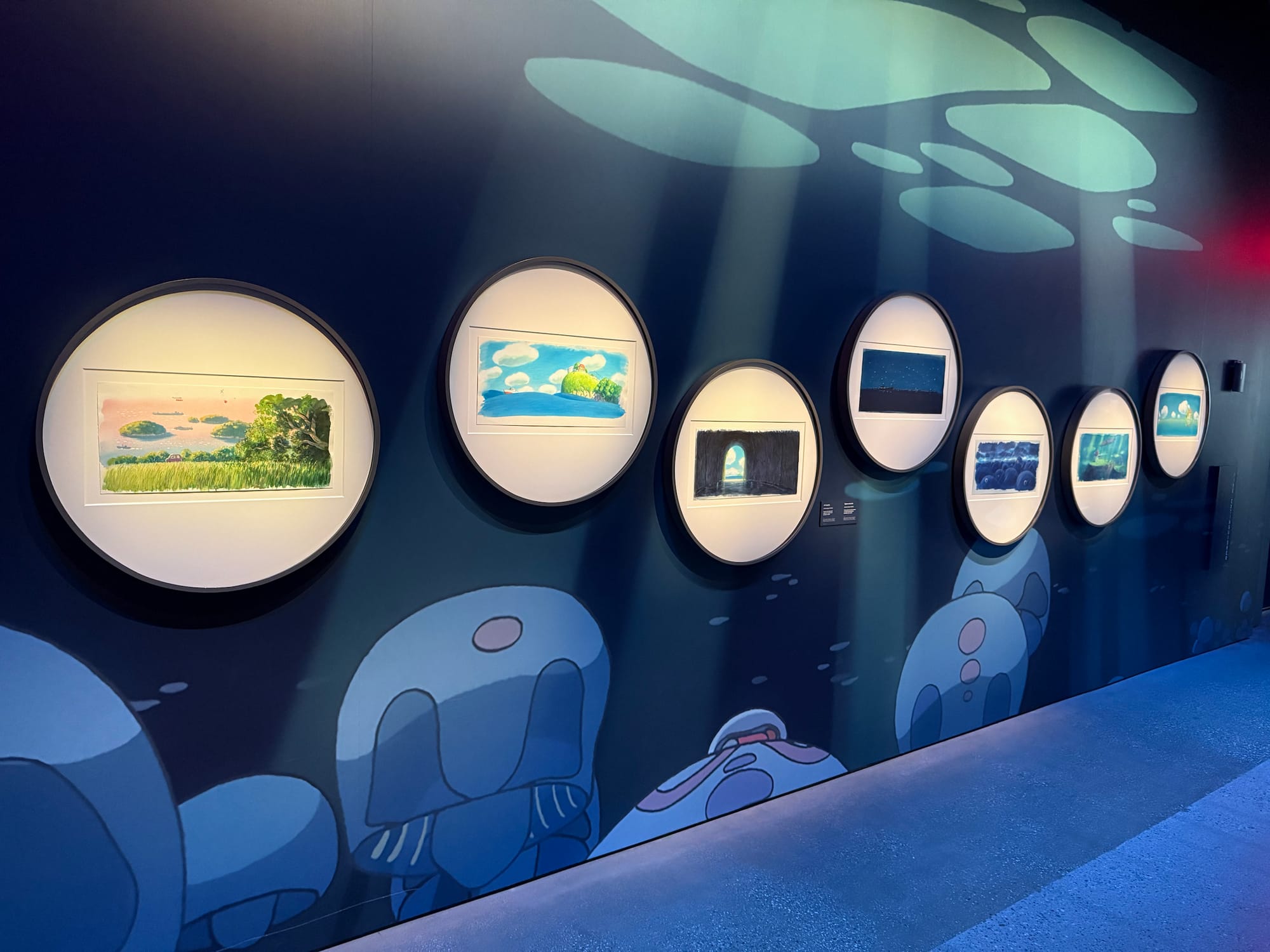
To reference the organic forms of Ponyo’s nautical world, Miyazaki was adamant that only curved lines be used in the film’s animation. “Get rid of straight lines. Use gently warped lines that allow the possibility of magic to exist, liberating us from the curse of perspective drawing. A world where even the horizon swells, dips, and sways,” he intones from a wall panel in the exhibition.
Aryal echoed this sentiment in the exhibition design, even fabricating circular frames for the watercolor and pastel art boards by Art Director Noboru Yoshida.
Ponyo is significant in part because it was completely hand-drawn, a return to form after some computer animation was used in previous Ghibli films. The exhibition features over 100 objects donated by Studio Ghibli, including several drawings by Miyazaki, highlighting the analog aspect of the film’s creation. The works are staged around a modest wooden desk used by Ghibli animators.
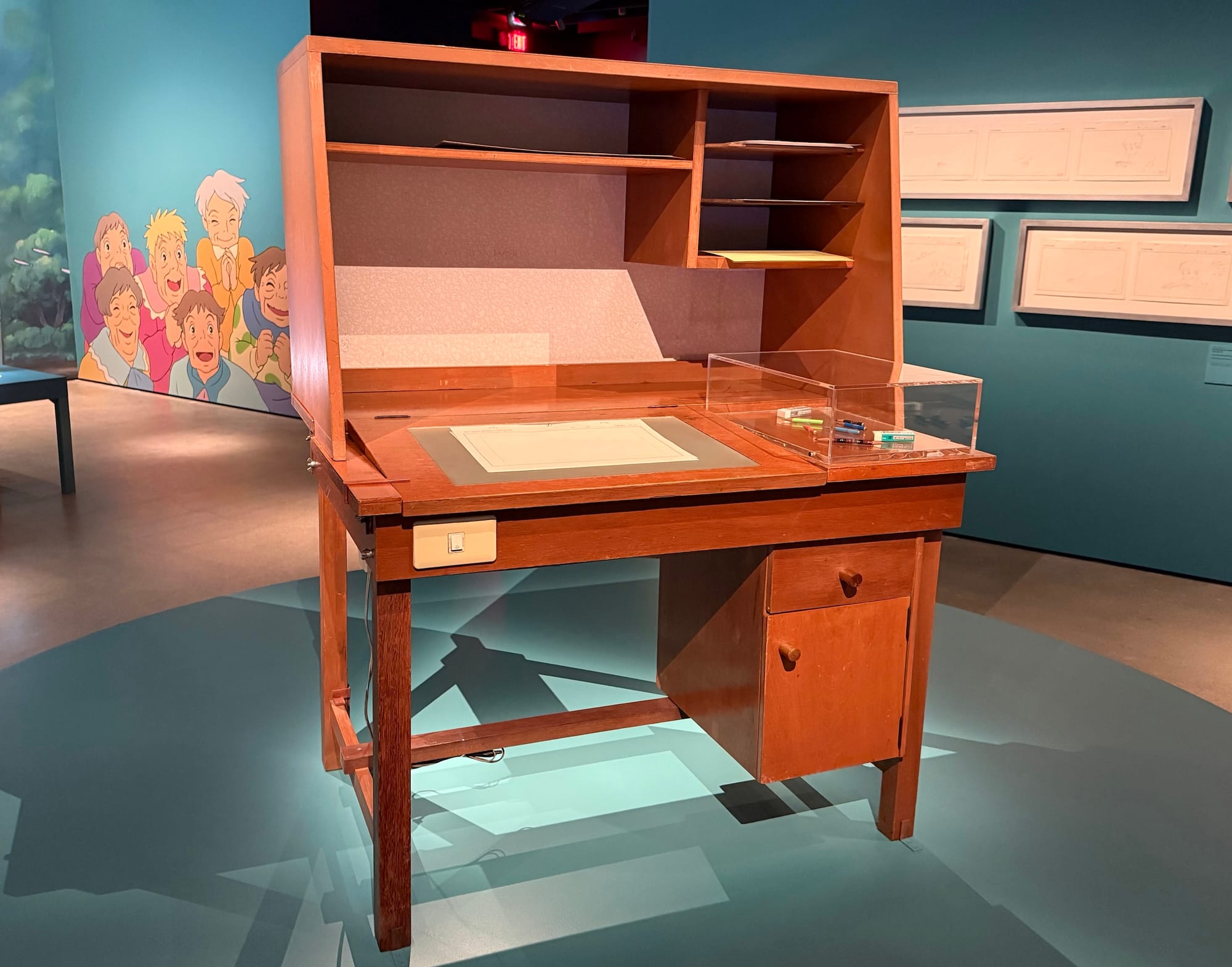
These objects, with their distinctly human traces, will perhaps be even more deeply appreciated by audiences today, amid an onslaught of digitally generated images often indistinguishable from reality.
Studio Ghibli’s Ponyo is not an exhaustive cinematic overview of the film, but rather an evocative experience that channels some of its captivating enchantment.
“The film has these moments of slowing down, contemplative, mesmerizing moments,” Niebel said, adding that the oversized bucket offers an entry point into this calm, cool world. “Originally, we wanted to make it a little smaller, and then our director Amy Homma asked, ‘What if adults want to crawl in, too?’”