Art
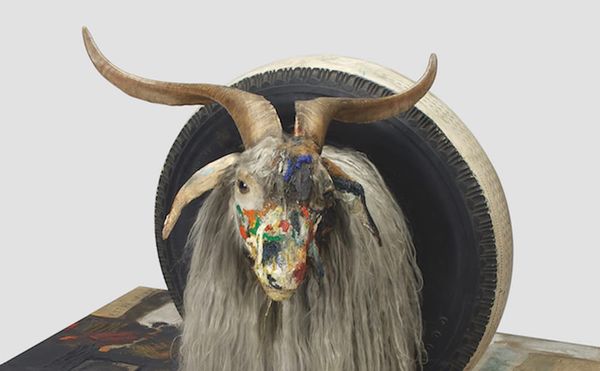
Twenty-Six Thoughts on Robert Rauschenberg
MoMA's retrospective runs from stench and perfection to perfection and putrefaction.

Art
MoMA's retrospective runs from stench and perfection to perfection and putrefaction.
Art
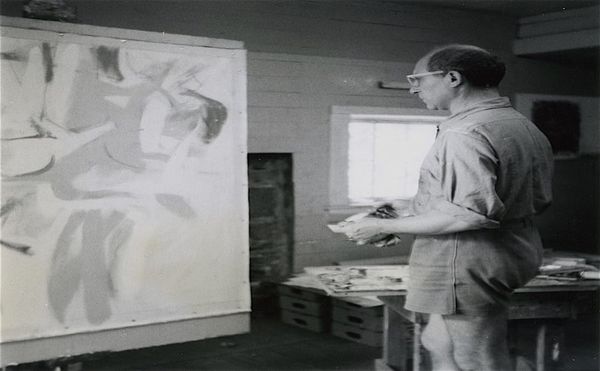
Among the reigning patriarchs of the New York School, the young Rauschenberg found his greatest and earliest champion in the painter Jack Tworkov.
Art
The rewards of what is in plain sight far outweigh what is tucked away.
Art
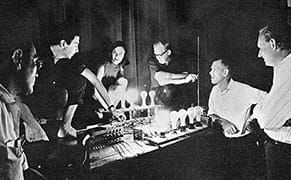
The first large-scale art and technology collaborations that occurred in the United States are not as legendary as, for example, the 9th Street Show that launched the New York School of Abstract Expressionism, but they should be.

Performance
Robert Rauschenberg worked with dancers?
Art
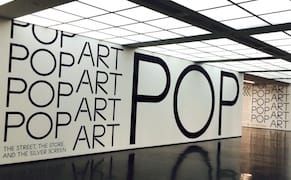
CHICAGO — Three major exhibitions devoted to Pop art that opened last year broadened the purview of this movement as a primarily Western (American) phenomenon by unearthing lesser-known artists to provide a global view of art in the 1960s and ‘70s.

Art
Art is often an act of venturing into the unknown, of starting something without knowing the outcome.
Art
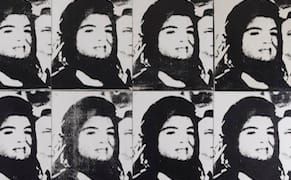
CHICAGO — The Modern Wing of the Art Institute of Chicago, which opened in 2009, has reinstated its contemporary collection after giving over most of the space in 2015 to a much-lauded retrospective of the American sculptor Charles Ray.

Art
SAN FRANCISCO — In an exhibition on view at the Contemporary Jewish Museum, nine Bay Area artists play with robotics, sculpture, lights, sound, video, and digital technologies to alternately engage, critique, and embrace our present-day entanglement with the digital world.

In Brief
Since John Adams first took up residence there in 1800, the White House has been adorned with a relatively safe, traditional collection of art.
Art
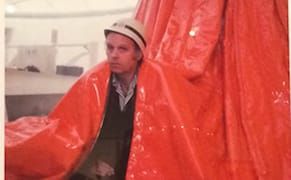
LOS ANGELES — From the Archives: Art and Technology at LACMA, 1967–1971 is a look back at a pioneering program at the Los Angeles County Museum of Art which matched leading artists with aerospace and technology companies in the hopes of producing cutting-edge artworks.

Art
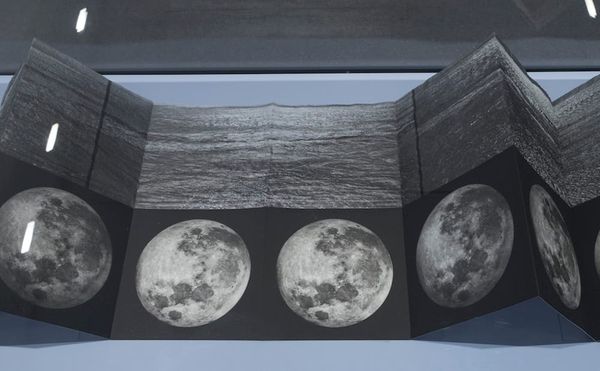
On July 20, 1969, the world watched, and was transfixed, as American astronaut Neil Armstrong — rendered on television as a ghostly black-and-white figure — descended from the Lunar Module onto the surface of the moon.