The 98-Year-Old Pop Art Queen Behind an Iconic Lichtenstein Billboard
Ahead of her memoir's release, we talk to Joan Kron about Andy Warhol, beating Sidney Janis to the punch, and why she calls herself a “renegade housewife” of Pop Art.
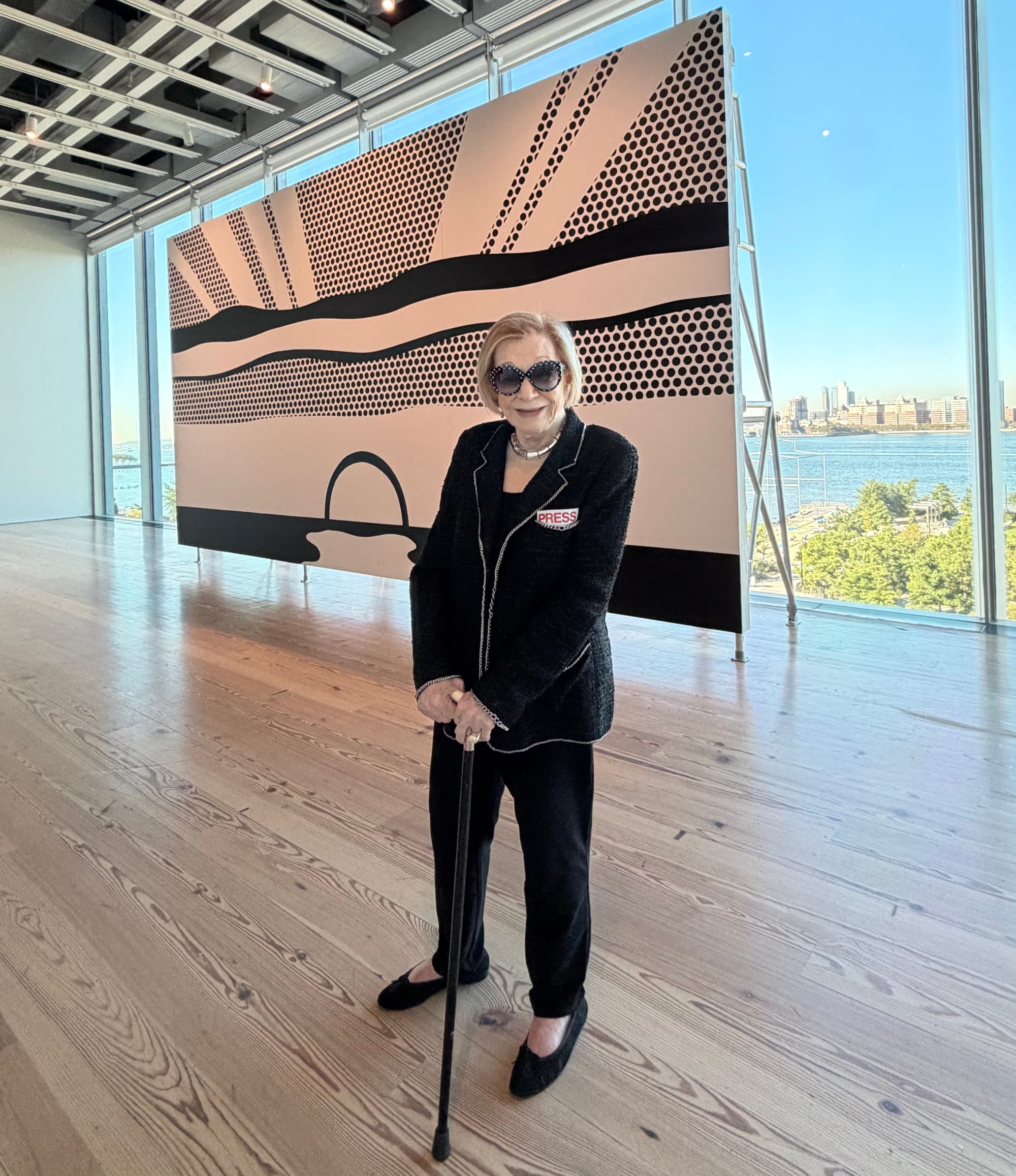
In 1962, the first-ever Pop Art exhibition on the East Coast was mounted at the Young Men’s and Young Women’s Hebrew Association (YM/YWHA) in Philadelphia. Just days before the Sidney Janis Gallery broke with Abstract Expressionism in its historic show The New Realists, the firebrand "housewives" of the Y had already featured many of the same up-and-coming artists, including Jim Dine, Roy Lichtenstein, and Claes Oldenburg in Art ’63: A New Vocabulary.
Brushing off the scorn from Philadelphia’s then-conservative art world, the show’s organizers, Audrey Sabol and Joan Kron, would go on to claim more firsts. They made the first “multiples” by artists like Robert Indiana and Marisol and hosted the Velvet Underground’s first concert in Philadelphia — a scandalous affair that almost ousted Kron from the Y, but, years later, would become a badge of honor in the organization’s history.
It was Kron’s idea to exhibit art on billboards that led her to commission Lichtenstein’s “Super Sunset Billboard” (1967), a remake of which is on display at the Whitney Museum of American Art in its major retrospective Roy Lichtenstein: Like New.
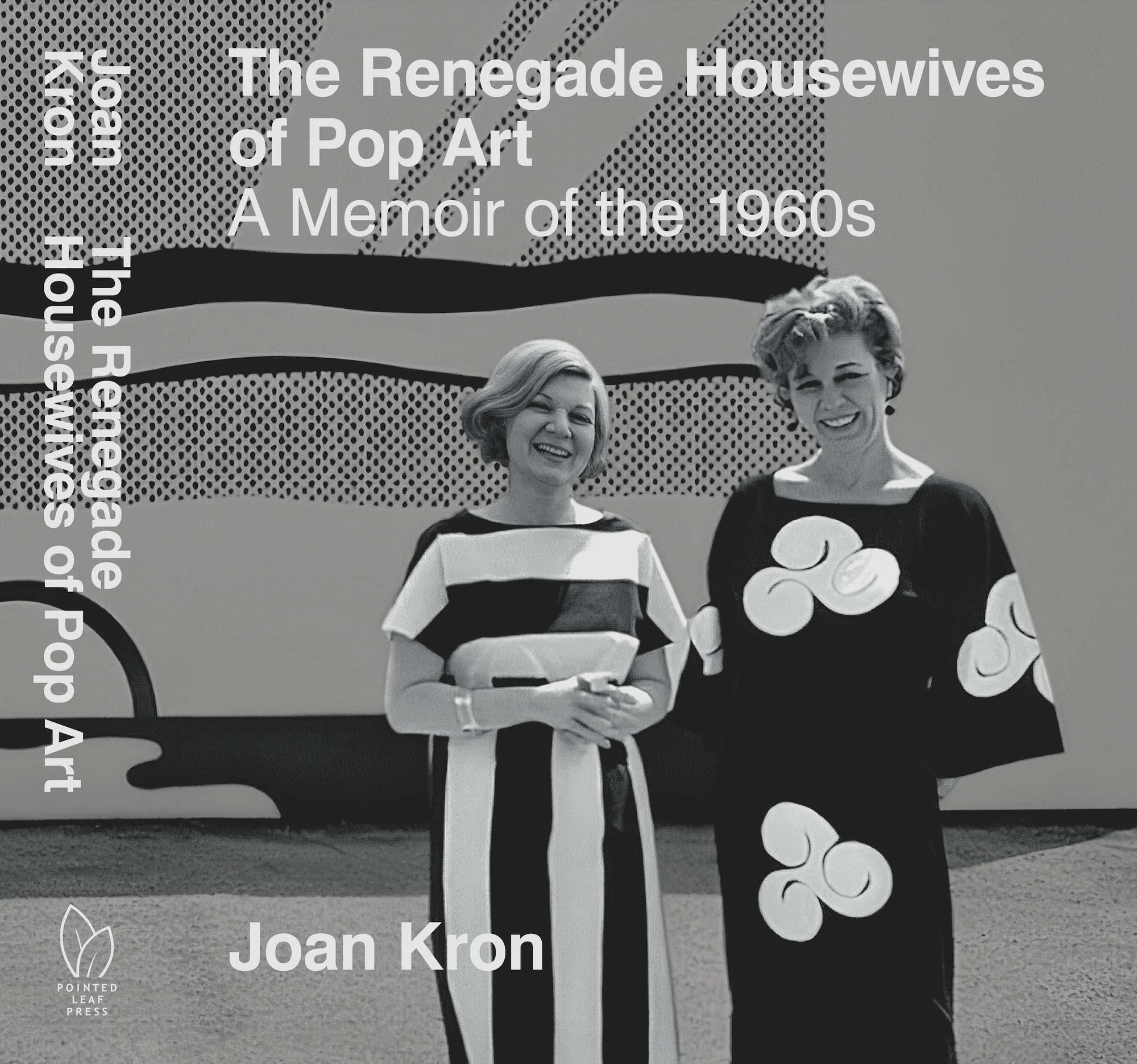
Kron went on to become a trailblazing journalist for New York Magazine, the New York Times, and the Wall Street Journal, and worked as a contributing editor at large at Allure. Now, at 98, she is working on her second documentary, and her stories of artists including Andy Warhol, Christo, Robert Rauschenberg, and more are detailed in her upcoming memoir The Renegade Housewives of Pop Art, which will be released this December. Our interview has been edited and condensed for length and clarity.
Hyperallergic: How did the Lichtenstein billboard come about?
Joan Kron: I was invited to be on the committee for the 1967 Arts Festival of Philadelphia, and I presented the idea to put art on billboards on every artery in the city. People shot it down. The head of city planning was on the committee, and he said, “That's a terrible idea! We're trying to get rid of billboards.” So I said to my collaborator, Audrey Sabol, “Do you want to work with me just on this, just by ourselves? We started a committee to save billboards. We made the architect Robert Venturi chairman, who had a fight with the city planning guys.
I was friendly with Walter Stait, who owned all the billboards around Philadelphia. He said, "I'll give you any free billboards I have, Joan. But they're all rented." So that was a dead end. We were sitting in Audrey's kitchen, looking out the back window and trying to figure out what we could do, when we remembered they had a handball backboard in the backyard. We were friendly with Roy Lichtenstein by then, and he had already offered an image of a sunset. The backboard was in the exact same shape as the image. So Walter Stait painted the billboard, and we had a big party to promote the idea of art on billboards. We got tons of publicity.
Then, Rose DeWolf from the Daily News wrote up a story about how “Joan wants to put art on billboards from here to Chicago. Is she out of her mind?” Roy and I went on the radio show at the Philadelphia Museum of Art with Ralph Collier. He made fun of us. He said, “No one is ever going to give you their billboards for art. That's never going to happen."
There’s always some naysayer. Then, about 40 years later, in Great Britain, they had a program for two weeks called Art Everywhere UK. They took over tens of thousands of billboards around the whole country, plus thousands of signs on top of taxicabs and on the sides of buses. A year later in the United States, they had the same thing. It was vindication at last.