The Agony and Ecstasy of Johanna Hedva
The artist’s first institutional solo in New York grapples with the idea of surrendering to the cosmos, but isn’t always convincing.

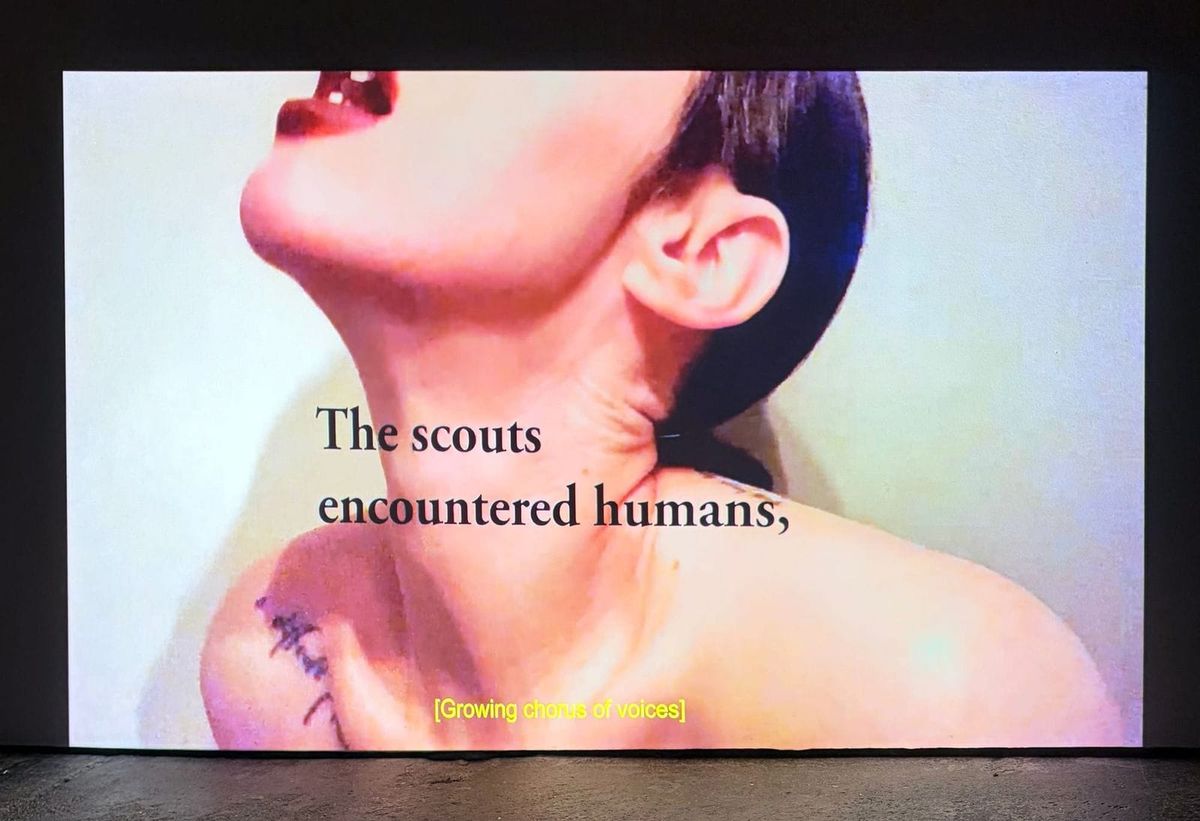
Korean-American artist, writer, and composer Johanna Hedva’s exhibition Gravity, My / Favorite Enemy, at the Center for Art, Research and Alliances (CARA), is created with its own demise in mind.
The show’s first work, “The Clock Is Always Wrong (Other Mouth)” (2023–ongoing) consists of a glass vial suspended from the ceiling by hooks and chains with a viscous, ink-black liquid slowly dripping from its spout and seeping into the carpeted gallery floor. This sculpture is said to contain enough of this liquid to last until December — its emptiness will signal the show’s closure.
This sense of finality is ever-present in Hedva’s practice across mediums: In addition to their visual art, they are an accomplished writer whose prose, poems, and essays such as “Sick Woman Theory” (2016) view the encroaching doom of illness and death as sites of exploration rather than hopelessness. Gravity, My / Favorite Enemy showcases a selection of six works that certainly grapple with these larger ideas of surrendering oneself to the cosmos, but aren’t quite convincing enough for one to follow Hedva into the void.
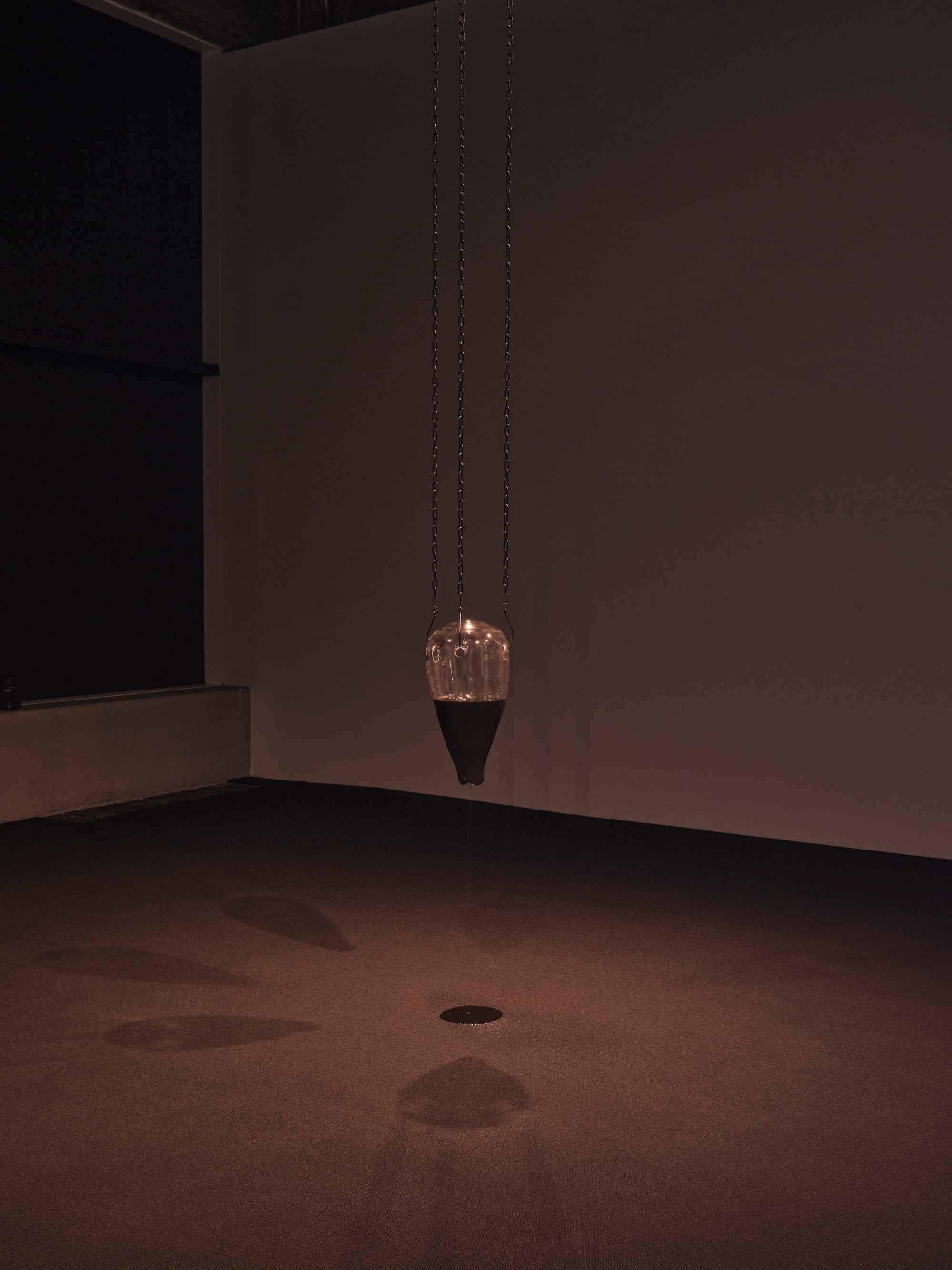
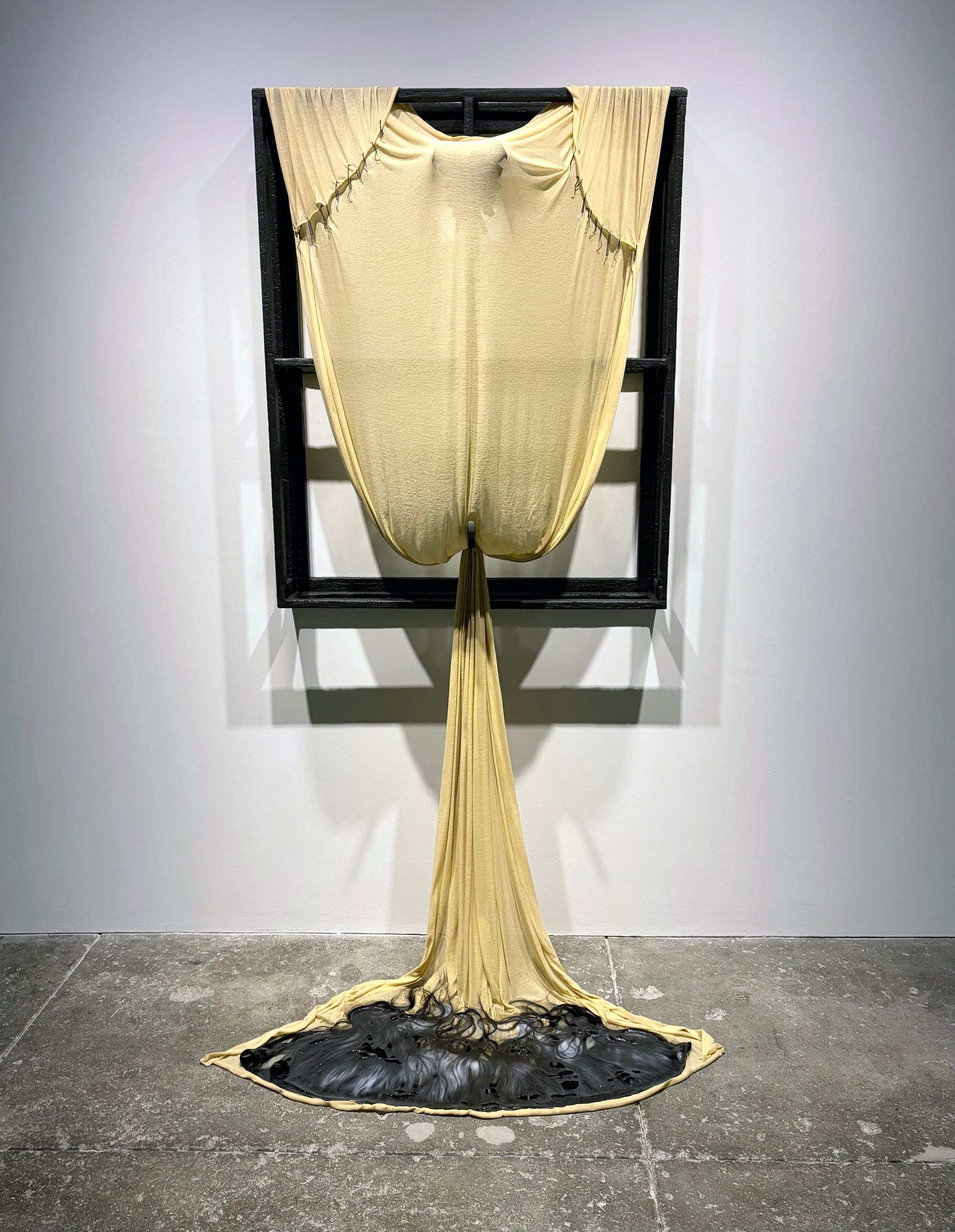
Left: Johanna Hedva, "The Clock Is Always Wrong (Other Mouth)" (2023–ongoing), mouth-blown glass, hand-bent hooks, chains, silicone oil mixed with pigment, carpet (photo courtesy the artist and TINA, London); right: Johanna Hedva, "I’m Not Punished by What You Like to Be Punished by" (2026), charred wood, jersey, Indian temple hair, fish hooks, embroidery floss, knife, goose feathers, glue (photo Madeleine Seidel/Hyperallergic)
On the main second-floor gallery, “I’m Not Punished by What You Like to Be Punished by” (2026) consists of a light-tan jersey fabric stretched out over a panel of charred wood and puddled onto the floor. The edge of the fabric is adorned with Indian temple hair — hair shorn during Hindu rituals and often sold to Western consumers in tracks to fund temple upkeep. This hair also appears in the sculpture “I’ll Take More” (2026), where a mane is draped over the piece’s wood frame, and a preserved luna moth is suspended by a piano string jutting out from the panel.