The Architect Shaping a New Chinese Vernacular
Pritzker-winner Wang Shu’s design for the Ningbo Historic Museum reconciles China’s nostalgia with its desire for a shiny, avant-garde future.

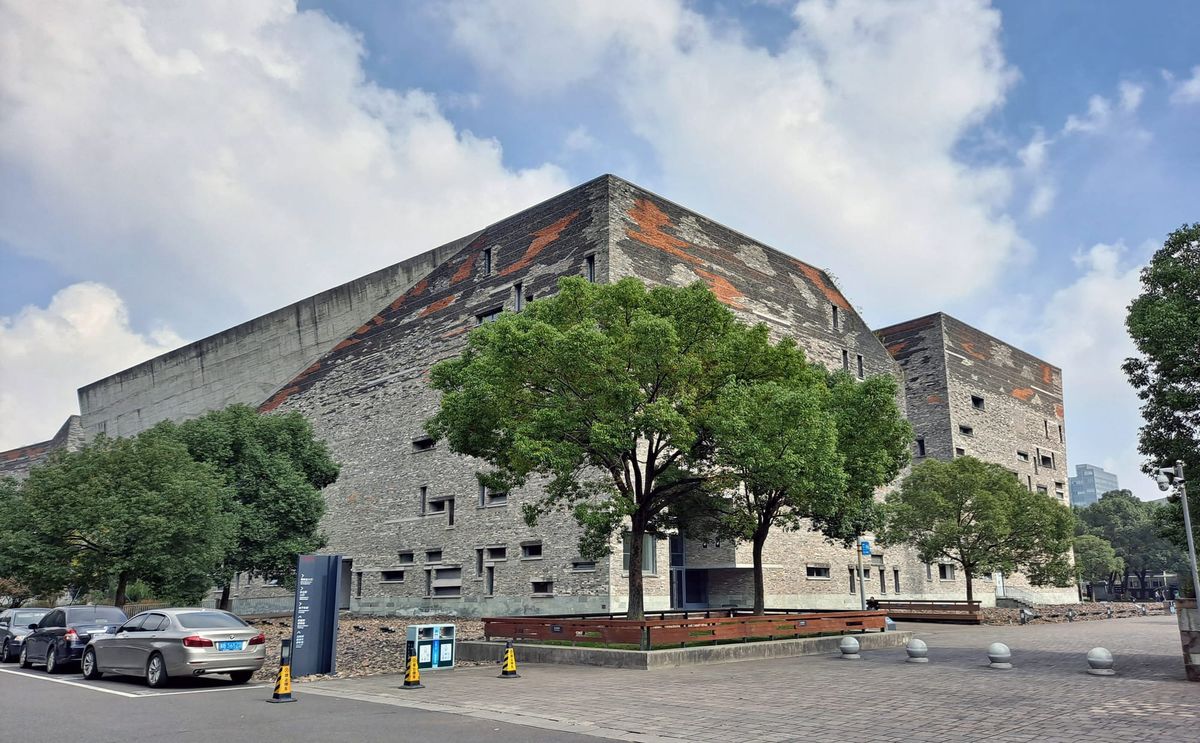
NINGBO, China — In May of this year, I took a short trip to Ningbo, China. I was especially interested in going because I knew that Wang Shu, the first Chinese citizen to receive the Pritzker Architecture Prize in 2012, built multiple buildings or complexes within the city — the world’s busiest seaport, on the coast of the East China Sea. In contrast to Richard Meier, Zaha Hadid, and other Pritzker winners who rose to prominence late last century and in the early oughts, Wang was not interested in becoming a starchitect. As I was going to be in Ningbo for only two days, I knew that I would be unable to see all of Wang’s projects and settled for one: the Ningbo Historic Museum, completed in 2008. Because of Wang’s work, I knew that I would return to Ningbo before I had even arrived.