The Belgian Exhibition That Strives to "Decenter" the West
With two contradictory briefs — to both decenter Europe and show Bruges’s centrality in international networks — an exhibition on the Belgian city is already off to a bumpy start.

BRUGES, Belgium — With its cobblestone streets, glossy green canals, and stepped gable townhouses, Bruges has the self-contained and unchanging quality of a scene in a snow globe. Bigger Picture: Connected worlds of Bruges 900-1550 seeks to bust this myth, demonstrating the extent of the city’s historical connection with the rest of the world. The inaugural exhibition of BRUSK — “BRU” for Bruges and “SK” for schone kunsten (“fine art”) — a large new gallery attached to the Groeningemuseum, the show is guest curated by Peter Frankopan, an Oxford medievalist and author of a popular history of the Silk Road. In addition to demonstrating Bruges’s global connections, the exhibition also invokes the notion of decentering the “West” from its self-appointed position as the hub of civilization, via a video presentation, starring Frankopan, that plays at its entry.
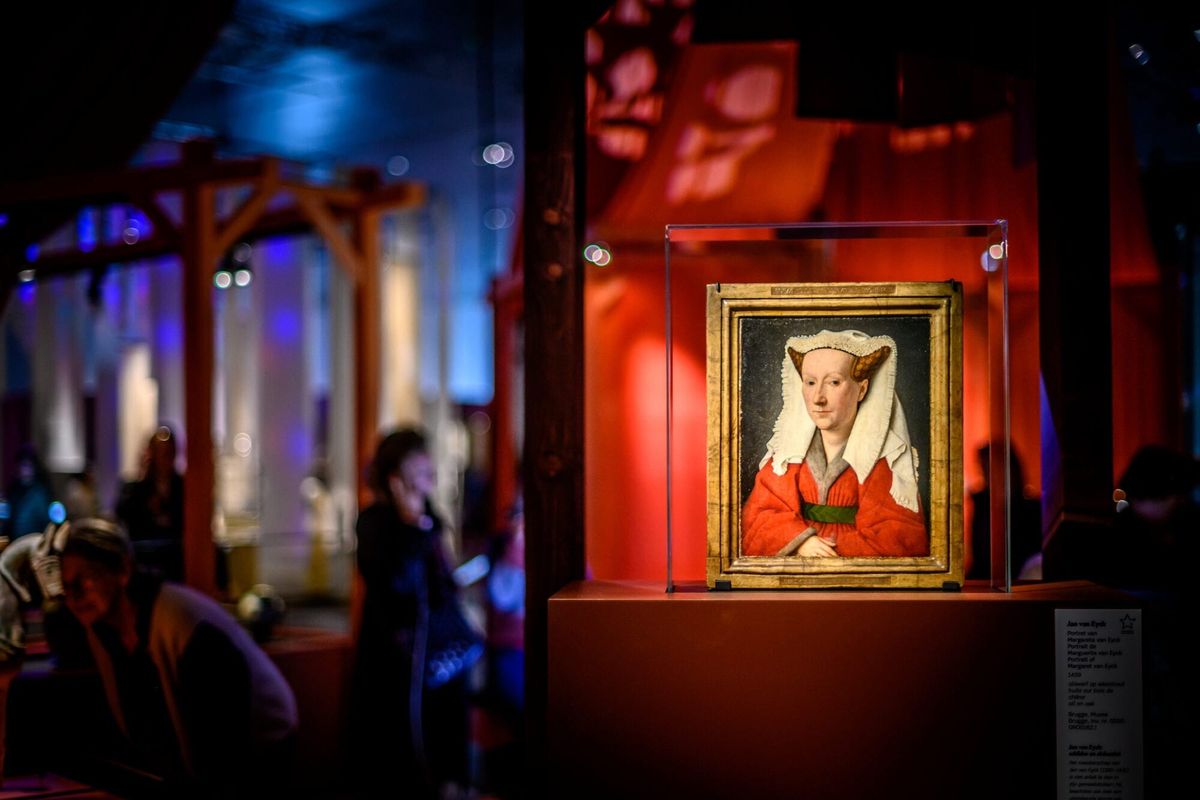
With these two somewhat contradictory briefs — to both decenter Europe and show Bruges’s centrality in international networks — the exhibition is off to a bumpy start. A further complication is the vast number and type of objects on display: There are over 250 items, ranging from a surprisingly covetable chain mail jacket and underwhelming shreds of ancient silk to significant paintings by Titian, Jan van Eyck, and Hans Memling, as well as religious relics, manuscripts of North African and European origin, Turkish carpets, Viking artifacts, coins, religious garb, and more.
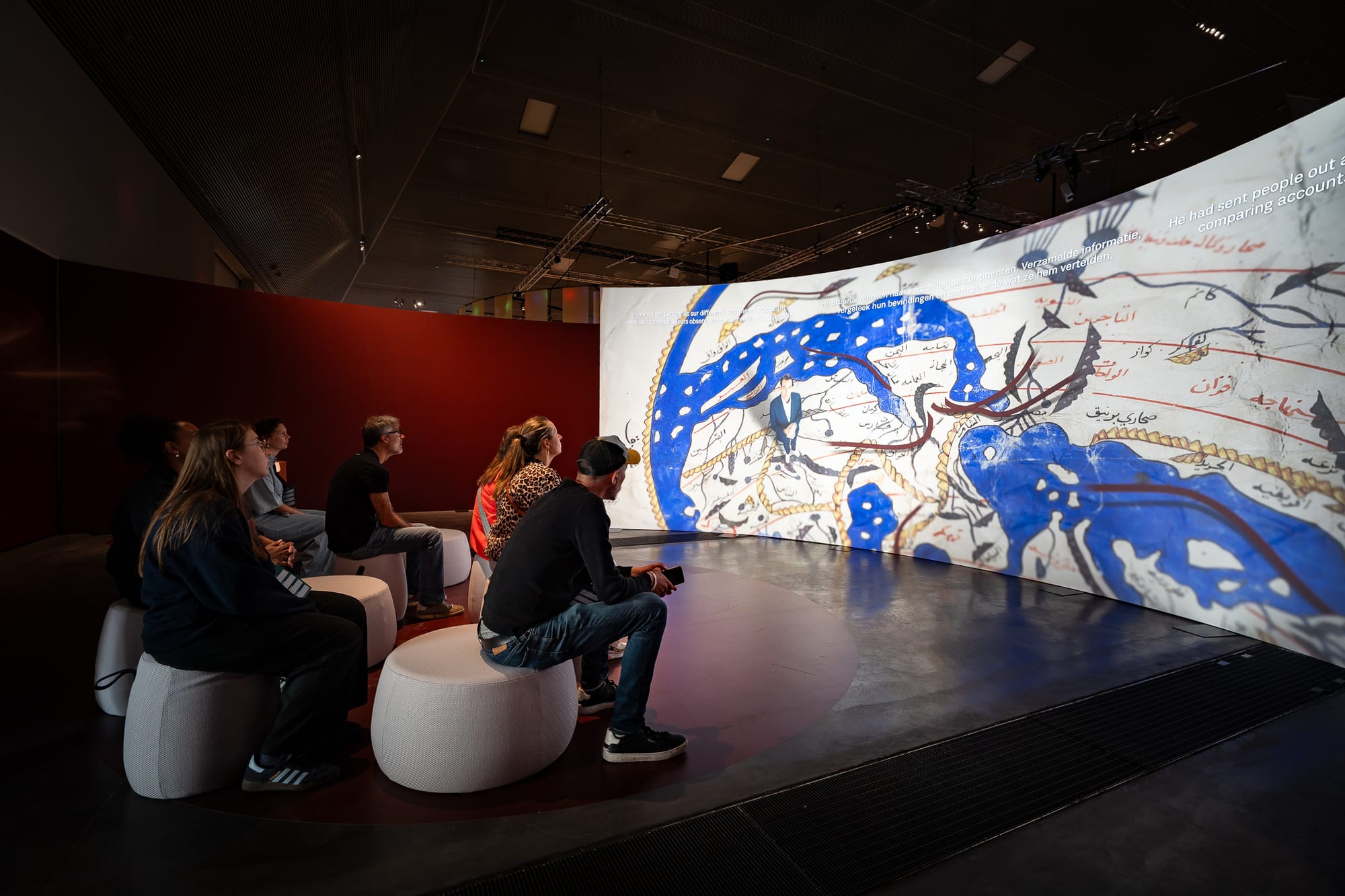
To manage this vast range of materials, the exhibition is divided into four “worlds,” each defined by its own intricately designed enclosure delimited by hanging cloth. The “North Sea World,” for instance, is made up of triangular panels that recall sails, while the “Mediterranean World” is under a pavilion-style tent. Each world also has a distinct soundscape — the Mediterranean is evoked by a twitter of birds and the sound of creaking wagon wheels. “The World of Christianity” has bells and more birds. The “World of the Court” is accompanied, like a medieval feast, by gentle plucking on string instruments. In the darkened gallery, the worlds form dramatically lit islands, linked by white lines painted on the floor. Aided by the inventive but not illuminating animations playing in each world, the whole installation is reminiscent of the opening credits for Game of Thrones.