The Indian Pavilion in Venice Asks: What Is Home?
"Geographies of Distance" offers a polysemous reading of home during a period of accelerated urbanization in India.

VENICE — The Indian Pavilion at the 61st Venice Biennale is to visual art what minor tones are to music: striking notes that invite contemplation and convey depth. Geographies of Distance: Remembering Home interprets the Biennale’s theme, “In Minor Keys,” through the rich diversity encompassed by India's name. The exhibition offers a polysemous reading of home in a country where time and space are measured on a vast scale, bringing together disparate experiences of place, memory, distance, and belonging.
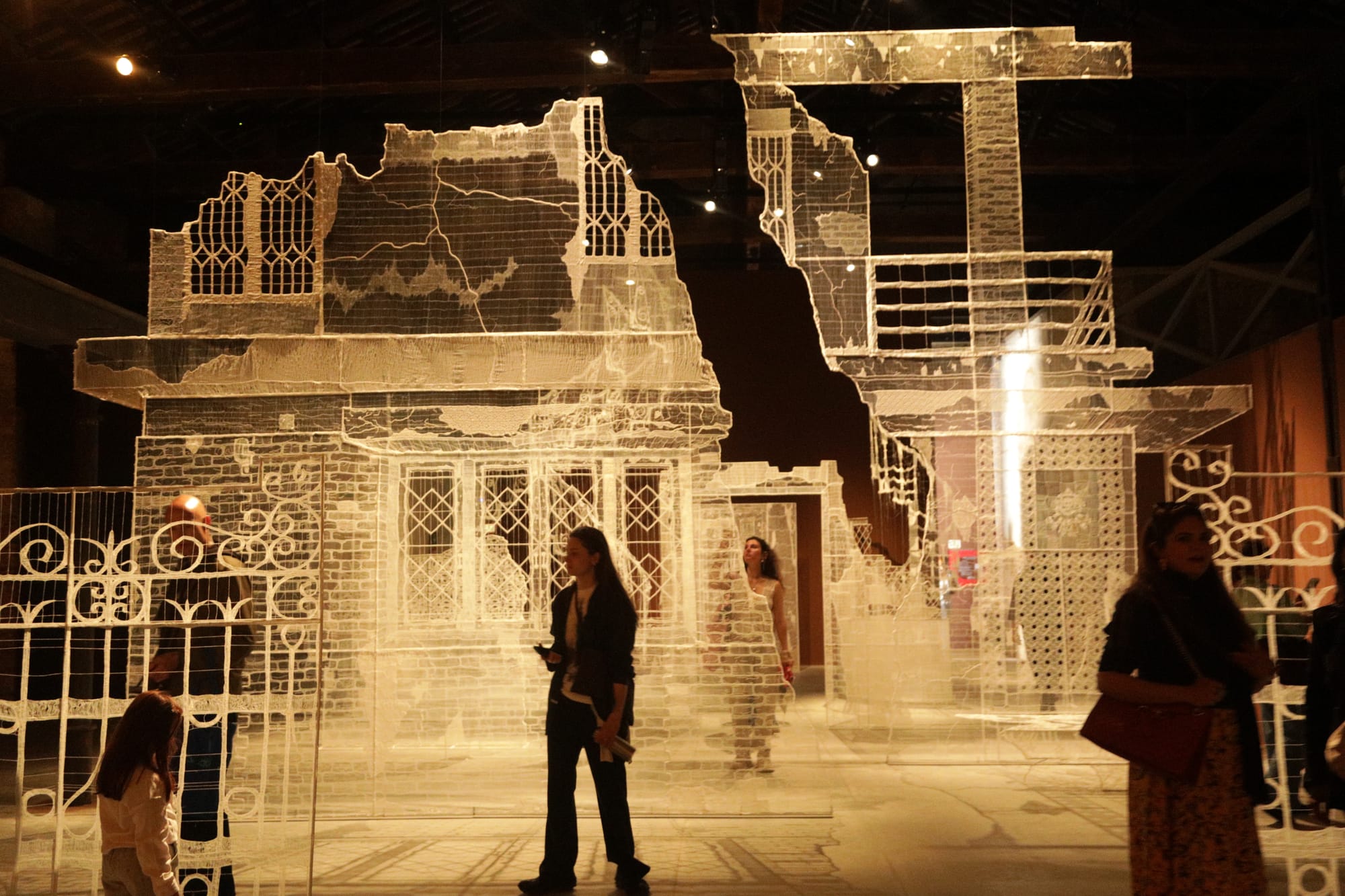
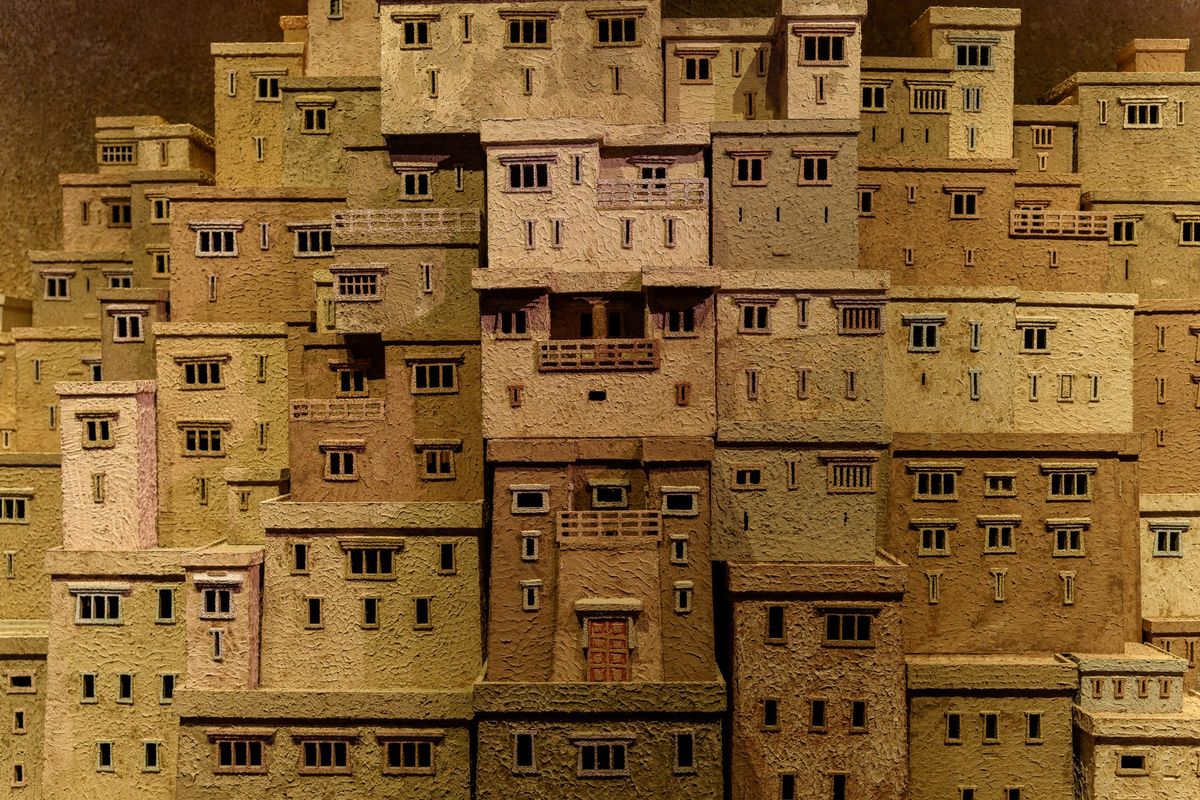
The exhibition represents all of India: from the sun-baked earth of the southern state of Tamil Nadu to the stepped architecture of Ladakh in the north, to houses at the foot of the Himalayas, and to the ghost of a Delhi long succumbing to bulldozers. Enormous flowers hang from the ceiling, standing in for gardens and their most distinctive inhabitants, a tribute to their prominent place in Indian private, public, and sacred life. A mesh of bamboo canes evokes a widespread construction technique in the East, symbolizing new cities rising above older urban landscapes.
“I would characterize the pavilion and the work of the five artists as a reflection on identity and belonging in a period of accelerated change,” said Amin Jaffer, curator of Geographies of Distance. “[It] proposes the idea that home is not solely a physical place we inhabit but a condition that we carry with us.”