The Met’s Krasner and Pollock Show Is a Breathtaking Upending
If you’re looking for bias or reparations, these volatile contents are all on the surface, quietly and neatly presented.


I was married to an artist once. It was not a good experience, although calling it “an experience” makes it sound like a unified, parsable thing, and it wasn’t that, either. We’re all adults here, is what I’m getting at — so no one should imagine that anyone has bulletproof insight into anyone else’s romantic relationship, much less their own. Certainly, once a relationship is over, it becomes a moving target in permanence: the good, the bad, and the ugly all trading places, each a microcosm in which various genres of chaos and ecstasy hold sway. And whatever we may think of other people’s marriages, we must take care. What we believe we know is almost always something we meant to say about ourselves. The phone call is coming from inside the building. If you see something, well, see something.
The Met’s new show, Krasner and Pollock: Past Continuous, is by any reckoning one of the most gorgeously designed and ingeniously installed exhibitions in the museum’s history. Yet its strength is in its unfussiness, because there’s no mystery about the subtext here. Although the title hints at deeper questions about the restorative power of memory, we all know why we’ve come to these mostly windowless galleries tucked into a somewhat hard-to-access section of the museum’s second floor. We want to stare at somebody else’s marriage. Even more than this, we want to know how she did it. How did Lee Krasner make these intricate and small and big and brash paintings? How did she survive being married to a man who was briefly the most famous artist in America, and who died while driving under the influence? How did she — unlike Edith Metzger, a passenger in the car Pollock crashed on the night of August 11, 1956 — make it out alive, and, moreover, what did it mean for her art?
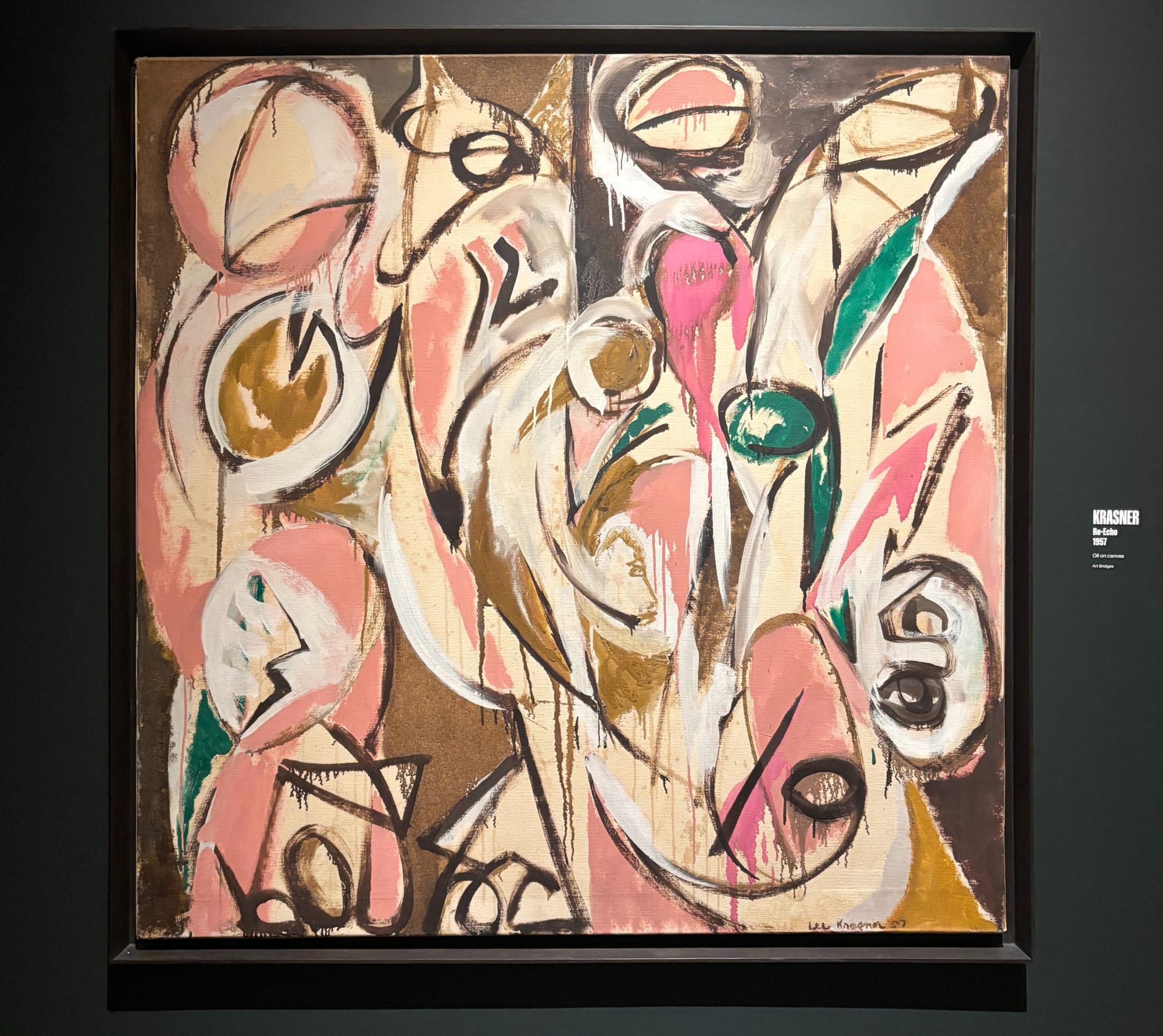
I arrived at the entry to Past Continuous having fought my way through the Saturday afternoon crowds that can make a visit to The Met these days feel more like a punishment than a brush with transcendence. A narrow hallway illuminated by a silent video of collaged film and photographic images of Krasner and Pollock’s Long Island cottage leads to rooms containing artworks. I lingered here, starting to feel dreamy, until another visitor, apparently also studying the pictures of Krasner and Pollock posed together, exclaimed sharply to her companion, “The lady was a homely lady, not pretty!” She then added, as if to either soften or authenticate the blow, “I knew her!” Gosh, I thought to myself, misogyny is alive and well, especially at soon-to-be-blockbuster retrospectives. Startled out of my communion with grainy images of painters' supplies and verdant marshland, I moved on.