The School of the Art Institute Turned Its Back on Media Arts
Instead of engaging in dialogue with its dedicated Video Data Bank staff, SAIC chose to callously cross out a budgetary line item.

In 1973, gallerist Howard Wise concluded his manifesto with an urgent appeal to build bold and "imaginative funding” structures for video artists. Wise’s manifesto would become a foundational document for the video distributor Electronic Arts Intermix (EAI), which he founded in 1971 shortly after closing his eponymous gallery. Like many arts manifestos, the text is saturated with a spirit of utopian dreaming; its language is rhetorically structured around “potential” and "possibility," and generates a future-oriented imaginary for what a robust and unencumbered landscape for media artists might look like. Yet the urgency at the heart of Wise’s writing is both pragmatic and deeply invested in the present. He insists that building these futures requires infrastructure-focused coalition building in the present. “Imagination and foresight in funding are needed now,” he proclaims, “to see beyond the present – toward a time when these ideas and programs will be fully realized.”
Wise’s manifesto stops short of prescribing exactly what this "imaginative funding” infrastructure for media art should look like, instead leaving the issue open to debate. Even so, his legacy offers critical insight into the structures he may have envisioned. At EAI, Wise put his manifesto into action, acting as a facilitator who placed deep trust in the judgment and creative aims of artists, researchers, and administrators — firmly believing that those doing the work should define its form. At a time when funding for media arts was rapidly expanding, he provided material and financial support that prioritized potential and experimentation.
The School of the Art Institute’s (SAIC) recent divestment from Video Data Bank (VDB) is a profound failure of institutional stewardship. The decision communicates a fundamental lack of care for the artistic communities SAIC purports to serve. VDB plays an irreplaceable role in video arts ecosystems: from the minutiae of conserving historic archives to horizon-expanding distribution work, VDB shapes canons, amplifies discourses, and makes key works accessible to researchers, curators, students, and artists alike. The divestment also undermines SAIC’s own history: VDB was founded by graduate students Kate Horsfield and Lyn Blumenthal, its original collection includes some of the earliest video art produced by SAIC students, and it recently completed a major conservation project restoring and digitizing the Phil Morton archives, foundational to SAIC’s video art department. VDB significantly magnifies SAIC’s social capital in the media arts, and amplifies the school’s relation to video art’s earliest histories. Lastly, but most importantly, the way in which the divestment has been carried out — without any forethought or planning for VDB’s immediate and long-term future and without dialogue with VDB’s staff, including its Director, Tom Colley who had devoted 27 years to the organization — is not only ethically disturbing but also an utterly gross form of negligence at a managerial level. Rather than engage in conversations with the devoted and knowledgeable staff members about the best possible paths forward, SAIC’s management chose to callously cross out a budgetary line item.
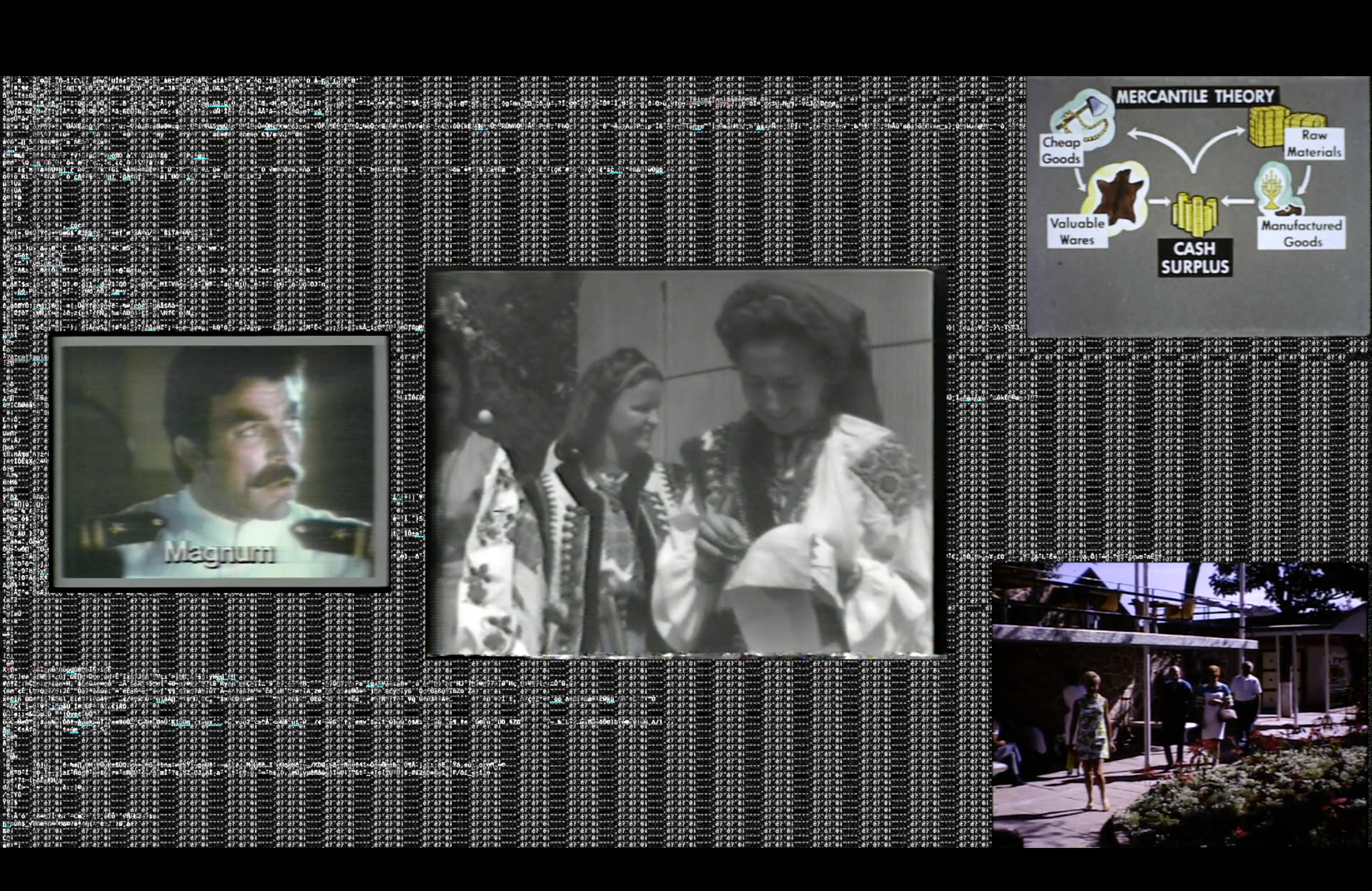
While devastating, SAIC’s divestment is also unfortunately part of a broader pattern in the history of media arts funding in the US, defined by fickleness, shifting priorities, and structural fragility. The first wave of support for experimental video emerged in the late 1960s, when the Rockefeller and Ford Foundations began funding experimental television programs. By 1970, both the National Endowment for the Arts (NEA) and New York State Council on the Arts (NYSCA) were providing generous public funding for video art. While private foundations played an important role in video art’s early growth, public funding consistently outpaced private support during this critical first decade for experimental video.
By the mid-1980s, the media arts were plunged into a twin crisis, as federal agencies and private foundations began withdrawing their support. Arts funding faced intense political pressure under the Reagan administration. Media programs were particularly hard hit: experimental TV labs at WNET, WGBH, KCET, and smaller regional sites were downsized or shuttered, and artist residencies largely ended as public broadcasters shifted toward more commercially viable programming to guard against politically motivated attacks. The long-term consequences of these neoliberal policies continue to reverberate today, as evidenced by the 2025 Rescissions Act, which effectively shuttered the Corporation for Public Broadcasting (CPB). Private foundations, including Rockefeller and Ford, had already in the 1980s begun redirecting their funding toward media literacy and documentary initiatives, leaving distributors like VDB and EAI to fill crucial gaps in infrastructure for video artists, becoming de facto stewards of the field.
SAIC’s divestment mirrors these historical instabilities, and comes at a moment of profound precarity for the small, experimental organizations that once flourished under the generous philanthropic and public support of the 1970s. While recent partnerships — such as EAI and Rhizome’s residencies in the new moving-image museum, Canyon, slated to open in 2026 — offer hope, they also underscore a crucial lesson: No external institution can be relied upon to safeguard the infrastructure of the field indefinitely. Sustaining media arts requires proactive community-building, accountability, and imaginative funding structures that prioritize long-term stability over short-term optics.
Wise’s vision remains instructive: Those devoted to creative work are best positioned to imagine its futures, and the responsibility for sustaining media arts lies first and foremost with the community itself. This demands a renewed commitment to philanthropic support — especially general operating support, not narrowly restricted program or project grants that keep organizations in a perpetual state of scarcity. It also requires supporting distribution systems by keeping works accessible and in circulation.
To survive, the video art community must actively cultivate the conditions of its own continuity and hold institutions and funders accountable for the social and cultural capital they derive from these relationships. This means demanding transparency and unrestricted funding mechanisms, and refusing the convenience of institutional divestment disguised as inevitability. If SAIC believes it must end its relationship with VDB, it must do so ethically — by ensuring a responsible transition and returning authority to the artists, conservators, archivists, and researchers who have always done the work of caring for VDB’s community.