The Timeliness of W. E. B. Du Bois’s Philosophies
His prevailing influence over social theory and racial philosophy proves as relevant as ever in a group exhibition that explores his ideas, research, and legacy.
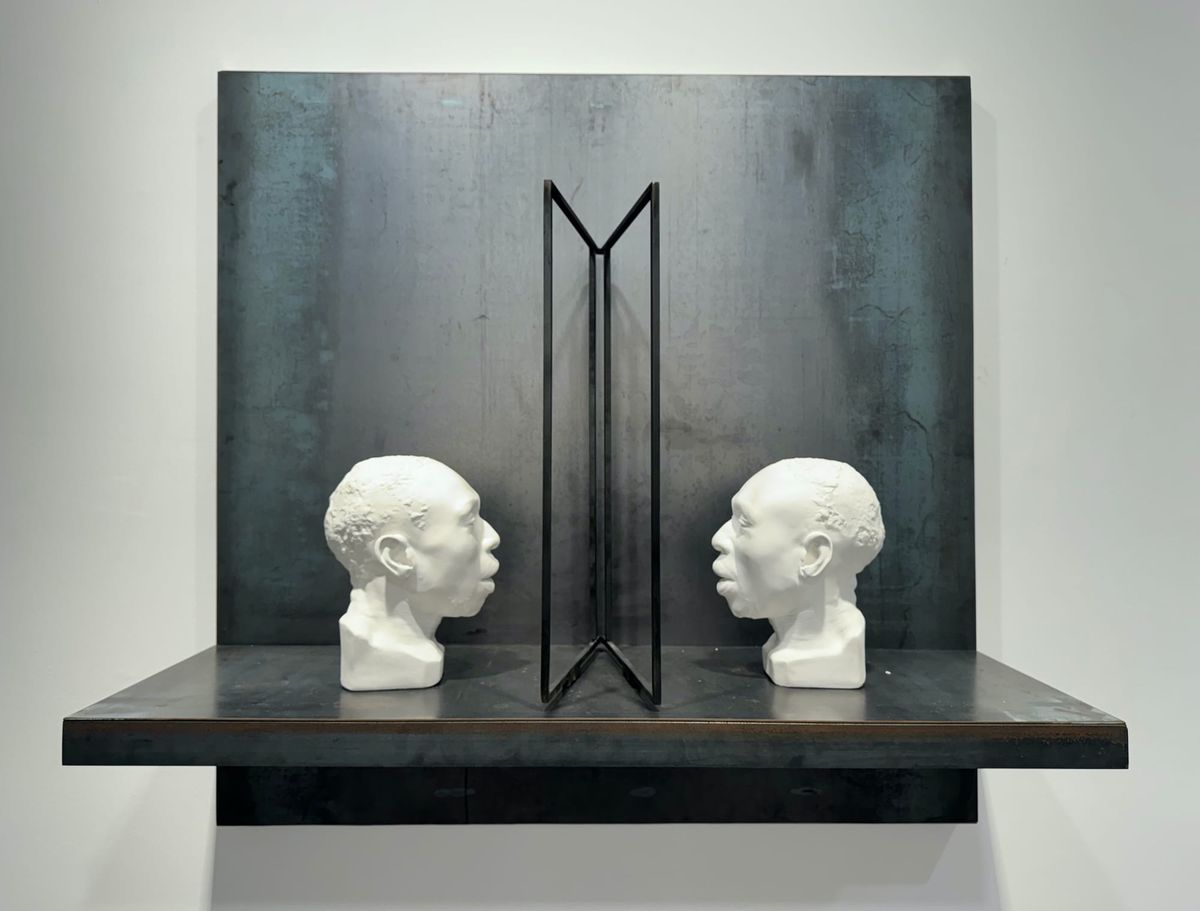
At the entrance of In Our Time: Eleven Artists + W. E. B. Du Bois at Pratt Manhattan Gallery, two identical, stark-white busts face off. Mirror images, they are separated by a hollow metal apparatus, a window of sorts. The sculpture, “Untitled” (2022), by the late artist Radcliffe Bailey, is a striking visual metaphor for W. E. B. Du Bois’s doctrine of double consciousness, the social historian’s conceptualization of African Americans’ racial positioning post-emancipation. In their orientation, the twin busts suggest the crisis of identity experienced under the duress of racism; the subjects’ autonomous self-fashioning is at odds with their marginalized civic position.
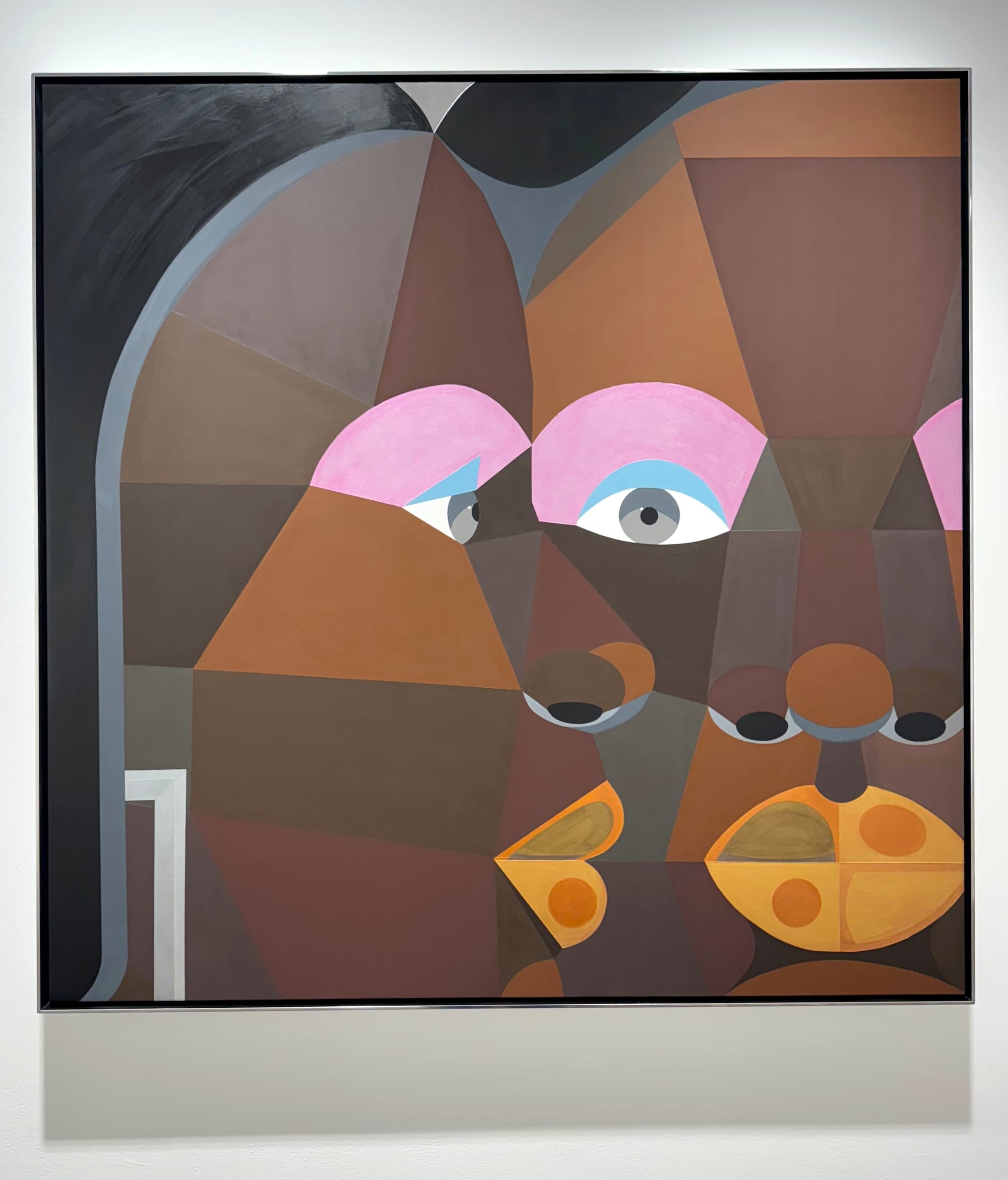
“Untitled” is a succinct primer for In Our Time, which gathers 11 artists to address the contemporary resonances of Du Bois’s philosophies, research, and legacy at large. These artists make meaning out of complex, interconnected histories in their practices; like Du Bois, they are aware of the potential of visual language to disseminate social philosophy to a wide audience. In another gallery, two faces composed of geometric shapes merge together in Derrick Adams’s “Fixing My Face” (2021). The painting calls to mind again the concept of double consciousness and invokes the simultaneous positive and negative potential of collectivization — the possibility for resistance, community, and intimacy at odds with racism’s desire to extinguish autonomy.
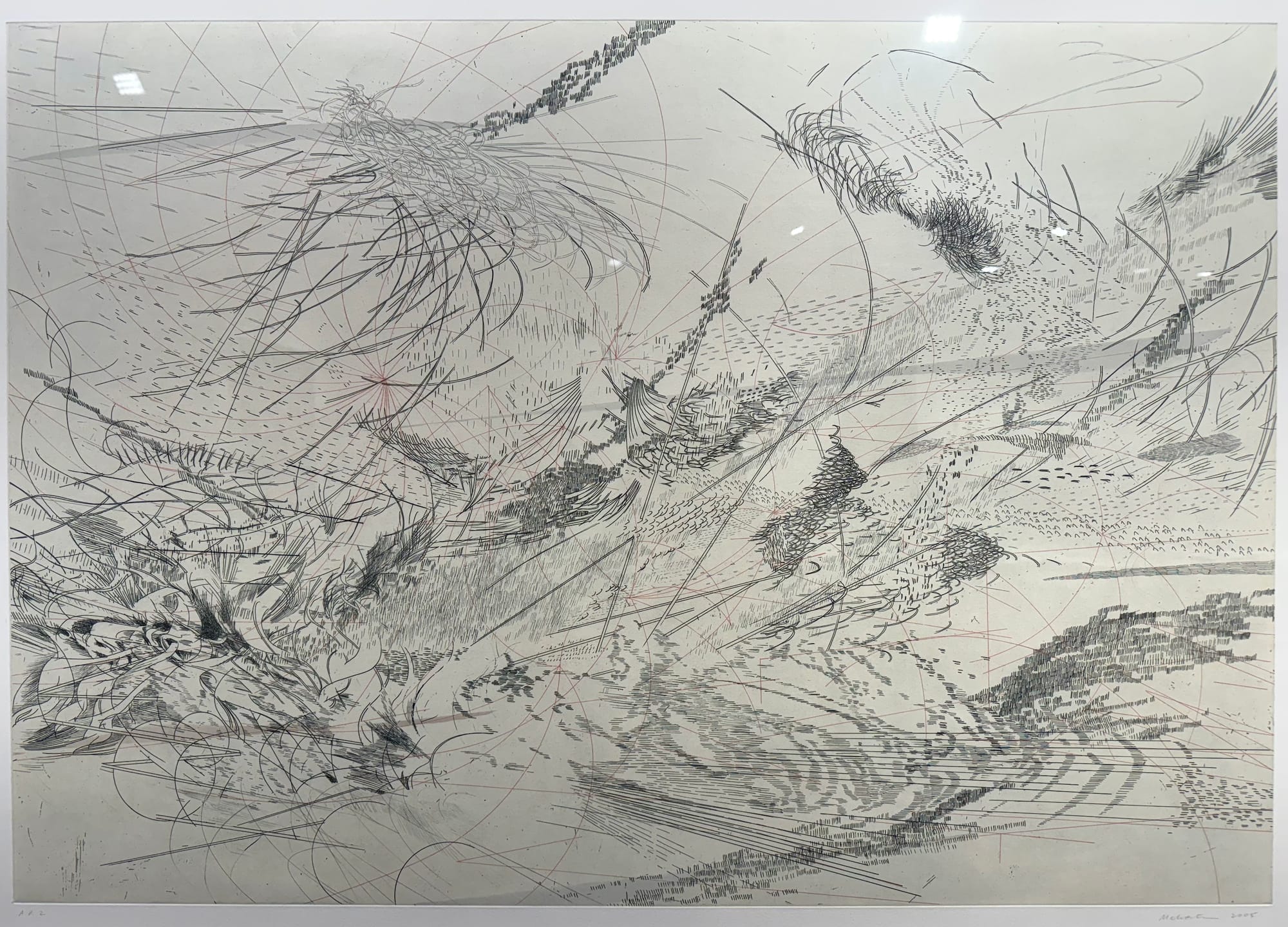
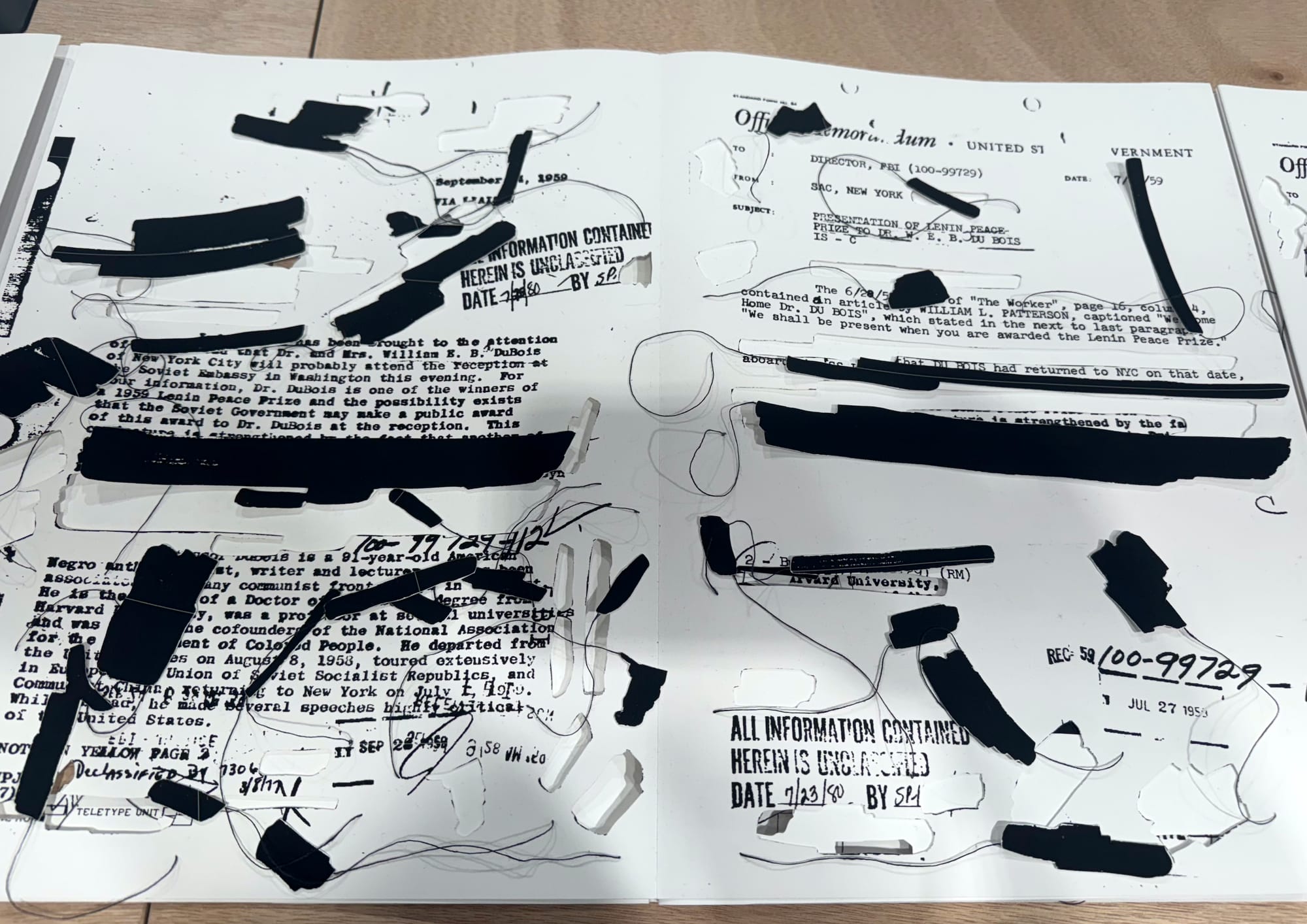
The exhibition’s centerpiece is a multimedia installation by Ann Messner, “Du Bois: The FBI Files” (2013). Stacks of documents are piled in corners throughout the building, and speakers emit audio from interviews and excerpts by Black musicians and activists, like Nina Simone and Angela Davis. Spread across a long table are declassified, heavily redacted FBI files on Du Bois. Messner has further manipulated these censored images, cutting and reconfiguring heavy strips of blacked-out text, leaving in their place negative space tethered by fine threads, highlighting their relation to blackness and void, to censorship and derogation. In these pages, the FBI concealed the names of Du Bois’s vitriolic opponents; the snippets that remain reveal a government terrified of racial uplift, of a challenge to the status quo.
One video on view particularly captivated me: Jefferson Pinder’s “float” (2019), a recorded performance honoring the life of Eugene Williams, a 17-year-old who was stoned to death in 1919 after floating over to the White side of a segregated beach in Chicago. “float” begins with lines of demonstrators marching into the lapping water, almost militarized. Tension builds between the presumed purpose of a beach — recreation — and the performance’s goal of protest. The participants’ bodies float on rubber tubes; they are linked by ropes held between their hands, a human flotilla. Their performance-action took place exactly one century after Williams’s brutal murder, highlighting the interconnectedness between historical event and contemporary art and experience. It undergirds the exhibition's thesis: the doggedness of antiblackness in the United States and the persistence of artists, writers, and activists who will not let it go unrecorded.
In Our Time is a reprisal of an earlier show, Du Bois In Our Time at the University of Massachusetts Amherst in 2013, also curated by Loretta Yarlow. The subject of Du Bois’s prevailing influence over social theory and racial philosophy proves just as relevant — this relationship could be revisited again and again, with a cast of artists both new and returning, continuing the pursuit of a more just world.
In Our Time: Eleven Artists + W. E. B. Du Bois continues at Pratt Manhattan Gallery (144 West 14th Street, Greenwich Village, Manhattan) through December 20. The exhibition was curated by Loretta Yarlow.