The Unbearable Strangeness of Being
In Cinga Samson’s haunted paintings, we do not know what we are looking at, or where we are.

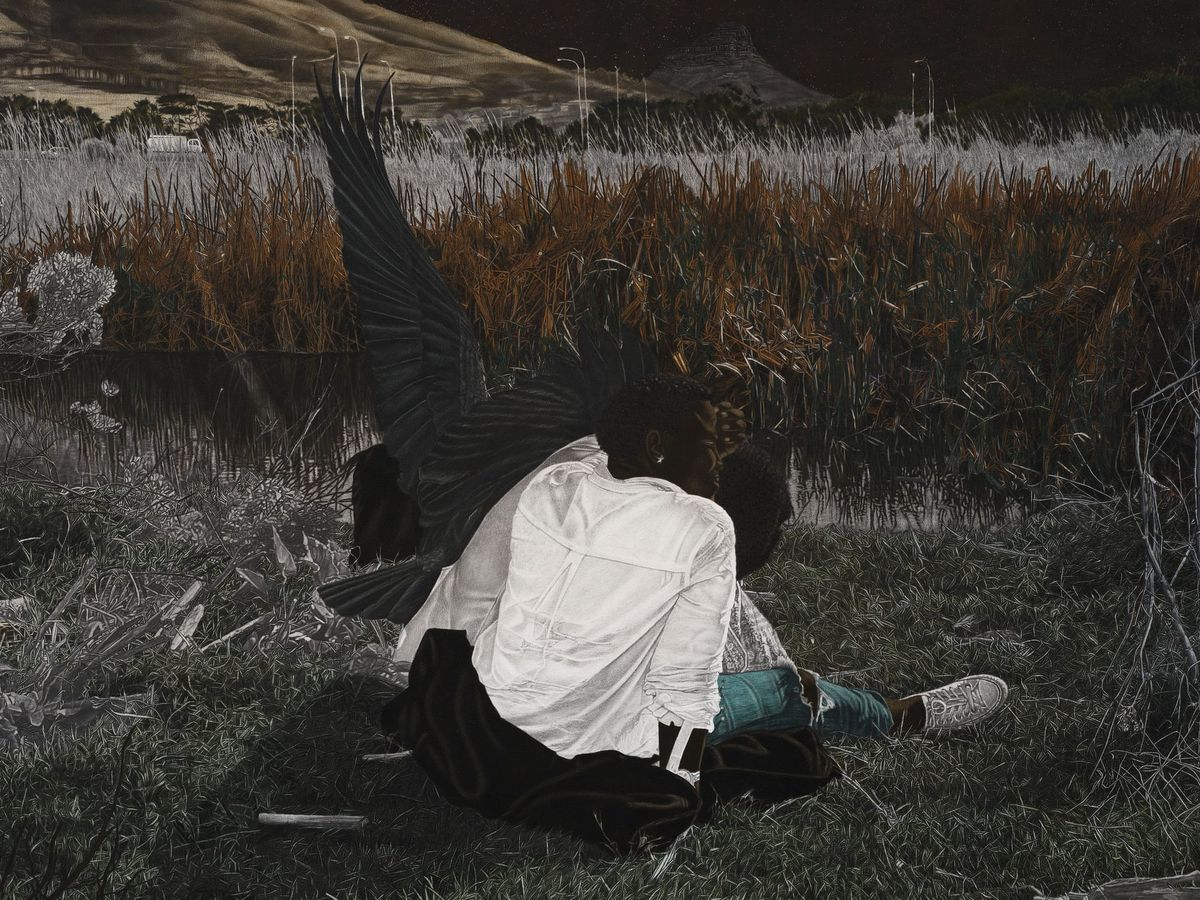
I went into the painter Cinga Samson’s otherworldly debut exhibition at White Cube without knowing anything about him. After looking at the large oil paintings featured on the gallery’s two floors, I read the press release and learned that Samson is South African, and the exhibition title, Ukuphuthelwa, is an isiXhosa word meaning “unable to sleep.” The press release tells us: “Unlike the English word ‘insomnia,’ the isiXhosa term carries no negative connotation and accordingly, for Samson, sleeplessness is not a condition to be cured but a state of spiritual alertness, a sensitivity that deepens in the dark.”
With this in mind, I looked again at the exhibition, went home and pored over the catalog published to accompany his 2023 show at White Cube’s London outpost, and started researching the artist. A week later, I returned to the exhibition, curious to see how its unsettling strangeness held up, and was not surprised that it did. Samson’s haunted paintings suggest the scars of history without trying to make them legible to a Western audience. They form an unexpected world we will never understand, even as we keep looking and looking.
Working with a limited palette inundated with dark and silvery grays, near blacks, blue-greens, deep Prussian blues, and small amounts of a bright, cold white, Samson scrupulously depicts crepuscular scenes of figures involved in disturbing ceremonial rituals that defy comprehension. He works by photographing scenes he sets up and developing drawings based on those photos, which in turn form the basis of his paintings. Things shift as he transitions from one medium to another. His choice to endow all the figures with completely white pupils, for instance, emphasizes the otherworldliness of his dramas and signals their spiritual alertness. They seem to be living in a limbo state, between life and death.
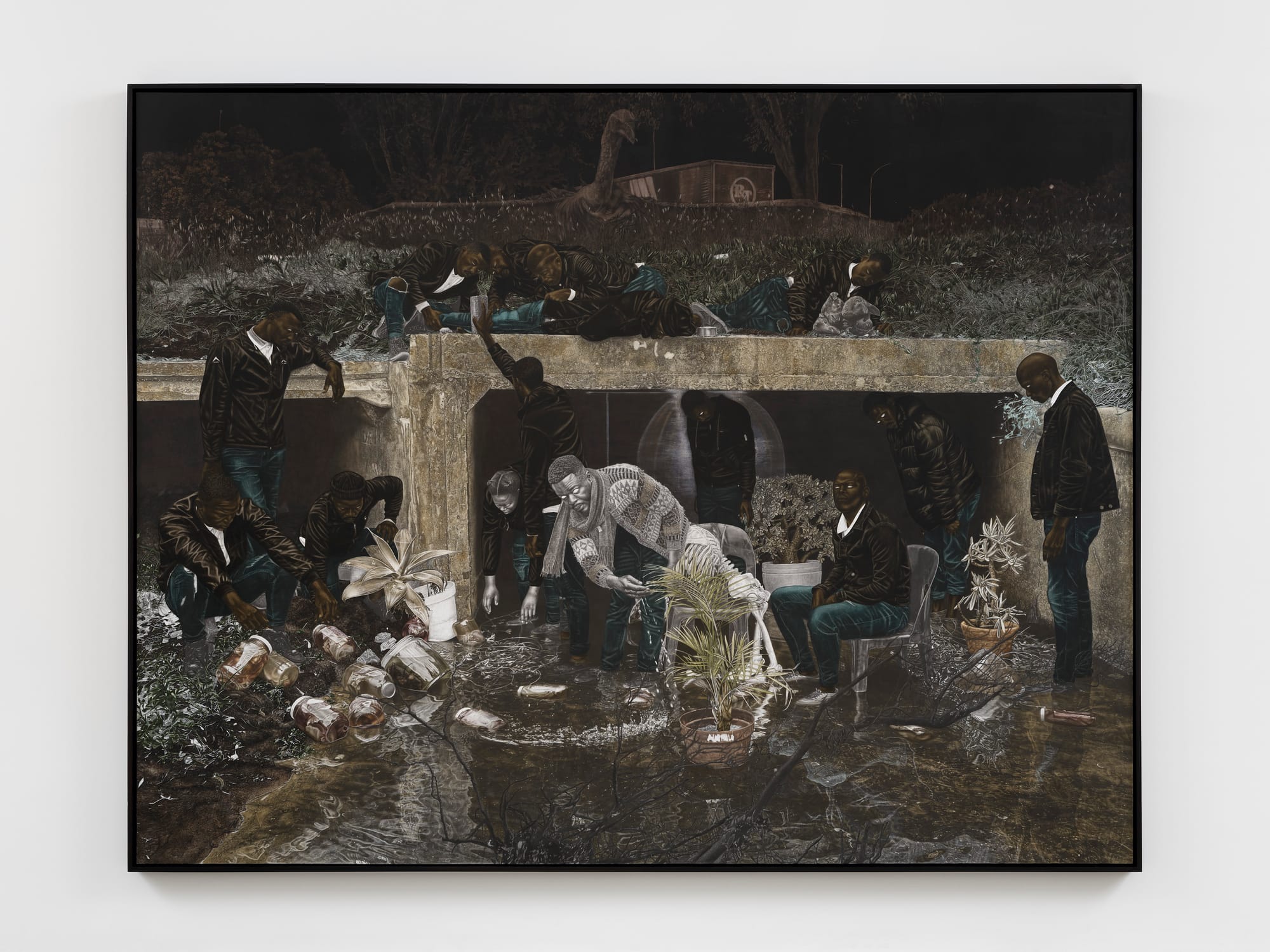
A ghostly gray figure in a patterned, knit sweater is at the center of “Ukuwelwa komda” (2026) (meaning “border or crossing a boundary, such as a river”). He is rising diagonally from a chair, as well as emerging from a skeleton. Behind him is a concrete passageway through which water is draining. There are figures wearing leather bombardier jackets and jeans at the top of the passageway, where grass is growing. A figure stands on each side of the painting, facing in, directing our attention towards the center, where there is a pile of glass jars in the water, their contents resembling internal organs, near the rising figure. The scene feels choreographed, which viewers might associate with the photographs of Gregory Crewdson, but the difference in mediums is crucial. Crewdson’s large-format photographs feel staged, like a still from a David Lynch movie, while Samson’s paintings transform the palpable into the unearthly. We do not know what we are looking at, nor where we are.
This otherness, which I felt most strongly in the paintings on the first floor of the gallery, could be read as resistance to Western eyes and its continued attempts at colonialism. Samson’s spiritually alert figures see the world with a clarity and understanding that evades outsiders. They neither see us nor acknowledge our presence.
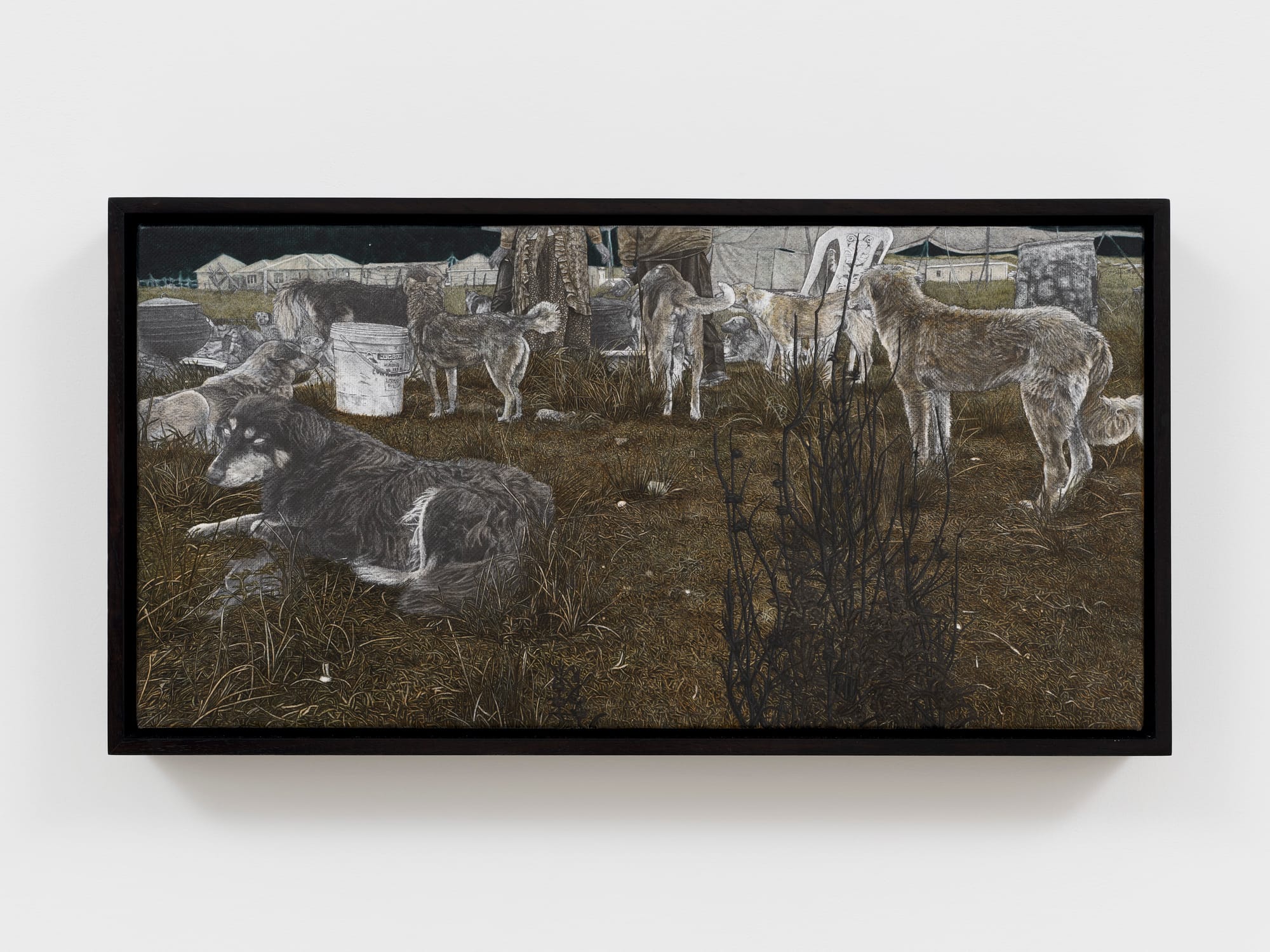
Viewers encounter further evidence of that separateness in the upstairs gallery. In “Intsingiselo II” (2026) (“meaning”), a pack of dogs is gathered together, some lying down, others standing, near a large white plastic bucket. We see a man and woman standing side by side on the upper right side, their heads cropped by the painting’s top edge. The dog lying in the foreground on the lower left has white pupils, the clearest sign of otherworldliness in this scene. The viewpoint is low to the ground, but the white-pupiled dog takes no notice of us. We are part of the scene, but as intruders, invisible to its closed world.
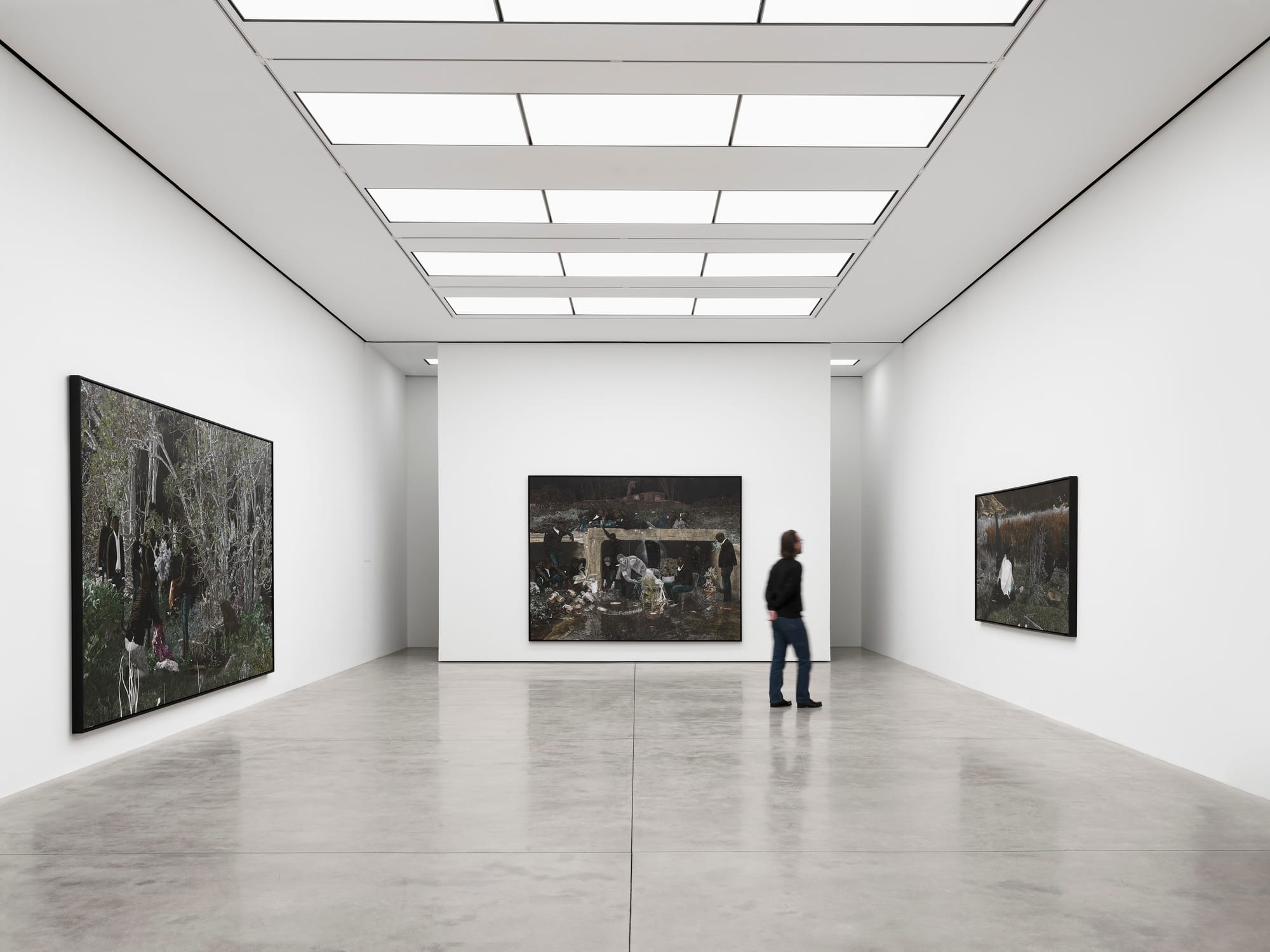
Cinga Samson: Ukuphuthelwa continues at White Cube (1002 Madison Avenue, Upper East Side, Manhattan) through April 18. The exhibition was organized by the gallery.