The Uncertain Future of Colombia’s Museum of Memory
Originally envisioned as a center for collective memory and mourning amid the country’s 70-year armed conflict, the building still sits empty in the middle of Bogotá.

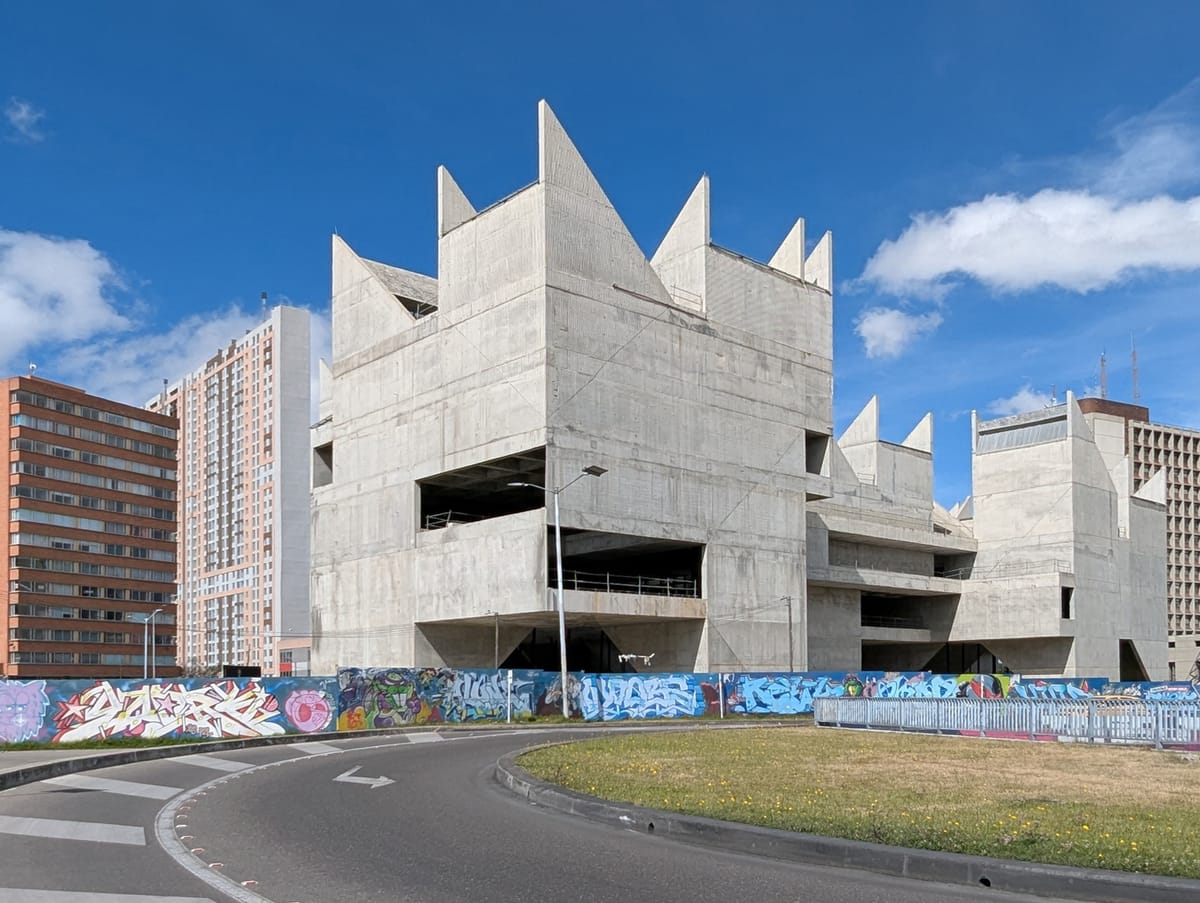
BOGOTÁ — In 2011, the Colombian government ordered the creation of a national museum “to achieve the strengthening of the collective memory” around the decades-long armed conflict. That same year, it passed the Victims and Land Restitution Law aimed at providing victims with reparations and justice. More than just a curated collection of objects or artworks, the museum, scheduled to be inaugurated in 2018, was conceived as an archive of the violent civil war that has ravaged Colombia for the past several decades through personal testimonies and artwork.
By 2024, however, only around 70% of the construction was complete, and the empty building was covered in puddles, cracked floors, and walls, and lacked handrails on the stairs. A government audit in 2024 found that nearly 12 billion pesos (~$3.1 million) of the allotted budget went unaccounted for, and the planning, quality of the construction materials (especially concrete), and technical specifications were severely lacking — not to mention that the building was not adequately designed to withstand earthquakes.
The Museo de Memoria de Colombia began on a high note in 2015 with the country’s largest design competition, in which a joint proposal from Colombian firm MGP Arquitectura y Urbanismo and Spanish firm Estudio Entresitio was chosen from more than 70 international submissions. The winning design, entitled “Entre la Tierra y el Cielo” (“Between Heaven and Earth”), was to act as both a museum and a monument unto itself.
Inside the giant concrete structure, irregular spaces — some several stories tall — are connected by a series of hallways and stairs. The roof is topped by geometric shapes that, according to the museum’s description, are meant to “symbolize different political and philosophical positions of the actors in the conflict in Colombia,” while decks located on the rooftops serve as mourning sites. Many of the museum’s main exhibition areas are located beneath vaulting ceilings that rise up several floors, offering the acoustics and scale of a cathedral, and there are conference rooms, a theater, a café, and a restaurant.
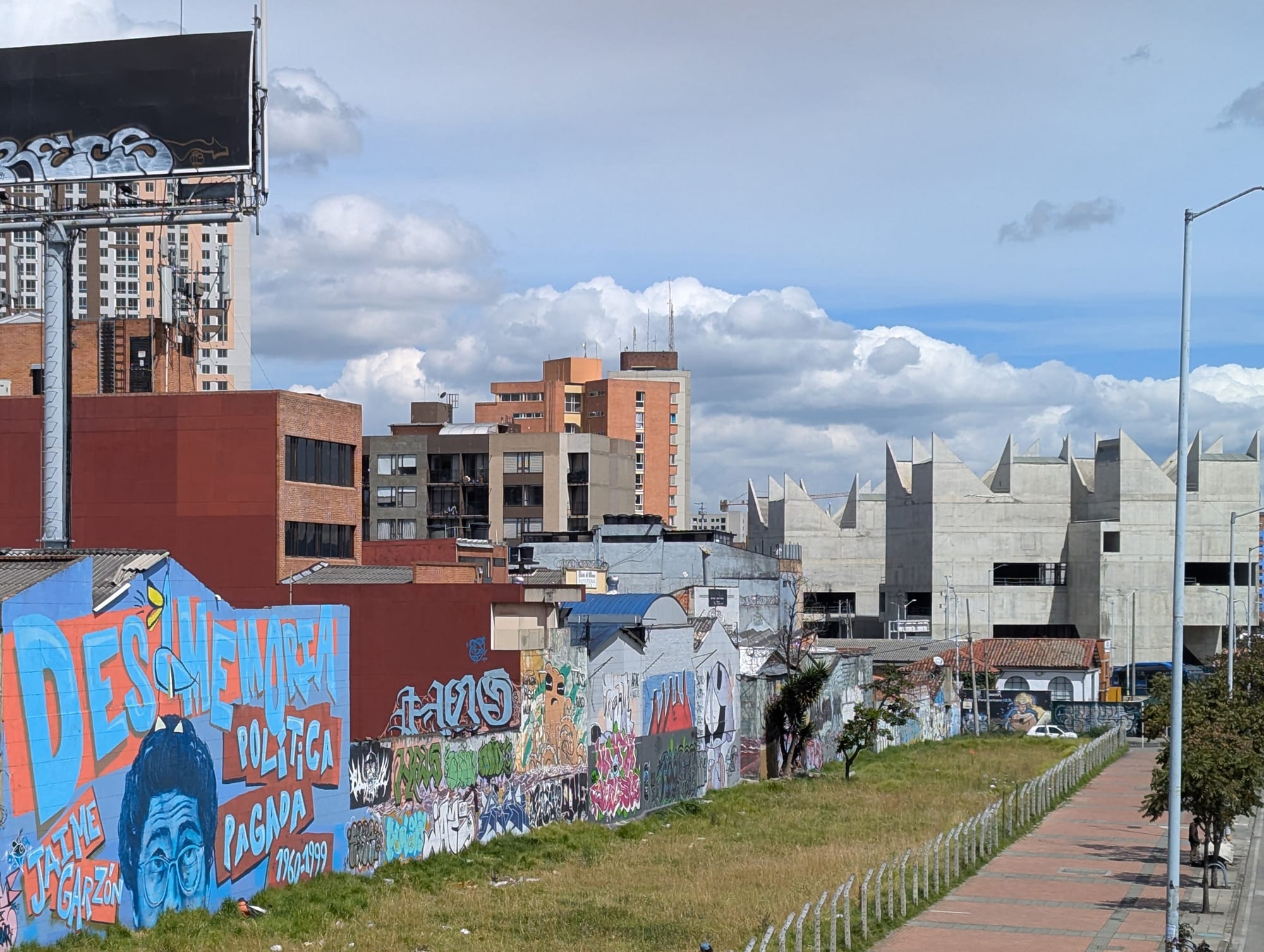
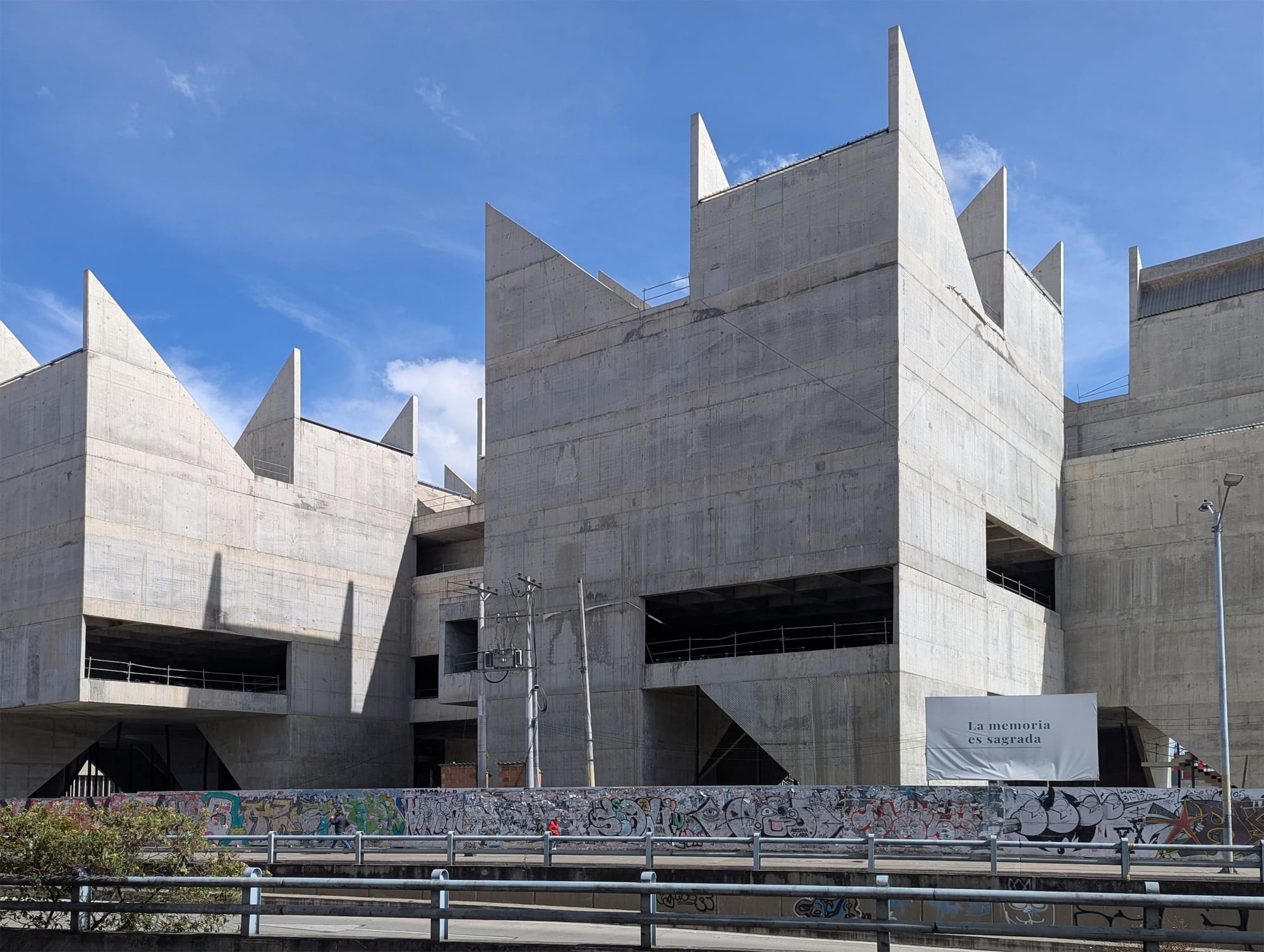
Designed to host the archives of one of the world’s most brutal histories of violence, the museum itself is hardcore Brutalist, perhaps in an attempt to prepare the visitor to encounter atrocities even before they enter the space. With an unscalable concrete facade, horizontal windows that look like bunker gun loops, and dozens of turrets on the roof, the building resembles nothing so much as a military fortification, the very kind of place where much of the violence to be documented in the museum was planned and carried out.
The museum was also designed as an avant-garde cultural center with art workshops and radio, video, and digital studios related to victims’ testimonies. As it declares in its founding text, the Museo de Memoria de Colombia, citing the writing of scholar Andreas Huyssen, attempts to become “an institution that vitalizes more than it mummifies,” abandoning the classic museum format that serves as a “fortress for a chosen few [...] exalted objects” in favor of living arts such as performance and interactive installations. The core of the museum is the documentation center containing legal documents, written texts, photography, iconography, sound, and audiovisuals. These documents come from victims’ relatives, tribunals, human rights organizations, as well as independent, official, and commercial media, direct sources for the study of contemporary Colombian atrocities.
While the architectural firms were chosen in an international competition, the Spanish construction company Obrascón Huarte Lain S.A., which has experience with infrastructure operating throughout Latin America, was contracted privately. Construction began in September 2020, during the administration of then-President Ivan Duque. According to his campaign promise, the museum was to be completed by 2022 with a budget of more than 66 billion pesos (~$20 million at the time).
The construction company had already been involved in several corruption and financial scandals in Colombia (including the Coffee Airport, which was never built), Mexico, and Spain (sentenced for payouts to Partido Popular politicians), which raises the question of why it was chosen in the first place. The private contract the construction company signed with the museum, however, protected it from being prosecuted. In the end, the government has paid all the outstanding bills, thus elevating the construction costs way above the initial budget.
Beyond cultural development, the museum was also envisioned with real estate interests in mind as a motor for gentrification in the center of Bogotá. Today, however, it remains an empty concrete shell of a building, one of the city’s greatest eyesores viewed by millions of commuters and tourists as they drive to and from the airport.
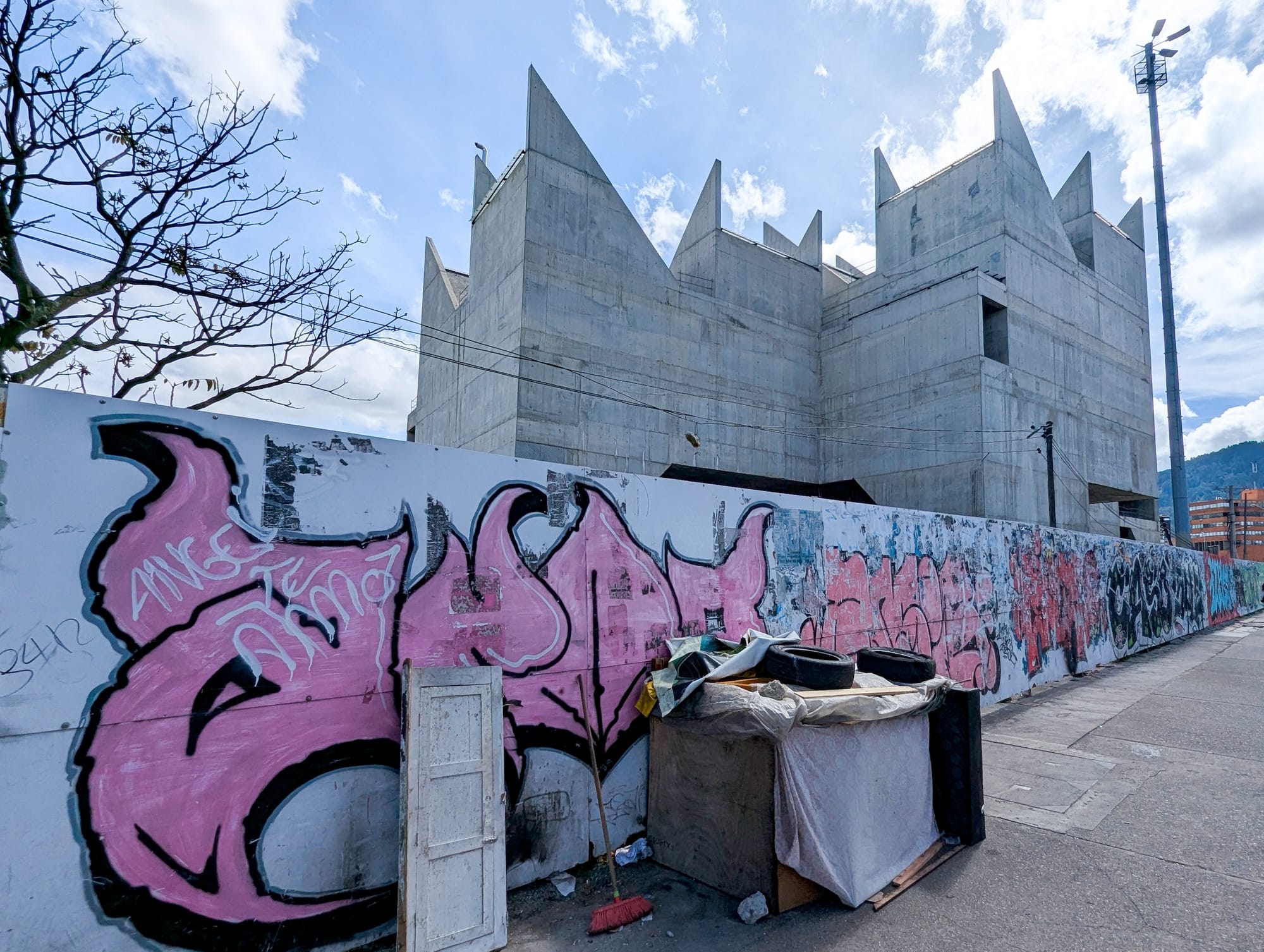
Last summer, a contract was signed with two Colombian construction companies for around 37 billion pesos (~$10 million) to finish the project by the end of 2026. Even if it is finished on time and within the budget, the stain of political corruption and ill will may make it difficult to animate a building that has been lifeless for so long.
Beginning in the early 2000s, “memory museums” dedicated to the documentation of human rights abuses began emerging across Latin America, a late reckoning with the dirty wars of decades before. The use of the word “memory” in their name distinguishes them from the many “memorial” museums around the world, the first of these being the Auschwitz-Birkenau Memorial Museum established in 1947, that were designed to consolidate a single narrative focused solely on victims and often cast current governments as the heroes of the story.
While both memorial and memory museums share an interest in documenting violence against certain groups, the latter are dedicated to more fully and directly researching the use of torture, enslavement, murder, and disappearances, and of signaling those who were most responsible for the violence, recent governments included. In memory museums, there are no heroes or saviors, only the crude reality of violence and the state’s complicity in it.
The challenges the Museo de Memoria de Colombia faces are even more daunting than those of other such Latin American museums: The armed conflict that began more than half a century ago is still ongoing, and many past atrocities are just coming to light. The number of victims of the armed conflict is staggering (it is calculated at 9.8 million people, around 17% of the country’s current population), making any attempt to completely document the atrocities practically impossible.
Even without reliable numbers, however, it is the precise nature of the victims that is most disputed. The official government narrative promoted for decades, up until the 2022 election of President Gustavo Petro, a left-wing politician and ex-member of the guerrilla organization M-19, claimed that the majority of those killed were either terrorists or victims of guerrilla organizations. The recent scandal of falsos positivos, however, revealed how the military had killed thousands of innocent people and labeled them guerrillas to manipulate public opinion.
The documentation center will not only include personal testimonies and artwork addressing the suffering endured by millions of people, but also firsthand accounts from the military personnel and paramilitaries responsible. Unfortunately, many of these confessional testimonies from the perpetrators were obtained by granting them reduced sentences or even absolution of their crimes. The discrepancy between sentences given to right-wing paramilitaries and sentences given to left-wing guerrillas shows how Colombia’s justice system favors the most bloodthirsty, many of whom are still involved in private armies and even in the hunting down and assassination of ex-guerrillas who already served their terms.
Those on the political right in Colombia deny the existence of falsos positivos despite all the documented evidence, which is slated to be on display in the Museo. The fact that the Colombian and US governments, the military, and leading businessmen and oligarchs have been involved in the majority of murders and disappearances carried out by paramilitaries is not something these powerful groups want to broadcast to the public, which may explain the resistance to the creation of this museum.
Dario Acevedo, appointed in 2019 as director of the National Center for Historical Memory by then-president Duque, opposed efforts to use the museum to give voice to victims of the armed conflict and parroted similar talking points as right-wing politicians who characterize the government’s role in the violence as self-defense.
“This is a very controversial subject, with those who maintain that what went on in Colombia was an armed conflict, something like a struggle between the State and groups organized against it,” Acevedo said in an interview that year with El Colombiano. “Others believe it was the government defending against armed terrorists and politically degenerate organizations that perpetrated kidnapping, drug trafficking, and crimes against humanity. Although the Victims Law states that what happened was an armed conflict, that cannot become an official truth.”
To rectify what he saw as political propaganda, Acevedo went so far as to remove documents and objects from the exhibition Voices to Transform Colombia, which he felt cast the past government in an unflattering light. He was forced to retire in 2022. As this political interference demonstrates, although the Museo de Memoria was built as a safe haven for the truth about Colombia’s armed conflict and its victims, its future archives and objects remain vulnerable to manipulation and censorship.
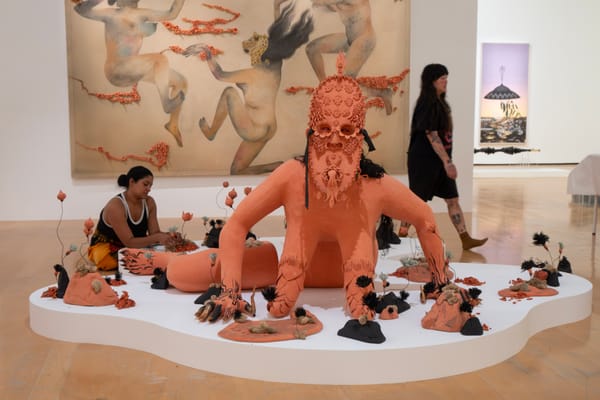
Fernando Arias, one of Colombia’s most politically incisive artists whose work often grapples with the relationship between armed violence and official narratives, directly addressed this issue in his ongoing project Memoria blanda (Soft memory). In 2023, Arias gained access to the construction site of the museum and carried out a performance in which he walked around the vaulted exhibition rooms, throwing heavy pieces of clay onto the floor. Chosen for its malleability when fresh and its brittleness when dry, as well as its ability to register impressions of the world around it, the clay raised clouds of dust in the air and splattered water from puddles as it was battered into new shapes, illustrating how easy it is to manipulate memory.
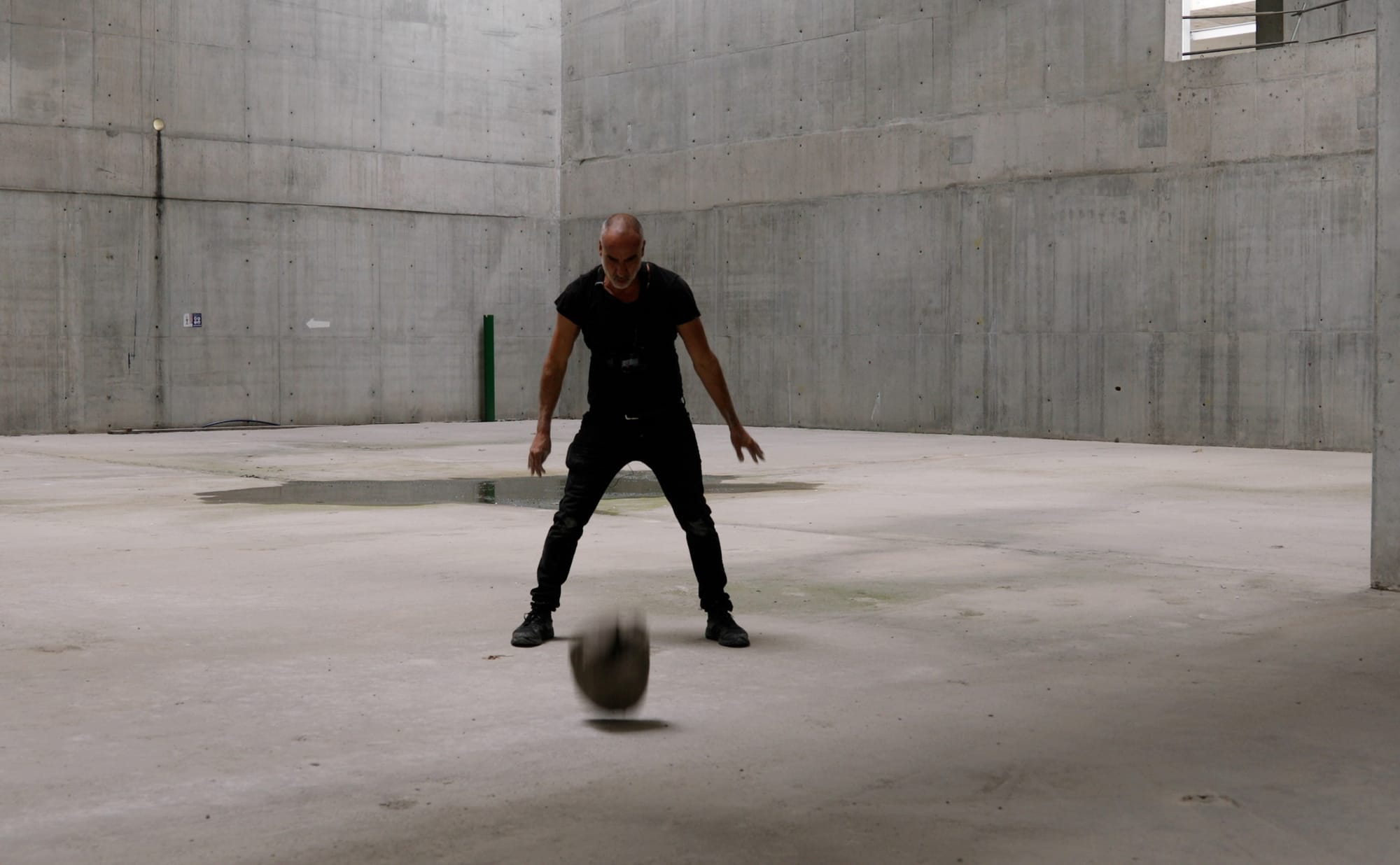
In addition to his performance, Arias came up with the idea for a large-scale sculpture entitled “Ablandora de Memorias (Memory Tenderizer)” to be exhibited in the lobby of the Museo. By flipping over a maquette of the building and attaching a giant metal handle to the turrets, the sculpture was meant to resemble a meat tenderizer. Both the tenderizer and the performance referenced the brutal, forced “softening” of memories of massacres and atrocities for political ends.
A white banner currently hangs outside the museum that reads “la memoria es sagrada” — “memory is sacred.” Nearby, the temporary walls surrounding the abandoned construction site have been covered with graffiti and tags. As soon as the building is inaugurated, it too will most likely be used as a surface for images and texts, which is not necessarily a bad thing. The artwork and writing on the walls throughout cities in Colombia have always been a much more reliable source of information than the mainstream media regarding the armed conflict, serving as some of the only written testimonies of all those who have been disappeared.
It is said that history is written by the victors. But after 70 years of armed conflict in Colombia, there is no winner. In contrast to official narratives of the armed conflict, the Museo was born out of an attempt to allow the victims and perpetrators of violence have their say and let the public judge for themselves.
The future of the Museo de Memoria de Colombia depends on upcoming presidential elections and whether President Petro’s party retains power, or is replaced by a right-wing candidate hell-bent on re-stigmatizing the victims and extolling the virtues of the national military. The integrity of the painful memories to be housed in the museum, if it is ever completed, will be a sign of what’s to come.