Theresa Hak Kyung Cha Made Human Again
Learning about Cha was like a secret revelation handed down among Asian American artists and poets. This show helped me appreciate her more clearly.
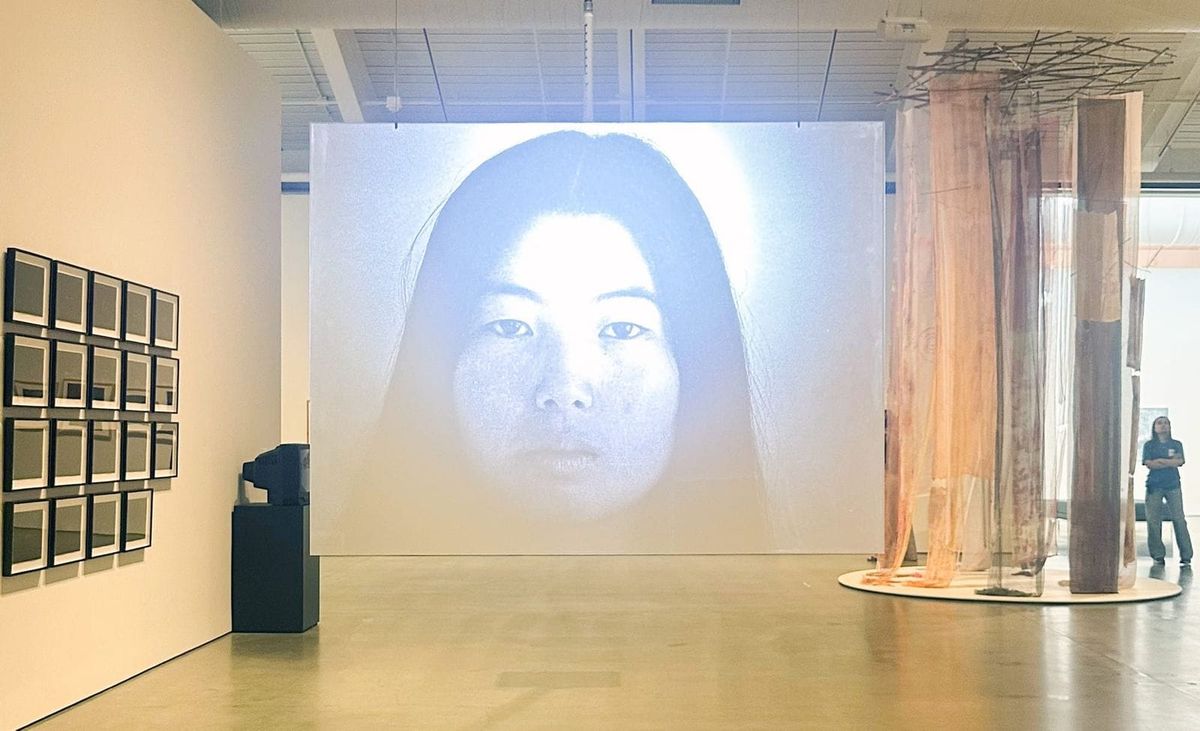
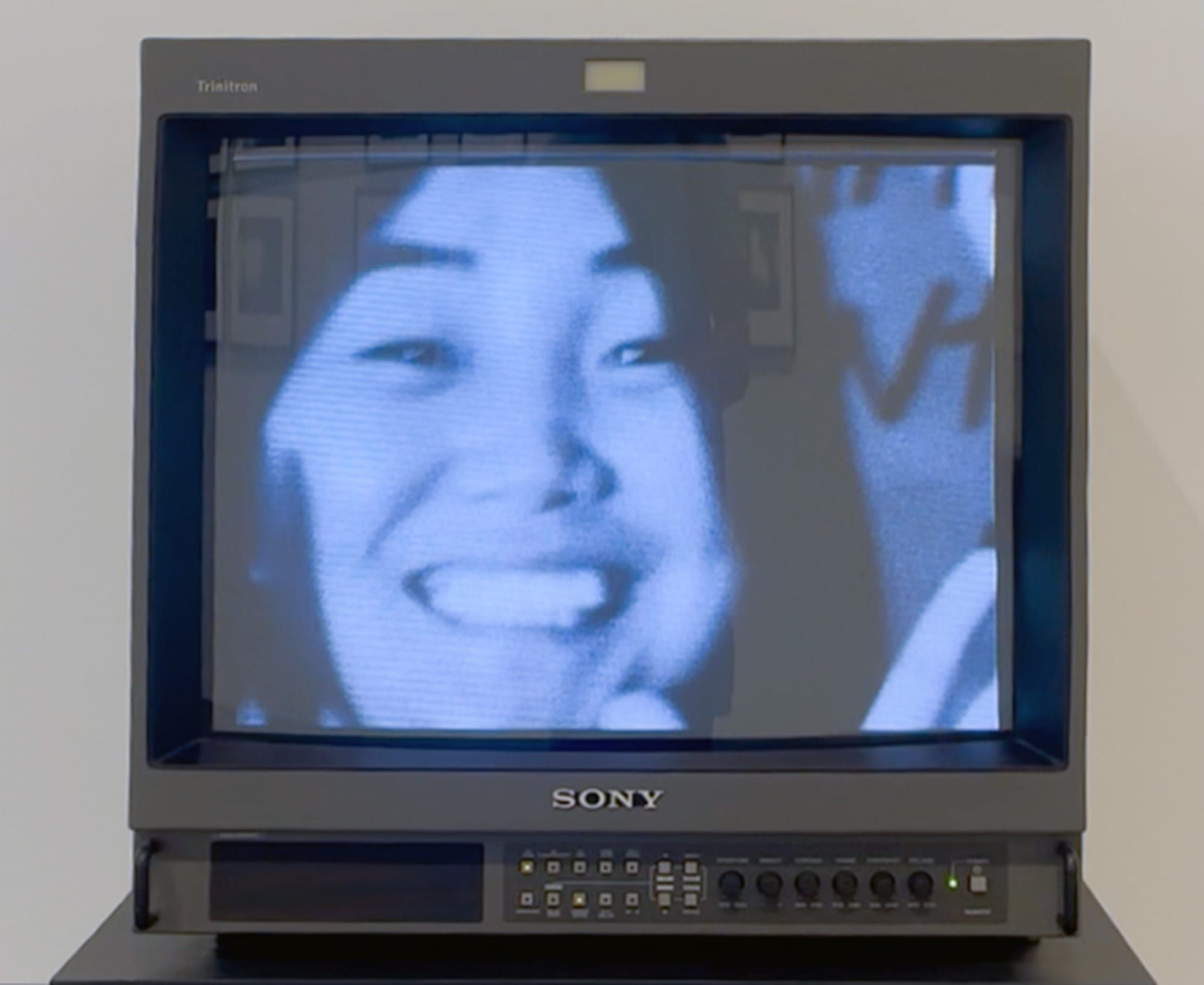
BERKELEY, Calif. — We feel the playful and puckish energy of Theresa Hak Kyung Cha from the beginning of “Untitled (Trip & Theresa)” (c. 1970s), the first of a series of three short film experiments, as she points to each word of a conceptual exercise written on the wall behind her, smiling and dancing as the camera zooms out. I didn’t expect to be so moved by seeing Cha smile, and this early moment stayed with me for the rest of my time with the exhibition. This candid glimpse of the artist’s personality encapsulates the way Multiple Offerings, currently on view at Berkeley Art Museum and Pacific Film Archive (BAMPFA), humanizes an artist who has become larger than life, sometimes overshadowed by her horrific murder and the gravity of the themes of forced migration, dislocation, and exile that she explored in her work.
Curators Victoria Sung and Tausif Noor tease out the artist’s playfulness through a thoughtful pairing of archival materials with artworks (BAMPFA was gifted the complete archives by the Cha family in 1992). “Permutations” (1976), for example, is composed of six one-second shots of her younger sister Bernadette. Each shot was assigned a number and then arranged by chance into a ten-minute video. I never appreciated the deadpan humor of this piece until I saw the entire sequence of numbers typed out on a sheet of paper, included in a vitrine nearby. Throughout her work, Cha reveled in visual and textual puns, such as the way the Korean character ㅌ looks exactly like the English letter E when divorced from context, as it is in one of the envelopes in “Faire-Part” (1976).
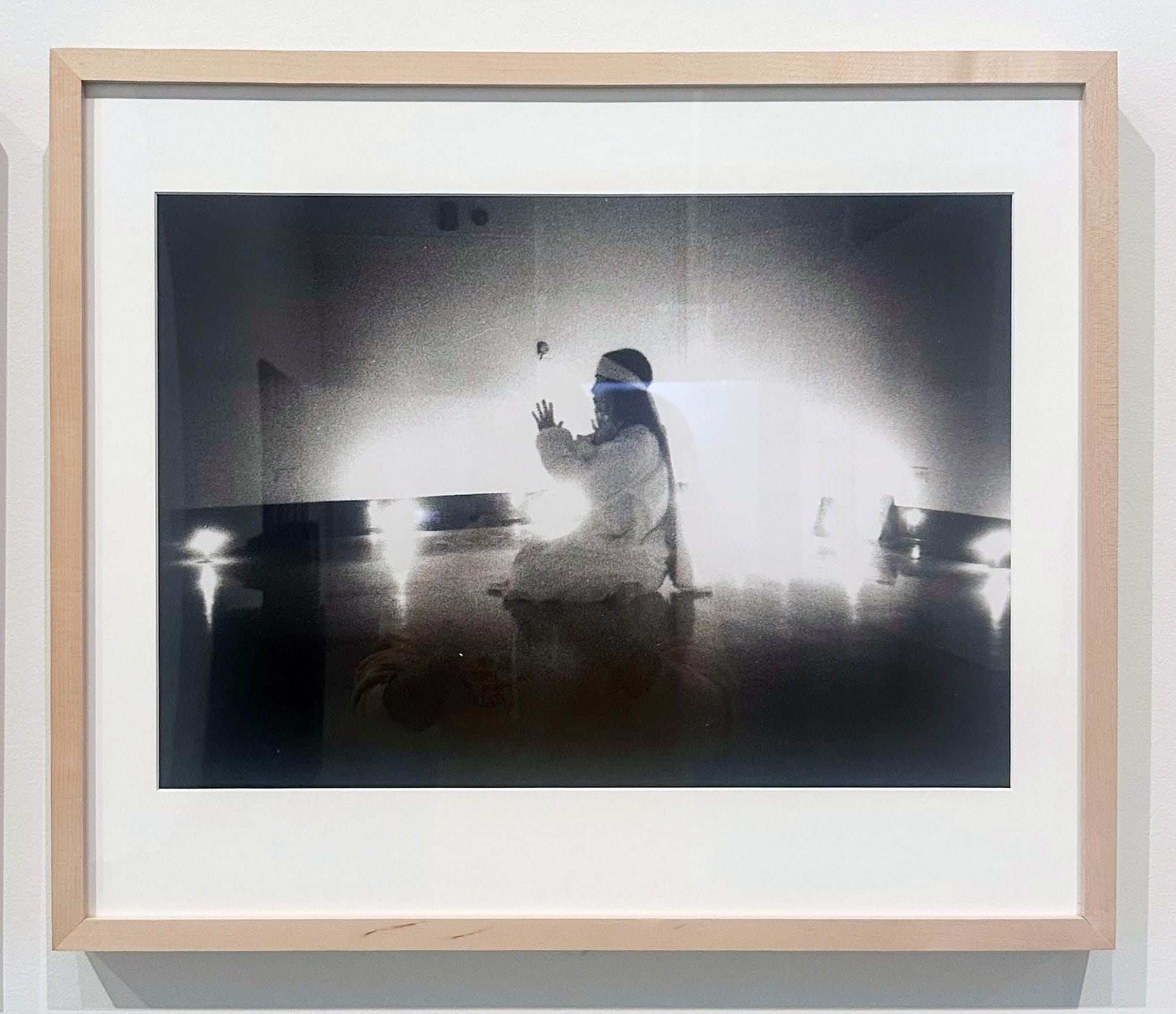
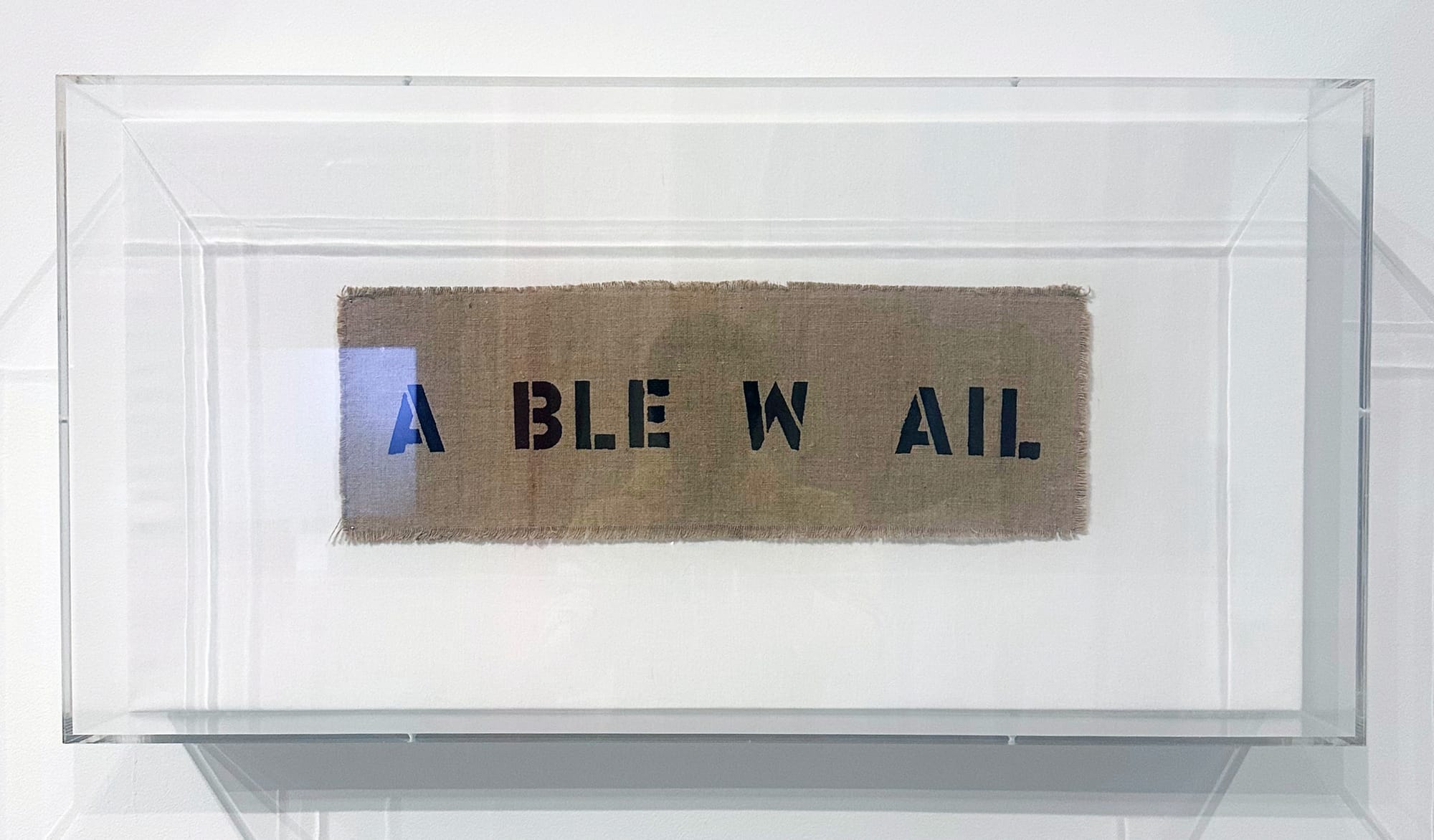
Cha’s practice was also quite physical, as evidenced by both her fascination with specific materials and her performance works, several of which are represented through documentation and ephemera from the archives. The ritualism of some of her performances, such as in “A Ble Wail” (1975), recall Korean shamanism. I recently spoke to Mudang Jenn, a traditionally trained Korean-American mudang living in New York, who told me that because Korean shamanistic traditions are so closely linked with the land, diasporic Koreans — now separated from that relationship — can only connect to that land through their bodies. Perhaps Cha, who returns again and again to themes of forced migration and displacement, sensed this as well and used her own body as a way to remain connected to her homeland.
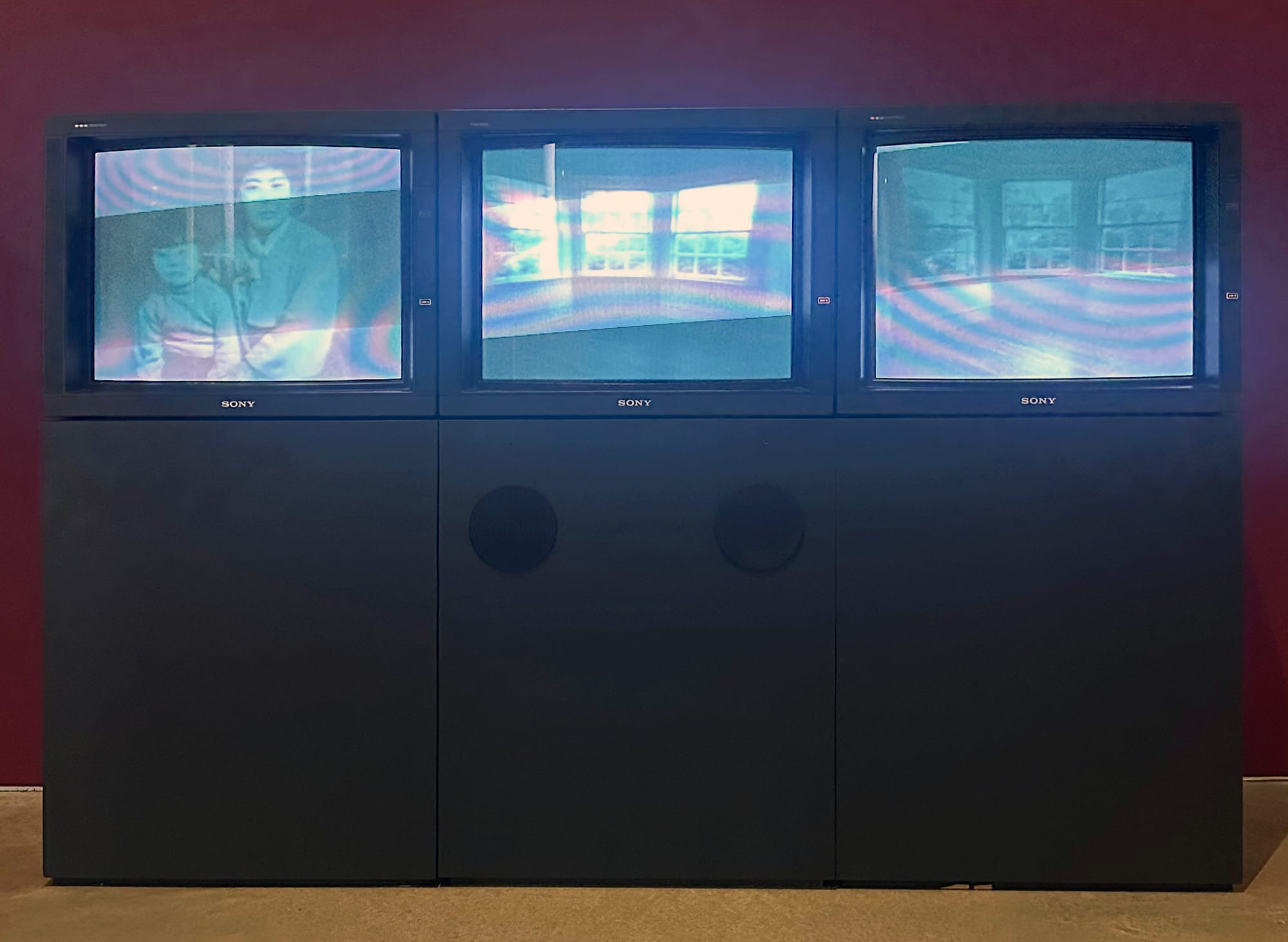
Even if her body isn’t performing, it appears over and over again: her thumbprint in “Untitled (Poem to Mother and Father)” (c. 1970s), a close-up of her mouth in “Mouth to Mouth” (1975), the title sequence of her video “Translations from a Willow Tree” (1976) written on the artist’s hand, her hands in “Passages Paysages” (1978). Cha’s own voice is often included in her work, and overlapping instances of her chant-like reading follow you through the exhibition. Several materials also reappear in Cha’s work — sheets and ribbons of semi-transparent cloth, envelopes, vessels, to name a few. These all appear in a restaging of “Exilée” (1980), a video and film installation made following her first trip back to Korea in 1979. The piece is a reflection on the distance between Korea and San Francisco, measured by the 16 time zones that separate her from her country of birth.
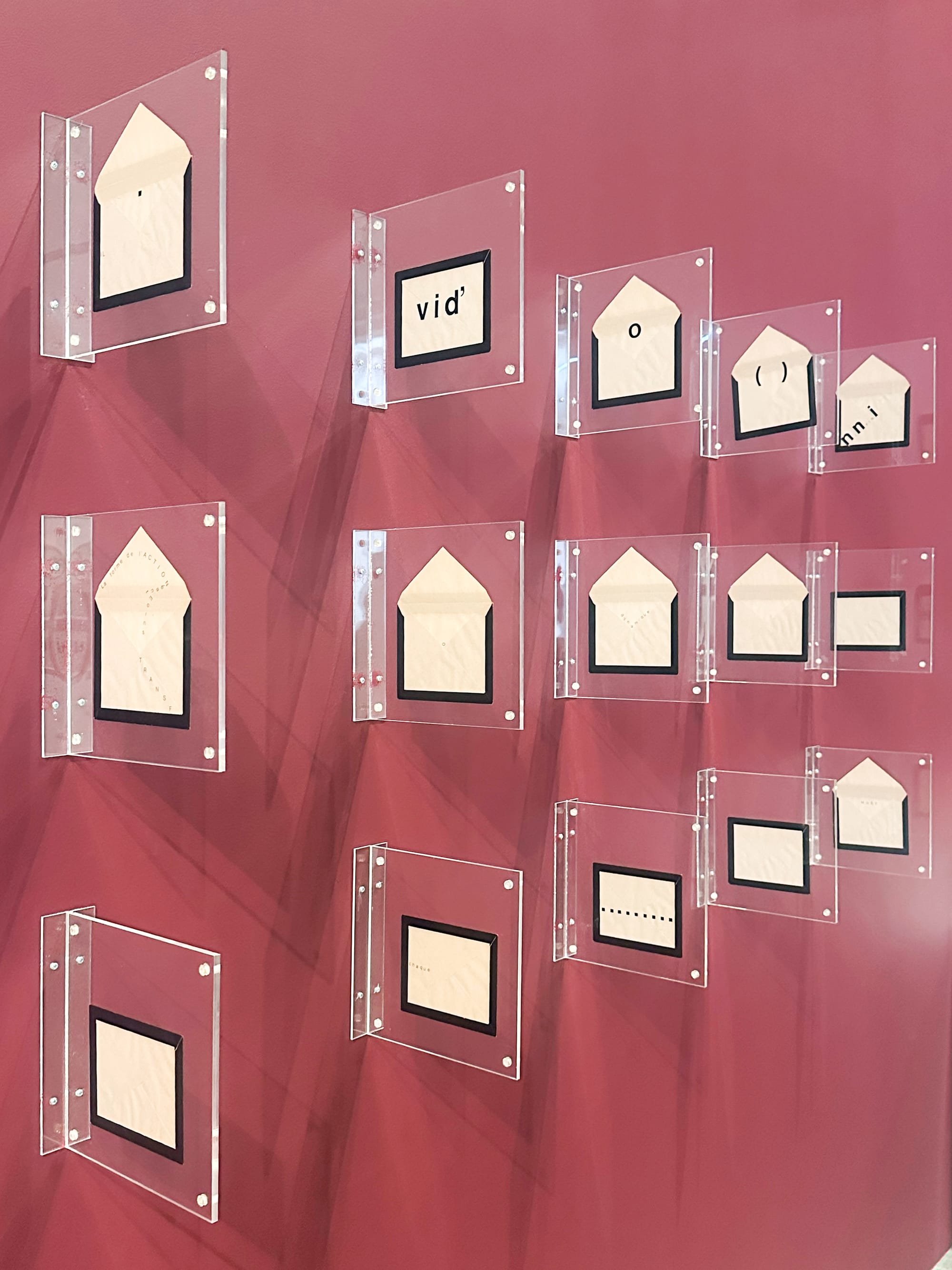
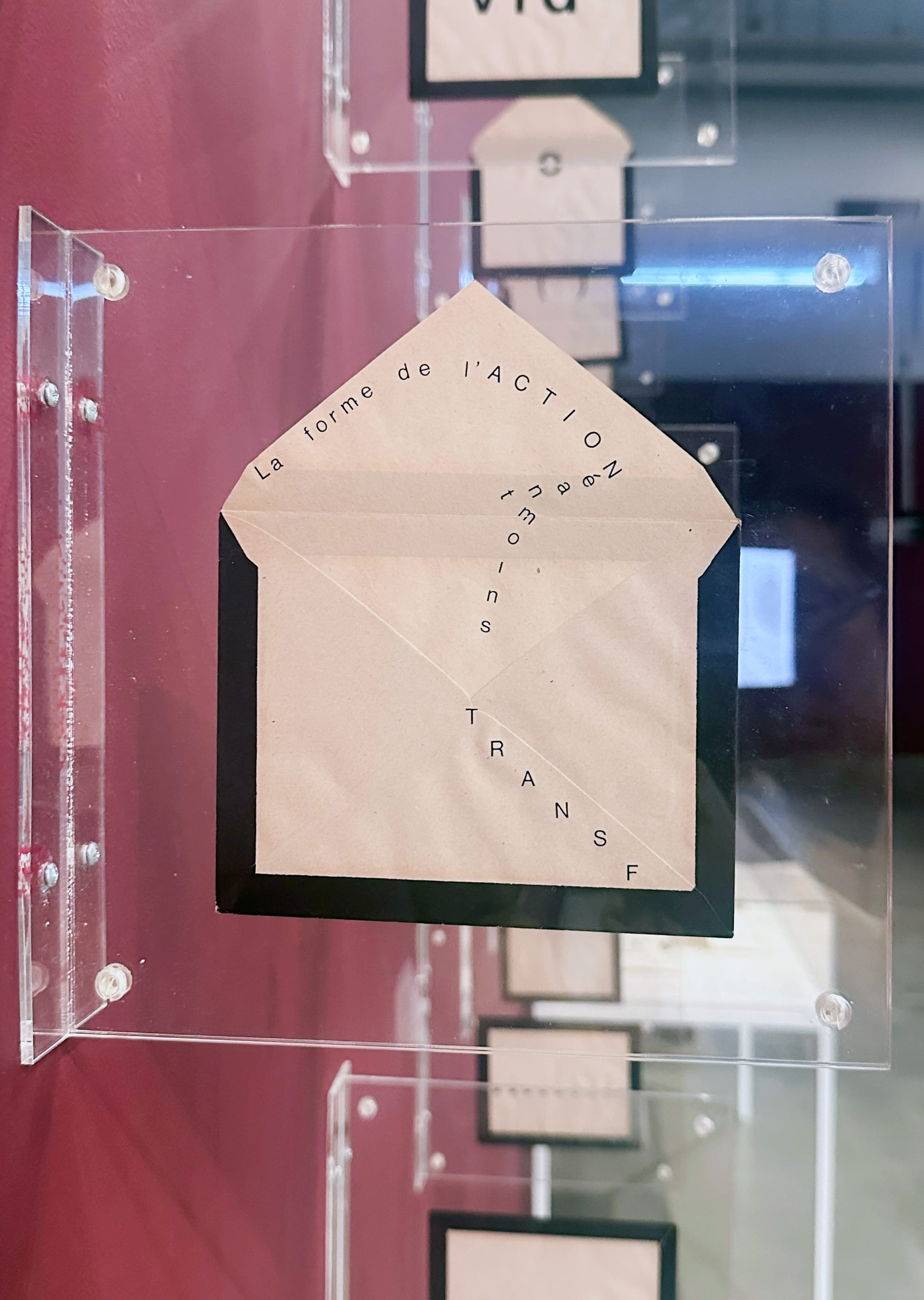
Installation views of Theresa Hak Kyung Cha, "Faire-Part" (1976), ink and press type on 15 envelopes
Cha’s playfulness and physicality show up in the way she works with text and language, her most recognizable medium. The exhibition helped me appreciate more clearly how she understood language as a material, how she broke apart and played with its structures, elements, and performance. “The Word” (1975), a video sequence of photographs of T-shirts stamped with a play on the word “Americanism,” presents the contradictions of the United States through a mischievous fragmenting: its cheerful, naive, individualism (“A / merry / can / ism”), and its hubris as it leaves deep scars on other nations, including Korea (“A / marr / can / ism”). “Surplus Novel” (1980), a poem typed on a long ribbon of paper, is loosely coiled into a porcelain bowl, rendering its contents illegible. One can only decipher the poem, a reflection on the objectifying and racially motivated catcalls endured by Asian-American women, because it is helpfully typed out in the accompanying exhibition label. Early works like “Mouth to Mouth," where Cha’s lips are seen slowly mouthing Korean vowels, remind me that the letters of the Korean alphabet mimic the shape that the mouth and tongue form when making their associated sound. In other words, this linking between the written word and its physical performance/sounding is deeply intertwined in Cha’s mother tongue.
Like many others, my first engagement with Cha’s work was through Dictee (1982), her genre-defying artist-book/novel. Until very recently, learning about Cha was like a secret revelation of your lineage, like discovering a long-lost relative, handed down among Asian American artists and poets. Multiple Offerings gave me a new appreciation for the physical and playful ways she worked with the material of language in Dictee and throughout her work. This exhibition is a gift. Not only does it reveal a historical lineage to those looking for one, but it also gives a glimpse of Cha’s humanity, allowing us to enter her work in a new way.
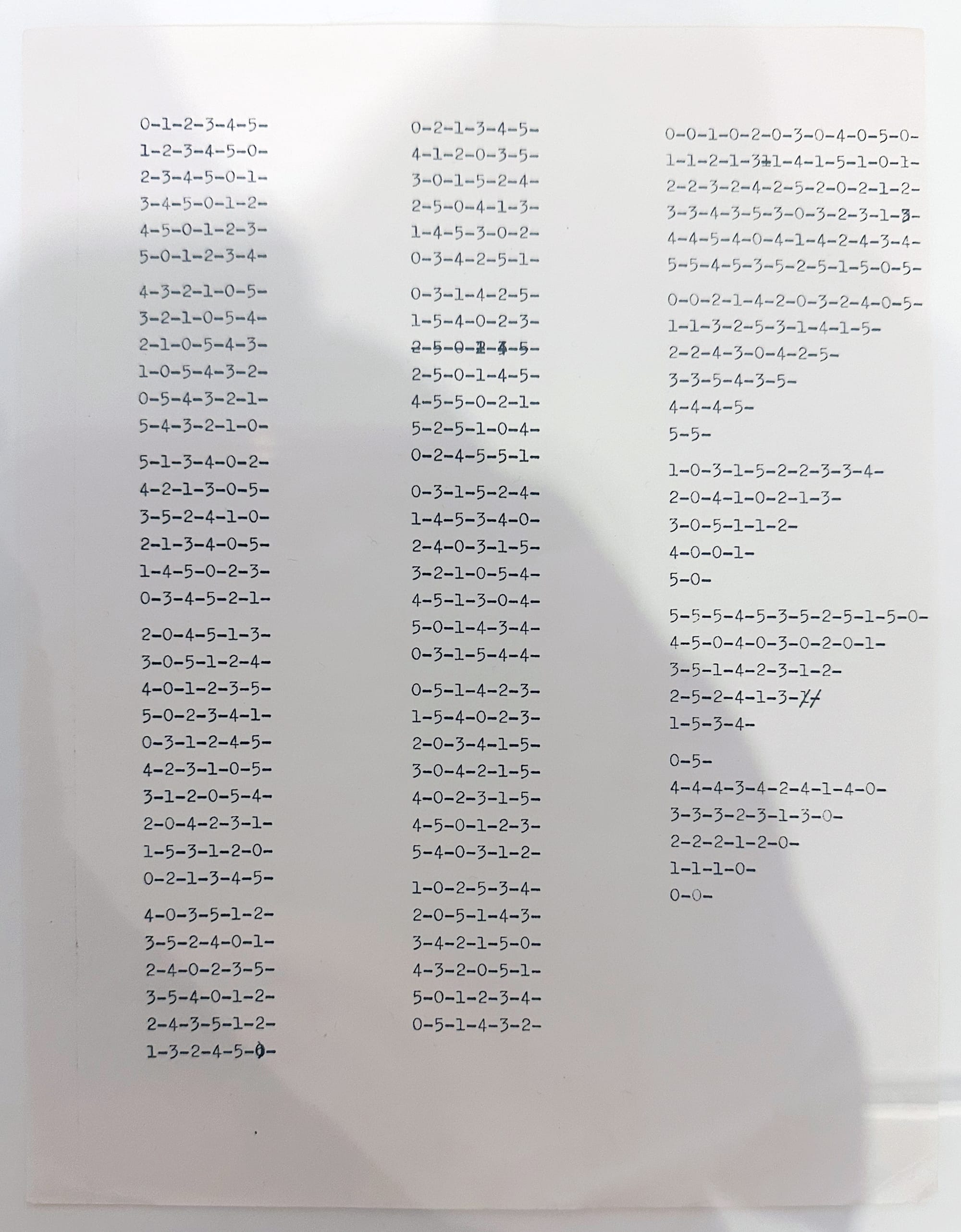
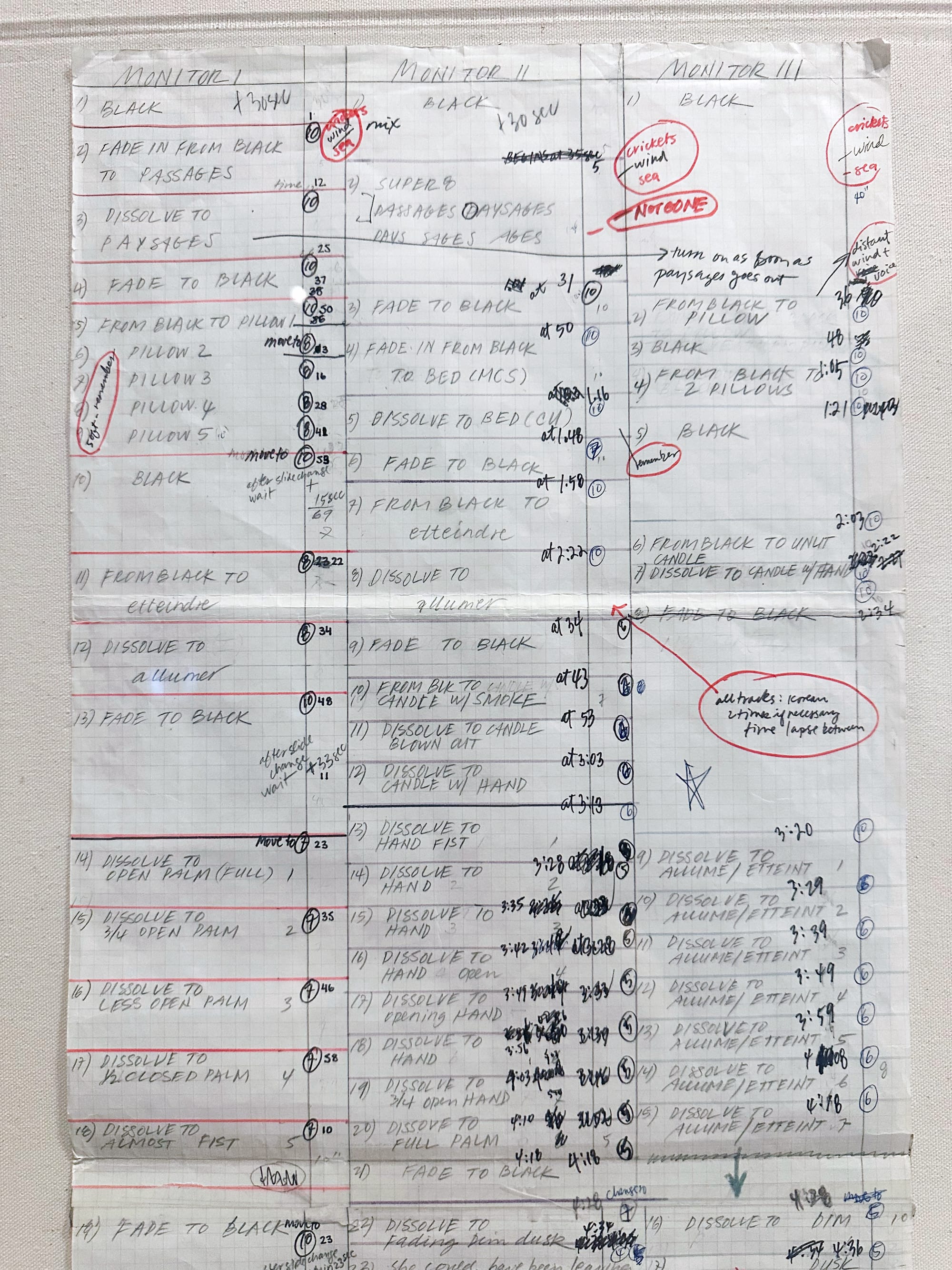
Theresa Hak Kyung Cha, "Notes for Permutations" (1976); right: Theresa Hak Kyung Cha, Notes for "Passages Paysages" (1978)
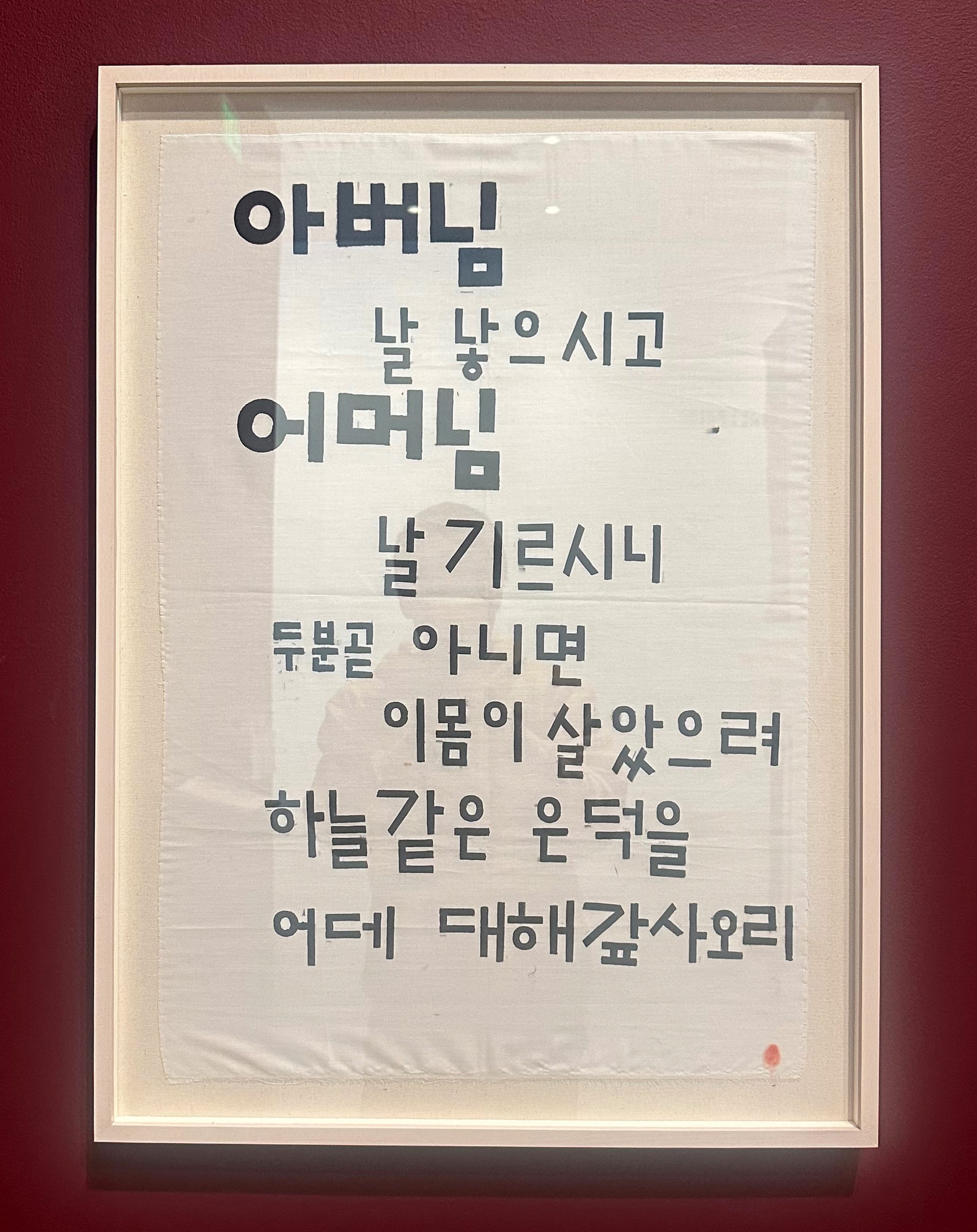
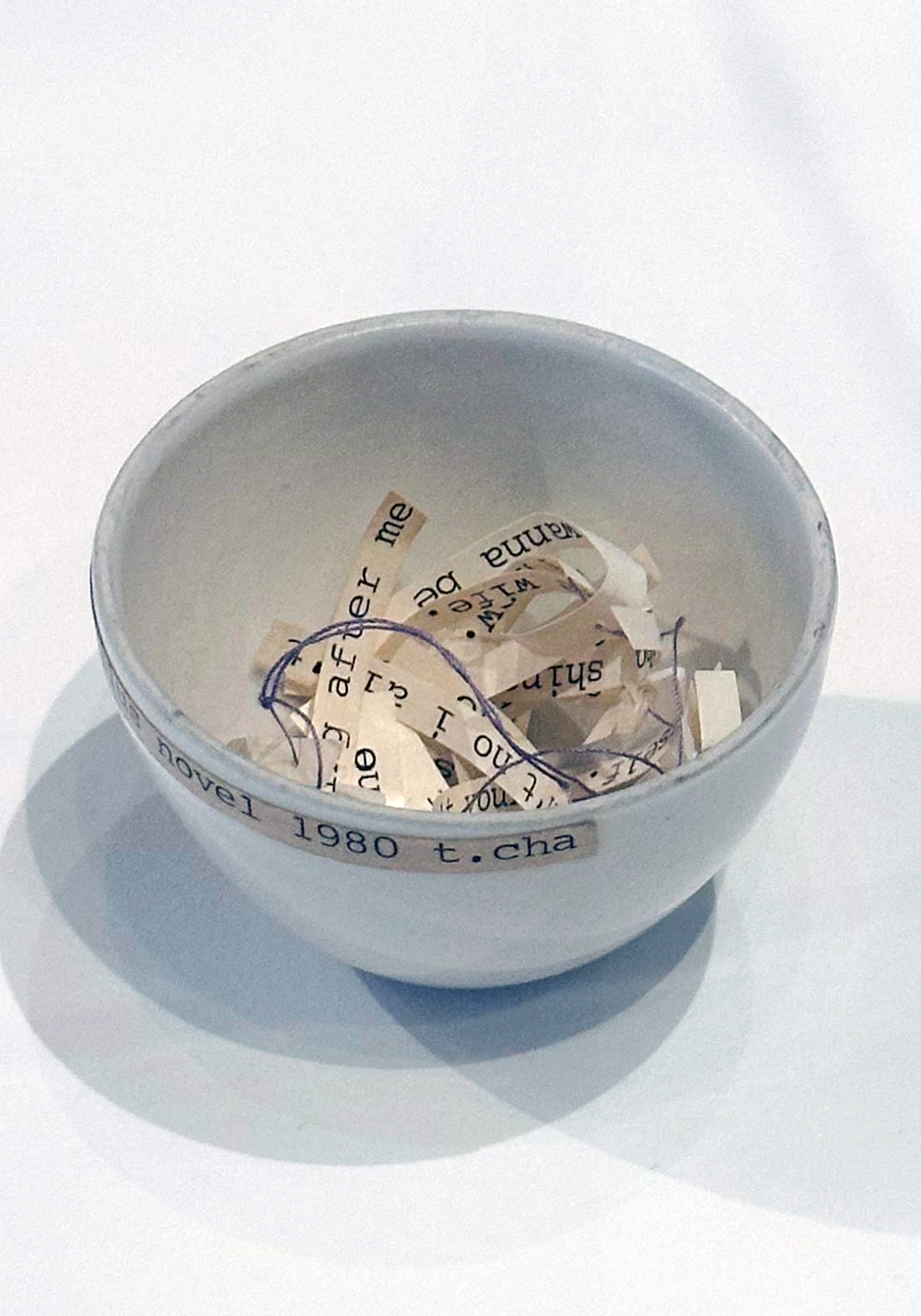
Left: Theresa Hak Kyung Cha, "Untitled (Poem to Mother and Father)" (c. 1970s), stenciled ink on cloth; right: Theresa Hak Kyung Cha, "Surplus Novel" (1980), porcelain bowl, thread, and typewriter ink on paper
Theresa Hak Kyung Cha: Multiple Offerings continues at Berkeley Art Museum and Pacific Film Archive (2155 Center Street, Berkeley, California) through April 19. The exhibition was curated by Victoria Sung with Tausif Noor.