What “The Book of Genocides” Teaches Us
Dana Mashoian Walrath’s work of graphic nonfiction points to historical patterns across 10 genocides, from Germany and Turkey to Gaza.

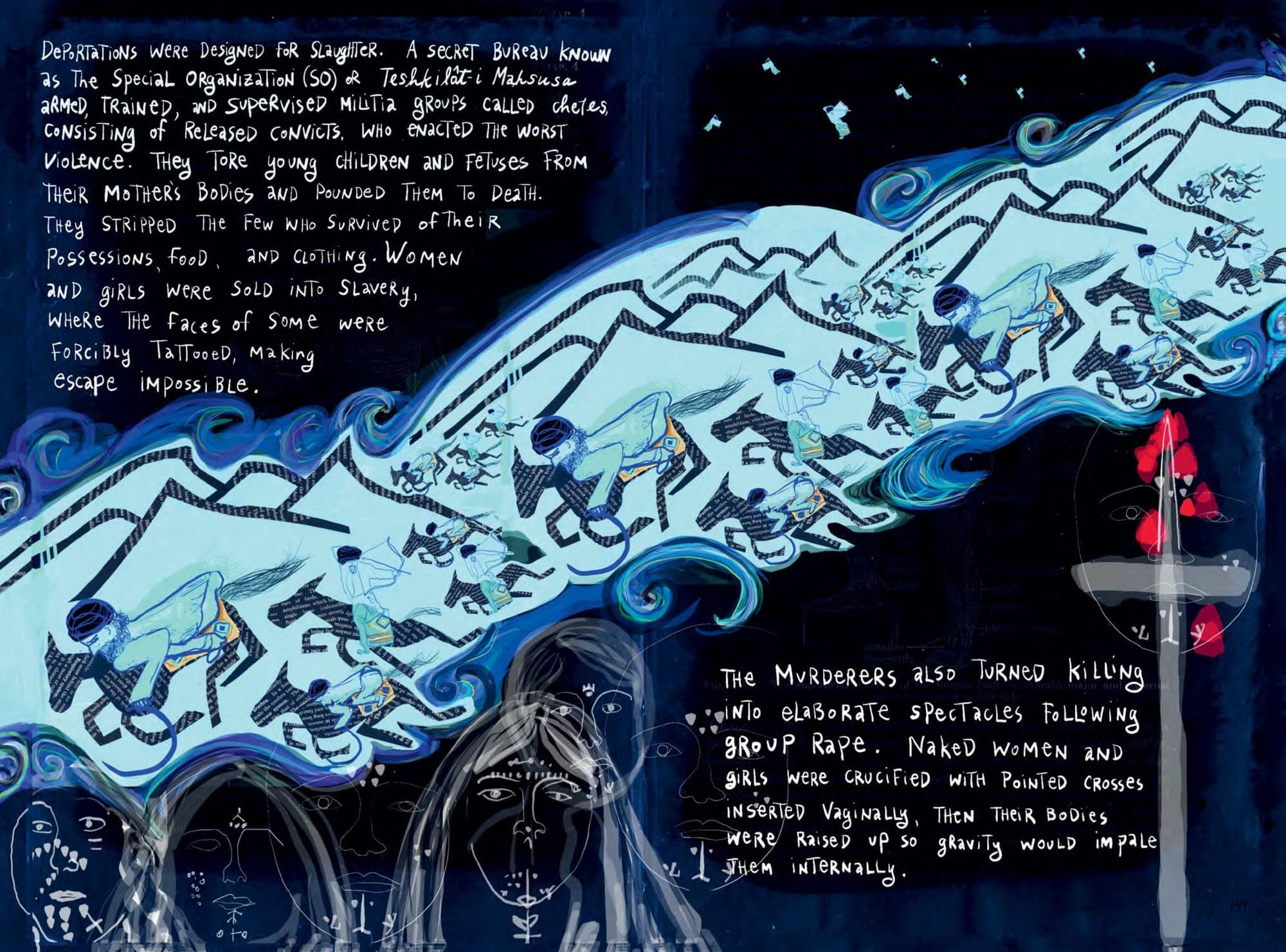
Dana Mashoian Walrath opens The Book of Genocides (2026) with her family’s own experience: Her grandmother is shown hiding in an urn while Ottoman Turkish soldiers publicly dismember her great-grandfather. Walrath renders the scene like an X-ray image, in a scratchy digital style reminiscent of charcoal sketches. Revisiting her family's horrific experience of the Armenian Genocide acts as an entry point to confronting something so vicious and scary — a moral abyss — with bracing intimacy.
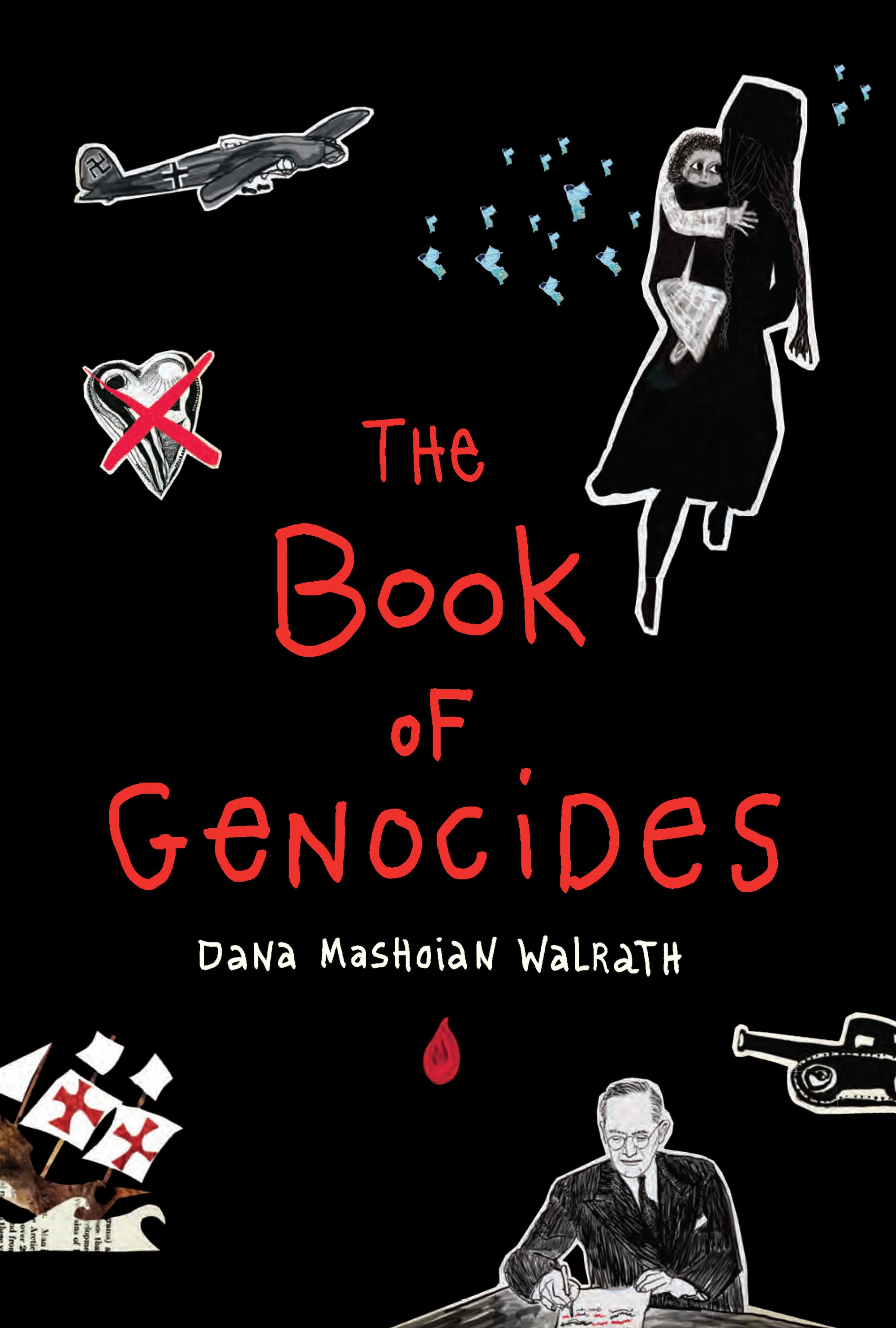
The graphic non-fiction book delivers on its title: Ten genocides constitute its unrelenting drumbeat, from the First Peoples of the Americas to Black Americans, Aboriginal Australians and Torres Strait Peoples; from the Armenian Genocide to Jews in the Holocaust, Palestinians, Cambodians, Tutsi, Bosnians, and Rohingya. Each chapter opens on a patterned red page before launching into an illustrated history followed by striking, full-body pencil drawings of human victims and animals, paired on facing pages with blackout poems. And while The Book of Genocides overflows with chilling facts and experimental visuals, I can’t help but wonder: Where is it taking us?
In the introduction, Walrath writes, “I know the anger, fear, and violence that makes people lose their ground and meet violence with violence, but our dreams can be different.” Placing perpetrators on trial isn't the mission here. The book instead attempts a kind of epic empathy, centering on a riddle that's long swirled around the word "genocide" itself: As a legal term, it claims universal morality while being constantly gatekept and weaponized by nation-states, human rights groups, and the media. Editors at the New York Times instructed their staff to avoid using the term "genocide," as well as the phrases "ethnic cleansing" and "occupied territory," in 2024 when covering the genocide in Gaza.
To address the term's contested history, she cites Raphael Lemkin, a Jewish Holocaust survivor who lost 49 family members and coined the word “genocide” in 1944. But he also represents the word's contradiction: She shows him refusing to support a 1951 United Nations petition, “We Charge Genocide,” which defined lynchings, police killings, and institutionalized violence against living Black Americans as genocide. She draws his face spattered with blood as he equivocates, representing shame as the same violence he himself once escaped. In hindsight, we see that Lemkin’s blind spot was no anomaly — particular identities are always fighting to define the word in a way that serves their interests. The Book of Genocides is, above all, an attempt to reimagine this troubled universalism in the face of increased polarization and ongoing genocides.