Zarina Brought the World to New York
Her visual idiom was fully embedded in South Asian histories, but she never fell into a too-close relationship with national identity.

Zarina Hashmi, known professionally as Zarina, lived a peripatetic life. She was born in 1937 in Aligarh before Indian Partition, moved temporarily with her Muslim family to Pakistan in the wake of that traumatic upheaval, and subsequently lived, studied, and worked in Bangkok, New Delhi, Paris, Tokyo, and many other places besides, before her death in 2020. Her oeuvre — spare, post-minimalist prints, drawings, cast-paper reliefs, and sculptures — consistently returns to questions of mapping place, remembering home, and understanding migration. It is indelibly marked by her nomadism — sometimes chosen, sometimes forced.
But Zarina was at the same time very much a New York artist. She arrived in the city in 1976, and quickly became embedded in some of the most consequential art scenes of the era — she was a member of the New York Feminist Art Institute; on the editorial board of Heresies magazine, where she co-edited the landmark Third World Women issue in 1979; and she co-curated the crucial exhibition Dialectics of Isolation: An Exhibition of Third World Women Artists in the United States with Kazuko Miyamoto and Ana Mendieta at A.I.R. Gallery in 1980. The Museum of Modern Art acquired her work as early as 1974, she was the subject of a retrospective at the Guggenheim Museum in 2013, and has shown multiple times at Luhring Augustine Gallery, including her current exhibition, Beyond the Stars.
Zarina’s work is all about dislocation — she once called “home” an “idea we carry with us wherever we go” — so it might seem perverse to emphasize her locatedness in New York. But it was precisely her presence in the city that made Zarina so important to many South Asian American artists and art workers of subsequent generations, especially women. She was one of the few who were visible despite the precarity of life as a woman of color, which in her case included eviction attempts and sidelining by White feminists of her generation. She was a bulwark against a doggedly persistent erasure. (It shocks me every time I’m confronted by yet another artist list for the Whitney Biennial with no or almost no South Asian American artists; since the exhibition was established in 1930, only 10 or so artists of South Asian descent have been shown in the galleries.) Even as other diasporas have — after much effort, activism, and talent — been recognized as having a place within the broader definition of what constitutes “American art,” South Asian American artists are generally marked as outside the fold, their culture largely understood solely through the lens of Big Fat Weddings and Bollywood.
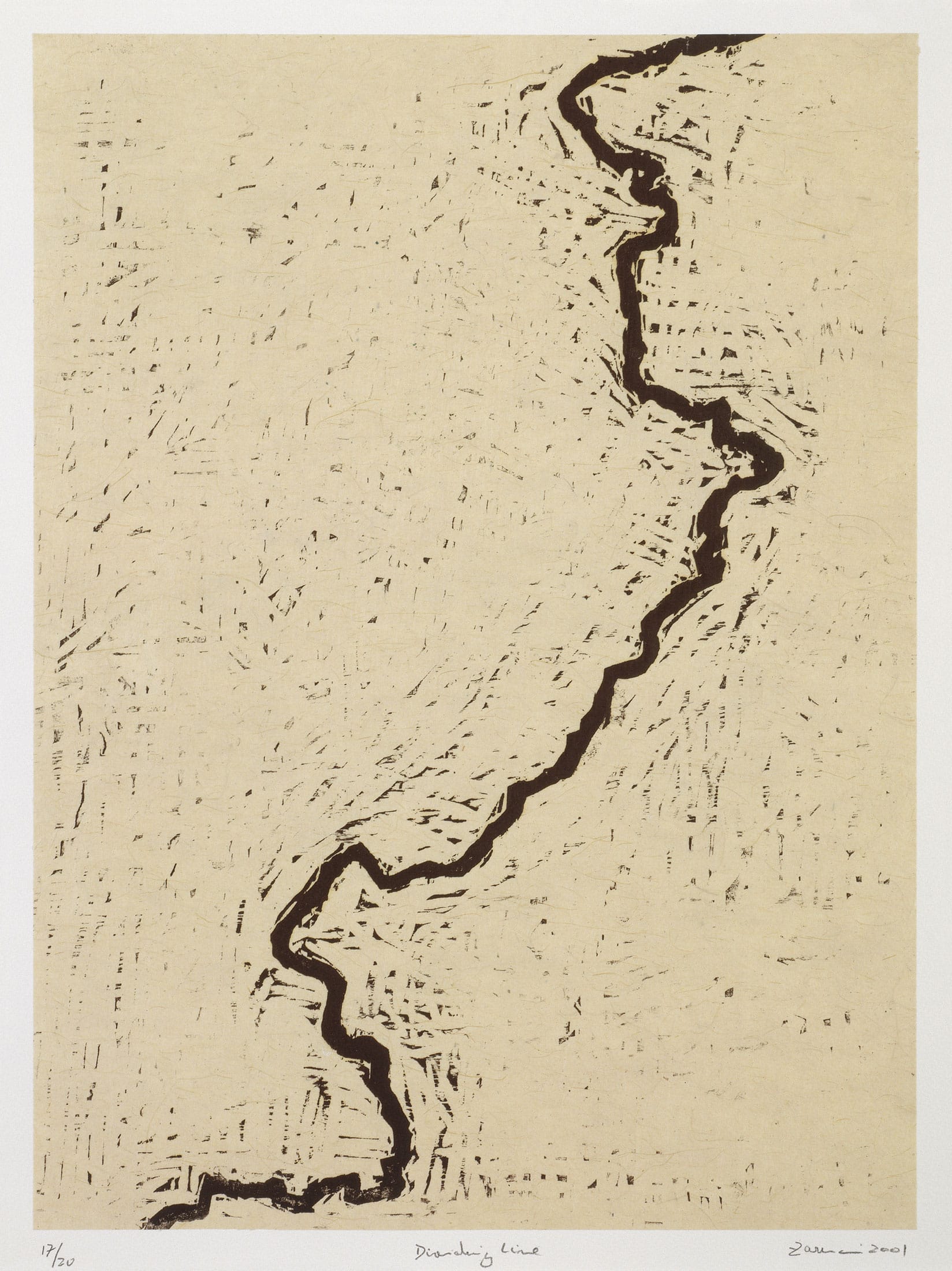
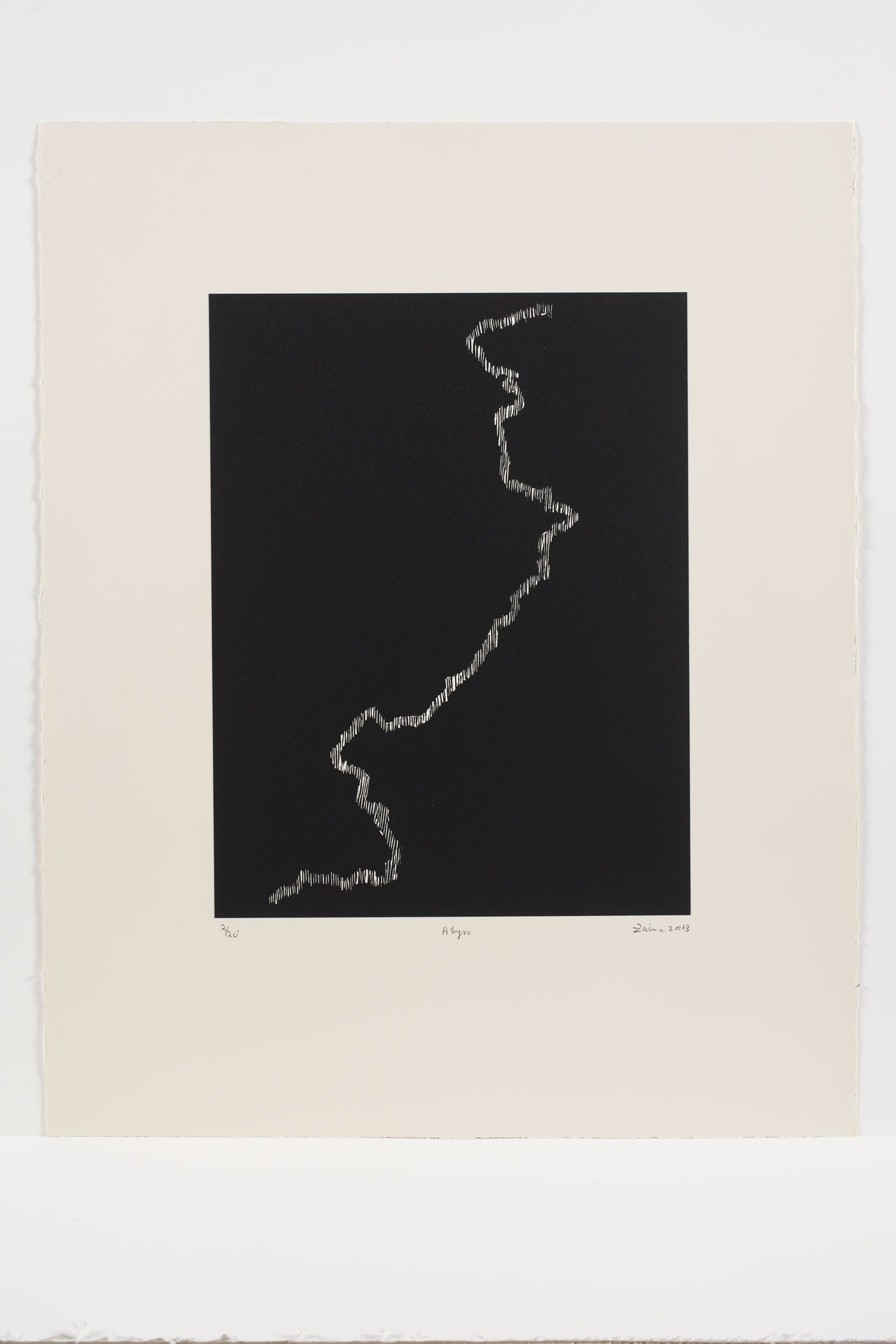
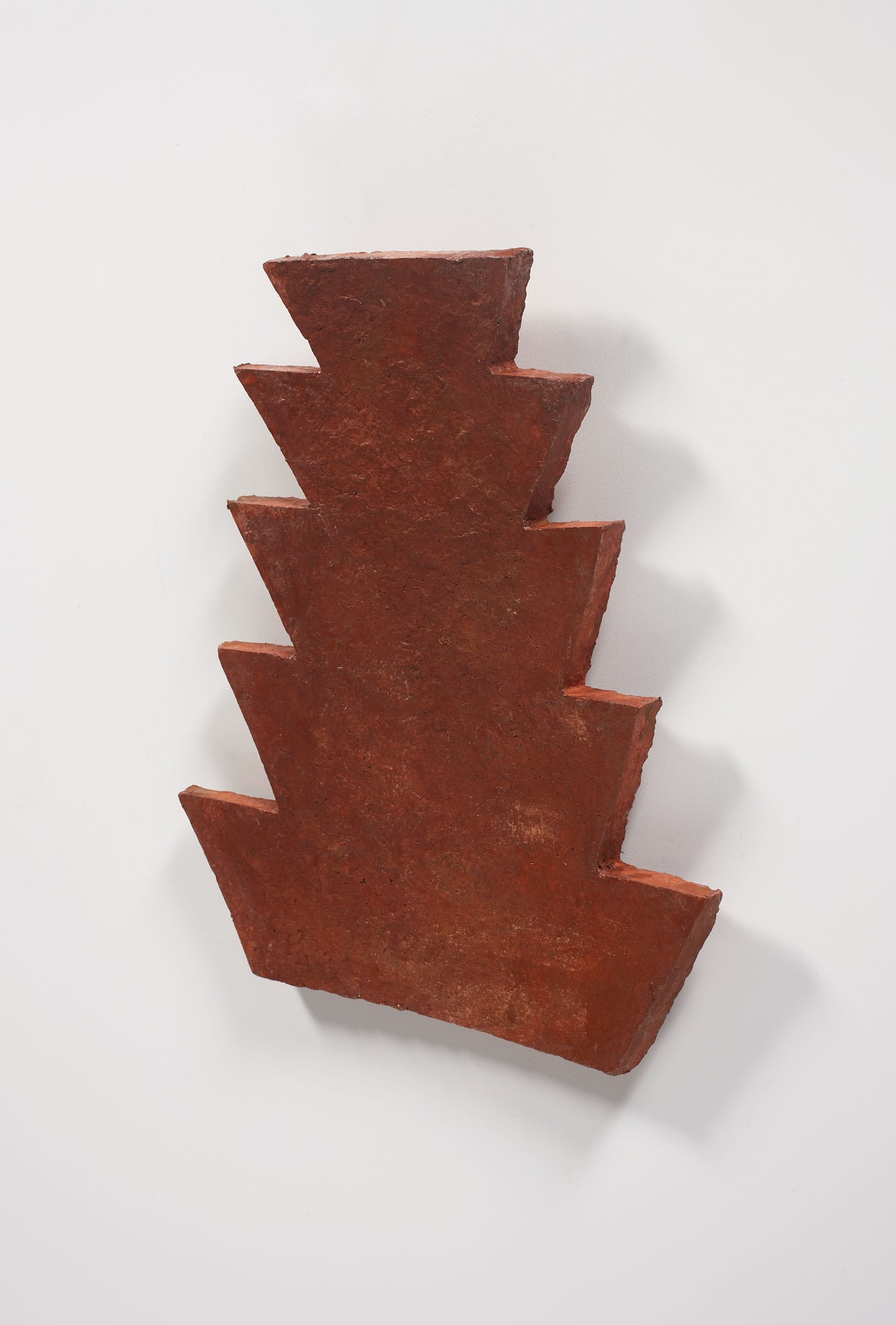
Left: Zarina, "Dividing Line" (2001), woodcut printed in black on Nepalese handmade paper mounted on Arches cover white paper (photo Lamay Photo); right: Zarina, "Abyss" (2013), woodcut on BFK light paper mounted on Somerset Antique paper Sheet size: 27 1/2 x 22 inches (69.85 x 55.88 cm) Edition of 20 (#18/20) Photo: Tom Powel Imaging Inc
Zarina’s practice, as demonstrated by the 32 works on view in Beyond the Stars, managed to walk a tight line between a visual idiom fully embedded in the Urdu language, South Asian histories, and Islamic and Hindu mysticisms, while never falling into a too-close relationship with national identity. And why would she? She was born in an India that ceased to exist after 1947, when it was ripped in two.
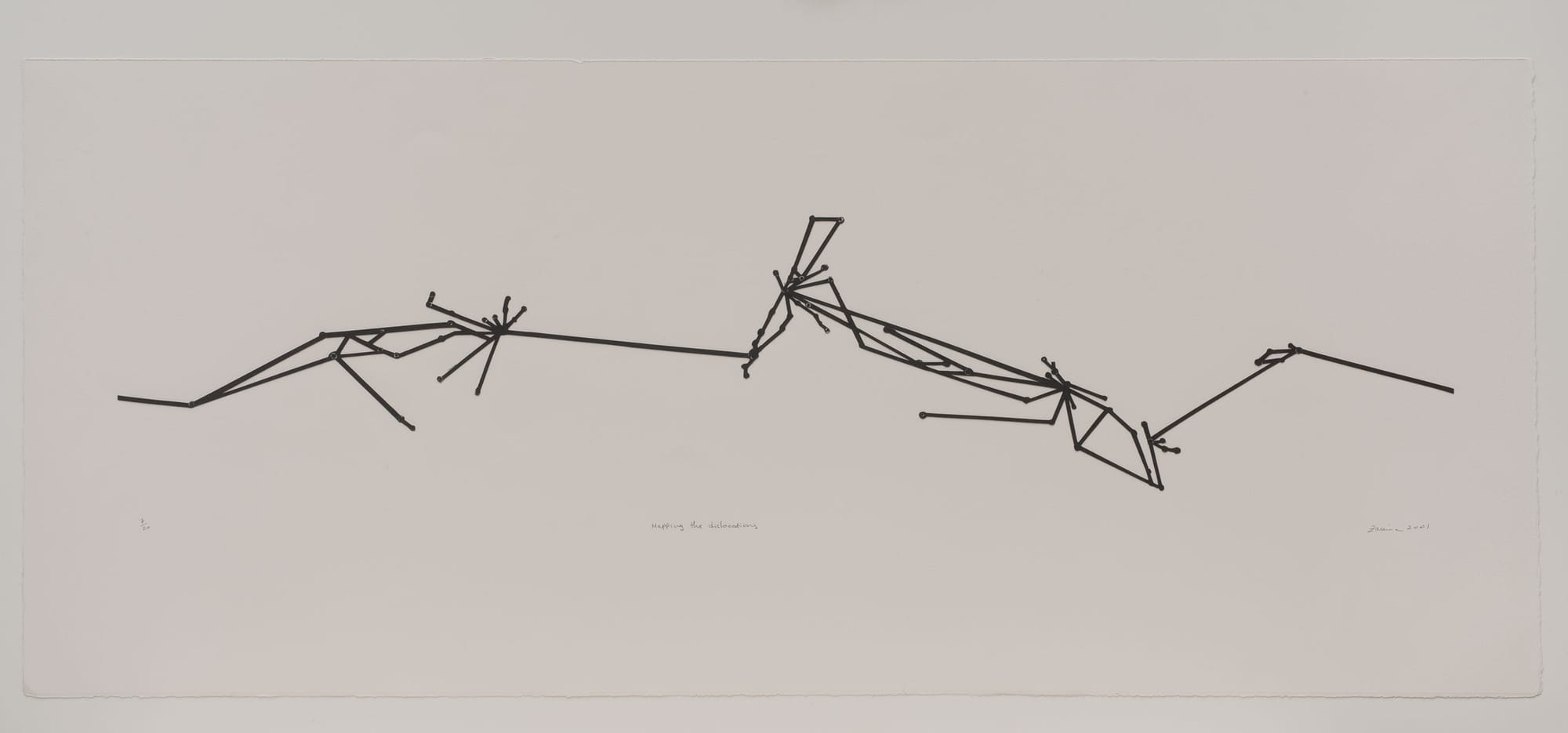
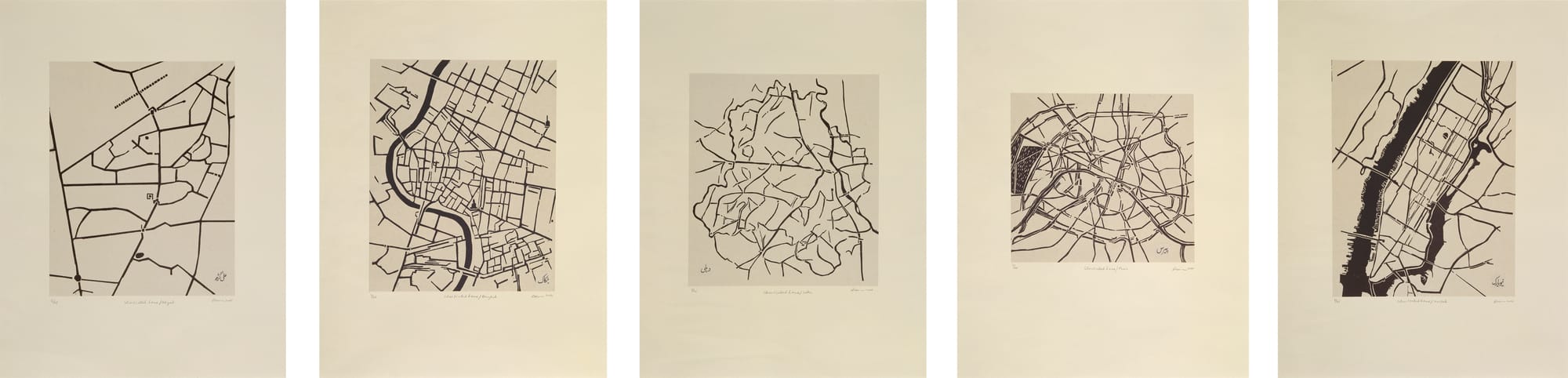
Two woodcuts on handmade paper, “Mapping the Dislocations” (2001) and “Cities I Called Home” (2010), mark her unique position in different ways. In the first, her geographical biography is rendered in a single, jagged route full of switchbacks and overlaps, the dots at the end of its segments (representing her stopping points) less important than the propulsion of the line. The second, a portfolio of five sheets, is a cartographic schematic of her waystations. Importantly, it frames Aligarh as equivalent to all of the other cities represented (Bangkok, Delhi, Paris, New York) rather than a nostalgic point of origin, a radical departure from typical representations of diasporic experience in art and literature.
Her images that deal directly with Partition — in which between 14 and 18 million people were uprooted in a matter of months, many killed, raped, or subjected to horrific violence — are equally complex. A pair of woodcut prints — “Dividing Line” (2001) and “Abyss” (2013) — distill the historical rupture into its most elemental form, a meandering line that follows the contour of the awful border between India and Pakistan.
In the former, Zarina carves out the land on either side of that line in rough cross-hatches, making the boundary that arbitrarily divided communities feel more like a river, imperfect and blurry at its edges — an active, shimmering place. In the second, the border is rendered via a series of fine, vertical lines etched into her block, not a river but a fault line in a landscape plunged into darkness. In both of these images, there is no difference between what exists on one side of the division and the other. I can think of no more devastating commentary on the cruelty of nationalisms than this.
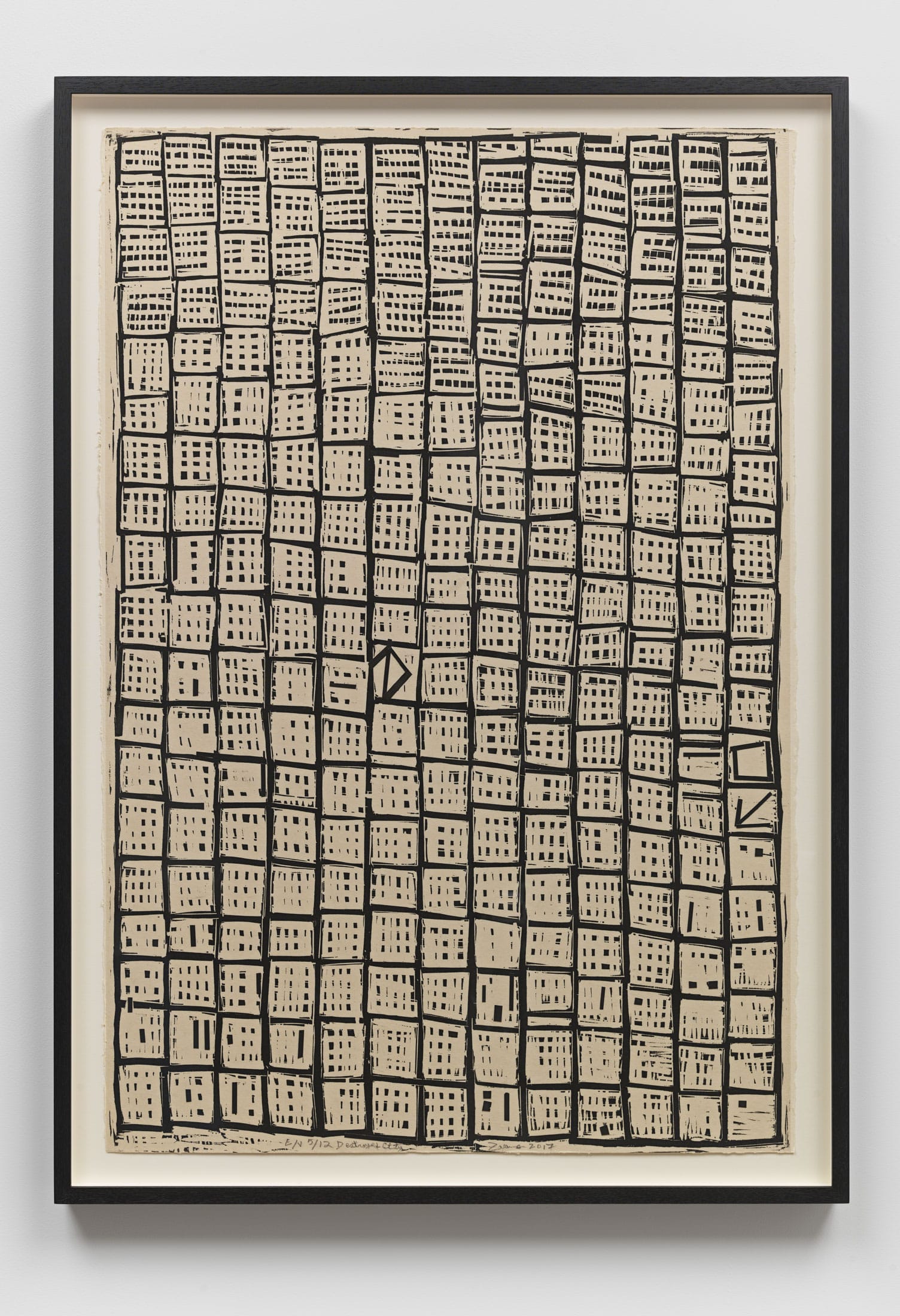
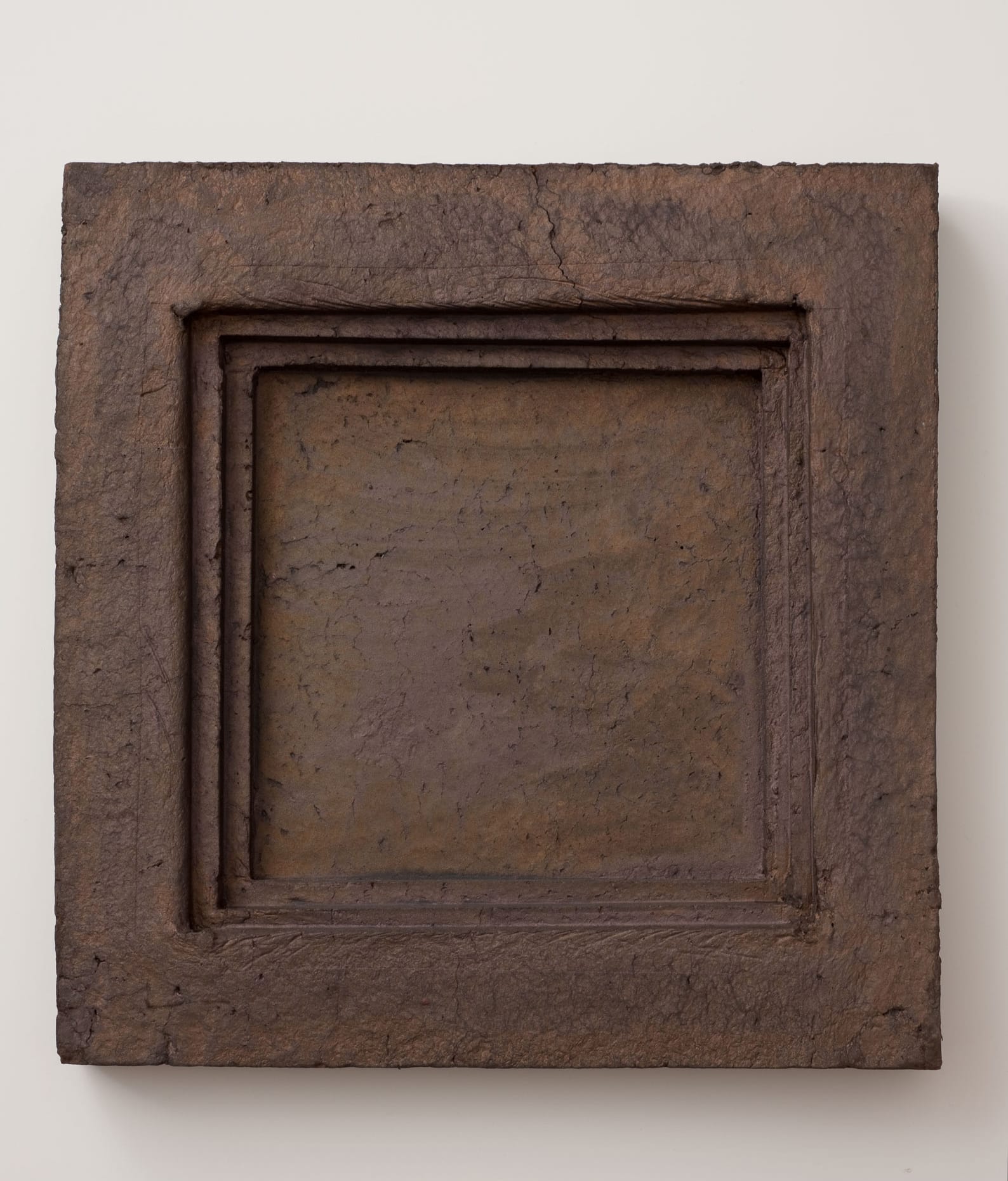
Left: Zarina, "Marrakesh" (1988), cast paper (photo Tom Powel Imaging Inc.); right: Zarina, "Destroyed City" (2017), woodcut printed in black on Indian handmade paper and collaged with printed black paper and mounted on Somerset Antique paper (photo Genevieve Hanson)
In Zarina’s hands, paper becomes a sign of both vulnerability and resilience. She uses it as the basis of sculptures like “Pool II” (1980) and “Marrakesh” (1988), burnishing and sizing the cast pulp with pigments to give it visual heft. Both are emphatically architectural — the former suggests a pool, perhaps modeled on those found in Mughal palaces and pleasure gardens. Hers is an architecture as light as paper, one that travels — a poignant reminder of how so many of us carry our homes with us as we move around the world.
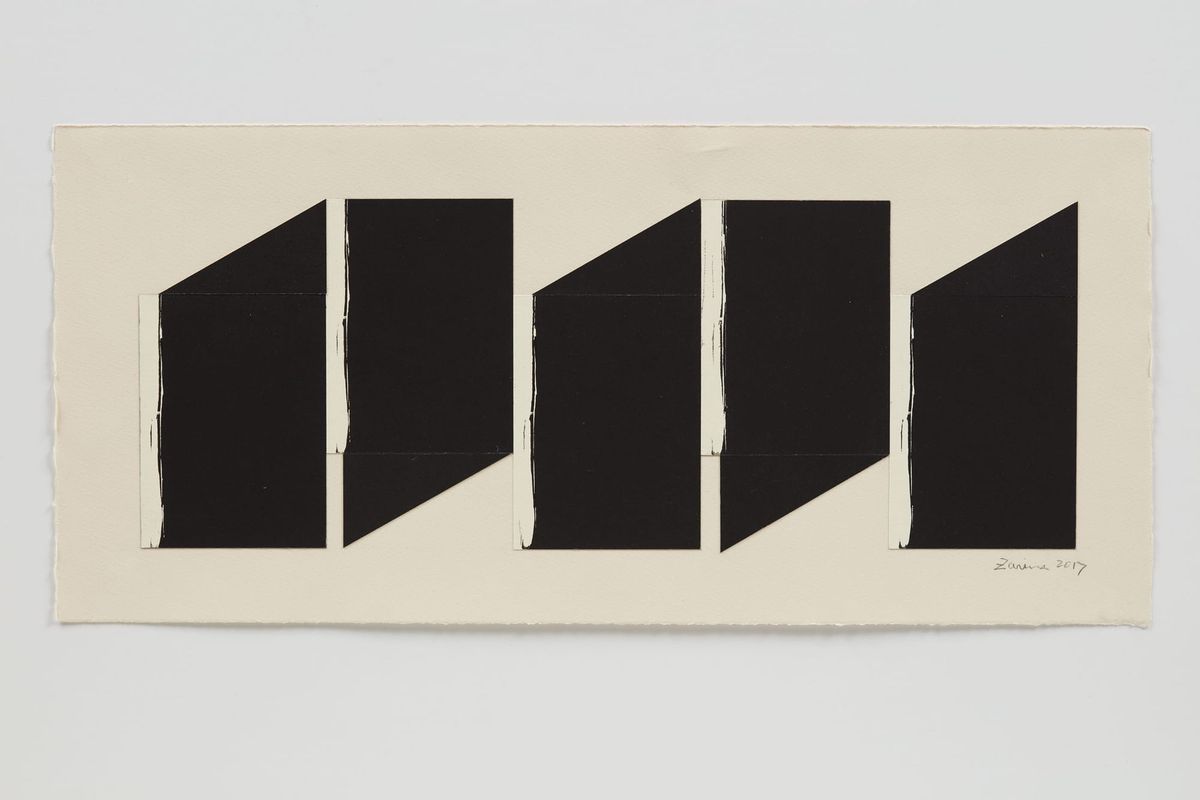
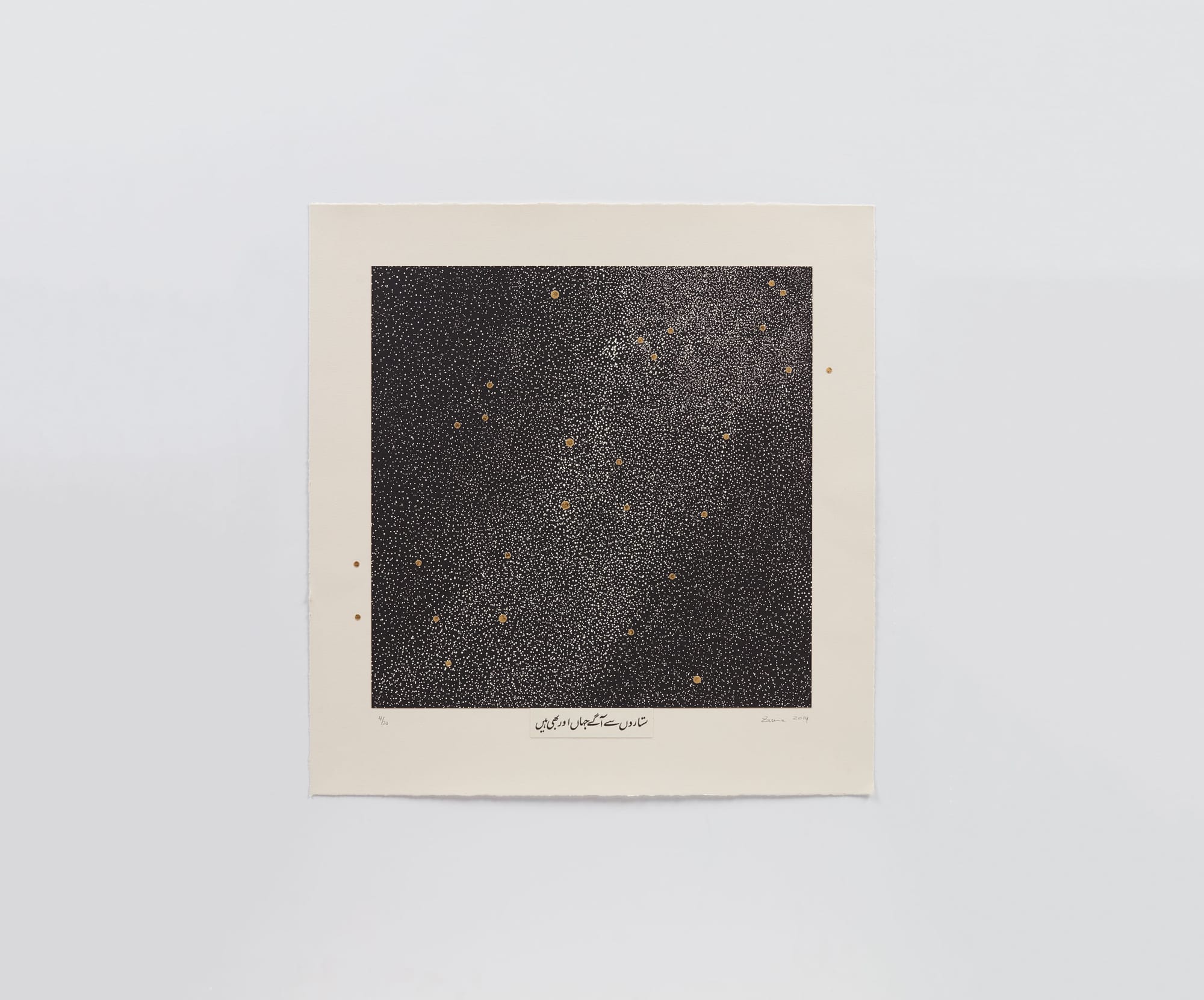
Cities are destroyed (“Destroyed City,” 2017) or effervesce into memory (“Delhi II,” 2000). Houses are made small (“Folding House,” 2014), or spin (“Spinning House,” 2013), or reduced to shadows (as in the cut paper and gold leaf “Shadow House VI,” 2006). And above it all is the sky. “Fold in the sky” and “Beyond the Stars,” both from 2014, envision the galaxy above as both boundless and bounded. The former imposes a vertical horizon on the hundreds of tiny, luminous dots, each representing unknown suns, while the latter overlays a square of stars with collaged gold leaf disks. But here, the gold disks exceed the frame, pointing us to something more that cannot be mapped — something beyond, even, infinity.
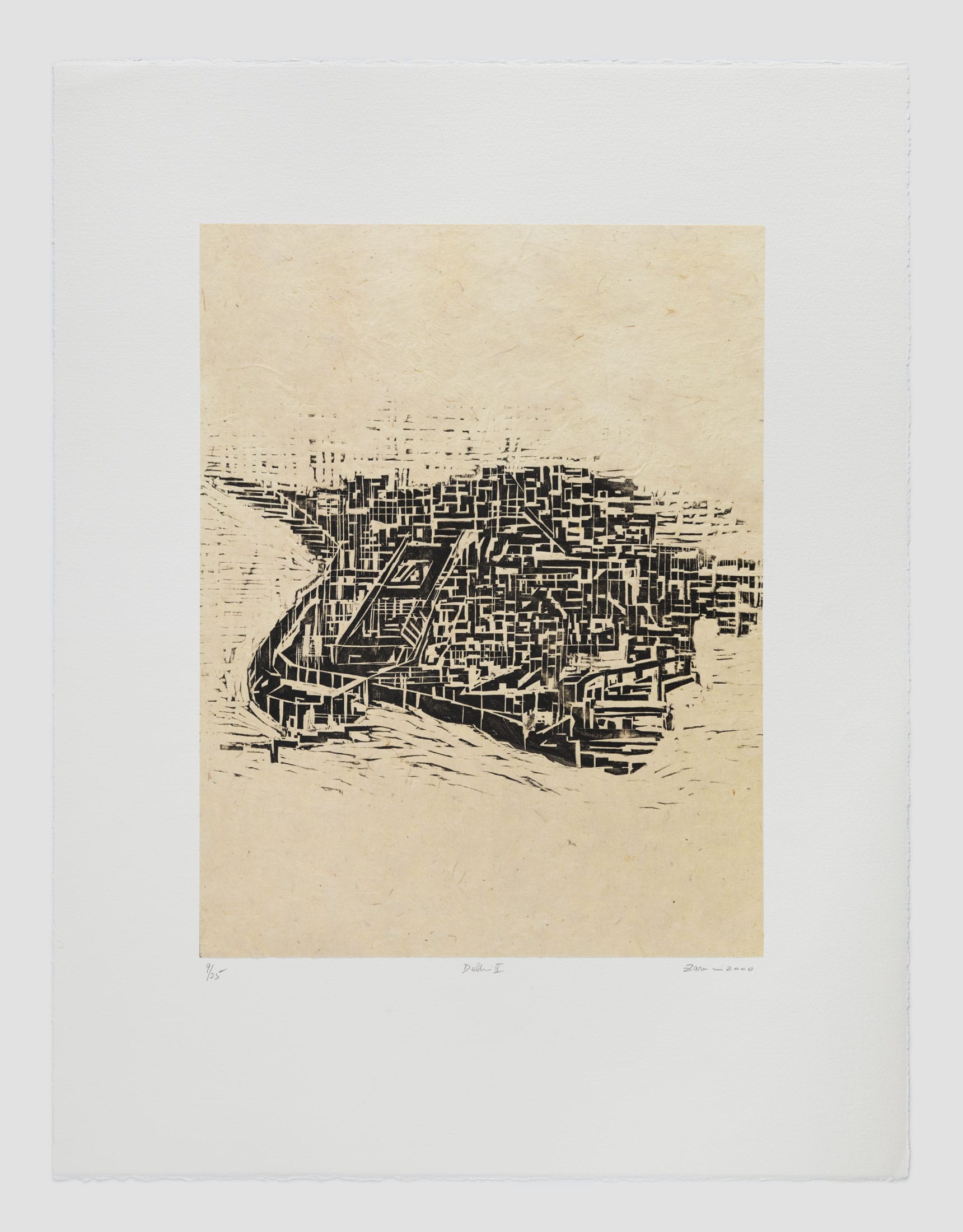
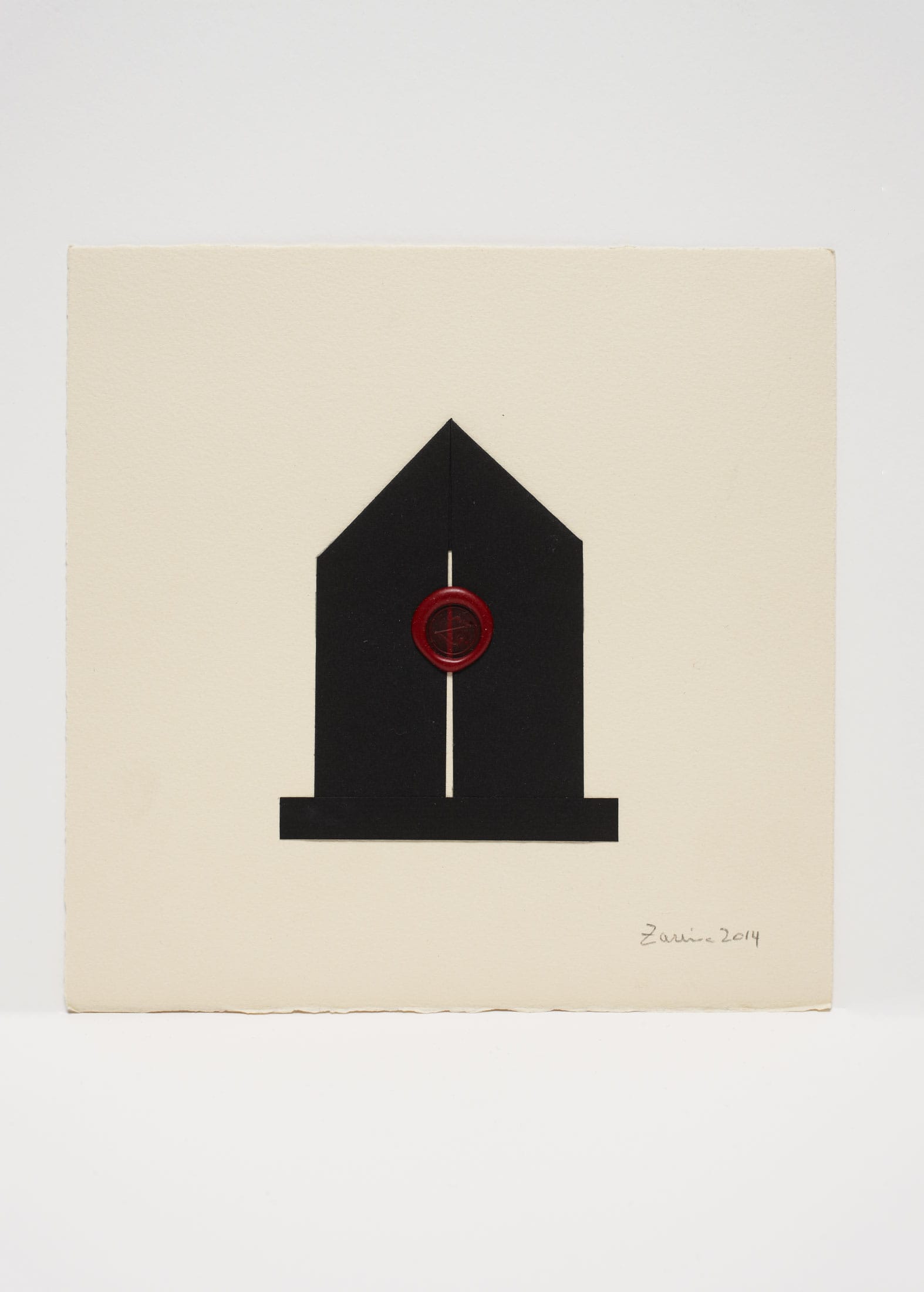
Left: Zarina, "Delhi II" (2000), single print from the portfolio Delhi Portfolio of 3 woodcuts printed in black on handmade Nepalese paper mounted on Arches Cover white paper (photo Genevieve Hanson); right: Zarina, "Folding House" (2014), collage on Indian handmade paper with Sumi ink and wax mounted on Arches Cover Buff paper (photo Tom Powel Imaging Inc.)
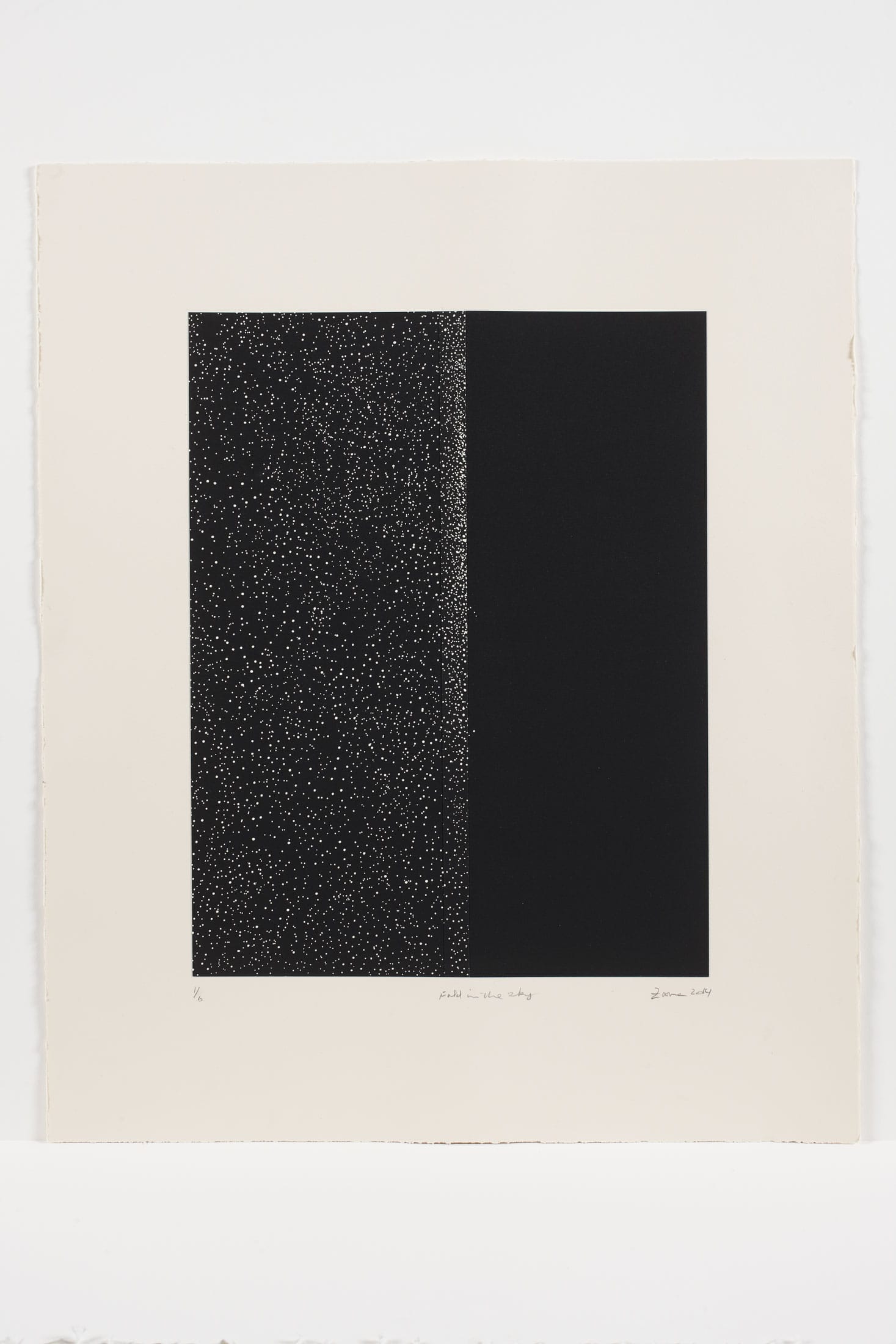
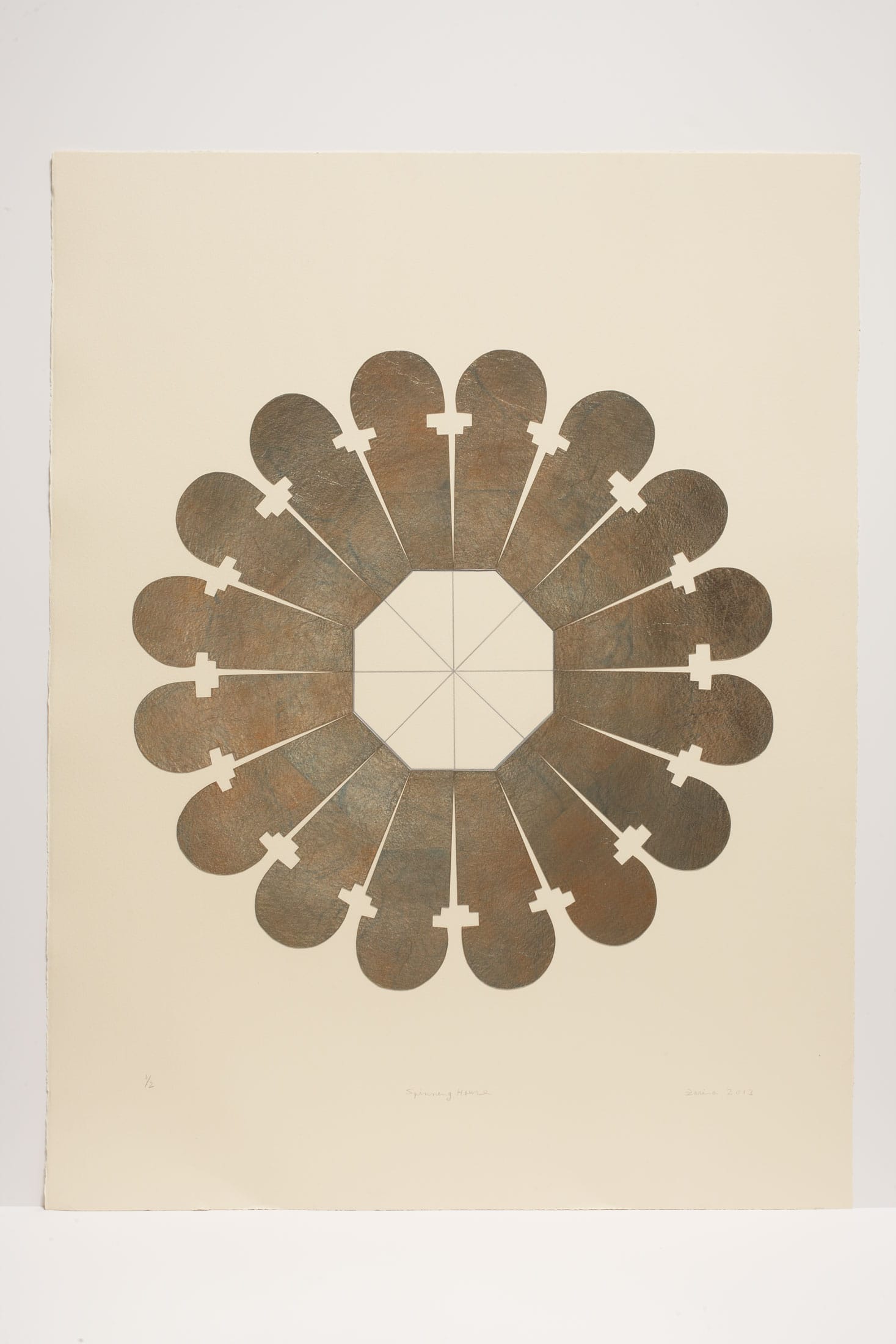
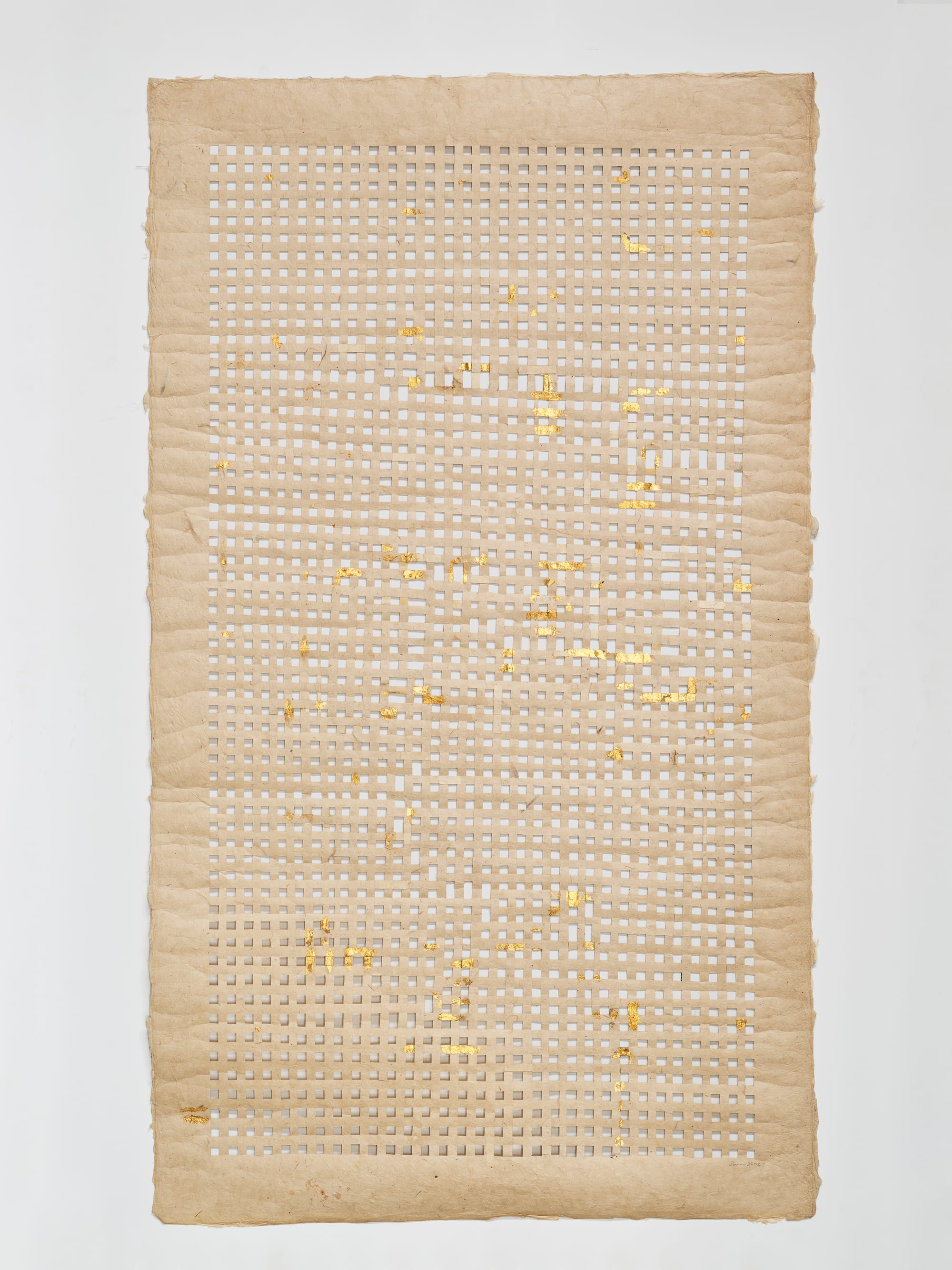
Left: Zarina, "Spinning House" (2013), collage with pewter leaf on etching with silver pencil mounted on Somerset textured cream paper (photo Tom Powel Imaging Inc.); right: Zarina, "Shadow House VI" (2006), cut Nepalese paper and gold leaf (photo Farzad Owrang)
Zarina: Beyond the Stars continues at Luhring Augustine Tribeca (17 White Street, Tribeca, Manhattan) through March 28. The exhibition was organized by the gallery.