Beer with a Painter: Sam Gilliam
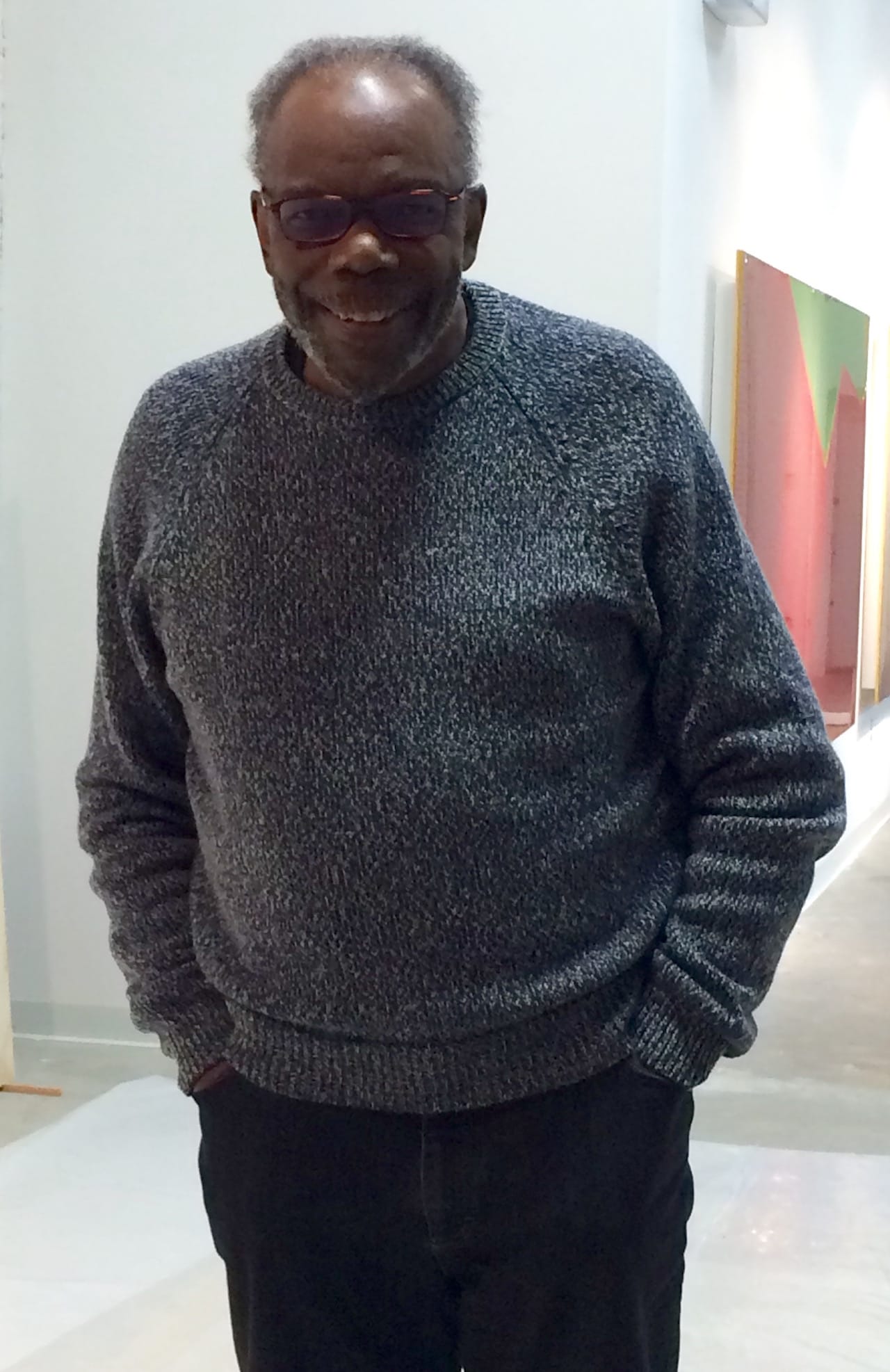
“I’m just getting started,” Sam Gilliam says with a playful smile as he watches me take in his Washington, D.C. studio.

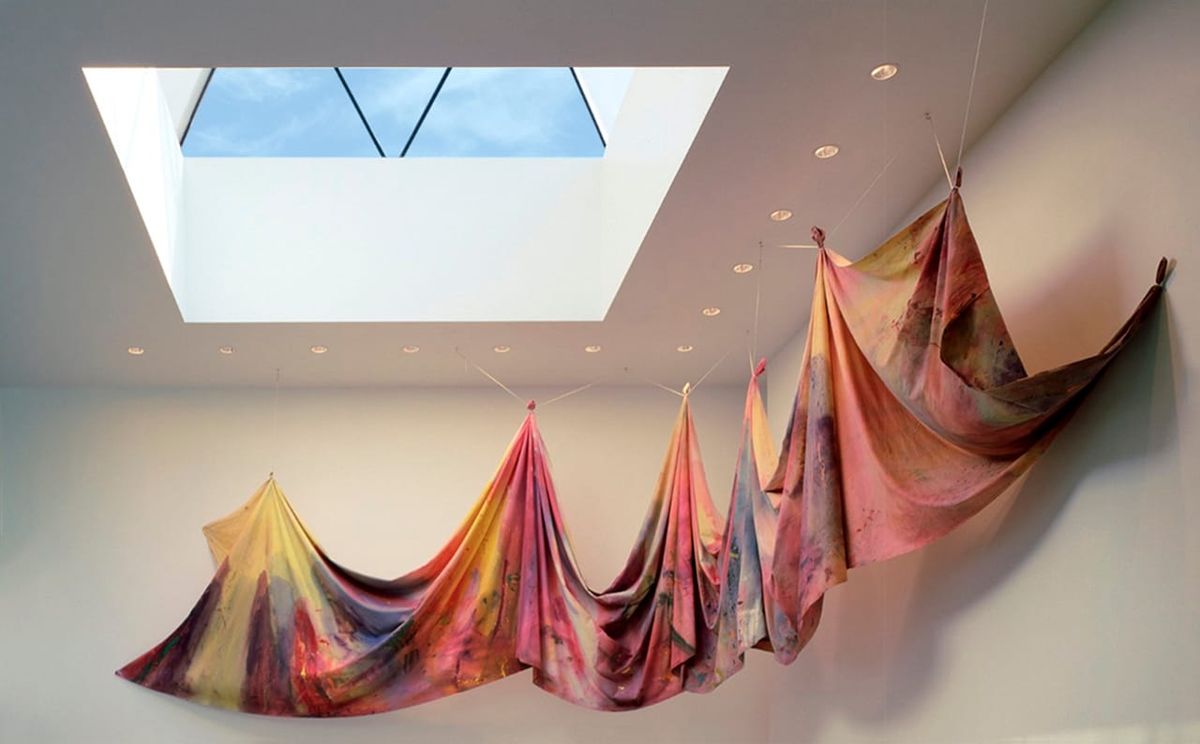
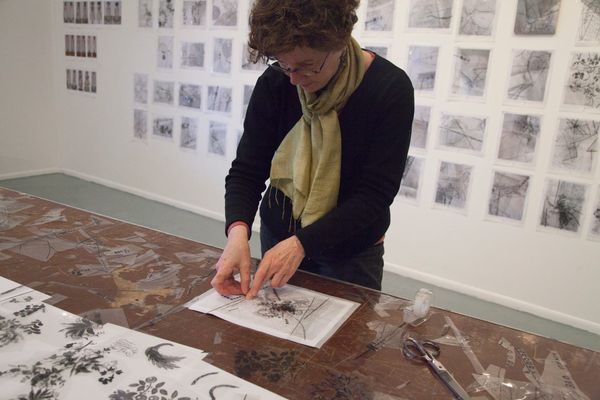
“I’m just getting started,” Sam Gilliam says with a playful smile as he watches me take in his Washington, D.C. studio. It is a candy store of color: a vast, skylit room, crisply renovated, with stacks of vividly stained sheets of Japanese paper on long tables; multi-panel enamel paintings in various stages of production; older assemblage pieces leaning against the walls; plans and maquettes for site-specific work pinned to walls; and the sound of activity in a wood shop in the back.
When I ask Gilliam how he makes his tabletop paper pieces, he takes a flat sheet and proceeds to fold it for me. “Like this,” he says, creasing it deliberately, with long, elegant fingers. Our conversation is like that, too: he tells stories with a quiet reverence; his gratitude for the beauty of a life spent with art is palpable.
He gives equal weight, in telling this narrative, to childhood play, the circus, the army, music, racial tension and the Civil Rights movement as it affected Louisville and Washington D.C. It has been said that Gilliam doesn’t make “black art,” but this assessment misses the mark. His work is experiential: these events are recorded and imprinted into the texture and facture of his work. Experience is then proffered to the viewer: to move through the work, or to observe the movement of the work itself.
Although Gilliam is best known for his “Drape” paintings—unstretched canvases stained in vibrant pigments and extended into three-dimensional space—the surfaces of the paintings he has made over a fifty-plus-year career are actually quite diverse. They include the “Black” and “White” paintings: dense thickets of monochrome paint, with collaged, cut and reused canvas additions. Gilliam has also worked extensively with multi-panel paintings in enamel on aluminum with plywood structures.
Gilliam was raised in Louisville, Kentucky. He received his Bachelor of Arts degree from the University of Louisville in 1955, served in the Army from 1956-58, returned to Louisville and completed his MFA in 1961. He moved to Washington, D.C., in 1962, where he continues to live and work. Between 1965 and 1973, he exhibited at the Jefferson Place Gallery. Early museum exhibitions at the Phillips Museum in 1967 and the Corcoran Gallery in 1969 established him as an innovator, expanding and reinventing the possibilities of Color Field painting and the Washington Color School. Since that time, Gilliam has completed numerous large-scale, site-specific, commissioned installations in museums and outdoor public spaces all over the world. In 2005, the Corcoran Gallery organized a traveling retrospective exhibition of his work. In 2013 David Kordansky Gallery, Los Angeles, hosted an exhibition of his work, curated by Rashid Johnson. A second exhibition at the Kordansky Gallery will open in June 2016.