Everything Is Not Fine in the Art World
Auction headlines offer a picture of health that hides a body in crisis.

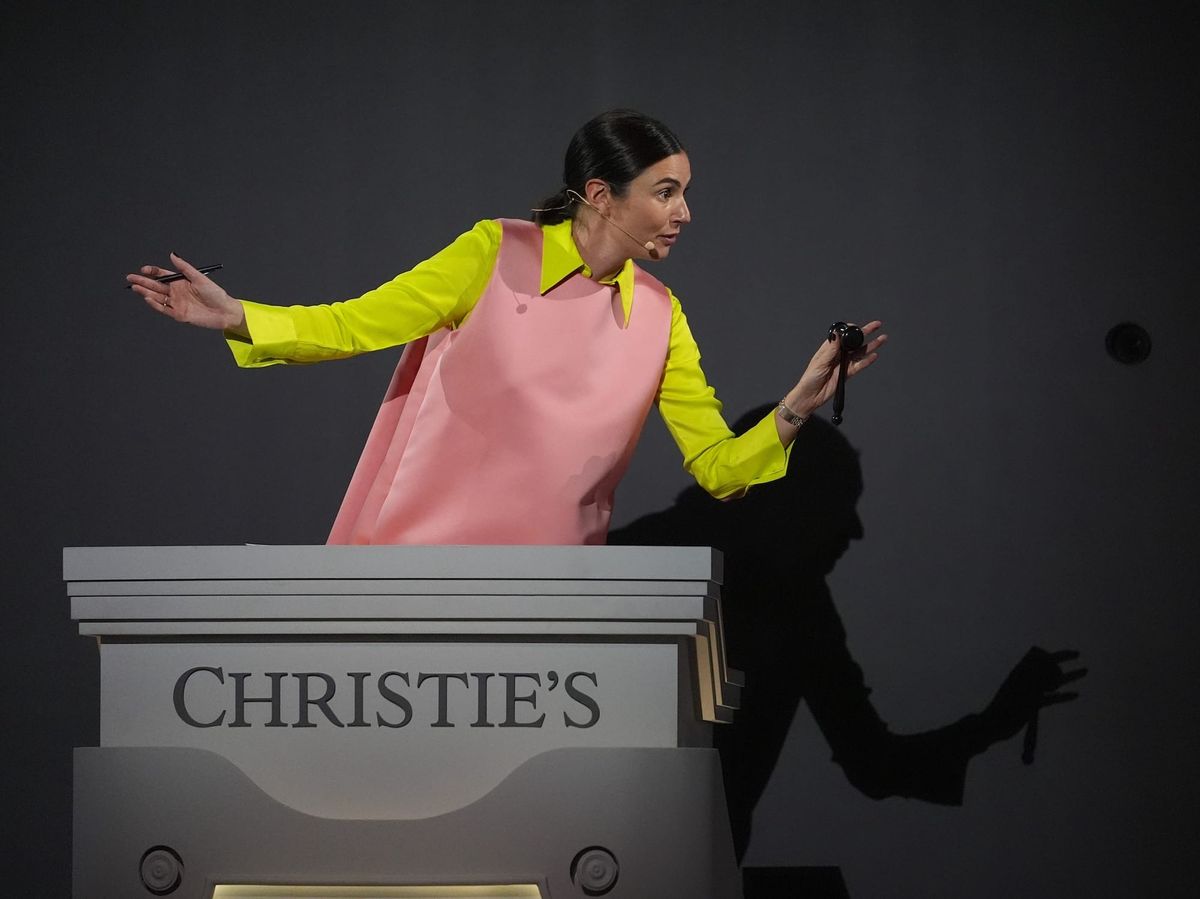
Last week, Christie’s staged its annual November spectacle, a double-header 20th-century sale that brought in roughly $690 million once buyer’s fees were added. The numbers were reported with breathless enthusiasm. Headlines announced a 42% increase over last year’s equivalent sales. The press framed the evening as a triumph and a sign that the art market was healthy again. Watching the coverage felt like watching a magic trick you have already seen too many times. A staggering figure appears on the screen, and the audience nods along. The illusion works because everyone agrees not to ask what the number actually means. It works because the number is the performance.
Auction houses rely on this sleight of hand. Their job is not to measure value. Their job is to perform it. Sarah Thornton wrote about this clearly in Seven Days in the Art World (2009), where she describes auctions as rituals rather than markets, spaces where belief is manufactured through choreography. Reading her work changed how I saw these rooms. The scripts, the coded gestures, the artificial suspense, the carefully timed applause, the way the room breathes in unison. None of it reflects the truth of what art is worth or what artists need. It reflects the truth of what the ritual requires. In that sense, last week’s evening sales looked exactly the way they meant to look: The paddles, the rhythm, the polished certainty. Everything was arranged to reassure the public that the system still works, that art still circulates as a luxury investment, cultural currency, and global status symbol.
But the $2.2 billion worth of art sold last week does not tell us what is actually happening to artists in 2025. It does not tell us about rising studio rents, unstable income, or the asymmetry between the labor required to make art and the wealth extracted from its circulation. It does not tell us that, in the United States, living artists receive none of that resale money. It does not tell us about the violence of watching one’s work used to signal a thriving market, while the artist who made it struggles to afford healthcare, or time. The headlines offer a picture of health that hides a body in crisis.