15 Art Shows to See in Los Angeles This Spring
Arshile Gorky’s road trip with Isamu Noguchi, Steve Arnold’s queer baroque aesthetics, Chicano photography, photography in the Black Arts Movement, and more.
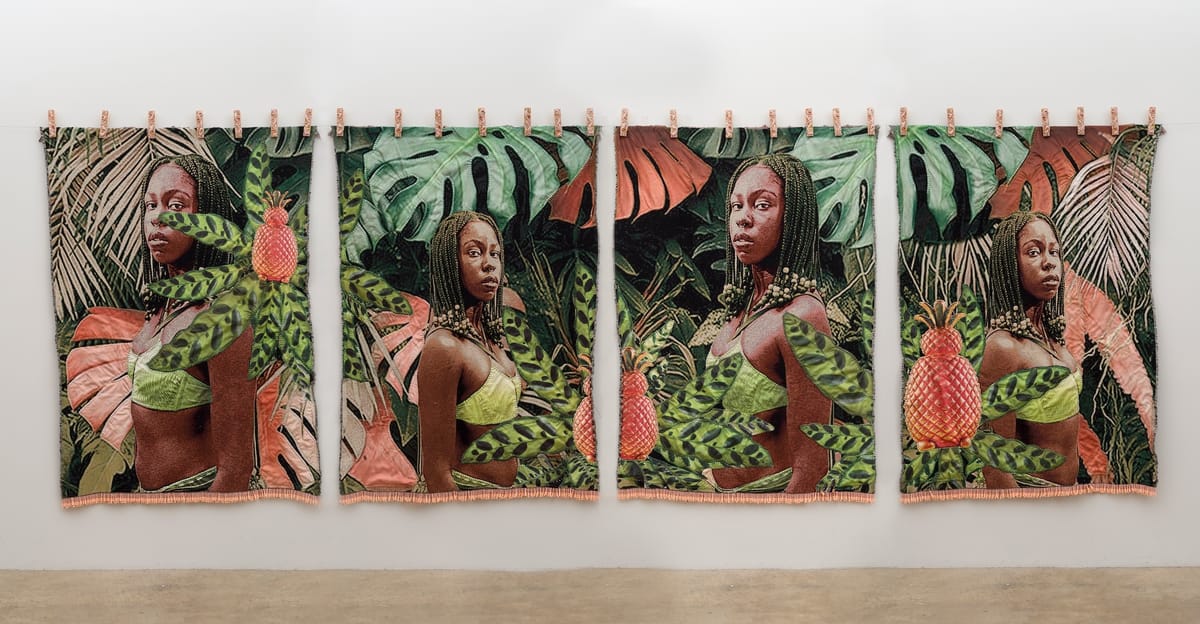
This spring, LA institutions present retrospectives on iconic local artists and group shows that explore the link between material, spirituality, and community. The Museum of Contemporary Art mounts an exhibition of influential conceptual artist Michael Asher, whose ephemeral works illustrate unseen networks of influence, and a Steve Roden exhibition in Orange County focuses on the maps, scores, and symbols in works on paper that play with our perception. Meanwhile, group shows at the Armory and the Hammer Museum feature contemporary artists who foreground connections between ecology, ritual, and tradition. At the Getty, the Black Arts Movement is considered through the lens of photography, while a sprawling show at the Riverside Art Museum and the Cheech assembles over 50 photographers who have been instrumental in reflecting, shaping, and creating Chicanx identity since the 1960s.
What a Wonderful World
Variety Arts Theater, 940 South Figueroa Street, Downtown, Los Angeles
February 6–March 20
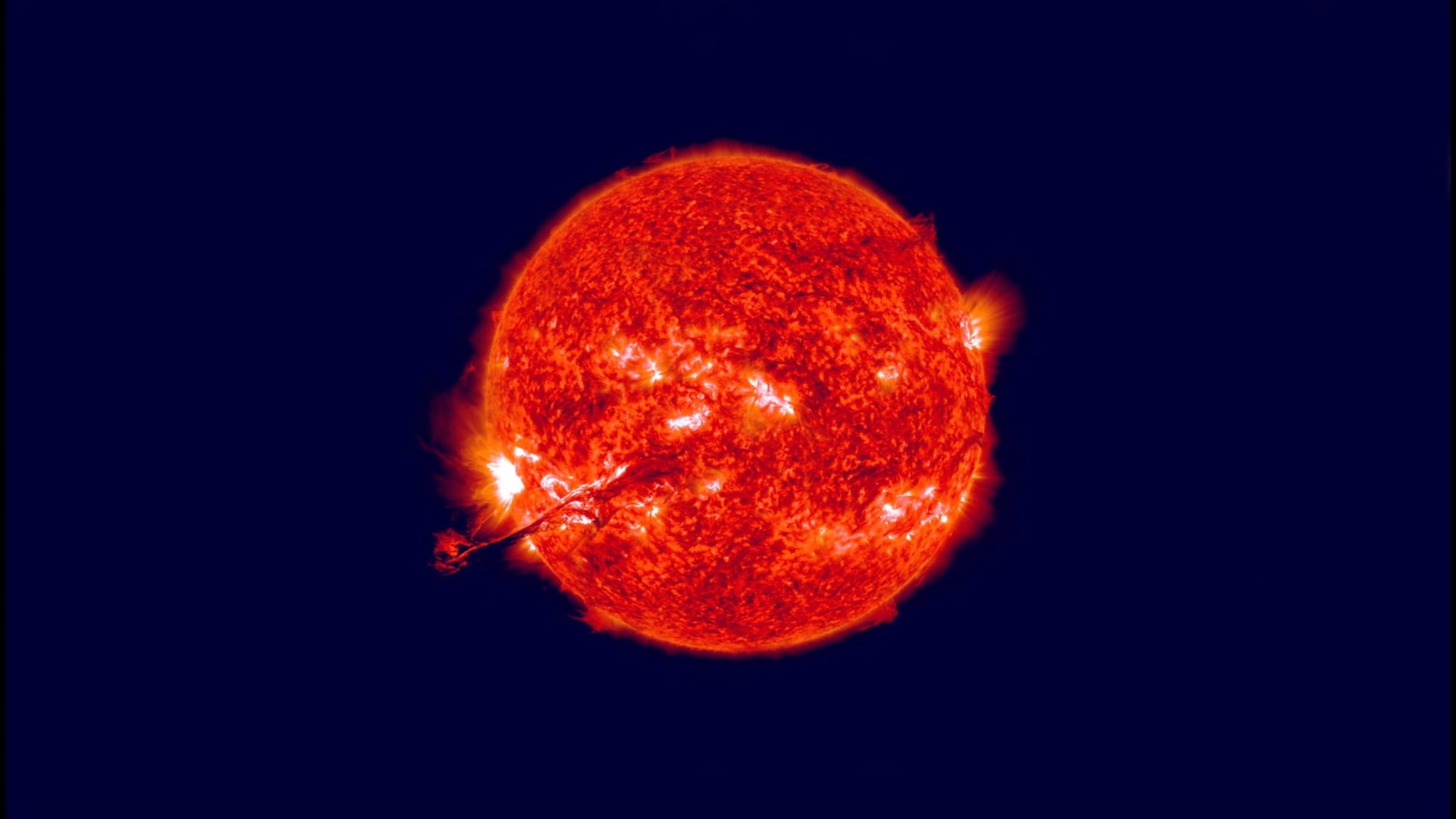
This exhibition transforms the Variety Arts Theater in downtown LA into an “audiovisual poem,” spanning 120 years of film-based media, from silent cinema to contemporary video art. Organized by the Berlin-based Julia Stoschek Foundation and edited by Udo Kittelmann, the program takes over all six stories of this historic, vacant building, utilizing not just the main theater space but also balconies, staircases, a basement, and a ballroom. The selections include iconic films by Luis Buñuel, Walt Disney, and Georges Méliès alongside modern and contemporary works by Marina Abramović, Arthur Jafa, Chris Burden, Maya Deren, Ulysses Jenkins, Paul McCarthy, Ana Mendieta, and many more, showcasing the breadth of the medium from popular entertainment to black box to white cube. Entry and popcorn are free.
Arshile Gorky: Horizon West
Hauser & Wirth West Hollywood, 8980 Santa Monica Boulevard, West Hollywood, California
February 21–April 25
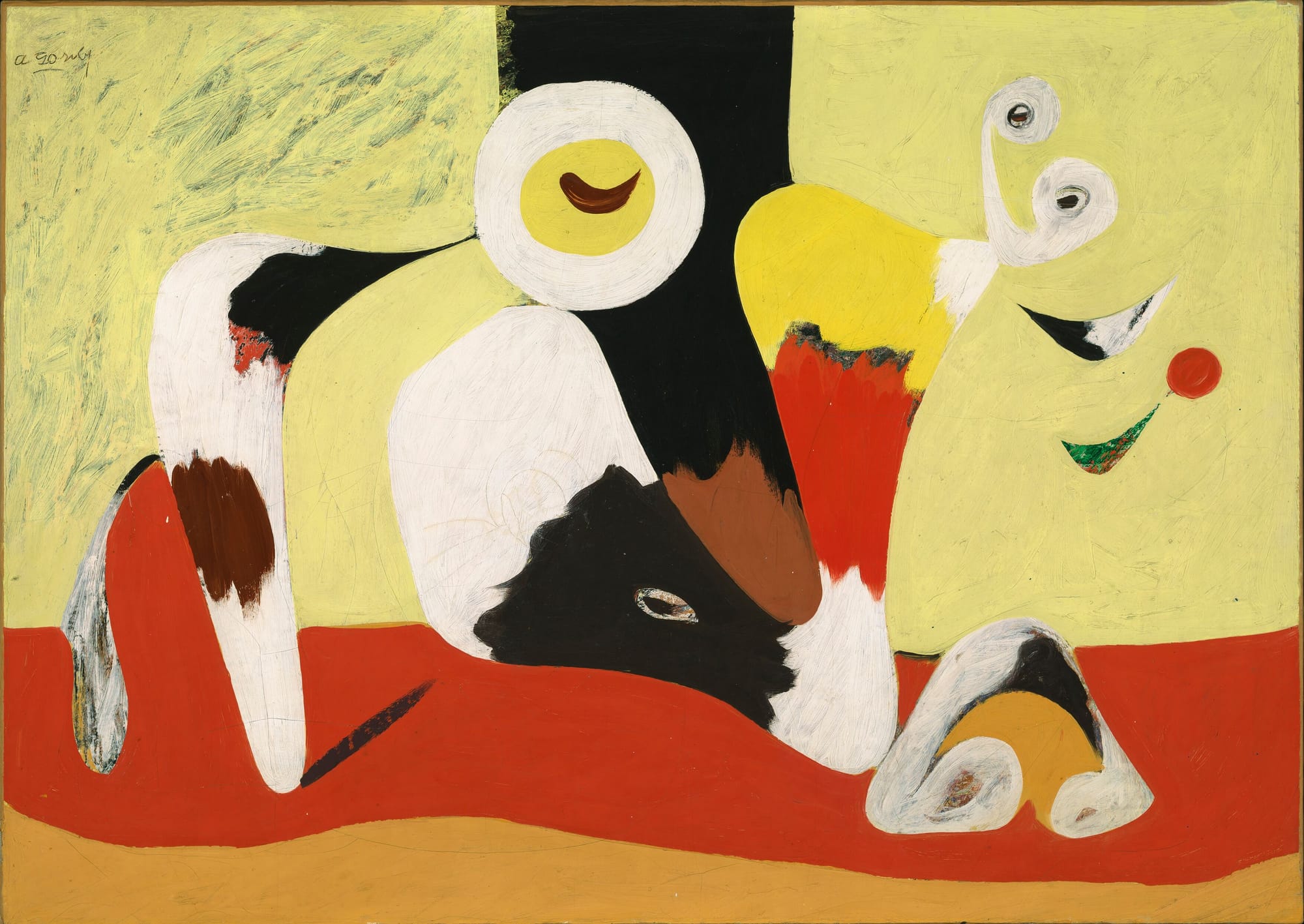
Armenian-American artist Arshile Gorky is a pivotal figure in the history of modernism who experimented with Impressionism, Surrealism, and Cubism, heavily influencing Abstract Expressionism before his early death at the age of 44 in 1948. In the summer of 1941, Gorky, his future wife Agnes Magruder, and sculptor Isamu Noguchi embarked on a fruitful two-week road trip from New York to Los Angeles, the artist’s cross-country voyage. Horizon West pairs Gorky’s landscapes from before and after this journey, including paintings on view for the first time as well as works from his first solo museum show at the San Francisco Museum of Art, shedding light on this lesser-known aspect of his oeuvre.
Steven Arnold: Cocktails in Heaven
Del Vaz Projects, Santa Monica, California
February 25–April 25
By appointment only: info@delvazprojects.com
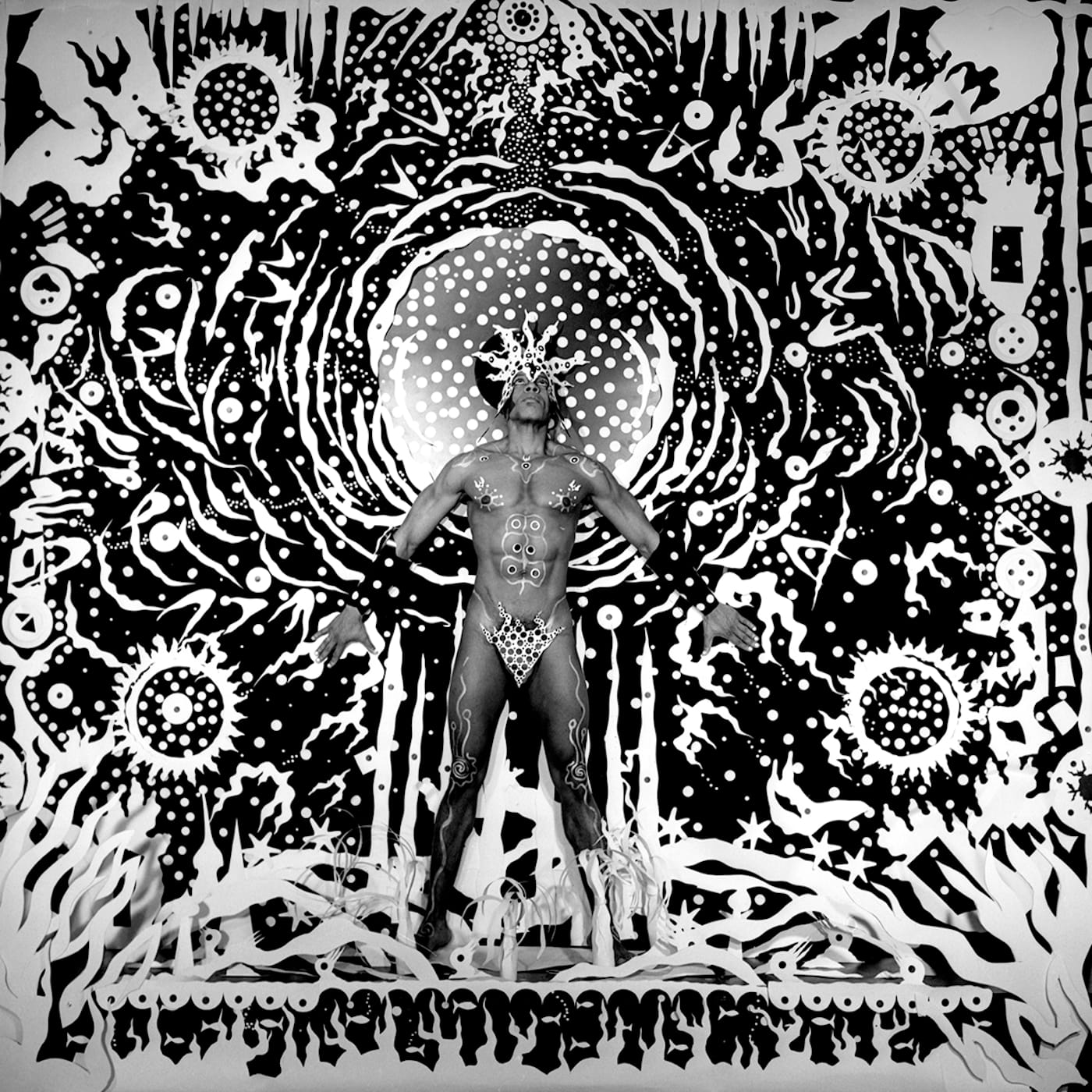
Steven Arnold was an influential multidisciplinary artist whose work spanned film, theater, painting, assemblage, and photography. A key figure of the queer counterculture in California who counted Dalí and Warhol among his fans, Arnold had a wildly prolific career before he died of AIDS-related complications in 1994. Cocktails in Heaven recreates his flamboyant studio Zanzabar to showcase a selection of photographs, costumes, posters, sculptures, furniture, and ephemera. Throughout the exhibition’s run, Del Vaz Projects will host a series of events and programs related to Arnold’s legacy, culminating in a day-long symposium on queer aesthetics and spirituality on April 25.
Steve Roden: wandering
UC Irvine Langson Orange County Museum of Art, 3333 Avenue of the Arts, Costa Mesa, California
Through May 24
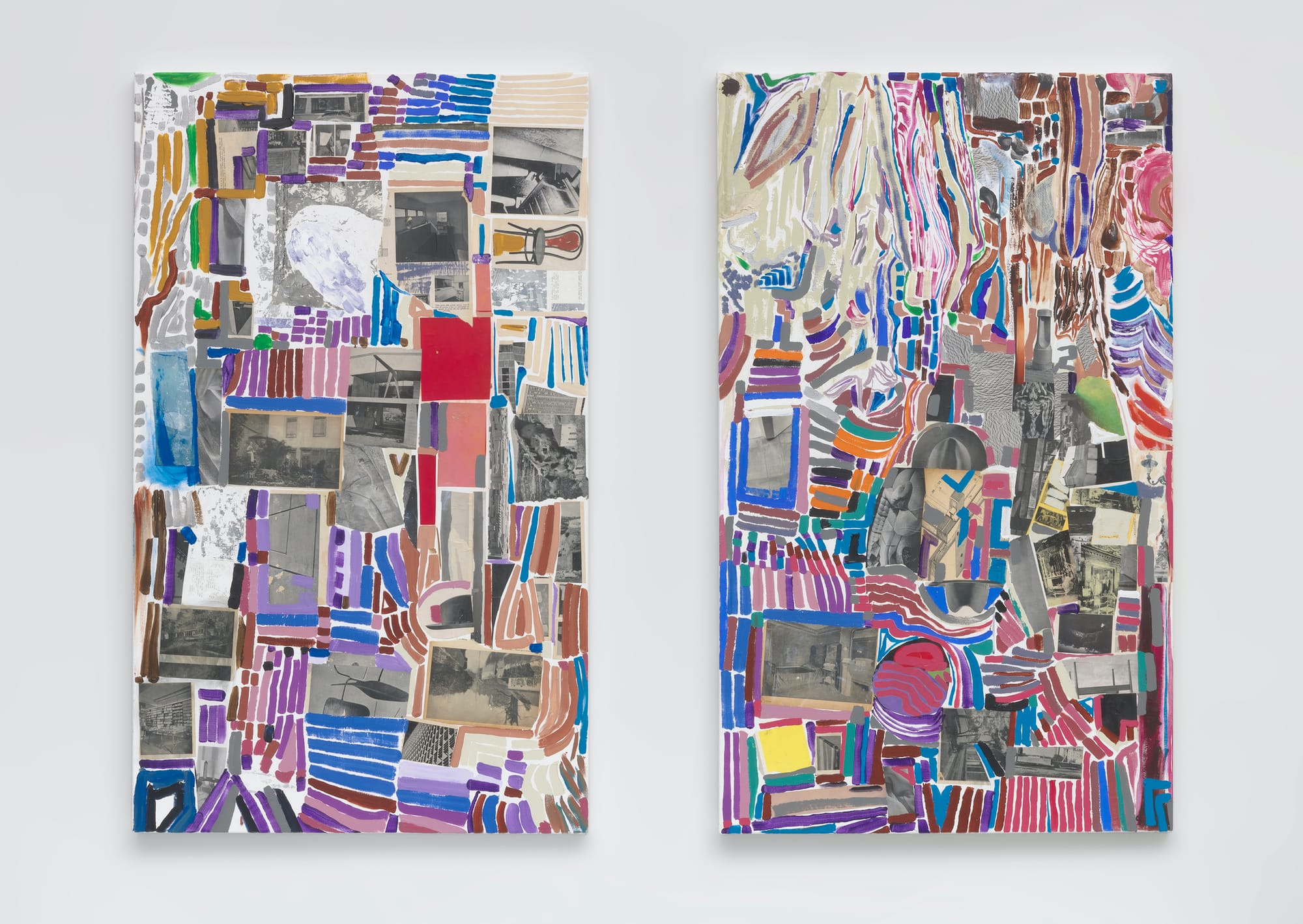
The late LA-based artist Steve Roden melded rigorous formalism with wide-eyed curiosity about the sights and sounds of the world around us. His work often incorporates maps, musical scores, or other symbolic notation, providing tools and systems to guide our perception. Wandering features a selection of Roden’s drawings and collages, highlighting his open-ended and generous approach that enlists the viewers as fellow explorers.
Robert Williams: Fearless Depictions
Long Beach Museum of Art, 2300 East Ocean Boulevard, Long Beach, California
February 6–May 31
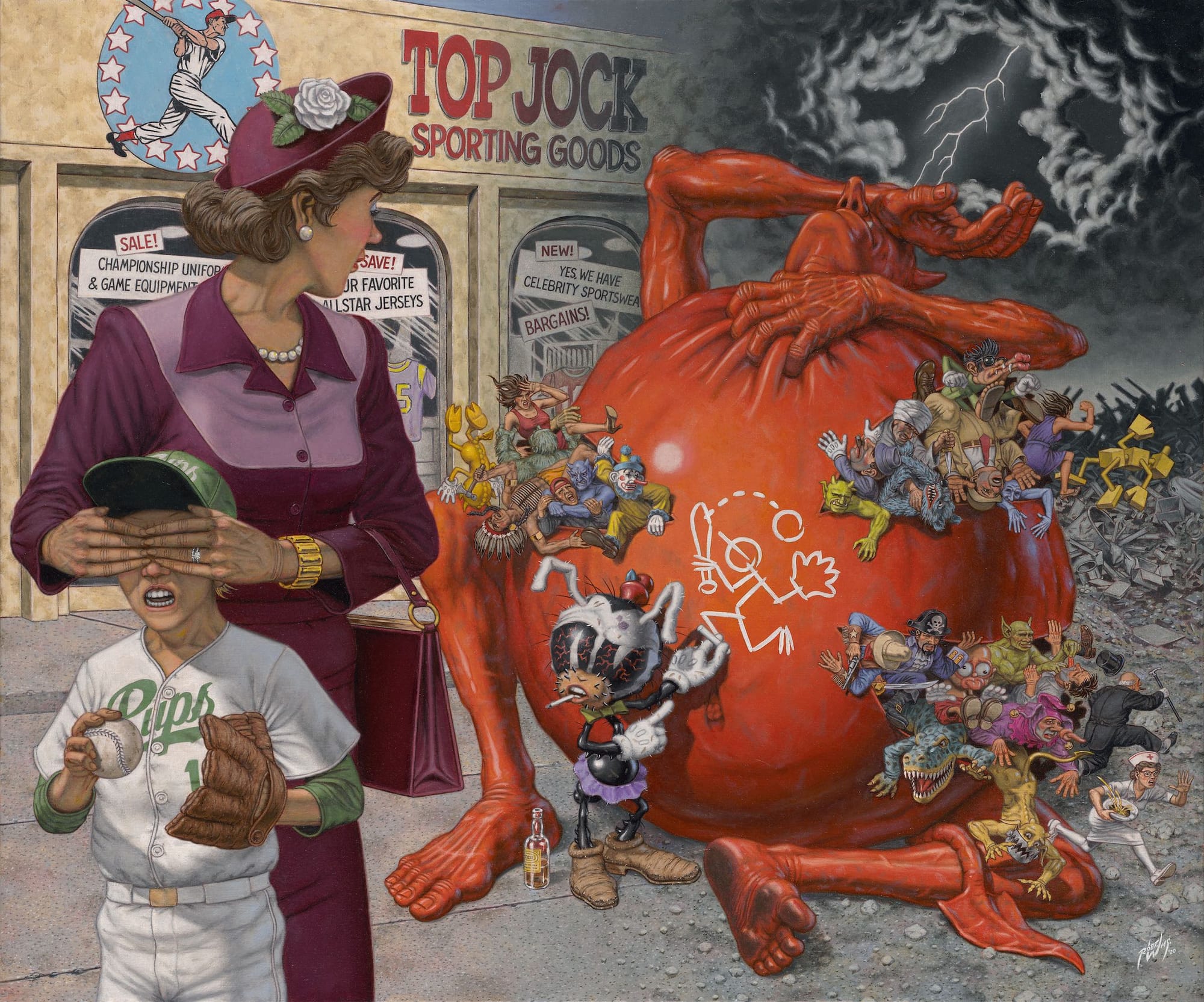
Robert Williams is often considered the godfather of the so-called “lowbrow” art movement, whose frenetic, captivating canvases fuse cartoons, sci-fi, hot rod culture, and the dark side of classic Americana, presented on a grand scale reminiscent of traditional history painting. Comfortably straddling the worlds of so-called “high” and “low” art, however, he dissolves these arbitrary categories entirely. Williams helped create legendary Zap Comix in the late 1960s; co-founded underground art magazine Juxtapoz in 1994; and was included in the seminal Helter Skelter show at the Museum of Contemporary Art, Los Angeles, in 1992, and the Whitney Biennial in 2010. Fearless Depictions gathers 57 paintings created since 2001 alongside two large sculptures, showing that Williams’s visionary mix of satire, humor, and mischief remains trenchant and vital.
Photography and the Black Arts Movement, 1955–1985
Getty Center, 1200 Getty Center Drive, Brentwood, Los Angeles
February 24–June 14
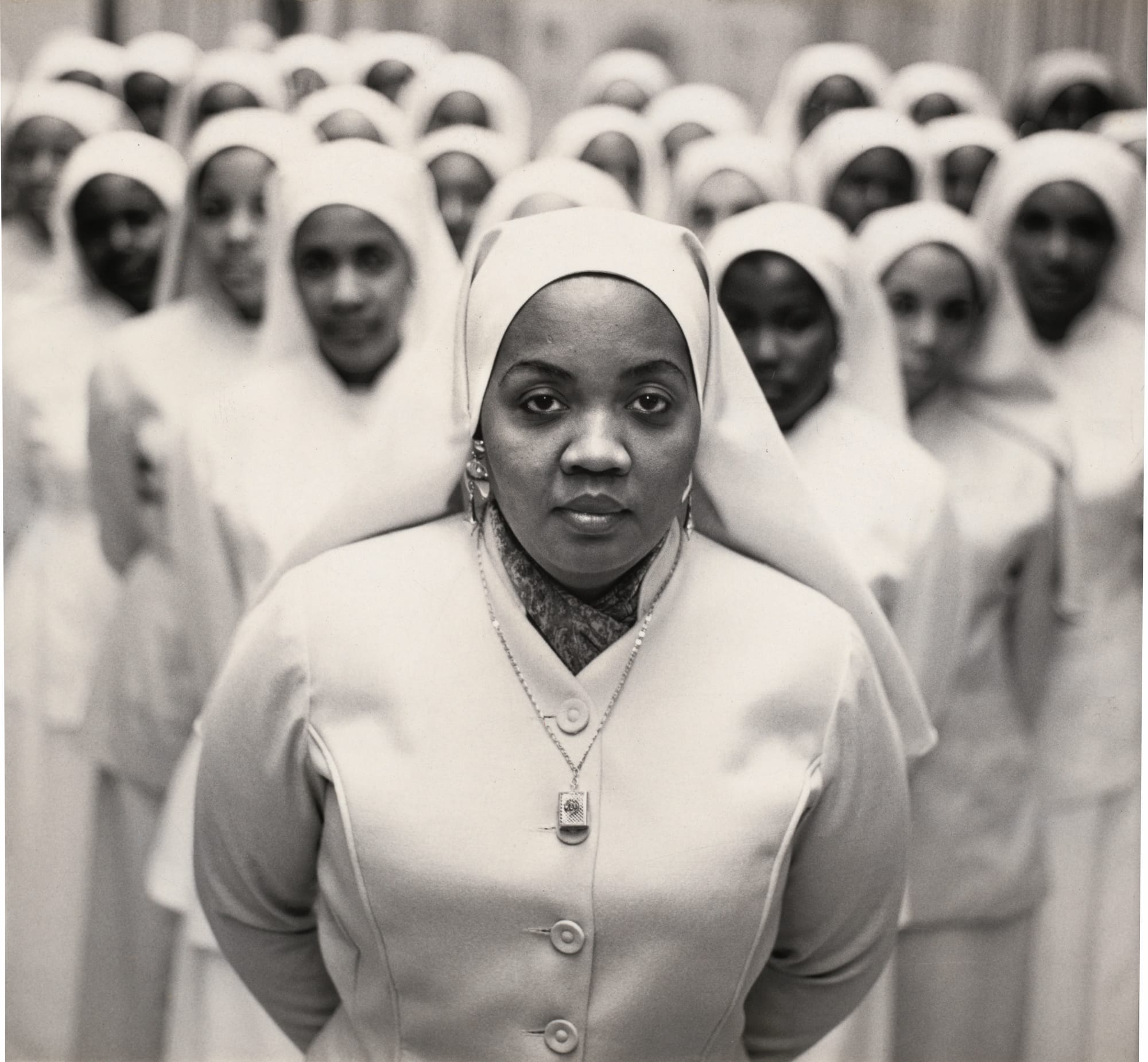
The Black Arts Movement emerged alongside the Civil Rights Movement, bringing together expressions of Black identity and culture across visual arts, music, poetry, film, and performance. This exhibition focuses on the role of photography in the movement, from documentary images and popular media to design and fine art. Participating artists include Lorna Simpson, Charles Gaines, Senga Nengudi, Gordon Parks, Kwame Brathwaite, Carrie Mae Weems, and others.
Chicano Camera Culture: A Photographic History, 1966 to 2026
The Cheech Marin Center for Chicano Art & Culture, 3581 Mission Inn Avenue, Riverside, California
February 7–September 6
Riverside Art Museum, 3425 Mission Inn Avenue, Riverside, California
February 7–July 5
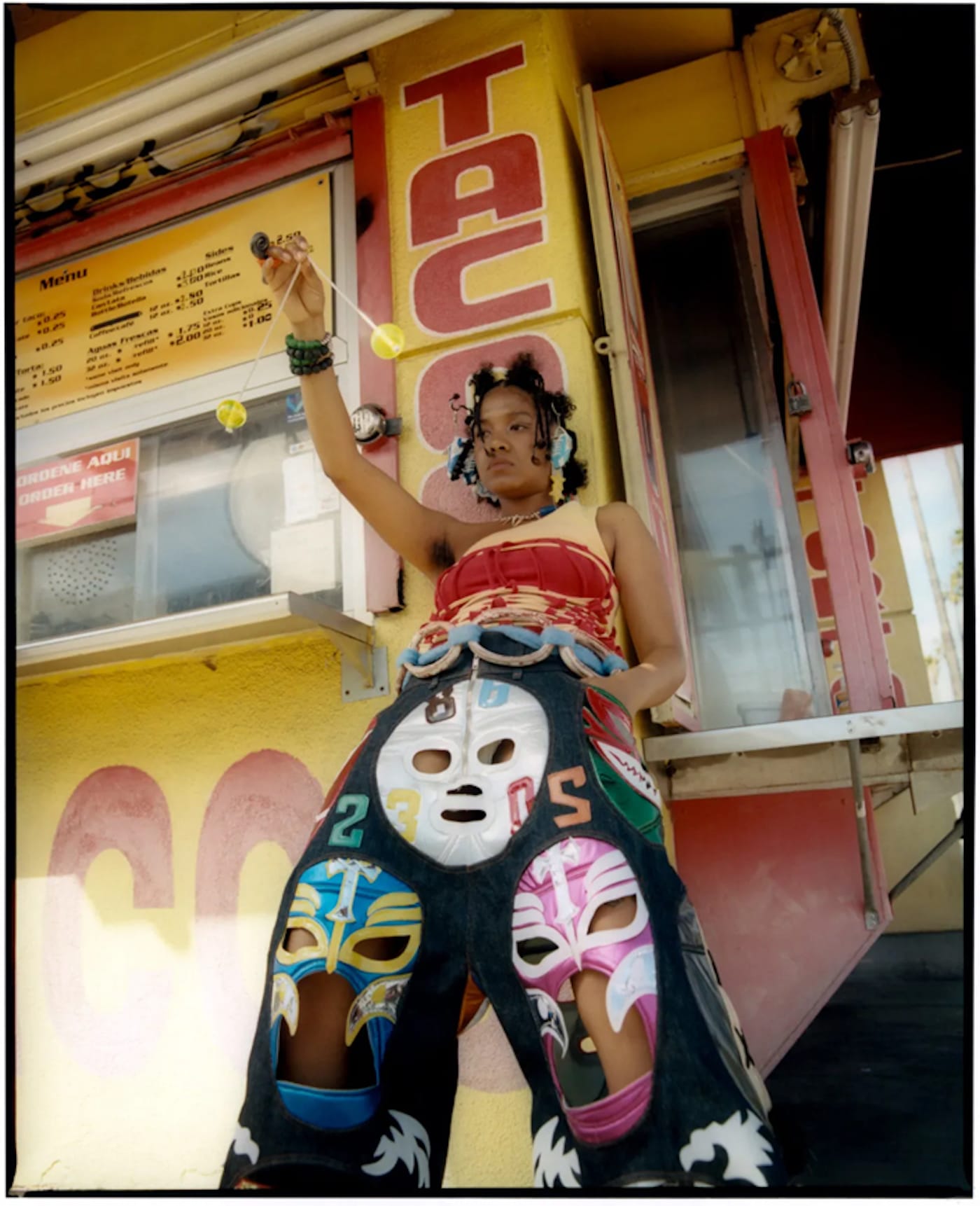
Chicano Camera Culture features work by almost 50 photographers spanning the past 60 years for a groundbreaking showcase of the breadth of Chicanx identity over an incredibly formative period. Pivotal moments in the Civil Rights struggles of the 1960s and ’70s are portrayed in works by Luis C. Garza, George Rodriguez, and María Varela. Subjectivity and representation are foregrounded in images by Harry Gamboa Jr., Laura Aguilar, and Ken Gonzales-Day. Subsequent generations of photographers, including Star Montana, Arlene Mejorado, and Thalía Gochez, build on the legacies of their predecessors, depicting family, community, and culture through a contemporary lens.
Fútbol Is Life: Animated Sportraits by Lyndon J. Barrois, Sr.
Los Angeles County Museum of Art, 5905 Wilshire Boulevard, Mid-Wilshire, Los Angeles
February 15–July 12
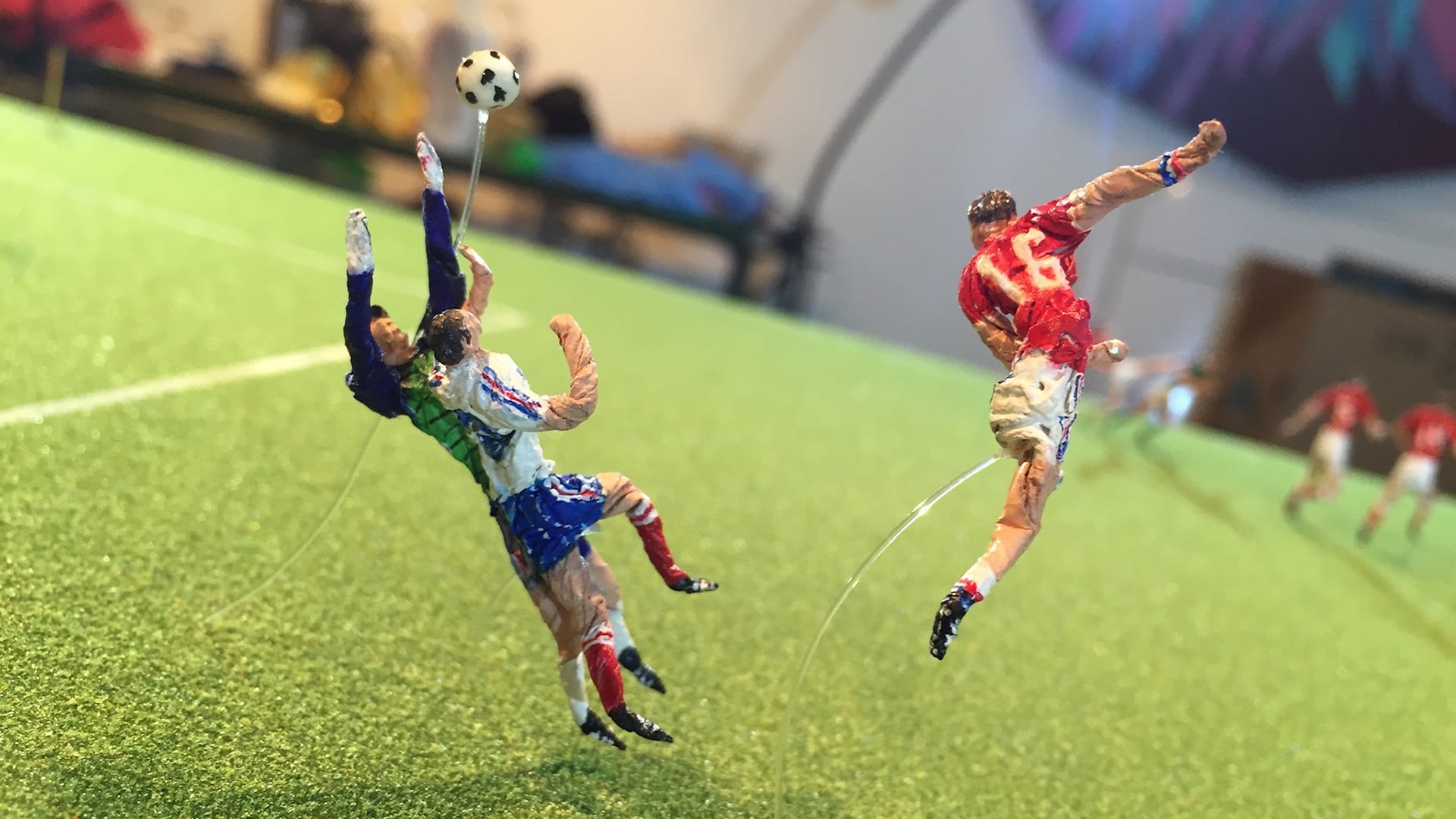
Football is the most popular sport across most of the world, with interest slowly growing here in the US (where we still call it “soccer”). Fútbol Is Life captures the grace, drama, and exhilaration of “the beautiful game,” just a few months before the World Cup arrives in LA this summer. Using gum wrappers, paint, glue, and other everyday materials, Lyndon J. Barrois, Sr. creates miniature hand-made tableaux and stop-motion animations of key moments in historic football matches, rendering these larger-than-life events on an intimate scale.
Bruce Conner / Recording Angel
Marciano Art Foundation, 4357 Wilshire Boulevard, Mid-Wilshire, Los Angeles
February 21–July 18
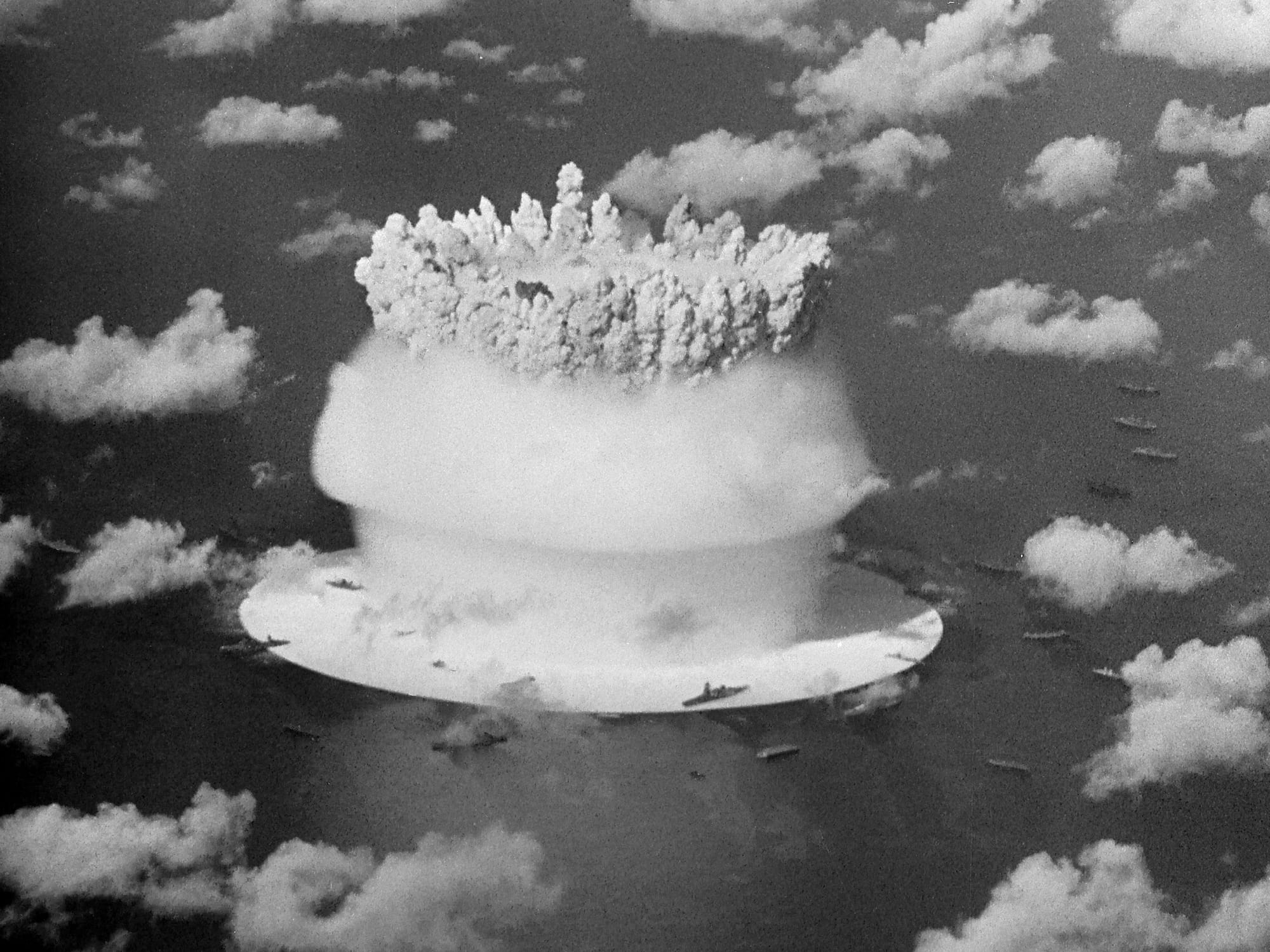
Bruce Conner’s multidisciplinary practice included painting, conceptual art, photography, collage, but he is perhaps best known for his work with experimental film. Conner’s radical vision cemented his ongoing status in the cultural underground, from the Beats in the 1950s to the punks of the ’70s and ’80s. His pioneering use of appropriated found footage, cinematic remixing, and blistering edits influenced avant-garde and popular media, leading to his moniker as the “father of the music video.” Recording Angel brings together seven of his most influential films, including "A MOVIE" (1958), which juxtaposes Western TV shows, “stag” films, and car crashes; and "CROSSROADS" (1976), a compilation of underwater atomic bomb tests.
Dear Little Friend: Impressions of Galka Scheyer
Norton Simon Museum, 411 West Colorado Boulevard, Pasadena, California
February 20–July 20
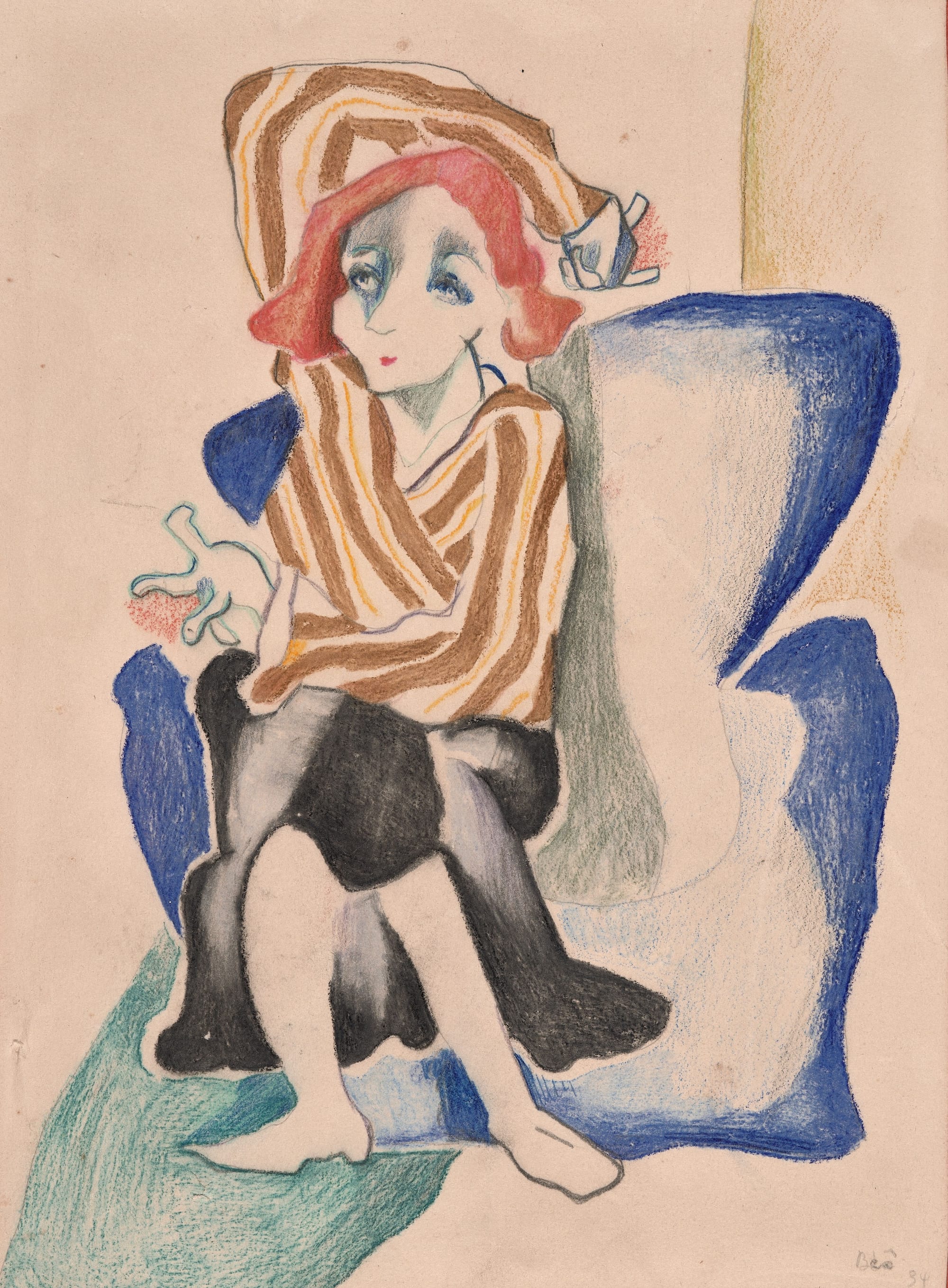
German-Jewish artist, collector, and dealer Galka Scheyer emigrated to California in 1924, playing a major role in promoting European modernism in the US, specifically work by the group of artists known as the Blue Four: Lyonel Feininger, Wassily Kandinsky, Alexej von Jawlensky, and Paul Klee. Her home gallery in the Hollywood Hills became a social hub where film industry luminaries mingled with artists, intellectuals, and writers. Showcasing portraits and paintings by Peter Krasnow, Beatrice Wood, Edward Weston, and the Blue Four alongside personal ephemera, Dear Little Friend paints an intimate picture of Scheyer not just as an advocate but as a friend and confidant.
Material Prophecies: Craft as Divination
Armory Center for the Arts, 145 North Raymond Avenue, Pasadena, California
February 20–August 1
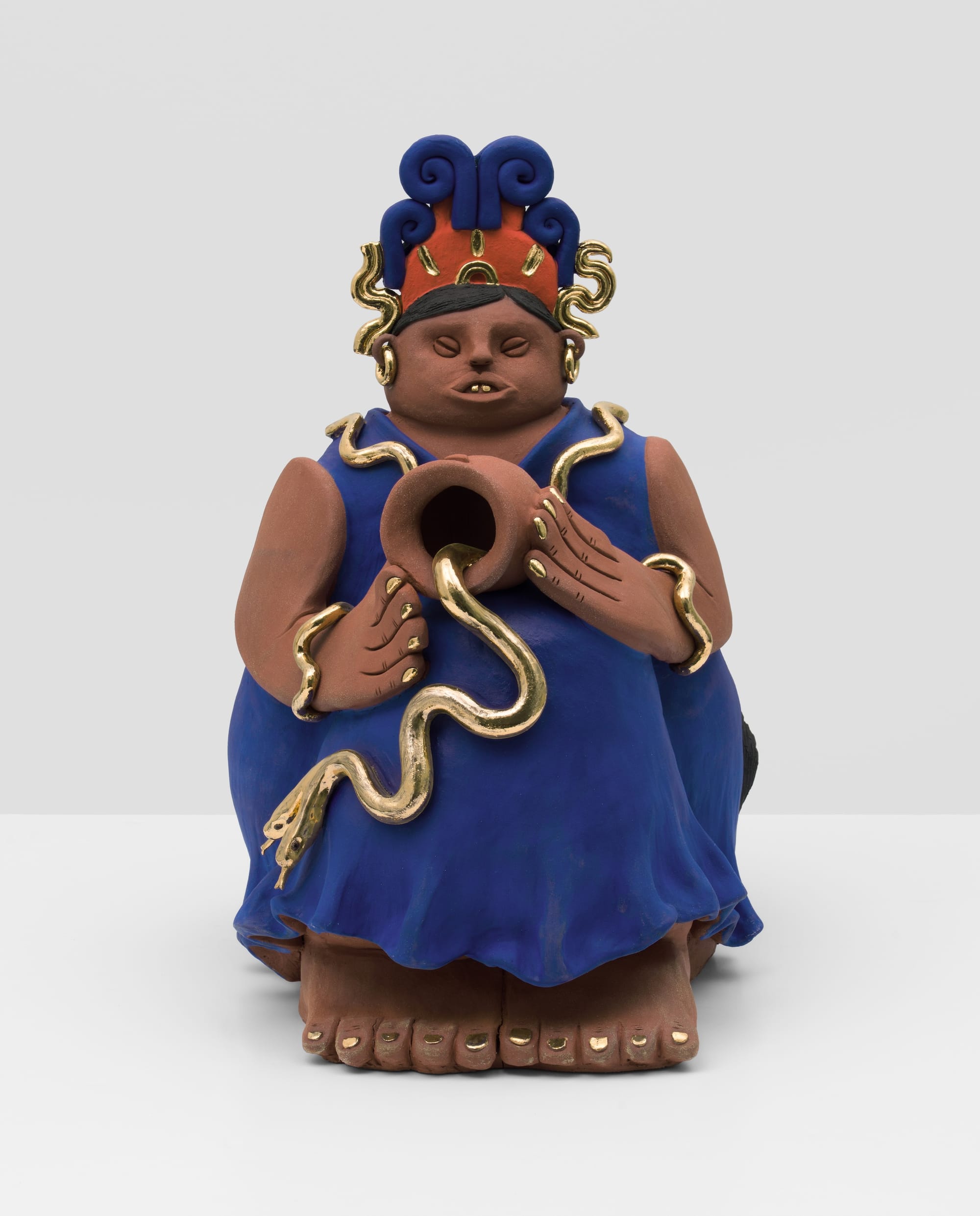
This group show highlights how earth, clay, fiber, and film can forge intergenerational connections, conveying traditional practices and spiritual wisdom. The exhibition features eight artists with links to the San Gabriel Valley, a region that is constantly being reshaped by cycles of destruction and rebirth. Participating artists include Jackie Amézquita, April Bey, Joel Gaitan, Sky Hopinka, and others.
Michael Asher
Museum of Contemporary Art, Los Angeles, 250 South Grand Avenue, Downtown, Los Angeles
February 24–August 2
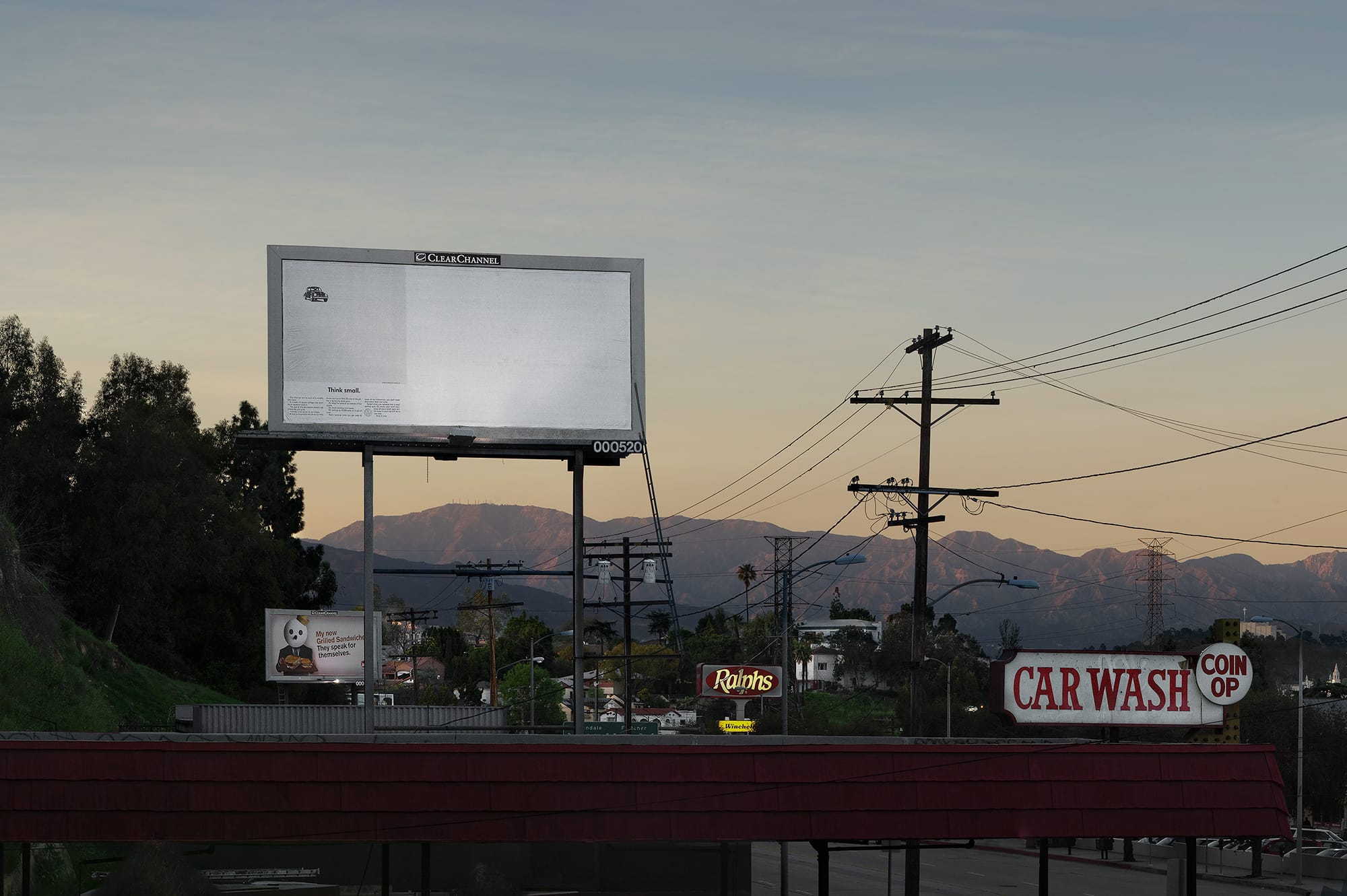
Although many of Michael Asher’s site-specific works were ephemeral and faded without a trace, his lasting influence on conceptual art is irrefutable. The late Angeleno artist, who passed away in 2012, is known for his incisive interventions that make visible the often unseen connections between artworks, institutions, and larger systems. This survey, organized by Artists Space, features 20 works presented through their extant physical elements, archival documentation, and an exhibition guide, providing ample context for his expansive oeuvre.
Raven Sanchez: Así Sea/So Be It
Institute of Contemporary Art, Los Angeles, 1717 East 7th Street, Downtown, Los Angeles
April 4–August 23
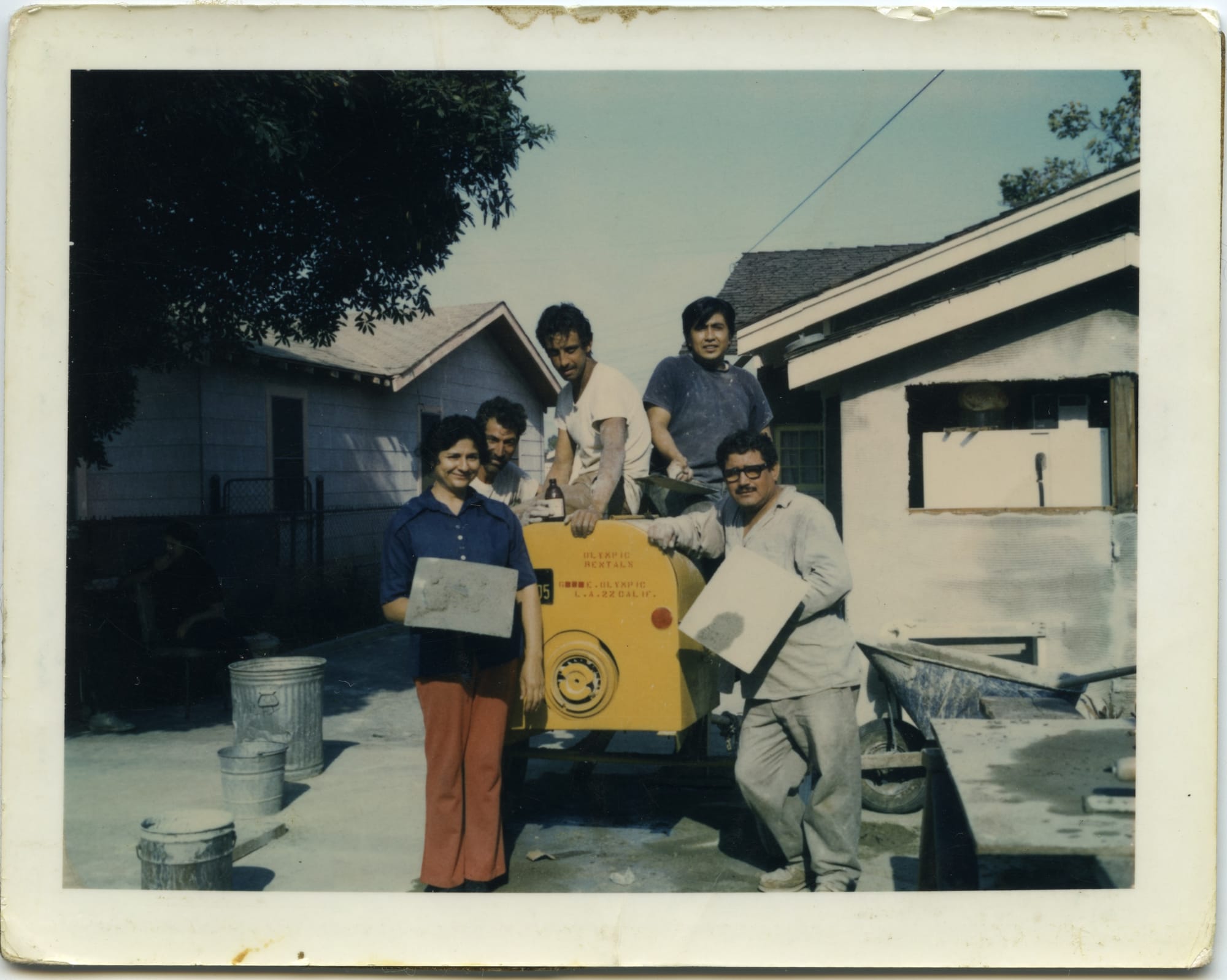
Raven Sanchez considers the ways in which materials hold and convey memory and history. Así Sea/So Be It is composed of more than 200 wax rubbings that Sanchez made with her mother and sisters of the exterior of her family home in East LA. It is a house that her grandfather stuccoed by hand in 1974 after emigrating from Tijuana, and which they recently decided to sell after five decades. Created through communal labor, the resulting artwork is both an elegiac memorial and a celebration of family in the face of demographic and material change.
Several Eternities in a Day: Form in the Age of Living Materials
Hammer Museum, 10899 Wilshire Boulevard, Westwood, Los Angeles
April 5–August 23
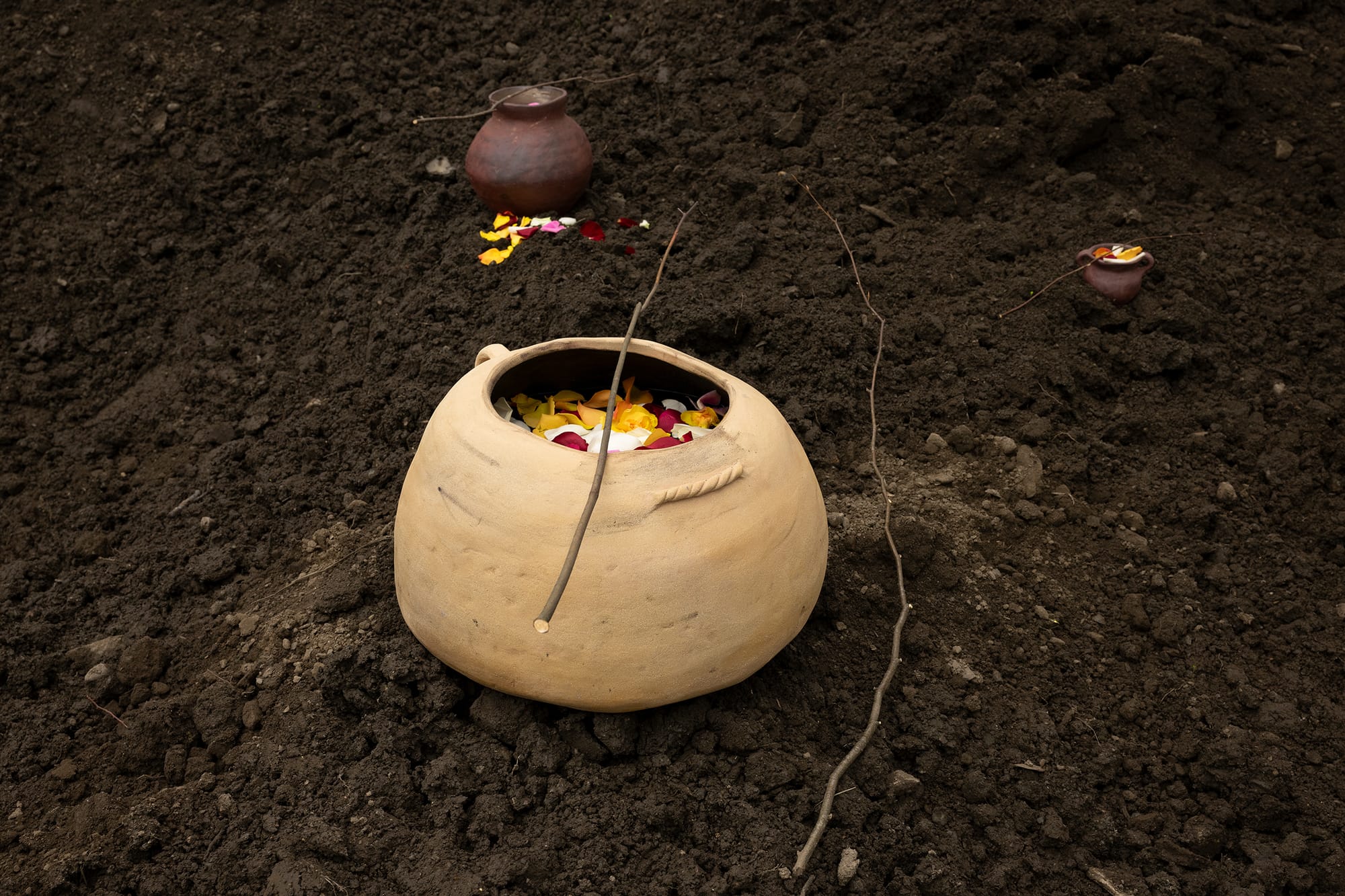
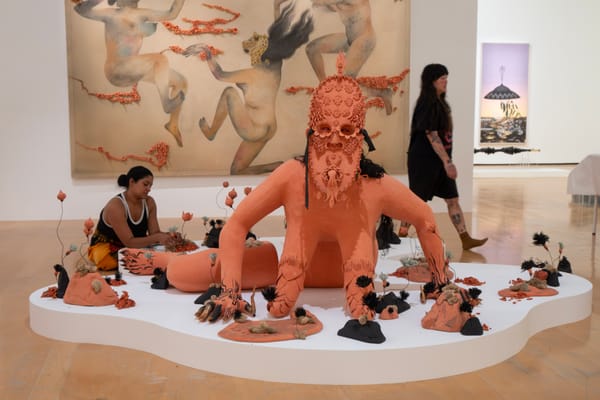
Several Eternities in a Day features 22 artists from across the Americas who use natural materials such as stone, flora, fruit, insects, and clay to highlight the relationship between the living world, Indigenous practices, and contemporary art. The resulting works span installation, painting, sculpture, and video, and involve not just vision but smell, sound, and touch. Participating artists include Carmen Argote, Esteban Cabeza de Baca, Raven Chacon, Raven Halfmoon, Rose B. Simpson, and many others.
Studio Ghibli’s PONYO
Academy Museum of Motion Pictures, 6067 Wilshire Boulevard, Mid-Wilshire, Los Angeles
February 14–January 10, 2027
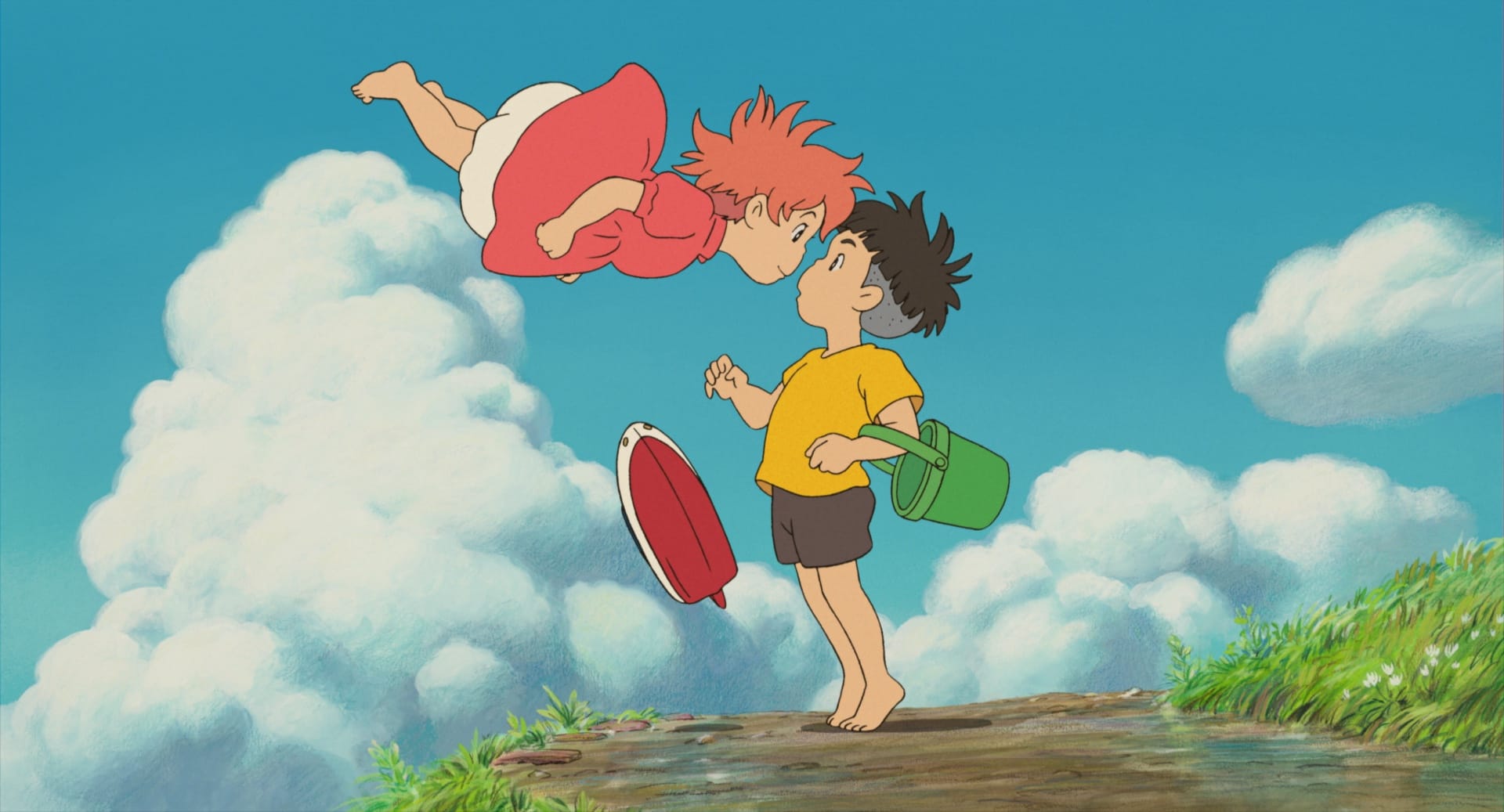
Five years after its inaugural exhibition on renowned Japanese animator Hayao Miyazaki and Studio Ghibli, the Academy Museum focuses on one of his most beloved works: Ponyo (2008). The film tells the fantastical tale of a fish-like creature who leaves the water on her quest to become a human girl, and the attempts of her wizard father to bring her back to the sea. The exhibition provides a behind-the-scenes look at the film’s creation, with over 100 objects and artworks selected by Studio Ghibli, including original drawings, posters, and art boards, alongside an interactive animation table and an immersive environment recreating Ponyo’s ocean world.