25 Art Shows Reckoning With the US at 250

From Indigenous survivance to quilting to modernism, these exhibitions and projects reframe and challenge the story of the United States.
25 Art Shows Reckoning With the US at 250
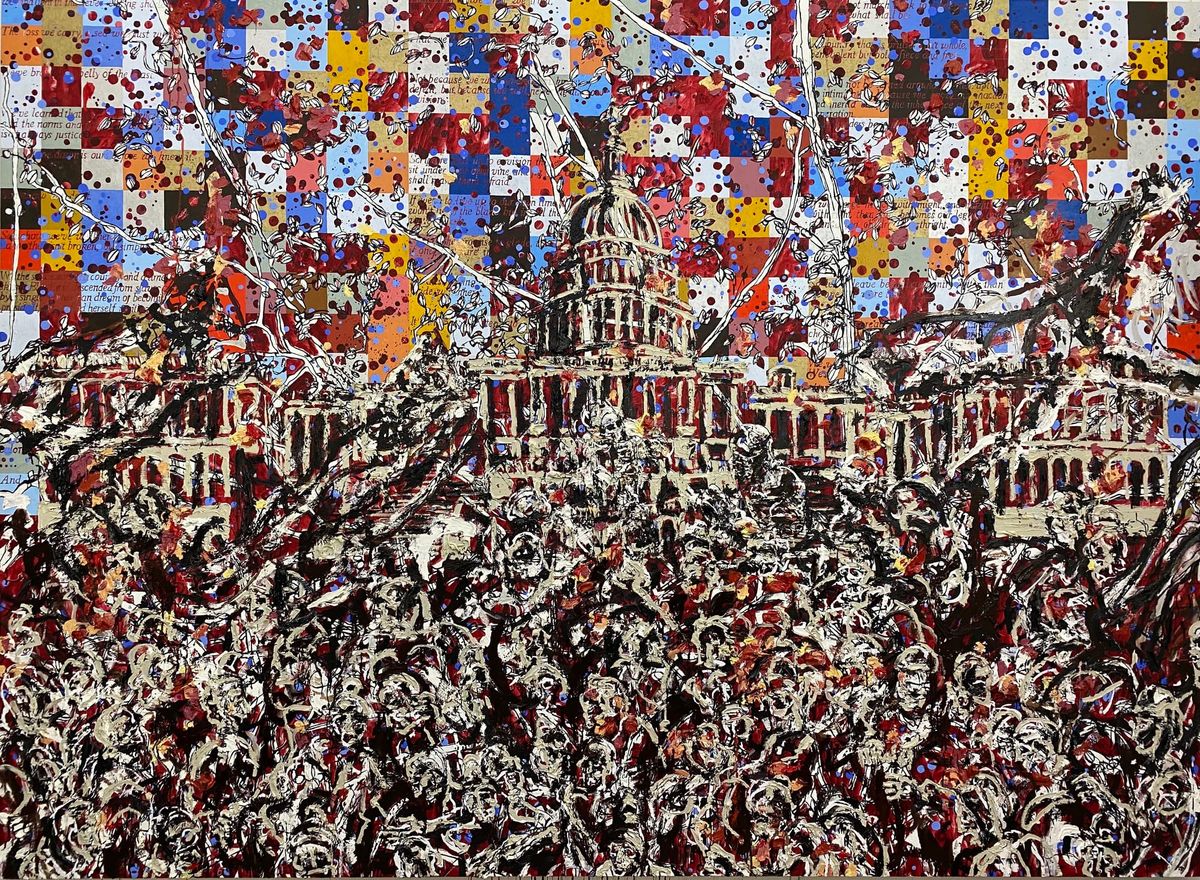
John William Bailly, "6th of January, 2021" (2021) (© John William Bailly, courtesy PAMM)

The word “celebration” doesn't feel especially appropriate when it comes to acknowledging the 250th anniversary of the United States in these trying times, but we can recognize that this milestone certainly presents both a welcome and critical opportunity for reflection.

As this occasion brings a wealth of complex emotions, intersecting perspectives, trailblazing innovation, and grotesque histories to the forefront, the arts landscape would rightfully remind us that it's worth commemorating our abilities to both document and channel these complexities. With that, art also provides us with the tools to not only imagine but also build our future.

Hyperallergic presents 25 art-related events across the nation that acknowledge the steps we've taken, the place we stand in today, and the undefined path ahead of us.


Rosy Simas: A:gajë:gwah dësa’nigöëwë:nye:' (i hope it will stir your mind)

Walker Art Center, Minneapolis, MN
Through July 5
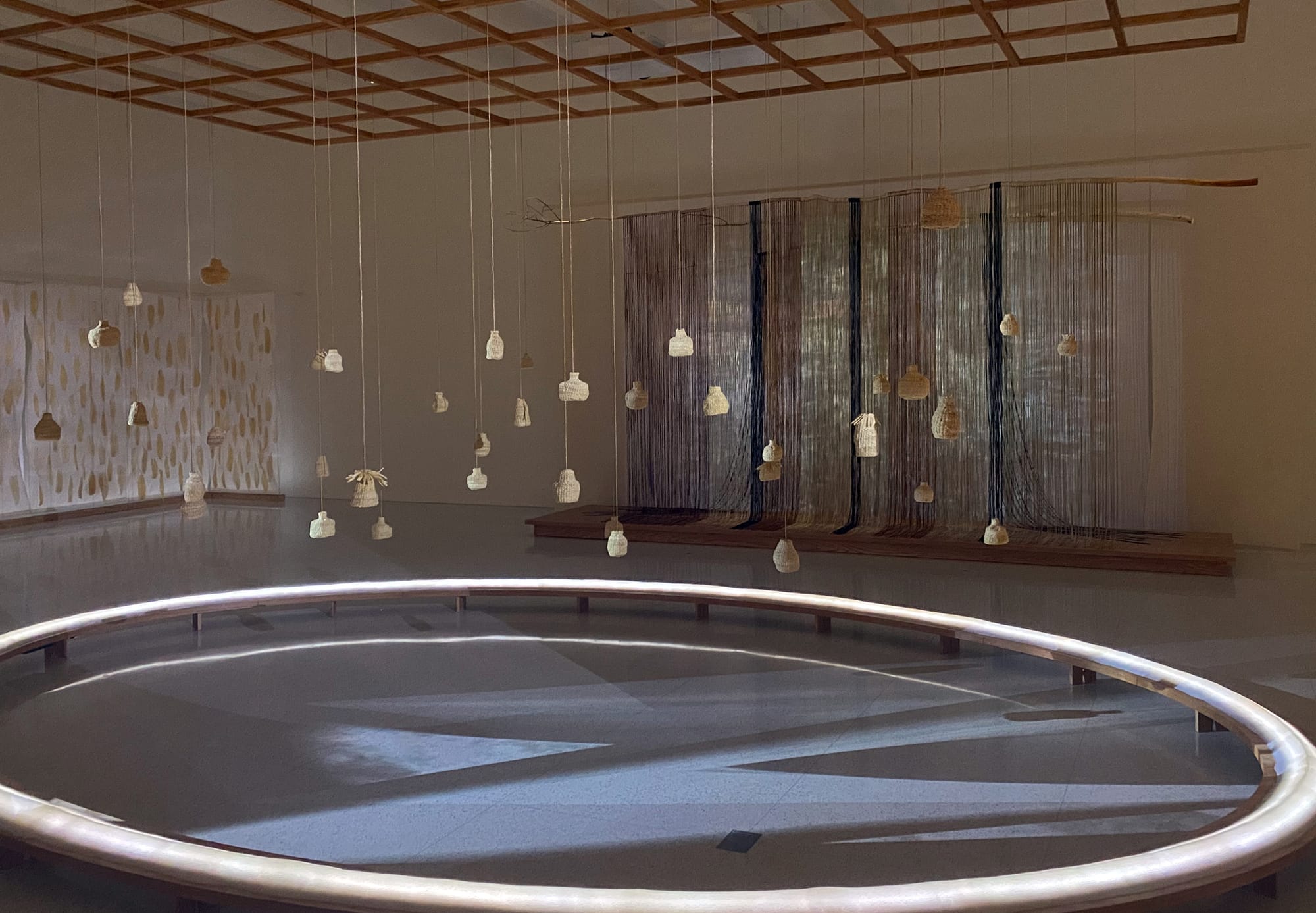
Installation view of Rosy Simas: A:gajë:gwah dësa’nigöëwë:nye:′ (i hope it will stir your mind) (photo Sheila Regan/Hyperallergic)

Catch it while you can! The culmination of a two-year residency at the Walker, this exhibition of works by Rosy Simas (Seneca Nation of Indians, Heron clan) embodies Indigenous survivance through foundational Hodinöšyö:nih philosophies that emphasize compassion, community welfare, and peacemaking — especially today, when humanity’s deadly divisions feel the most insurmountable. Simas invokes the power of the circle throughout this presentation, highlighting how its protective nature, equitable shape, and symbolic endlessness become tangible properties in Hodinöšyö:nih beliefs and practices.


Women Across America: 1945-1979

Eric Firestone Gallery, New York, NY
Through July 11
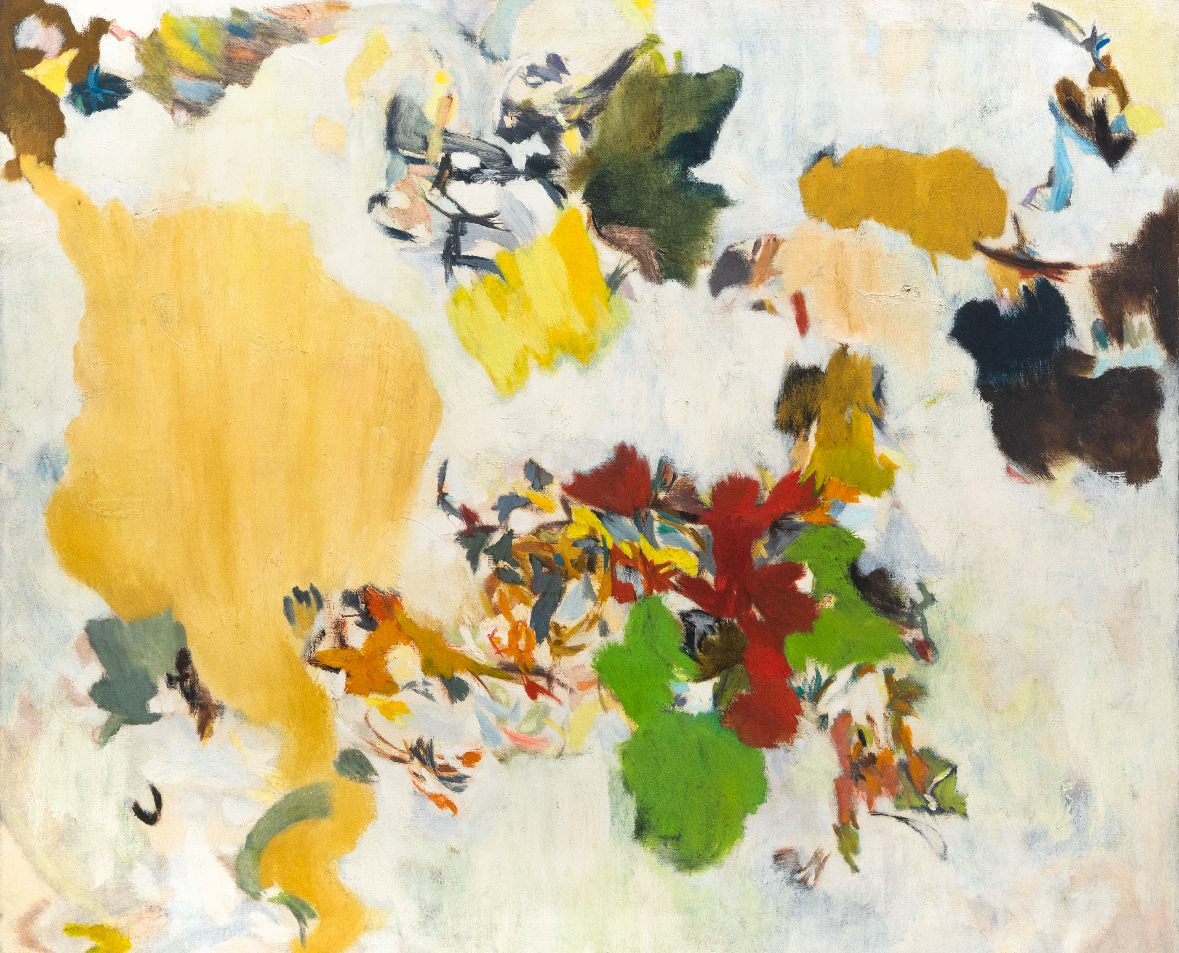
Elise Asher, “Exodus” (1958) (photo Sam Glass, courtesy Eric Firestone Gallery)

Shifting between Surrealism, Abstract Expressionism, the Washington Color School, and the Women's Art Movement, this show traces women artists’ groundbreaking contributions to and influence on post-war American art. Several key paintings are coming out of private collections for the first time, bringing together works by Helen Frankenthaler, Lee Krasner, Sari Dienes, Elaine de Kooning, Grace Hartigan, Alma Thomas, Perle Fine, Jane Freilicher, Miriam Schapiro, and Betty Parsons, among others, for a multigenerational dialogue on the refusal of exclusion.


Indigenous Independence: America 250 at Gilcrease

Gilcrease Museum + Helmerich Center for American Research, Tulsa, OK
Through July 11
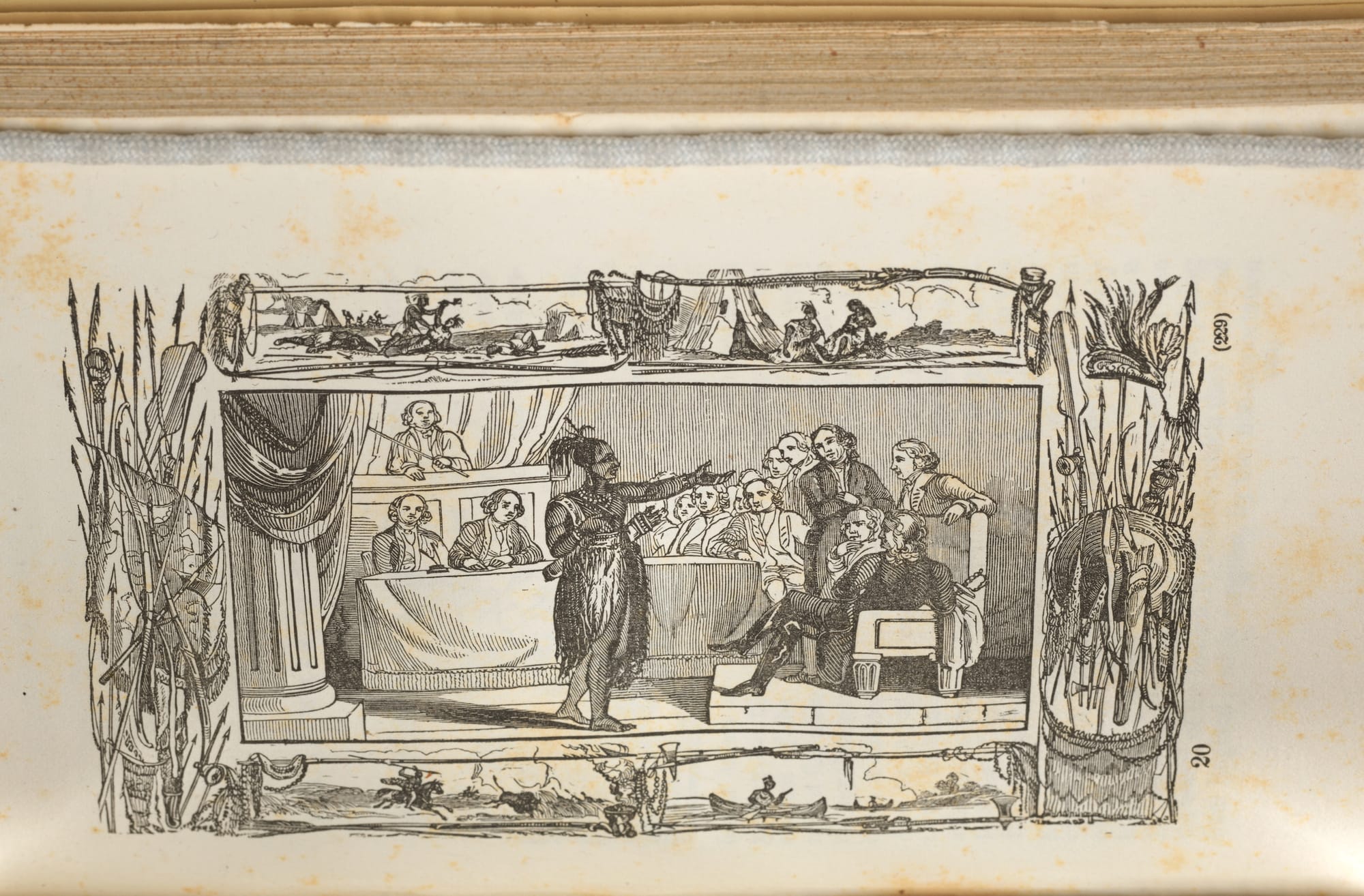
John Frost, Indian Wars of the United States, from the Discovery to the Present Time. From the Best Authorities (Philadelphia: R.W. Pomeroy, 1841), “Logan's Lament” p. 229 (image courtesy Gilcrease Museum)

Rare manuscripts and archival materials from the Gilcrease Museum collection underpin the exhibition examining the decisive role Native American nations played in shaping the country’s founding, from diplomacy and alliance-building to conflicts over land and sovereignty. Highlights include a certified handwritten 1777 copy of the Declaration of Independence, pre-independence maps of Native American territories, historic texts and illustrations recounting Native relations with the French and British colonists through the French and Indian War and after the American Revolution, and materials related to Founding Father Charles Thomson, the secretary of the inaugural Continental Congress who compiled a detailed report outlining the Penn family’s mistreatment of the Lenape (Delaware).


America Today: Voices in Contemporary Print

The Print Center, Philadelphia, PA
Through July 25
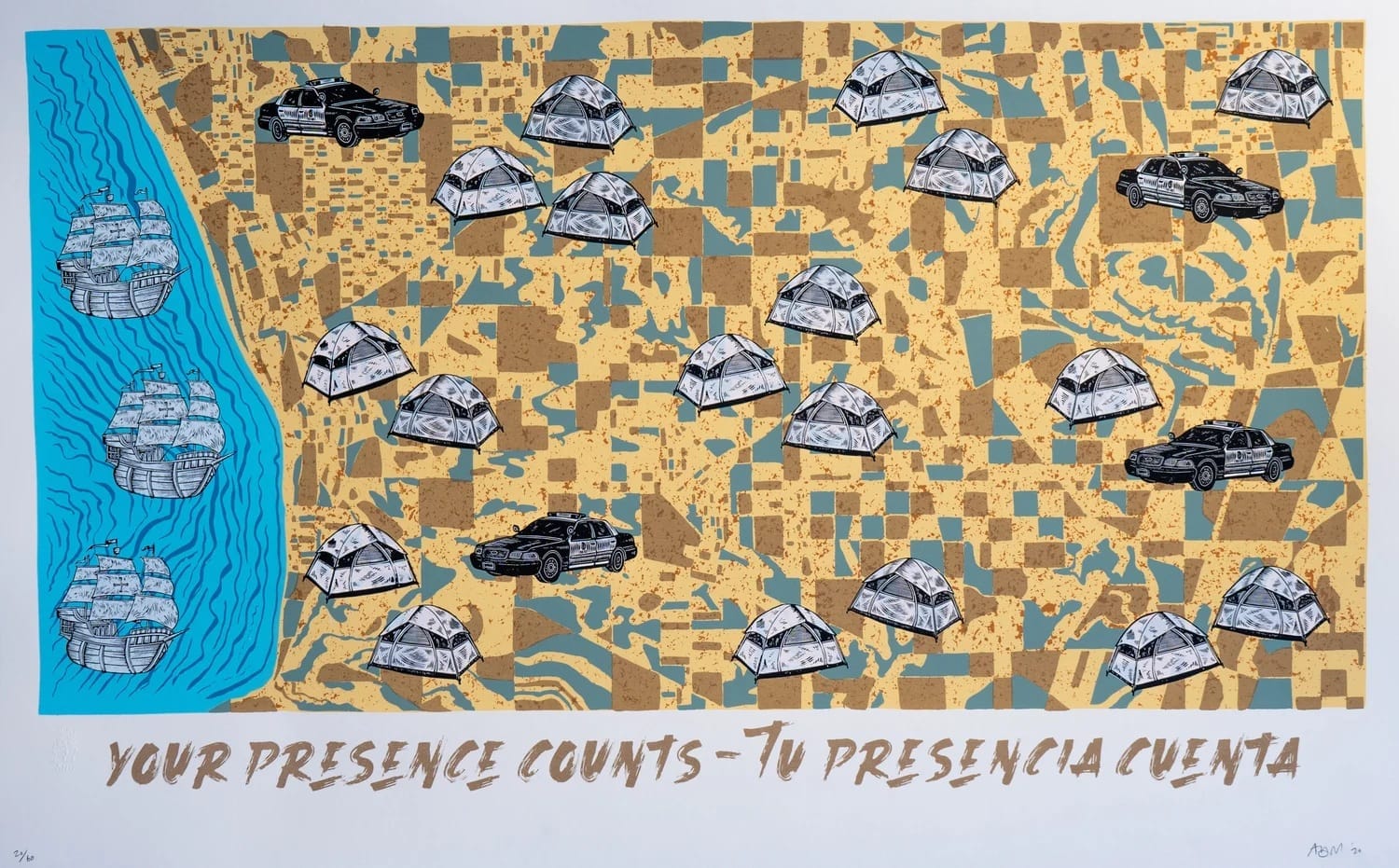
Alvaro D. Marquez, “Your Presence Counts (Tu Presencia Cuenta)” (2020), edition of 60 (image courtesy the artist, Self Help Graphics | LA, and The Print Center)

This group exhibition reflects on printmaking’s role in archiving and shaping the history of the United States, and undresses contemporary American democracy to examine the integrity and resistance of its fabric by holding it over a flame. Curated across several themes informing today’s political climate, works by Natalie Ball, Howardena Pindell, Lehuauakea, Chakaia Booker, and several others representing six mission-driven print shops nationwide confront the history and futurity of the country as we stand at a crossroads.
American Aspirations

Smithsonian Castle, Washington, DC
Through July 26

“Gospel Hymns No. 2” by P. P. Bliss and Ira D. Sankey, Harriet Tubman’s personal book of hymns (public domain via the National Museum of African American History and Culture)

Suggesting that nobody can sway the Smithsonian Institution, Secretary Lonnie Bunch III and curators Abeer Saha and Henry Rubenstein mindfully select over 30 treasured objects that best represent the nation’s wide-net dreams, achievements, and shortfalls from the museum and research complex’s innumerable holdings. American Aspirations ruminates on the notion of individual and national pursuits as referenced in the Declaration of Independence, identifying moments of profound innovation, improvement, and injustice through objects like Thomas Edison’s lightbulb, Harriet Tubman’s hymn book, and Thomas Jefferson’s writing desk.


America 250: Common Threads

Crystal Bridges Art Museum, Bentonville, AR
Through July 27

Organized in partnership with the American Folk Art Museum, this exhibition examines American patriotism through prevalent symbols and art forms. A historic selection of regional quilts; hand-outs and collectibles featuring George Washington’s face, eagles, and the American flag; and souvenirs from the American centennial in 1876 walk visitors through the aesthetic choices meant to stimulate civic engagement and national pride, while work by contemporary artists including Kay WalkingStick, Vanessa German, and Robert Colescott dissect and critique those semiotics.


Beyond Mysticism: The Modern Northwest

Seattle Art Museum, Seattle, WA
Through August 2

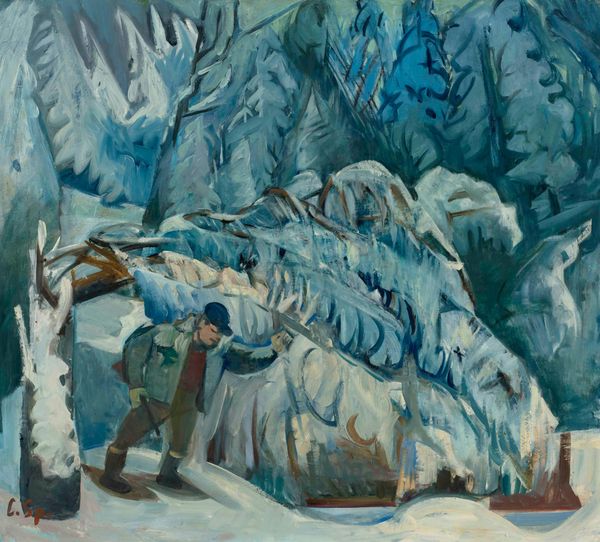
This massive group exhibition gathers modernist works that emerged within and beyond the Northwest School — an informal regional art movement that gained steam in the 1930s and ’40s. With an infusion of East Asian and Indigenous artistic influences, the Northwest School folded the moodier and uncanny elements of Surrealism, Social Realism, and Abstract Expressionism into depictions of and responses to the changing lifestyles, labor markets, and landscapes of the region at the time. The show highlights work by the movement’s “Big Four” — Guy Anderson, Morris Graves, Mark Tobey, and Kenneth Callahan — and myriad others who brought their own flair to this facet of Modernist American canon.


Freedom Dreams 

The Barnes Foundation, Philadelphia, PA
Through August 9

Installation view of Freedom Dreams at the Barnes (photo Hakim Bishara/Hyperallergic)

Featuring Arthur Jafa's iconic “Love Is the Message, the Message Is Death” (2016) and Garrett Bradley's “America” (2019), this immersive exhibition of contemporary Black art films and moving image installations suspends viewers in a series of collective memories where past, present, and future are flexible in the contexts of Black history, culture, collective and resilience.


Burnished: Pueblo Pottery

National Museum of Women in the Arts, Washington, DC
Through September 27

Lisa Holt and Harlan Reano, “Jar” (2025) (© Lisa Holt (Cochiti), Harlan Reano (Santo Domingo))

The 24 clay vessels in this exhibition reflect the diverse traditions and material cultures that accompany a millennium-old art form across Pueblo communities. Women makers foreground this internationally renowned sculpture practice, often imparting their knowledge matrilineally. Among the featured artists are San Ildefonso potter Maria Martinez, who reinvented the historic blackware practice to great success; generational Santa Clara potters Margaret Tafoya, LuAnn Tafoya, and Stephanie Tafoya; and Hopi-Tewa artist Iris Youvella Nampeyo, whose smooth, earth-colored pots became famous for their signature simplicity and dimensional appliqués.


Mary Whyte: Salt of the Earth

Gibbes Museum of Art, Charleston, SC
Through September 27

Mary Whyte, “Oyster Bank” (2023) (image courtesy the artist and the Gibbes Museum of Art)

Acclaimed watercolorist Mary Whyte acknowledges the nation’s semiquincentennial with 26 figurative paintings and a site-specific drawing in a sweeping tribute to the American people for all of the diversity, grit, conviction, and spirit they possess. From coast to coast, Whyte deploys her representational skillset to capture those from all walks of life, including a fortune cookie maker in San Francisco, an oyster man from South Carolina, and New Orleans’s late mobile produce vendor Arthur James Robinson, better known as Mr. Okra, who was famous for singing out of his painted truck to make sales.


Ms. Americana

National Museum of Women in the Arts, Washington, DC
Through October

Centering 18th- through 20th-century American art, this exhibit engages the contributions of women artists including Jennie Augusta Brownscombe, Cecilia Beaux, Ellen Day Hale, Clementine Hunter, Lilla Cabot Perry, Sarah Miriam Peale, Anna Claypoole Peale, Jane Peterson, and Lilly Martin Spencer. Emboldened by their independence, circumstances, and a quest for personal enlightenment, these artists traveled the world, made a living from their practice, and were trailblazers for the representation of professional women artists in the canon of (colonial) American art and academia.


America 250 Collaborative Quilt-Along

National Museum of the American Indian, New York; Washington, DC; and virtual
Through October 1

Constructed with myriad fabrics and rich with collaboration and tradition, the art of quilting is synonymous with American history on an archival and metaphorical level. The National Museum of the American Indian celebrates this ever-evolving art form through a nationwide “quilt-along,” inviting anyone and everyone to contribute to a massive artwork composed of patterned squares designed by six Native American women artists depicting Indigenous history, futurity, and contemporaneity. The museum will host onsite sew-ins in New York and DC, remote quilting sessions, and virtual talks by participating artists Lauren Good Day, Cissy Serrao, Nikki Corbett, and Emma Alcazar.


Roadside Attractions

New Mexico Museum of Art, Santa Fe, NM
Through October 4

Steve Fitch, “Snakepit Operator, Highway 66, Sayre, Oklahoma,” (1972) (© Steve Fitch; Photo Blair Clark, courtesy New Mexico Museum of Art)

Explore the cultural zeitgeist of the great American road trip on the centennial anniversary of Route 66, affectionately referred to as the Mother Road that stretches from Chicago to Santa Monica. The birth of car culture and the reverence for experiential Americana gave way to an assortment of quirky mom-and-pop hospitality businesses, giant sculptures and novelty architecture, neon signage, and exotic animal shows — historic roadside attractions that signified what adventures lay ahead. A selection of photographs lovingly documenting Route 66’s iconic roadside culture celebrates the kitschy, quirky, and bizarre aesthetics of traversing the American West.


Best Laid Plans: Unrealized Projects from the Archives of American Art

Reynolds Center for American Art and Portraiture, Washington, DC
Through October 18

A look at the American art, architecture and design landscape from the standpoint of “what could have been, but never was,” Best Laid Plans pulls from the Smithsonian Institution’s Archives of American Art collection’s archival documents, proposals, and other preserved ephemera related to various unrealized projects. Publication drafts, exhibition proposals, public work schematics, and other creative initiatives by the likes of Sol LeWitt, Mierle Laderman Ukeles, Robert Smithson, Dara Birnbaum, Bruce Conner, Nancy Spero, and Robert Morris are assembled in an exhibition emphasizing that failure and success are not opposites, but simply two sides of the same coin.


Drawing America: US@250

Brooklyn Museum, Brooklyn, NY
Through November 3

The semiquincentennial of the United States is a season-long affair for the Brooklyn Museum, which has assembled a conglomeration of pop-up events, scheduled programming, and site-specific installations that honor “those who have imagined a more equitable future and fought for the promise of our democracy — and those who continue to do so today.” In addition to two topical exhibitions that run concurrently, the museum has hand-selected collection objects and developed several self-guided audio tours that walk visitors through underrepresented and marginalized perspectives of American history.


Thomas Cole: Painting the Nature of America

Thomas Cole National Historic Site, Catskill, NY
Through December 2026

Cynthia Daignault, Light Atlas (2016), oil on linen, 360 canvases (photo Edward C. Robinson III)

This national historic site, where Thomas Cole resided and worked from his marriage until his death, calls on visitors to reflect on the Hudson River School movement and its persisting influence. In a program of special exhibitions, a selection of Cole’s scenic paintings and studio supplies unpacks the artist’s devotion to the beauty of the American wilderness in contrast with the stronghold grip of industrialization, while a group display of other Hudson River School artists reiterates Cole’s lasting impression. Additionally, contemporary painter Cynthia Daignault presents 360 paintings in her series Light Atlas (2016), each documenting the sites and scenes from a cross-country road trip.


Passages in American Art

Portland Museum of Art, Portland, ME
Through January 1

Accompanied by loans and commissions, a revised display of the Portland Museum of Art’s permanent collection now accounts for multiple voices in the composition of the nation’s history and legacy. Building on the countless interpretations of the word “passage,” Black and Indigenous points of view come into focus and contemporary and historical stories intersect through the insights of a robust advisory community guiding the reinstallation.


She Speaks: Black Women Artists and the Power of Historical Memory

Banneker-Douglass-Tubman Museum, Annapolis, MD
Through January 16

Examining 250 years of United States independence through a Black Feminist lens, She Speaks recognizes Black women as active participants in shaping and preserving the nation by highlighting artists who operate as historians, archivists, and scholars to tell their stories. Presented alongside rarely seen archival materials and family heirlooms, the exhibition highlights the pivotal role Black women have played since the Revolutionary era, while envisioning liberated futures through cosmic speculation. Elizabeth Catlett, Faith Ringgold, Alisha Wormsley, Martha Jackson Jarvis, Alanna Fields, and Ada Pinkston are among the featured artists in this exhibition.


Liberty & Legacy

Newark Museum of Art, Newark, NJ
Through March 7

Winslow Homer, “Beaver Mountain, Adirondacks; Minerva, New York” (c. 1874–77) (public domain via Wikimedia Commons)

From the museum’s extensive collection of American art, visitors trace the paths of migration and the uphill battle for civil rights across multiple marginalized demographics; witness an analysis of freedom and power through the lenses of land ownership, political and social representation, law enforcement, and civic engagement; and understand the prominence and resounding impact of New Jersey’s central role in the American Revolution. Select highlights include paintings by Winslow Homer, Kervin Andre, and Alejandro Macias, as well as prints by Jacob Lawrence and Fritz Scholder.


This Is America: Selections from PAMM’s Collection

Pérez Art Museum Miami, Miami, FL
Through May 23

Danielle De Jesus, "Two men and their blue gate" (2021) (© Danielle De Jesus, courtesy PAMM)

Pulled from the museum’s collection, dozens of modern and contemporary artworks from a diverse selection of artists engage with pivotal moments of crisis, triumph, and transformation throughout the ceaselessly evolving story of the United States. From the Civil War to the COVID-19 pandemic, works by the likes of John William Bailly, Carrie Mae Weems, Alfredo Jaar, Danielle De Jesus, Rashid Johnson, Joseph Cornell, Sheroanawe Hakihiiwe, Thomas Bils, Joel Meyerowitz, Howardena Pindell, and Jeffrey Kent present resilience in its various interpretations across the socio-political environments defining our histories and futures.


Homelands: Mnë’nának, Māēnāēwah, Tešišik

Milwaukee Art Museum, Milwaukee, WI
Ongoing

An informed revision of the Milwaukee Art Museum’s previous “American West” gallery now centers the histories and perspectives of Indigenous communities rooted across Wisconsin and the broader Great Lakes region. Contemporary and historic Native artworks bring light to undertold truths and represent the diversity of creative expression within the label of American art, while a variety of non-Native artworks are accompanied by wall texts with personal reflections from Indigenous community members engaging with the subject matter.


In Pursuit of Life, Liberty & Happiness

Smithsonian National Museum of American History, Washington, DC
Ongoing

“No Stamp Act” teapot (c.1766-70) (public domain via National Museum of American History)

From the National Museum of American History’s sprawling collection, 250 objects from the 1700s through today become emblems of groundbreaking moments in American politics and resistance, entertainment and cultural influence, agriculture and manufacturing, education and innovation, and scientific research. Abraham Lincoln’s top hat, a 17th-century pine shilling, an America Online (AOL) disc, a 2002 special edition iPod with Bob Marley, Melania Trump’s inaugural ball gown, Judy Garland’s ruby slippers from the set of The Wizard of Oz, and a pocket compass from the Lewis and Clark Expedition are among the collection objects assembled in a herculean effort to do the impossible.


Reclamation Day: A Reunion of Hope

Reclamation Day, 25 Kent Ave, Brooklyn, NY
June 20, noon–11:30pm

Intentionally preceding Independence Day, the inaugural edition of a new and restorative ritual comes together in Williamsburg, inviting visitors to embark on a multifaceted journey toward reparation through interactive workshops; participatory murals, installations, and performances; film screenings; and musical interventions. Steered by Black and Indigenous artists and organizers, this experimental, sensory-heavy curation of happenings will stimulate deep reflection, foster an environment for healing and repair, and break down the walls between idealizing and realizing speculative futures. Come for Jeremy Dennis, and stay for Joey Bada$$.


Mary Cassatt: After Impressionism

Art Institute of Chicago, Chicago, IL
Opening September 6

Mary Cassatt, "The Child’s Bath" (1893) (image CC0 Public Domain via AIC)

While 2026 marks the semiquincentennial of the birth of the United States, it also marks the centennial of emboldened and cosmopolitan American artist Mary Cassatt’s death. Centering the artist’s later career after her unique association with the French Impressionists, over 75 paintings, works on paper, and ephemera related to her famous lost mural spotlight Cassatt’s lifelong sensitivity to subject matter and material. Experimental breakthroughs, like that of  Cassatt’s prints born from the Japonisme explosion in France, shine alongside her gentle but powerful paintings and pastel drawings of women and children.


Spectacular Freedom: Andrew Wyeth and the Modern American Watercolor

Cleveland Museum of Art, Cleveland, OH
Opening September 20

Andrew Wyeth, “Black Hunter” (1938) (© 2025 Wyeth Foundation for American Art /Artists Rights Society (ARS), New York)

An exhibition of over 70 works from Andrew Wyeth’s estate, the majority of which have never been publicly displayed, captures the beloved realist’s seemingly effortless expertise in watercolor painting. Wyeth’s technical handling provokes contemplation about the balance of creative liberty and material control, both in his intimately pastoral depictions and in the broader scope of the contemporary American experience.