Traumas of a Spotted Lady
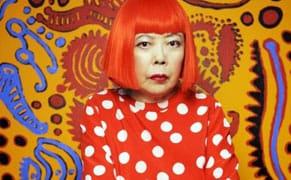
Yayoi Kusama seems to reinforce popular notions of the artist who battles with some form of madness.

In Arthur Nersesian’s wonderfully freewheeling 2003 novel about a painter in New York, Chinese Takeout, there’s a paragraph I’ve never forgotten because it resonates so deeply with anyone who has ever wondered where creativity begins. At the beginning of chapter six the narrator offers this insight:
It takes two qualities to make a serious artist: an interesting aesthetic and a blunt trauma. The first is a method and the second is a reason to paint.
This passage popped into my head during the recently published Yayoi Kusama interview in Time Out London. Here are some excerpts:
Having suffered nervous disorders and hallucinations since childhood, Kusama has chosen to live in a Tokyo psychiatric hospital for the past 38 years, and has built herself a studio opposite.
[…] the marital infidelities of Kusama’s father had a lasting impact on his free-spirited daughter. ‘My father had lots of lovers and I had to spy on him for my mother. Because my mother was very angry it made even the idea of sex very traumatic for me. My work, including the naked happenings, is always about overcoming that bad experience.
[…] her nervous disorders have no doubt always fed into her art (in analytical terms she’s burying herself in the process of repeating what she fears, in order to obliterate both her fears and herself) …
[…] Few other contemporary artists have been able to accommodate a psychiatric nervous disorder (Kusama still receives medication at the hospital in which she lives) as part of a highly successful commercial career.
Kusama seems to reinforce popular notions of the artist who battles with some form of madness. Of course, Van Gogh is the poster boy of that popular myth.
After reading these personal facts about Kusama, looking at her “Obliteration Room” project in Australia does feel very very different.
Read the whole interview here.
h/t @diggingpit