7 Art Books for Your March Reading List
Read up on the hidden history of occult influences on modernism, French sign painters, the Finnish painter who bucked convention, incarcerated artists, and more.



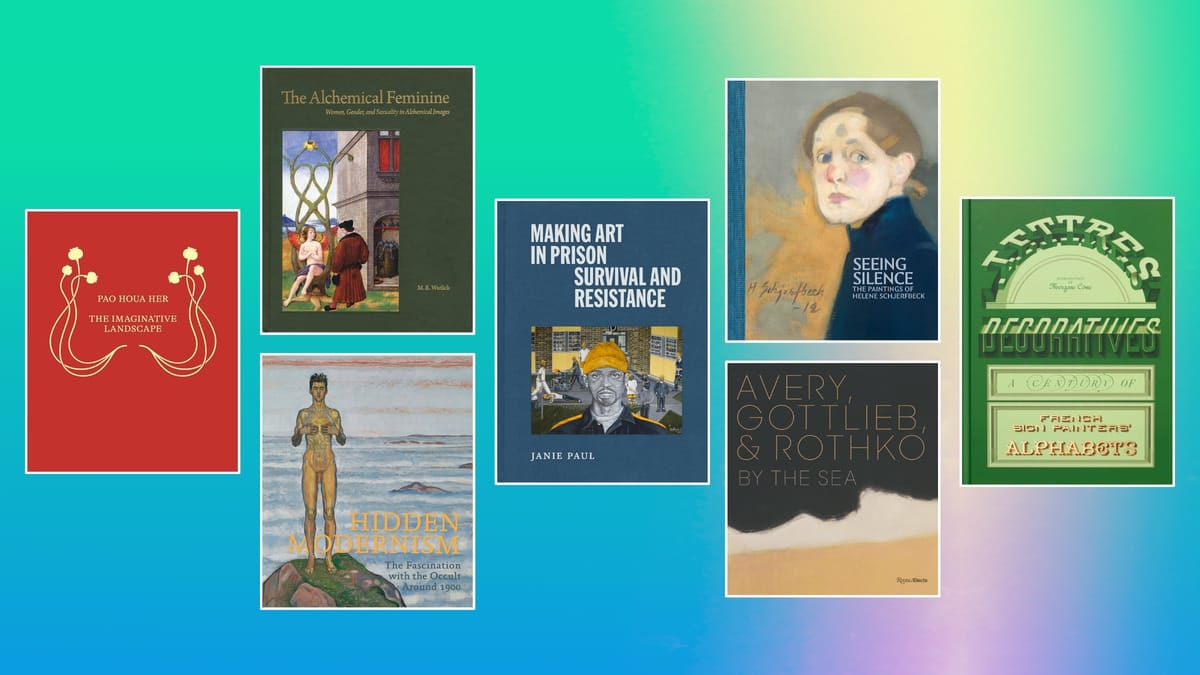
March means it's almost reading-in-the-park season, and a strong slate of new art books is here to kick off spring. Fans of the Helen Schjerfbeck exhibition at The Met can now pick up a copy of the catalog, while a tome by Janie Paul gets a reissue timed with a long-running exhibition on artists incarcerated in Michigan prisons. In the realm of the supernatural, we also take a look at books on gender in medieval alchemical imagery and how the occult influenced modernism as we know it. Those and more below to get you started. —Lakshmi Rivera Amin, associate editor
Seeing Silence: The Paintings of Helene Schjerfbeck, edited by Dita Amory | Metropolitan Museum of Art, January
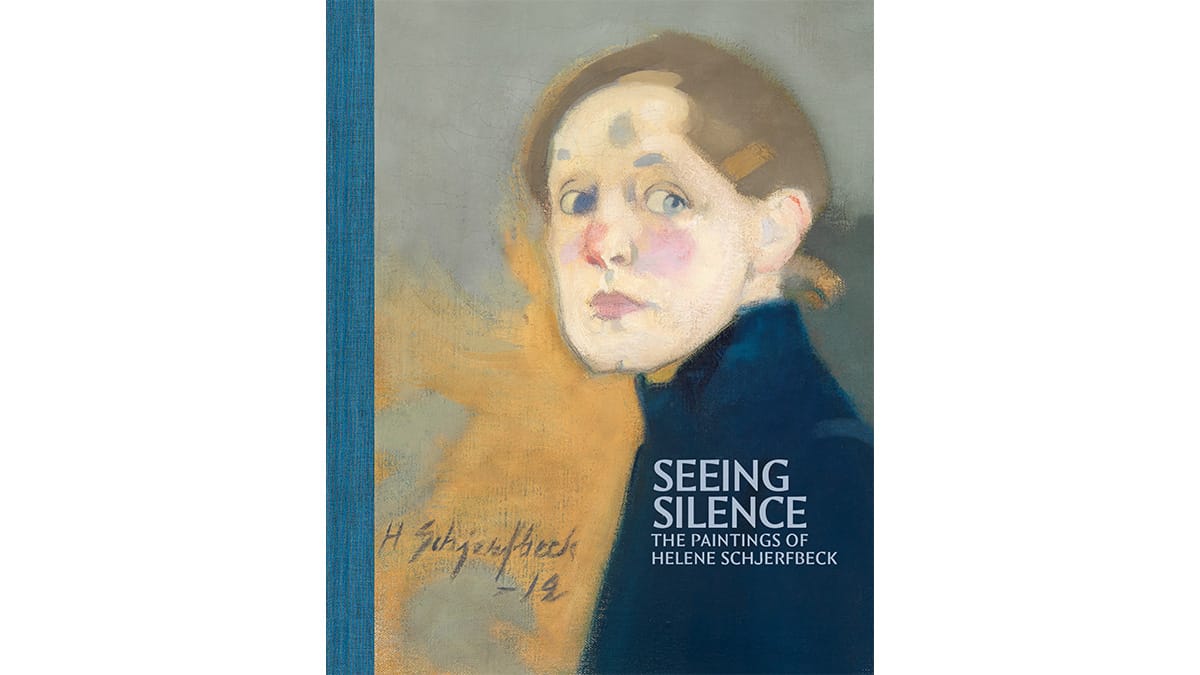
I’ve lost count of the number of times I’ve pored over artwork by a woman and wondered, in the back of my mind, “Why haven’t I heard of this artist before?” The Metropolitan Museum of Art traces the evolution of modernist Finnish painter Helene Schjerfbeck, whose indelible portraiture is burned into my brain and left me wanting to know more about her singular role in Europe’s patriarchal art scene. The exhibition lays out a timeline of her searing gaze, culminating in self-portraits from her final years spent in a Swedish spa hotel. How rare it is to witness an artist portray her own transformation with such honesty and attention. With essays by curator Dita Amory and Finnish art historian Anna-Maria von Bonsdorff, among others, this catalog rejects previous characterizations of Schjerfbeck as “frail and fragile,” instead bringing her life and work into sharp relief. —Lakshmi Rivera Amin
Lettres Décoratives: A Century of French Sign Painters’ Alphabets by Morgane Côme | Letterform Archive Books, February
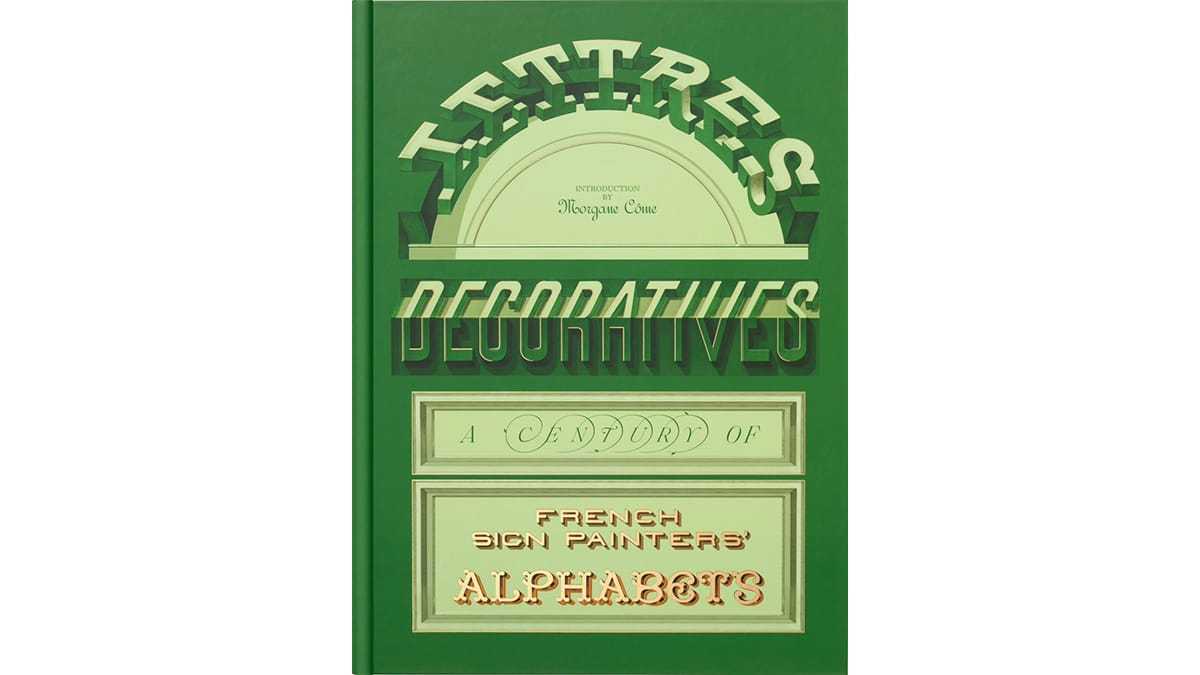
There’s something for everyone in this book. For the historically inclined among us, Lettres Décoratives offers well-researched texts on the origin and evolution of French sign-painting, starting in the 19th century. Or, if you’re anything like me, you can flip through the pictures — signs and extracts from journal manuals of letters from the late 19th to the mid-20th century — which are so beautiful, I wanted to cry. See, for instance, an illustration for a coiffeur (hairdresser) with a pair of silver scissors threaded through; Art Nouveau letters whose organic curves make them look almost alive; or an intricate sign advertising other signs, which looks like a carnival stand, complete with a red curtain. A world that cares this much about such ordinary aesthetics feels almost unimaginable now. —Lisa Yin Zhang
Pao Houa Her: The Imaginative Landscape, edited by Lauren Dickens and Jodi Throckmorton | Inventory Press, San José Museum of Art, and Kohler Arts Center, February
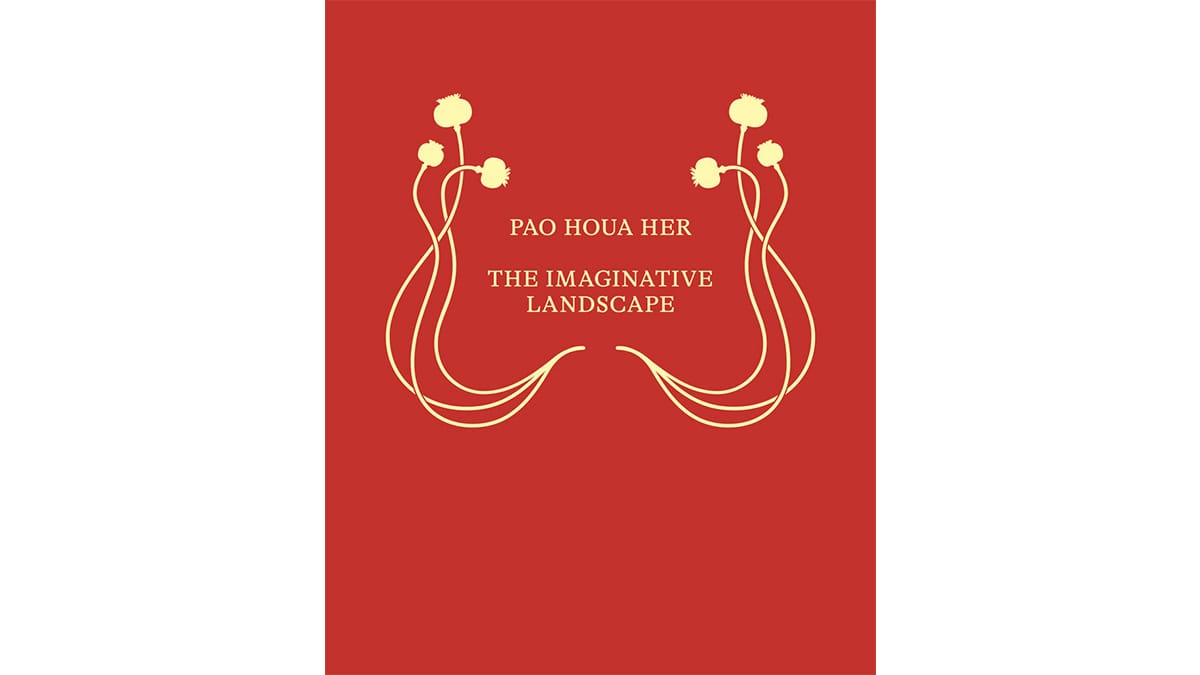
In her photo-based work, Pao Houa Her gives life to the Hmong diaspora, an ethnic group rooted in Laos that has since transcended borders while maintaining a sense of community established in the United States. For her, the camera has become a tool of connection and reconstruction, often in pursuit of the elusive American dream and frequently infused with a longing for what came before but no longer exists. But nostalgia isn't the focus of her work — the worlds she creates suggest a contagious newness. —Hrag Vartanian
The Alchemical Feminine: Women, Gender, and Sexuality in Alchemical Images by M. E. Warlick | Fulgur Press, February
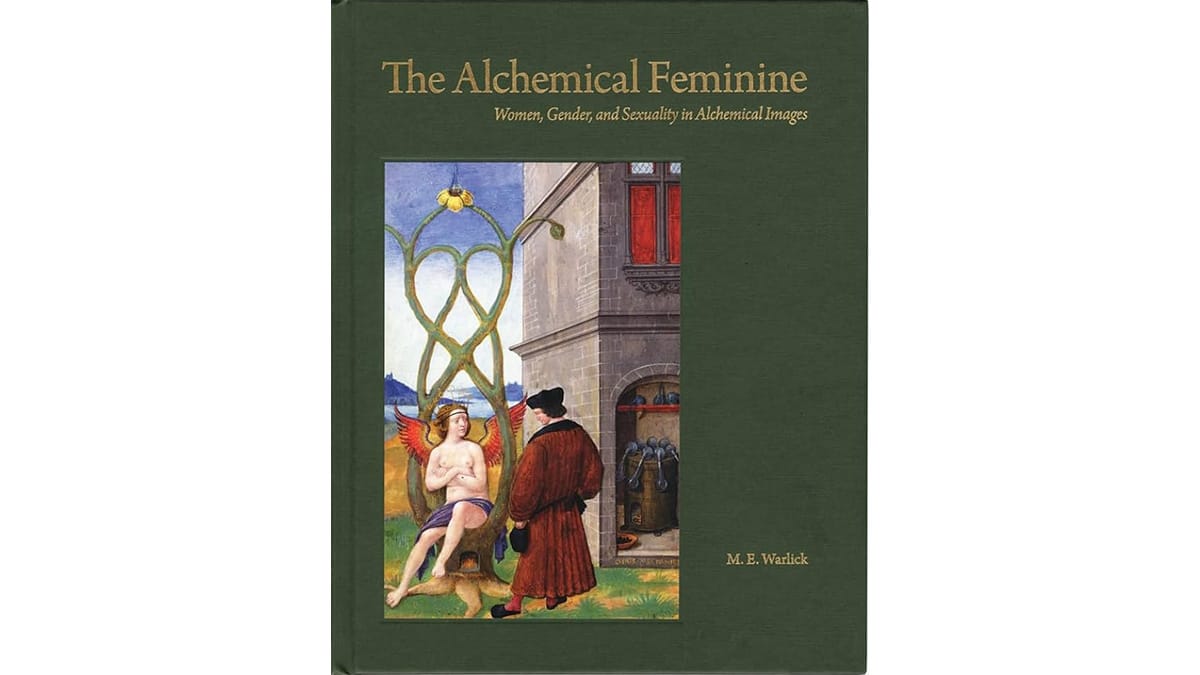
If art historian M. E. Warlick’s pedigree as an expert on art and alchemy wasn’t already cool enough, her most recent publication filters alchemy through a feminist lens — and actually, it makes perfect sense. Alchemy’s language is structured through gender tropes, beginning with the mystical union of “male” and “female” properties to birth the Philosopher’s Stone, believed to transmute base materials into silver and gold. Here, Warlick focuses on the prominence and symbolism of women in alchemical images, particularly in illuminated manuscripts, as they reflected women’s actual roles in medieval and Renaissance European society. This journey takes readers deep into the rich and strange terrain of feminine imagery, identity, and the coding of physical matter as “female” in alchemy. Just as fascinating as the text are the 200-plus illustrations. —Natalie Haddad
Hidden Modernism: The Fascination with the Occult Around 1900 | Walther König, March
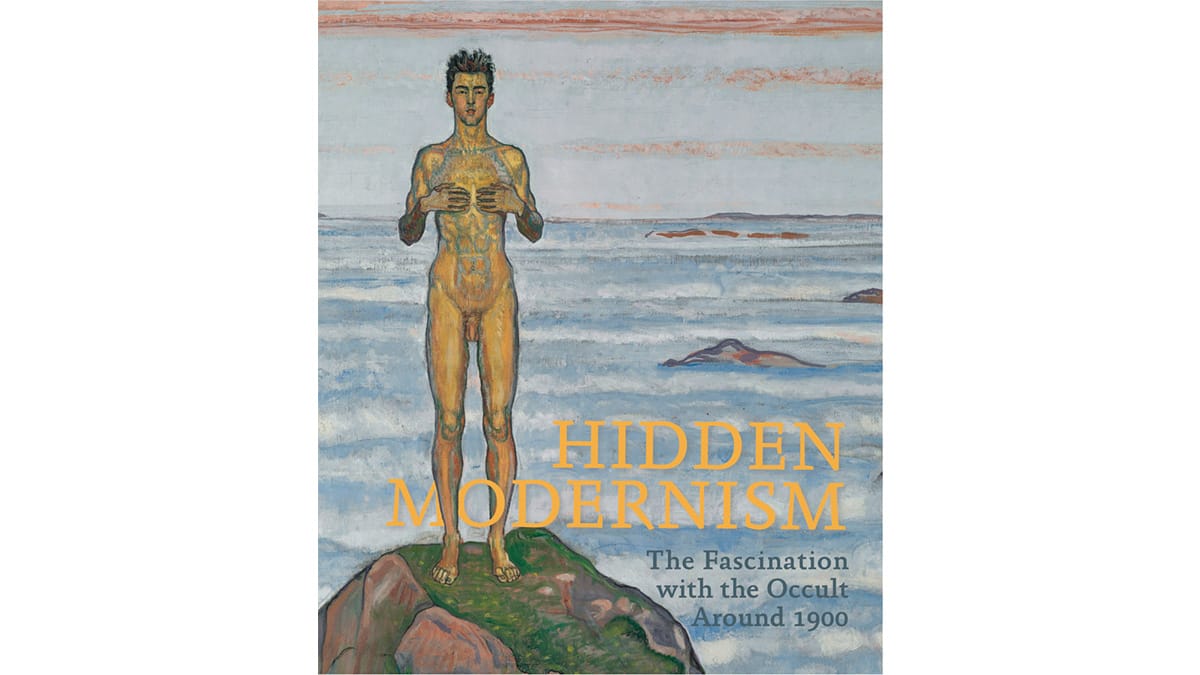
Hidden Modernism takes late 19th- and early 20th-century Vienna as its case study of the long and fruitful relationship between art and the occult, with surprisingly far-reaching results. The book explores how artists associated with the Lebensreform movement, which countered modern industrialization with nature and health, found resonance in theosophy and spiritualism, transforming these interests into work that would influence global modernism. A companion to the exhibition of the same name at Vienna’s Leopold Museum, it looks at artists such as Oskar Kokoschka and Richard Gerstl, whose dissolving portraits prefigured Abstract Expressionism; Loïe Fuller and Isadora Duncan, who helped shape modern dance; and Koloman Moser, who paved the way for the Bauhaus and mid-century modern design, among many others. —Natalie Haddad
Avery, Gottlieb & Rothko: By the Sea, edited by Eliza Rathbone | Rizzoli Electa, March
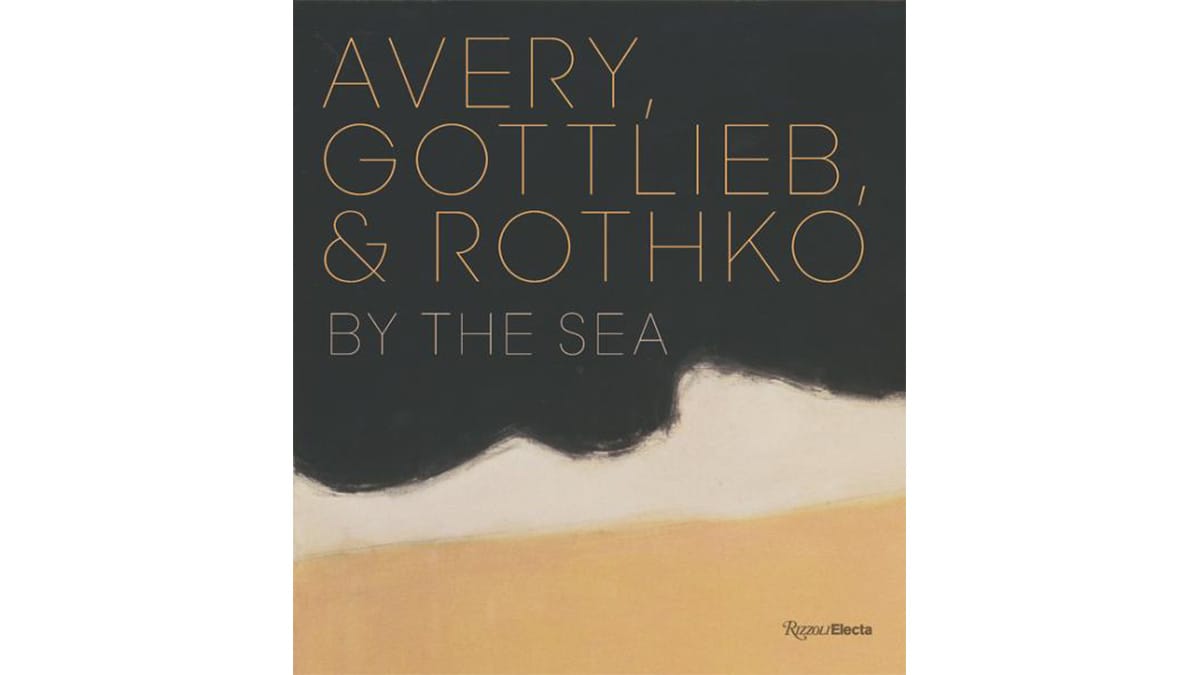
At Milton Avery's memorial, Mark Rothko talked lovingly about the pioneering modernist artist who rendered landscapes and seascapes into colorful forms. During that speech, he mentioned meeting with Avery and Adolph Gottlieb numerous times during his formative years. While the three artists don't seem like obvious companions in the annals of art history, Eliza E. Rathbone, who shares these facts in her essay in this excellent book, points out that even Avery's wife, Sally, called the three friends "a close-knit trio."
The images in this book, which accompanies an exhibition opening at the Cape Ann Museum on June 30 before traveling to the Phillips Collection in the fall, make the case that the relationship between their work is not only striking but clear. Avery's planes of color seem like precursors to Rothko's own ethereal planes, and Avery's "White Moon" (1957) appears in dialogue with Gottlieb's own sun-like forms.
This exhibition and catalog will surely make many of us rethink how we categorize 20th-century American modern art and whether we have been missing connections that have been there all along. —Hrag Vartanian
Making Art in Prison: Survival and Resistance by Janie Paul | Hat & Beard Press, reissue
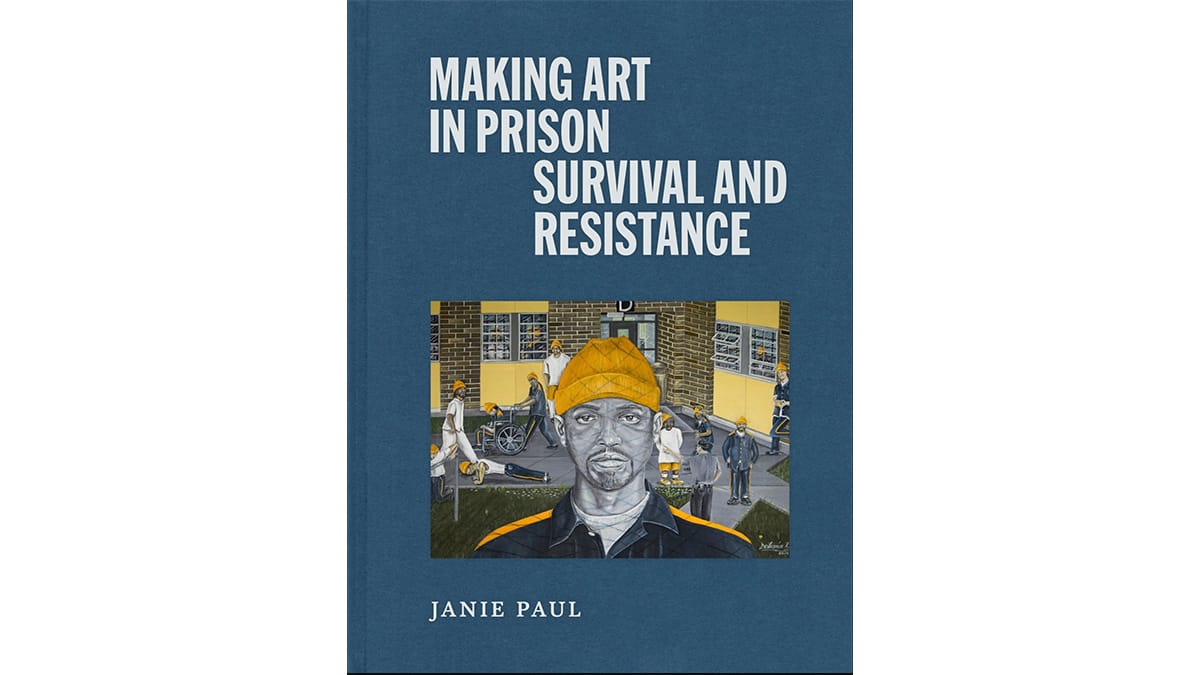
The Annual Exhibition of Artists in Michigan Prisons, organized by the University of Michigan’s Prison Creative Arts Project, is the largest and longest-running show of its kind in the United States. Marking its 30th anniversary this year is a reissue of Making Art in Prison. Janie Paul, professor emerita and co-founder of the Exhibitions of Artists in Michigan Prisons at the University of Michigan, has compiled a beautiful and deeply meaningful collection of artworks while shining a light on the creators and their stories. It’s worth getting the book for the art alone, which points up the hollowness of so much contemporary art and visually dazzles. However, the insight it offers on the dehumanizing experience of incarceration and the complicated and often unjust roads that lead to it feels more necessary than ever. —Natalie Haddad