Rowan Renee Unearths Green-Wood Cemetery’s Forgotten Lives
The lots at the cemetery’s perimeter are marginal sites for people who, very likely, were marginalized during their lives.

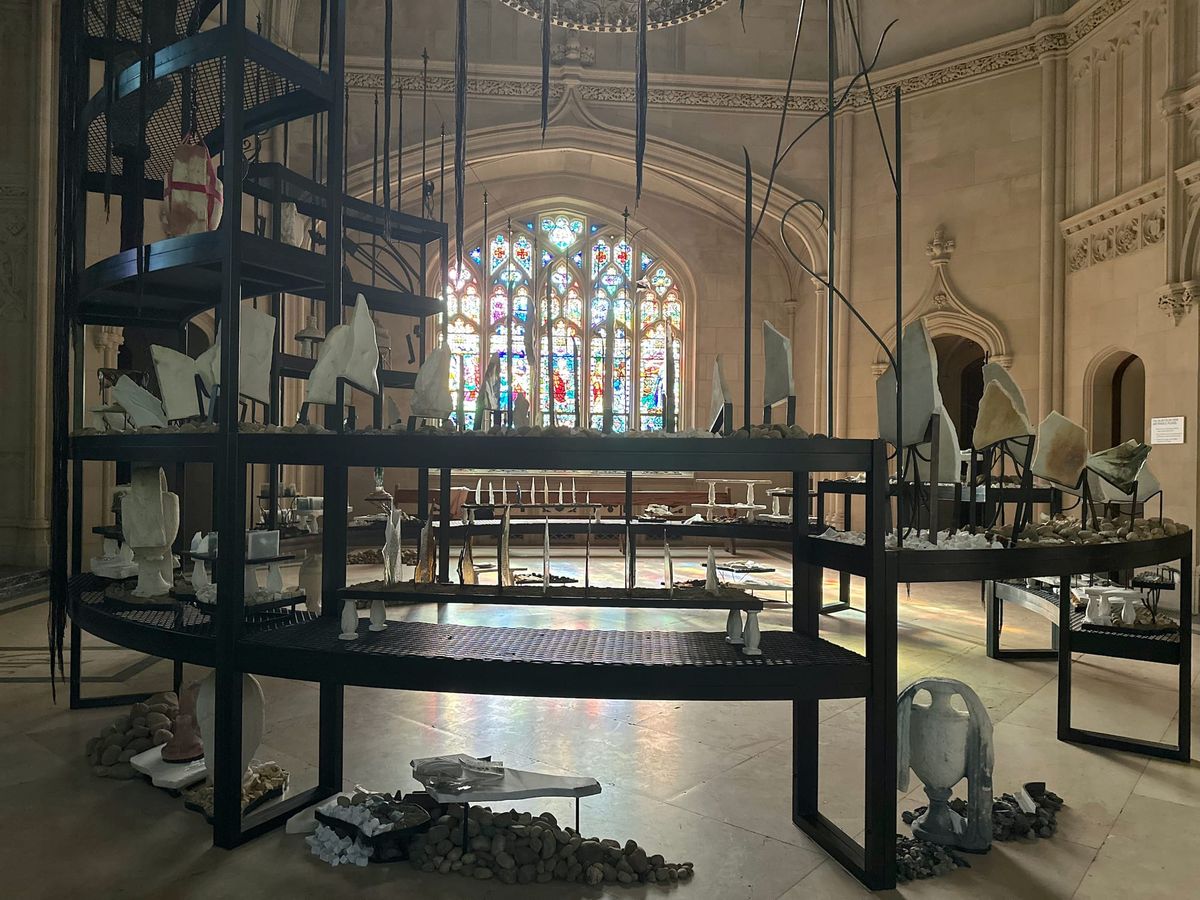
It is not often that an art exhibition radically alters one’s understanding of, and orientation within, a major urban landmark. Rowan Renee’s multifaceted The Perimeter Path in Brooklyn’s renowned Green-Wood Cemetery is definitely one of those times.
Numerous well-known people are interred at Green-Wood and many visitors flock to their graves: Leonard Bernstein, Jean-Michel Basquiat, Boss Tweed, Charles Ebbets (of Brooklyn Dodgers’ fame), Governor DeWitt Clinton, among others. There are also many costly gravestones, monuments, and mausoleums, which, not surprisingly, memorialize overwhelmingly White, often wealthy people.
But what Renee, Green-Wood’s 2022–23 artist-in-residence, has focused on are the inexpensive and easily ignored public lots, historically for working class and low- or no-income people, and the many people buried there, often in unmarked graves or beneath gravestones that have eroded or disappeared over time. These lots are largely at Green-Wood’s perimeter, next to the metal fence separating the cemetery from streets. They are marginal sites for people who, very likely, were marginalized during their lives.
How Green-Wood incarnates — physically and spatially — the whopping inequities that have plagued the United States since its origins, chiefly those involving class and race, is at the core of The Perimeter Path.