A Felix Gonzalez-Torres Exhibition Forgets What He Was Fighting For
“Sweet Revenge” at the Reina Sofía gives the impression of a showcase of a second-generation Minimalist artist, emphasizing form over anything else.

MADRID — The long-awaited exhibition Felix Gonzalez-Torres: Sweet Revenge at the Museo Reina Sofía opens with an emphasis on Madrid’s role in the artist's life. Gonzalez-Torres briefly lived here as a Cuban child refugee in 1971 before moving on to Puerto Rico and New York. While this marks his first large-scale solo exhibition in the Spanish capital, it follows a landmark show at the Centro Galego de Arte Contemporánea in Santiago de Compostela in 1995, just before his death from AIDS-related complications; a 2000 group show (No es sólo lo que ves: Pervirtiendo el Minimalismo) at the Reina Sofía itself; and a 2021 exhibition at the Museu d’Art Contemporani de Barcelona framed by the COVID-19 pandemic. By centering his brief history as a refugee, the present exhibition challenges our traditional understanding of Gonzalez-Torres's trajectory. Why, though, are many of his most politically charged works missing?
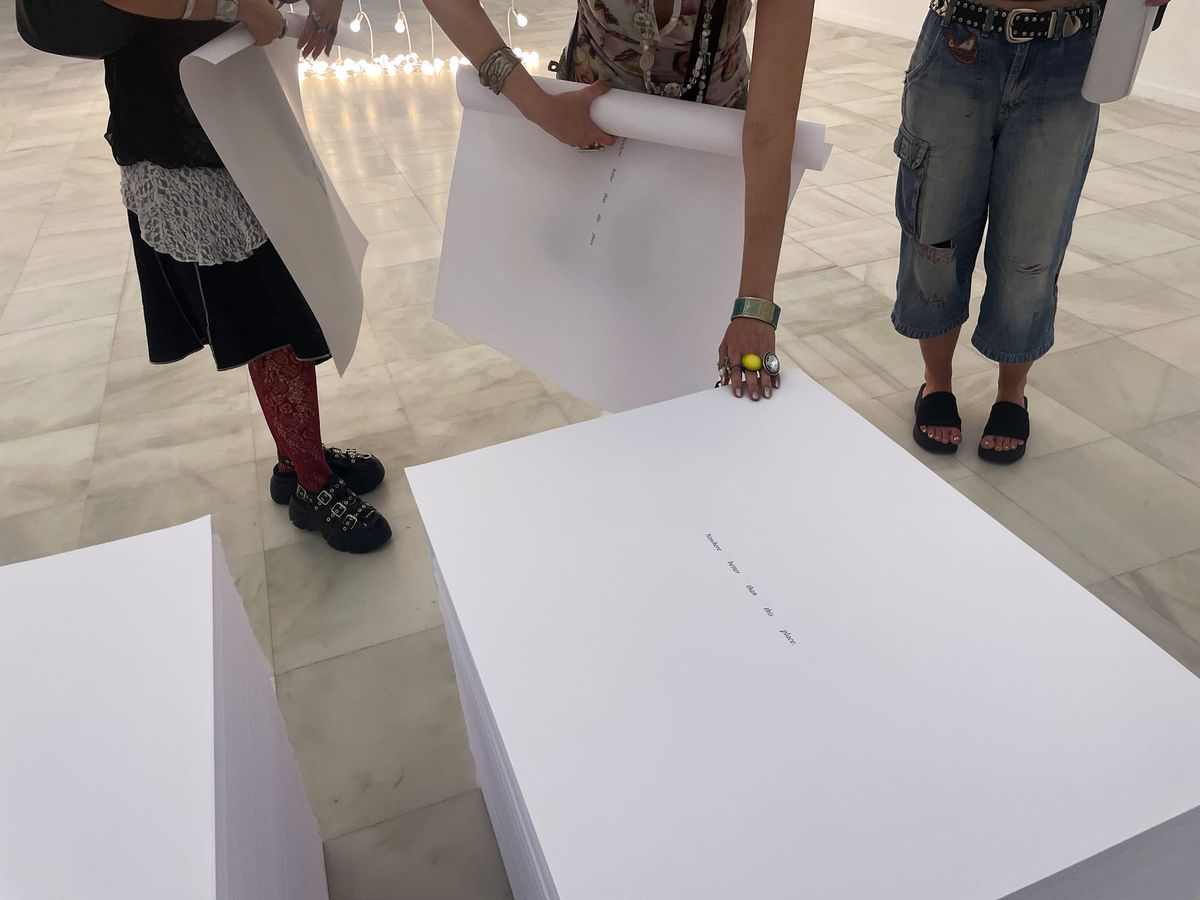
The exhibition unfolds across seven galleries on the first floor of the Sabatini Building, featuring more than 50 works by Gonzalez-Torres: his iconic candy spills, text portraits, puzzles, beaded curtains, paper stacks, and photographs, alongside quotes by the artist printed on the gallery walls. Strikingly, there is no chronological framework. The exhibition was curated by artist Alejandro Cesarco and Nancy Spector, the former Guggenheim artistic director and chief curator who organized Gonzalez-Torres's definitive 1995 retrospective in New York. They drew inspiration for the show's title and central theme from the blue candy spill “‘Untitled’ (Revenge)” (1991), a work the artist created after returning to Madrid as an adult. He would later reflect on the personal significance of the visit: “I returned to Madrid nearly twenty years later — sweet revenge.” According to a wall text, being sent to Madrid as a child refugee “was a traumatic experience, one that heavily informed his preoccupations with memory and repetition.”
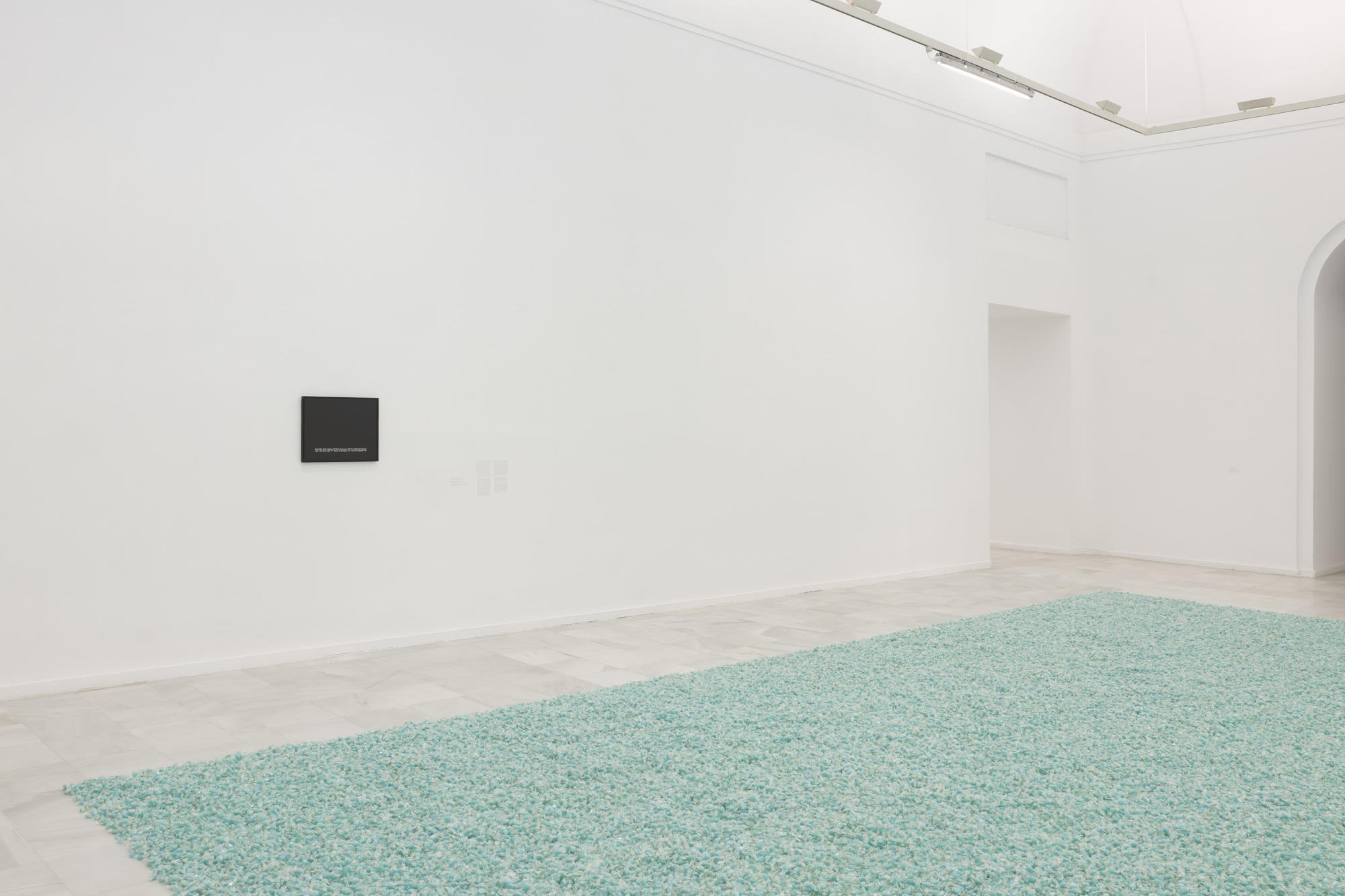
Adopting “Sweet Revenge” as their operational framework, the curators highlight the ambiguity and complexity of Gonzalez-Torres’s works, which often oscillate between aesthetic beauty and critical engagement. They present a parallel text titled "Methodology" in the entrance hall, outlining the principles, instructions, and responsibilities that guide the exhibition. This text explains the logistics behind the replenishable candy piles, paper stacks, and alterable text portraits, detailing how they are to be presented and expanded upon. Ultimately, the curators seem to focus more on the mechanics of Gonzalez-Torres's works than on what he was trying to say.