A Kind of Paradise: Reclaiming Colonial-Era Photography Through Contemporary Art
At Museum Rietberg, 20 global artists transform colonial photographs into new narratives of memory, identity, and resistance.
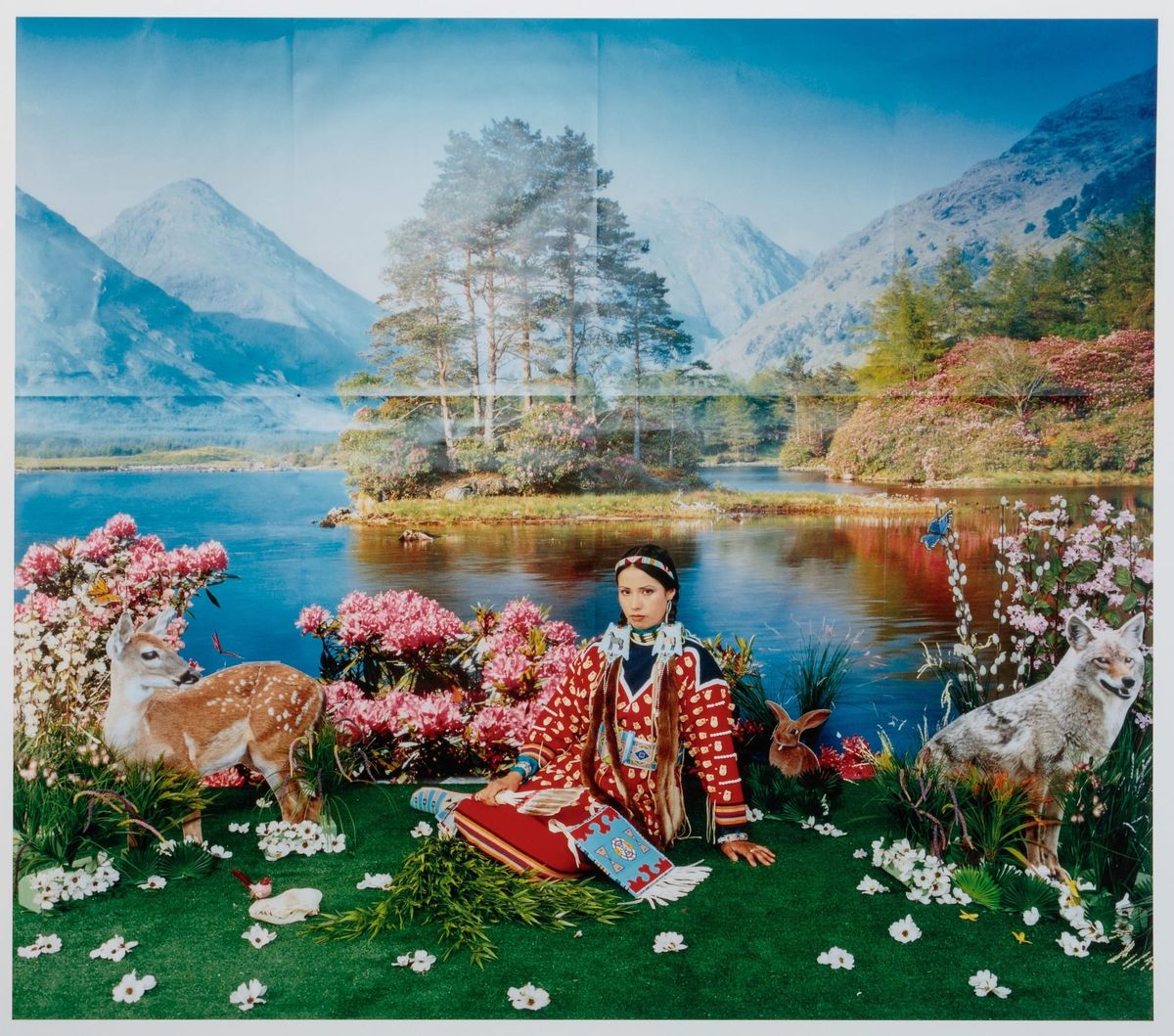
A Kind of Paradise, on view at Museum Rietberg in Zurich, brings together twenty artists who treat colonial‑era photography not as a sealed historical record but as material that can be unsettled, reworked, and reclaimed.
The show unfolds across four sections – Shapeshifters, Confrontation, Care, and In the Photo Fantastic – each offering a different tactic for dealing with images that have shaped, distorted, or erased histories. Rather than smoothing over the contradictions of the colonial archive, the artists lean into them. They cut, annotate, stitch, and reimagine photographs that once claimed to define entire cultures.
In Shapeshifters, the absence of photographic archives becomes a generative force. Many communities outside Europe have little visual documentation of their own pasts, a void created by extraction, displacement, and the uneven spread of early photography. Artists such as Rosana Paulino, Cédric Kouamé, and Dinh Q. Lê respond by building their own counter‑archives. Their works are layered and tactile, insisting that memory is not a fixed record but a living practice that shifts depending on who is looking.
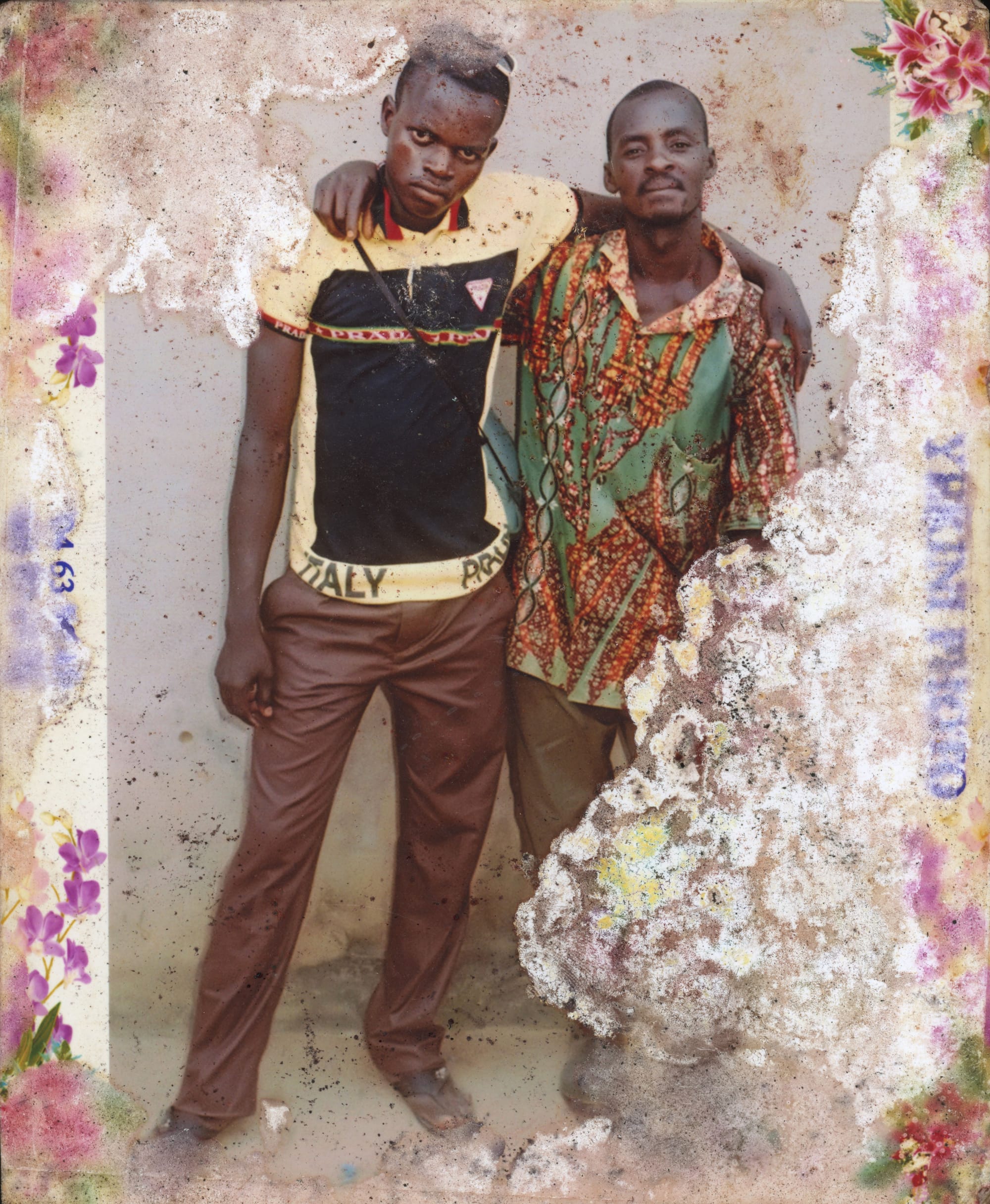
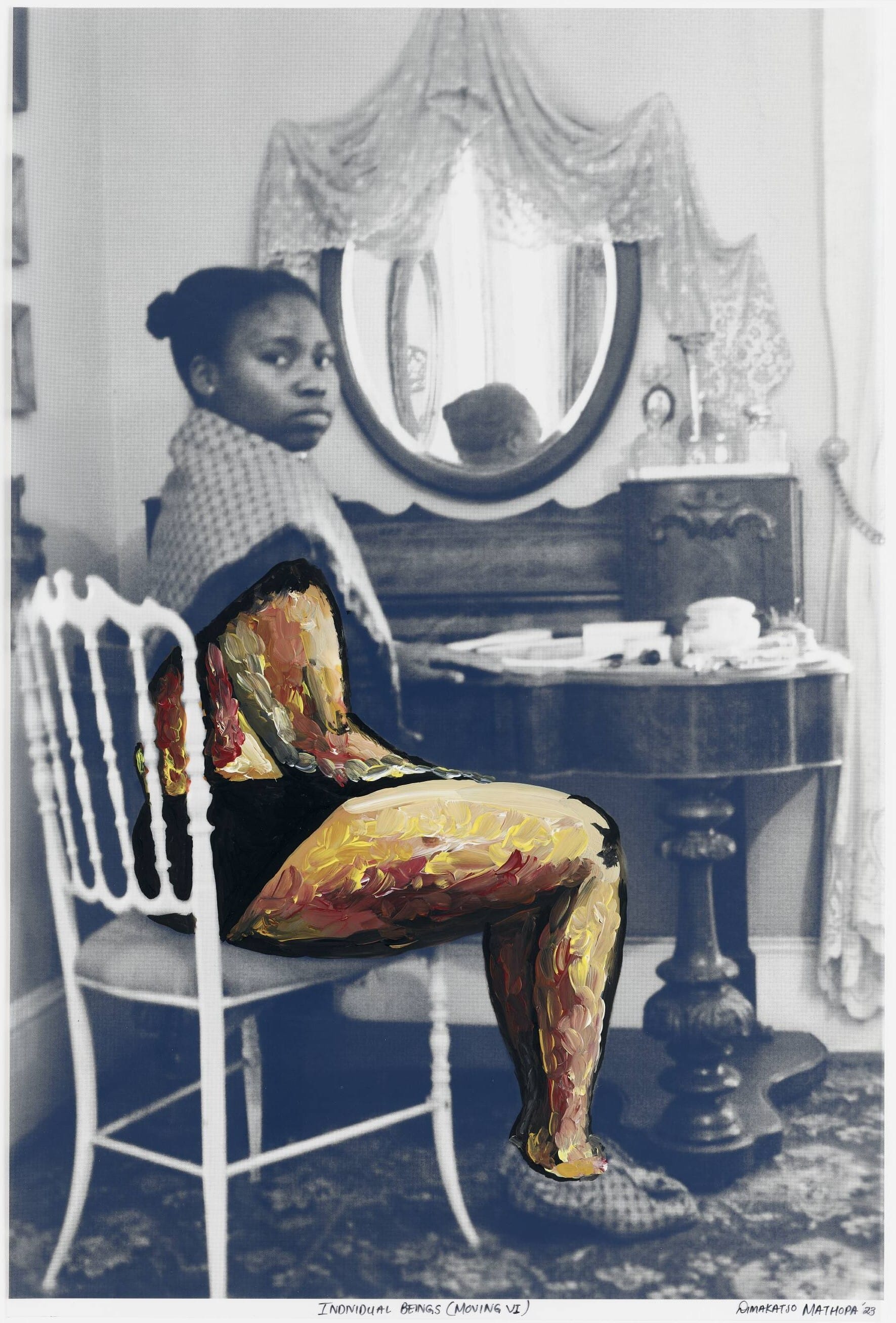
Left: Cédric Kouamé, from the series The Gifted Mold (2012), Côte d’Ivoire (© Cédric Kouamé, courtesy the artist); Right: Dimakatso Mathopa, “Individual Beings (Moving VI)” (2023–24) (© Dimakatso Mathopa, courtesy the artist; Museum Rietberg)
Confrontation turns to the mass‑produced images that circulated through postcards, magazines, and ethnographic albums. These pictures helped codify racial hierarchies and fantasies of otherness. Artists including Omar Victor Diop, Yuki Kihara, Frida Orupabo, and Dimakatso Mathopa dismantle these visual clichés with precision. Their collages and interventions expose the mechanics of the colonial gaze while reclaiming the dignity and agency of the people pictured.
In Care, the artists approach historical photographs marked by violence and exploitation with a different kind of intensity. Works by Sasha Huber, Tuli Mekondjo, and Zenaéca Singh act as gestures of protection. They shield, mend, or reframe figures who were once objectified by the camera. These pieces do not simply critique the past. They acknowledge its emotional and political afterlives, which continue to shape the present.
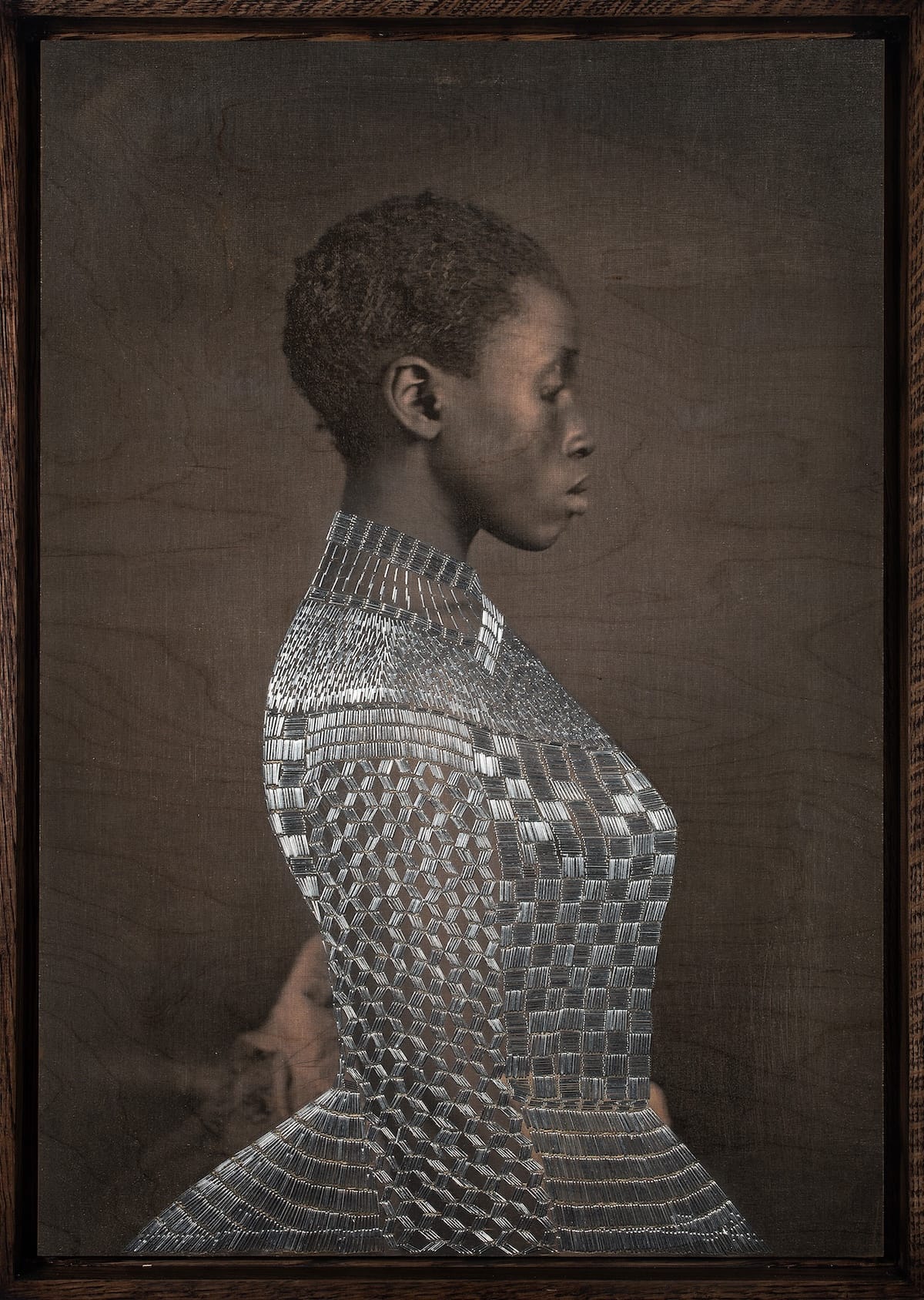
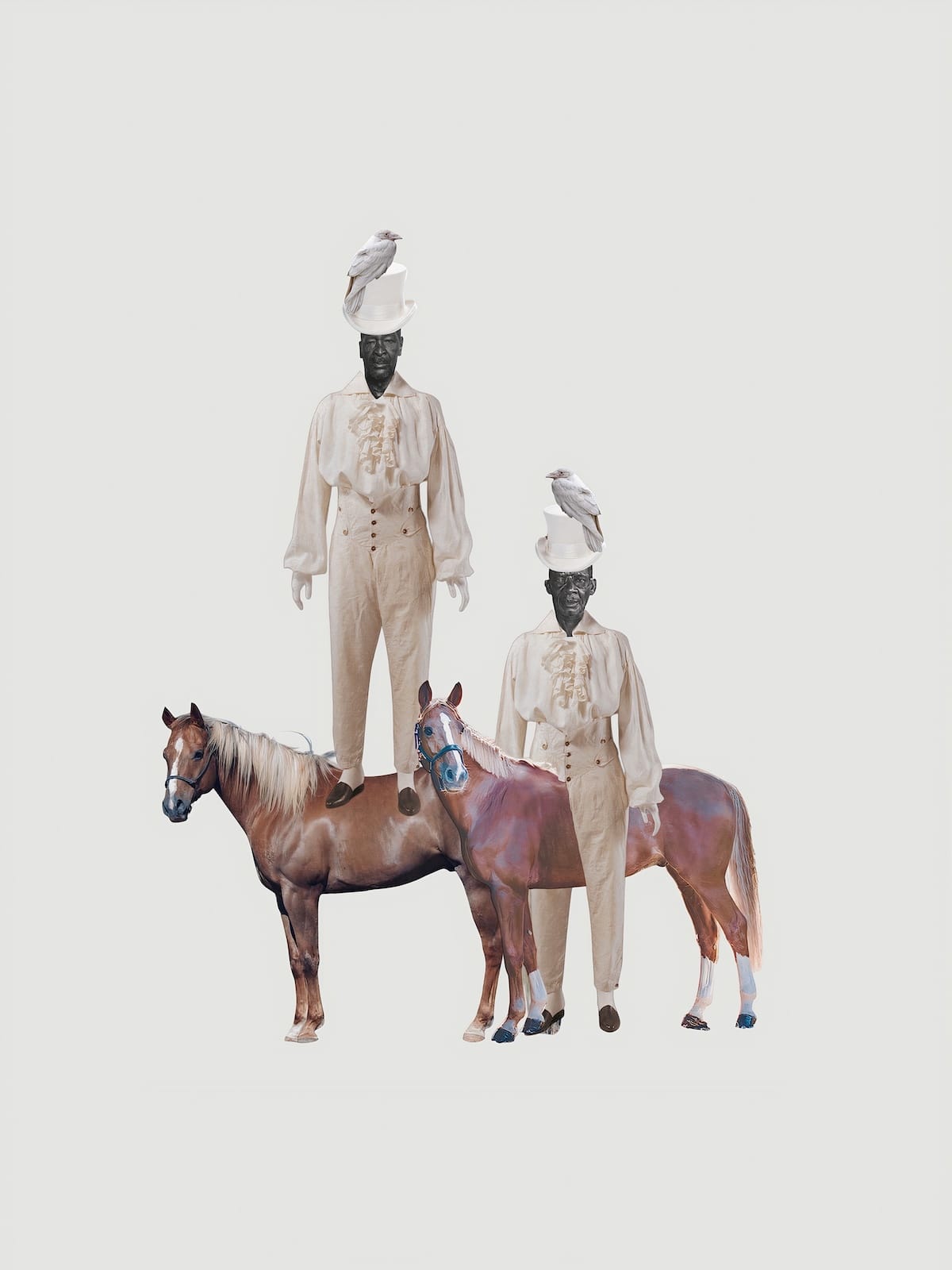
Left: Sasha Huber, “Tailoring Freedom – Delia, Profile” (2023) (© 2026, ProLitteris, Zurich; Harvard University, courtesy the artist); Right: Tshepiso Moropa, “Night Riders” (2025) (© Tshepiso Moropa, courtesy the artist)
The final section, In the Photo Fantastic, embraces speculation as a method. Drawing on Saidiya Hartman’s idea of critical fabulation, artists like Tshepiso Moropa, Aline Motta, and Raphaël Barontini fill the gaps in the archive with imagined scenes and alternate histories.
Threaded throughout the exhibition are photographs from Museum Rietberg’s own collection, taken in Africa and Asia between the late nineteenth and early 20th centuries. A new film documents artists, researchers, and curators engaging with these images, revealing how much remains unsettled and how much possibility still lives inside the archive.
To learn more, visit rietberg.ch.