A Refreshing Turn to Craft at AIPAD's Photography Show
In a year of AI image corruption, this year’s fair, focused largely on Latin American and Latine artists, feels especially hopeful.

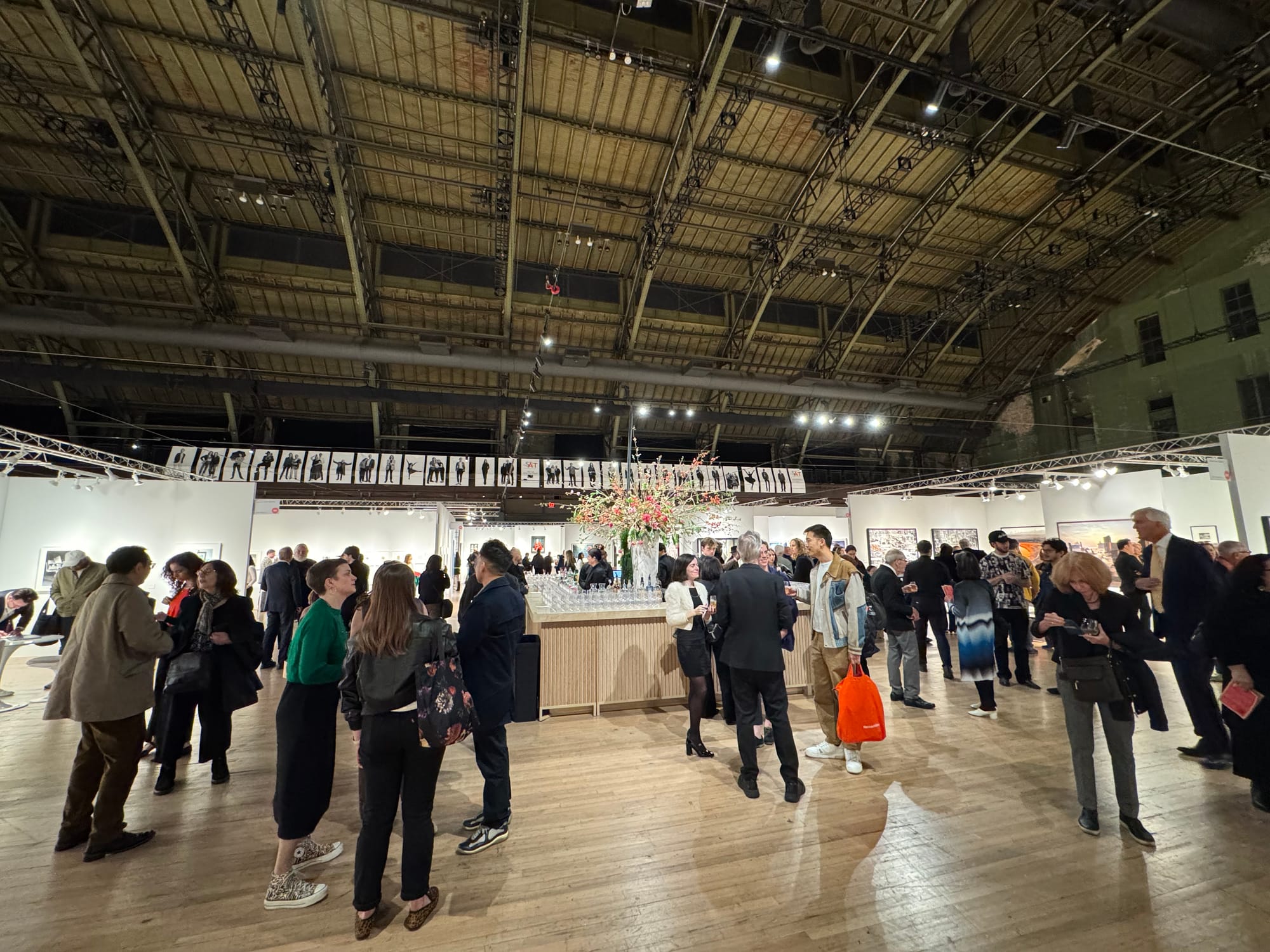
Maybe it’s because I got my first iPhone when I was 11, or maybe it’s a sign of the digital times, but seeing a photograph framed on a wall always stuns me.
Even more arresting to me is a room full of physical photographs — vintage, rare, or contemporary — outside of a narrow museum or gallery setting. This year’s iteration of the Photography Show, held by the Association of International Photography Art Dealers (AIPAD) at the Park Avenue Armory, brought 82 image exhibitors to its main floor in an overwhelmingly varied display.
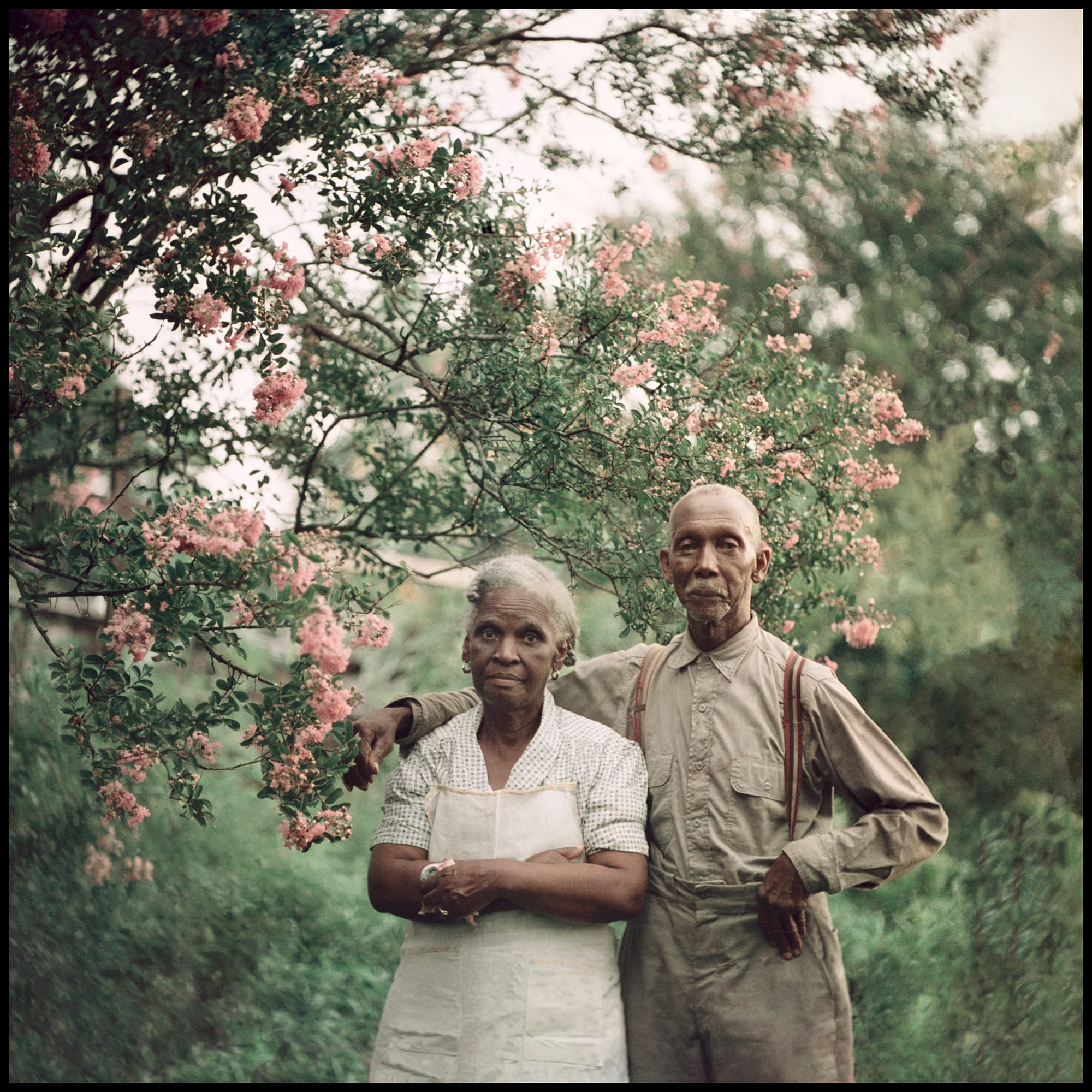
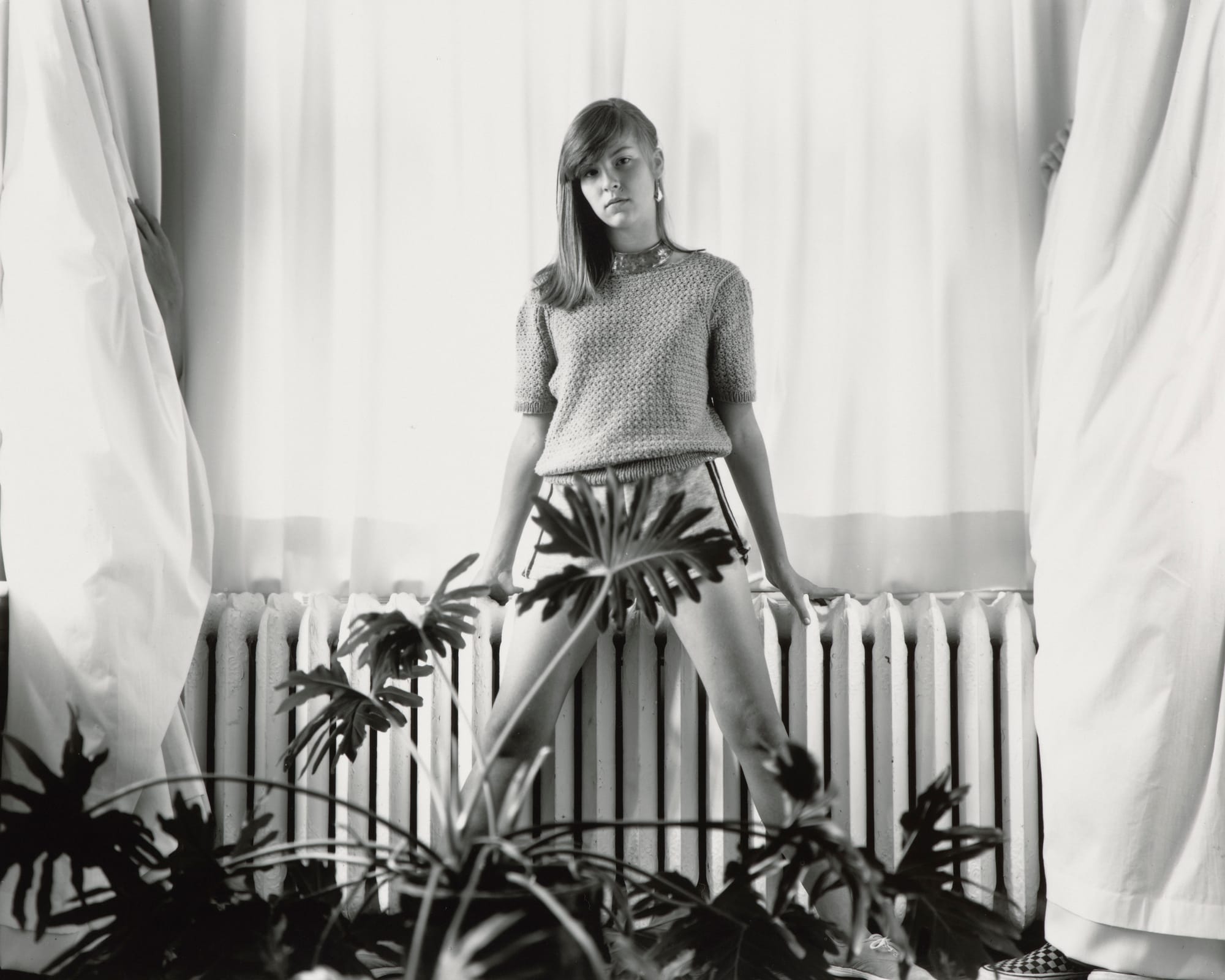
Among the most trafficked booths on opening night, Wednesday, April 22, was that of Jackson Fine Arts, which displayed tender works portraying female tweenhood by Sally Mann and selections from Gordon Parks’s monumental Segregation Story series (1956). The display of Park’s works is timed to the 70th anniversary of their original publication in Life magazine, a commission documenting segregation in Alabama.
For its 2026 edition, running through Sunday, April 26, the self-proclaimed longest-running photography fair in the world emphasized artists from Latin America and its diaspora, a focus that was immediately palpable throughout the venue.
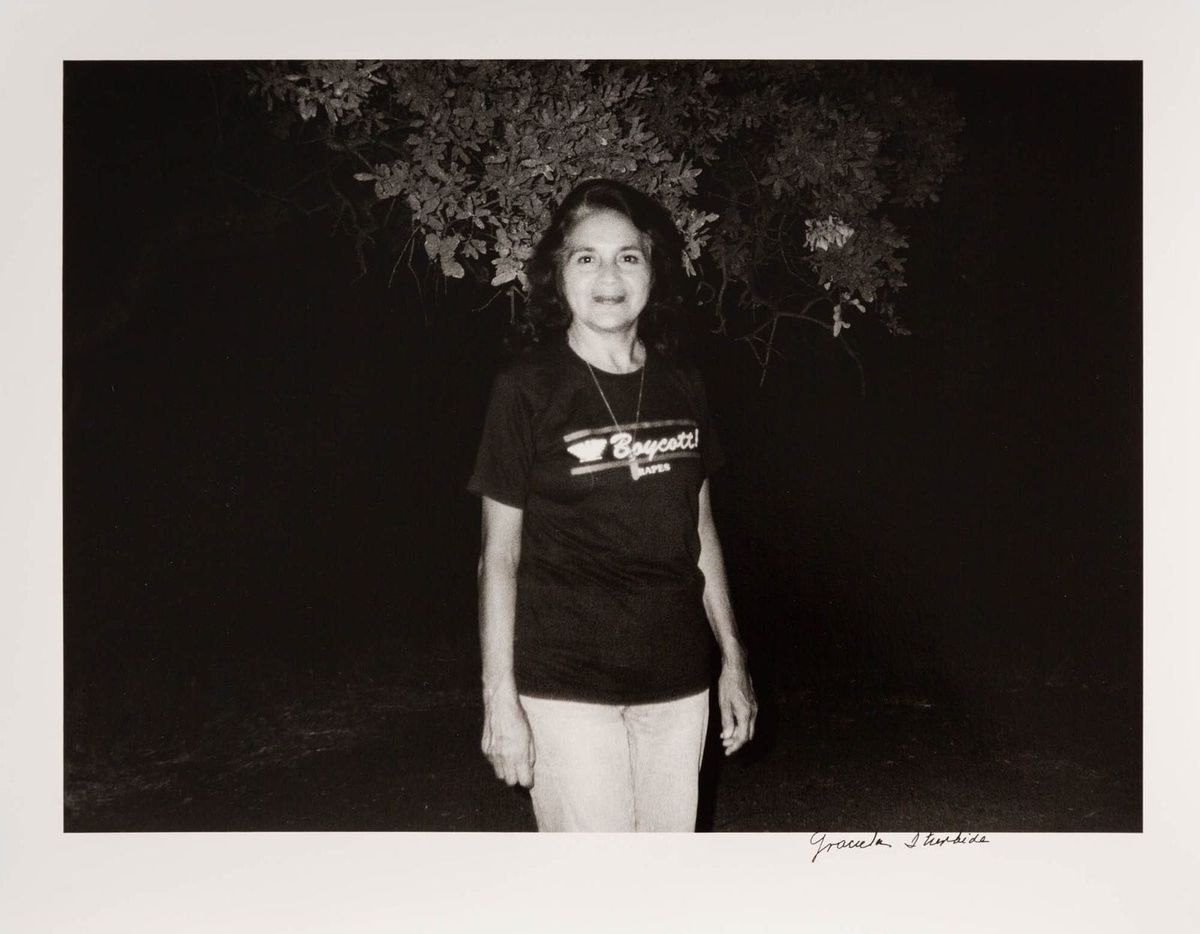
After perusing a shocking number of modern photographs featuring horses, headless nude feminine torsos, zoomed-in plants, and portraits of women disappearing into fabrics, I saw a small but unmissable portrait of labor leader Dolores Huerta. The black and white picture, taken by Mexican photographer Graciela Iturbide in 1991, shows the activist smiling and wearing a “Boycott Grapes” T-shirt.
Tucked into the booth of first-time participant Ruiz-Healy Art was a photograph of Huerta, whose name made headlines once again last month after she accused Cesar Chavez, who co-founded United Farm Workers with her, of rape.
Before Huerta’s allegations were made public in March, the gallery had shown the portrait alongside Iturbide’s portrait of Chavez, but after the news broke, they decided to omit the image from the AIPAD lineup.
“ We thought it was still obviously very important to show the [Dolores Huerta] photo,” said gallery director Patti Ruiz-Healy. The silver gelatin print is selling for $6,250 this weekend.
“ I feel like they made a conscious effort this year to showcase more Latin American, Latinx, Chicano-focused galleries,” Ruiz-Healy noted.
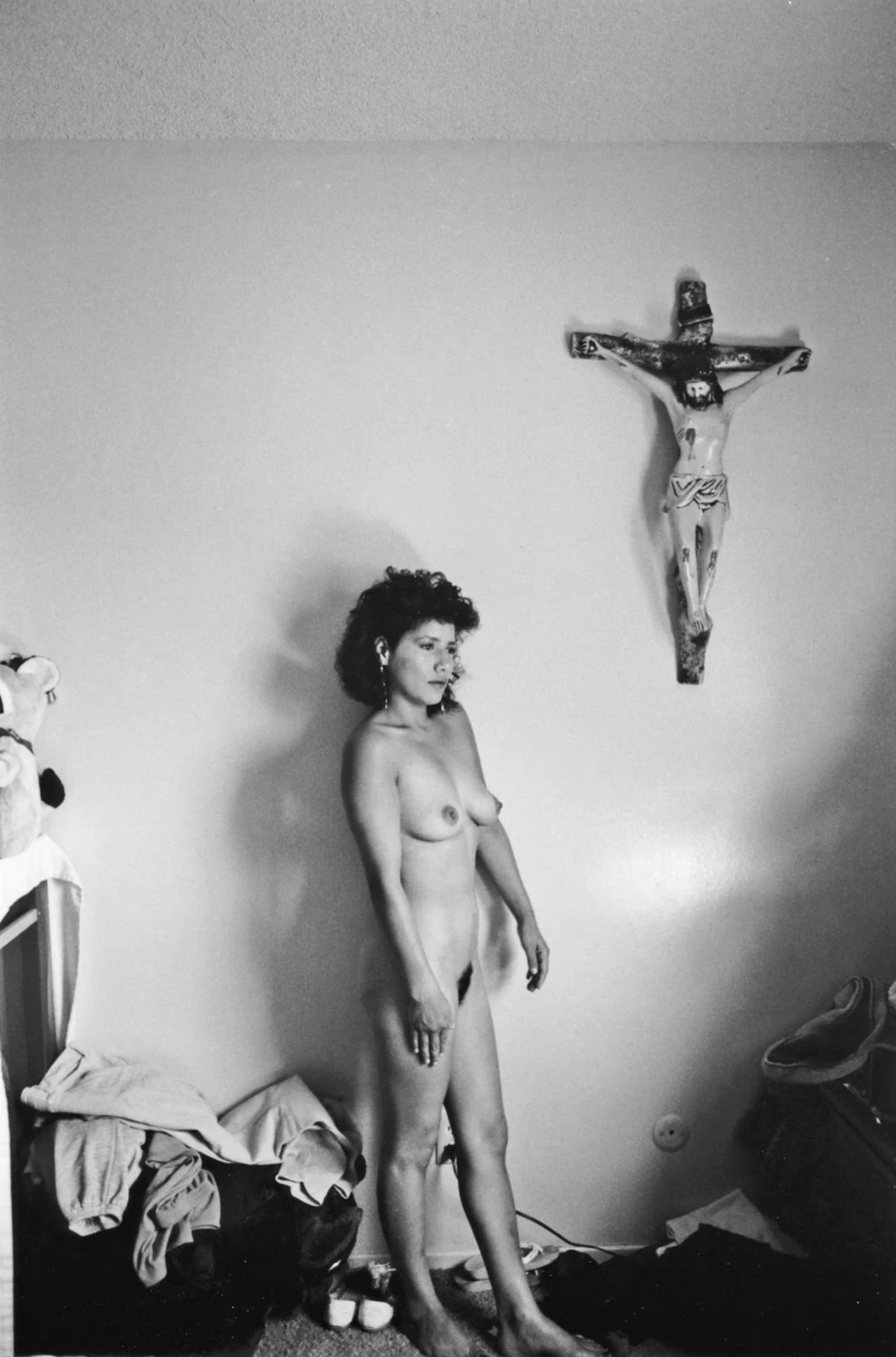
Iturbide’s other images of East Los Angeles are also on view at the booth, including a stunning $10,250 vintage print of a nude woman known as Cristina, a member of the White Fence gang, next to a crucifix.
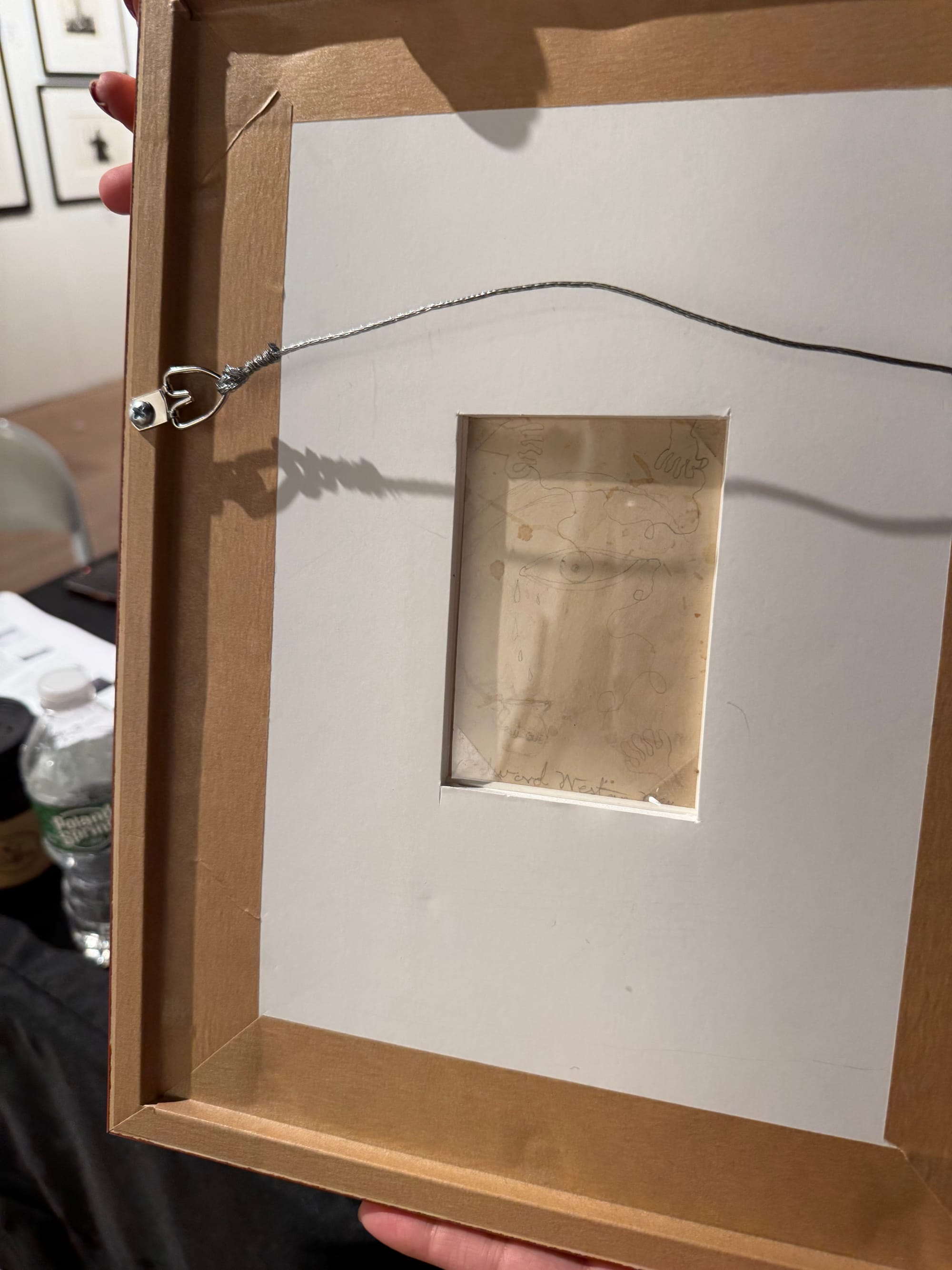
In an arguably more classical representation of Latin American art history, Throckmorton Fine Art prominently displayed a vast assortment of photographs of Frida Kahlo, including a $75,000 miniature portrait of the artist captured by Edward Weston in 1931. The back of the print features an abstract doodle by Kahlo.
Later during Wednesday’s preview, I found a smiling Jorge Mazzinghi, an architect from Buenos Aires, selling unbound, cardboard-covered photo books. He stood at his booth next to a large image of a boy smiling and leaning against a car, taken in 2001 by an anonymous photographer.
Twenty-four years ago, Mazzinghi began distributing disposable cameras to unhoused people in Buenos Aires. As an architect, Mazzinghi said he sought to “invert” the typical outward-in perspective of the unhoused population. His project, Proyecto Calle, sells the photos individually and as part of a photography book to benefit the unhoused photographers who took them.
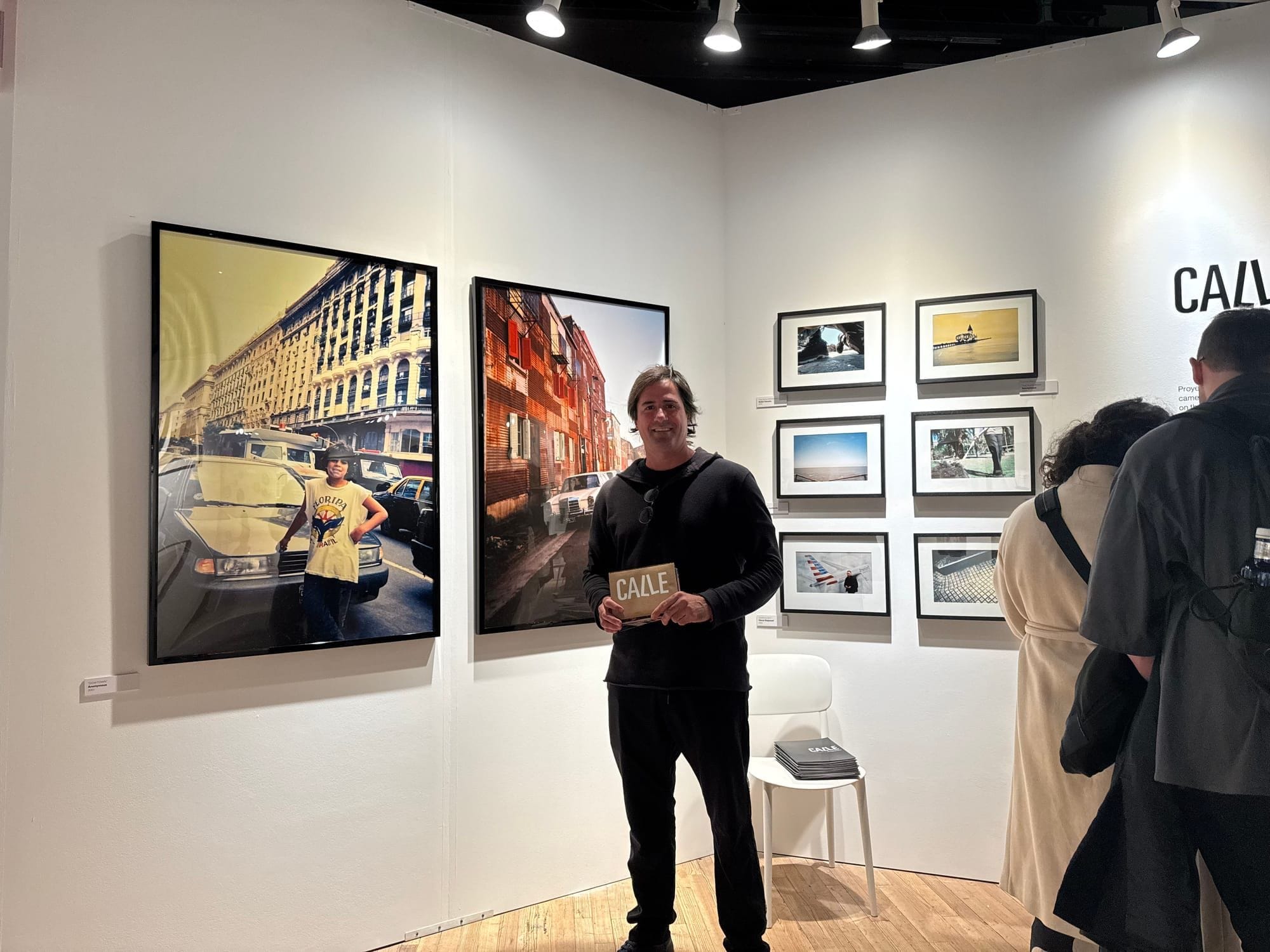
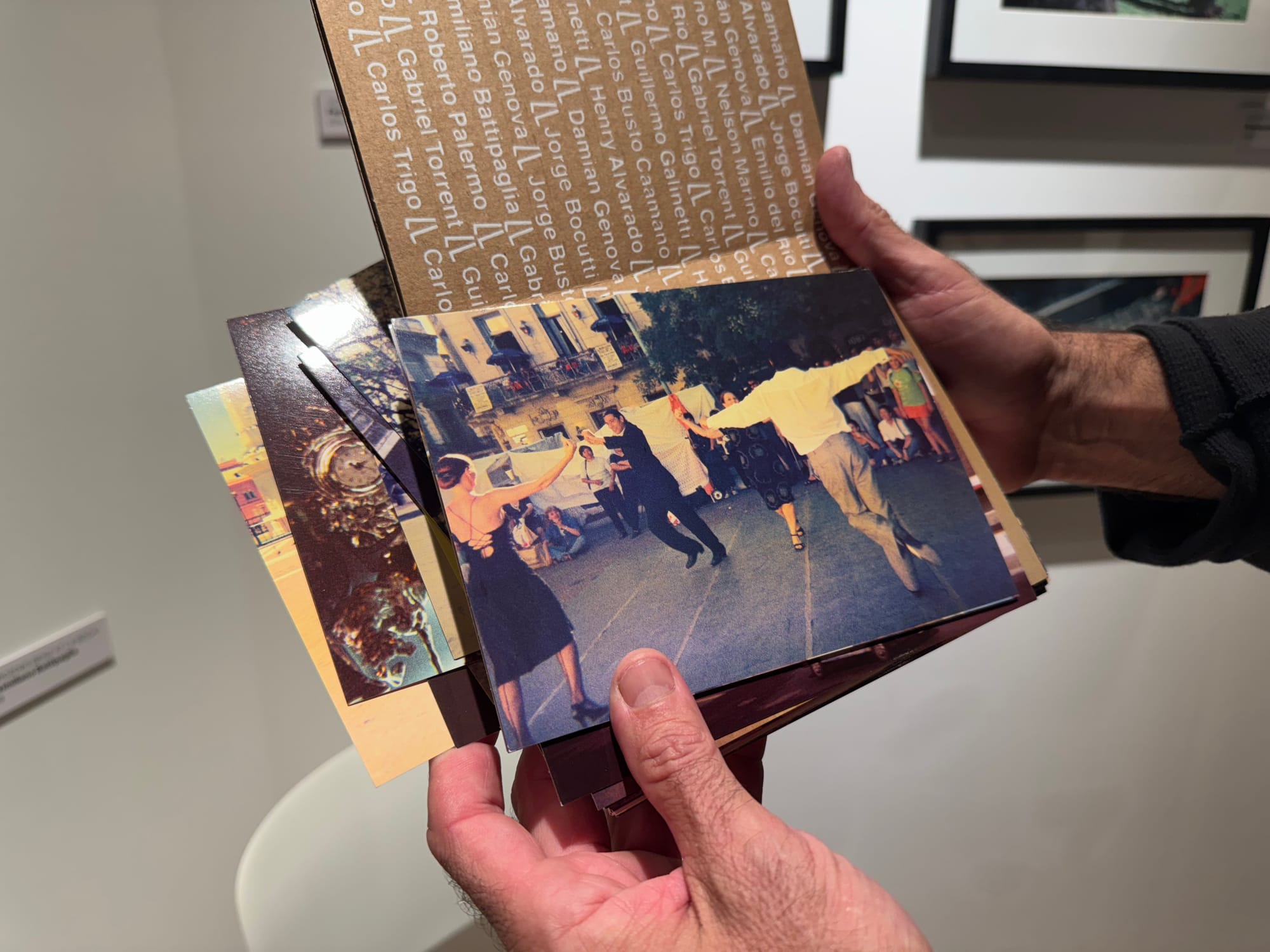
To date, Mazzinghi said his project has distributed 312 cameras to 291 individuals in Buenos Aires, Montevideo, and São Paulo. Typically, he provides the cameras and collects them in weekly workshops at local homeless shelters. Some individuals, he said, are making $300 a month from the project. Not enough to pay rent in the expensive city, he said, but enough to cover some food costs.
He showed me images from the project’s Buenos Aires book, which included a dachshund, public dancing, and smiling subjects. AIPAD invited Mazzinghi to come to the fair for free, he said. The project makes just enough to break even.
“Their vision of the city is unique,” Mazzinghi told me. “They know it more than anyone, from different angles and situations.”
In a year of AI image corruption, this year’s AIPAD felt especially refreshing, though many of the images I approached were captured decades ago. Some of that feeling of newness was indeed thanks to the dialogue between contemporary Latine photographers and the changing world around them.