A Tour Inside the NY Botanical Garden’s Trippy Orchid Show
Classic city scenes become floral fantasies in this year’s pop-timistic iteration of the park’s iconic annual show.

New Yorkers are at their finest — most comradely, most game — during extreme events we can rally around: Knicks wins, SantaCon horrors, heat waves, and, as recently experienced, winds that make parts of the city feel as cold as Antarctica. The deathly chill did not deter those who ventured to the Bronx’s New York Botanical Garden (NYBG) earlier this month for the opening of Mr. Flower Fantastic’s Concrete Jungle, this year’s pop-timistic iteration of a beloved annual orchid show.
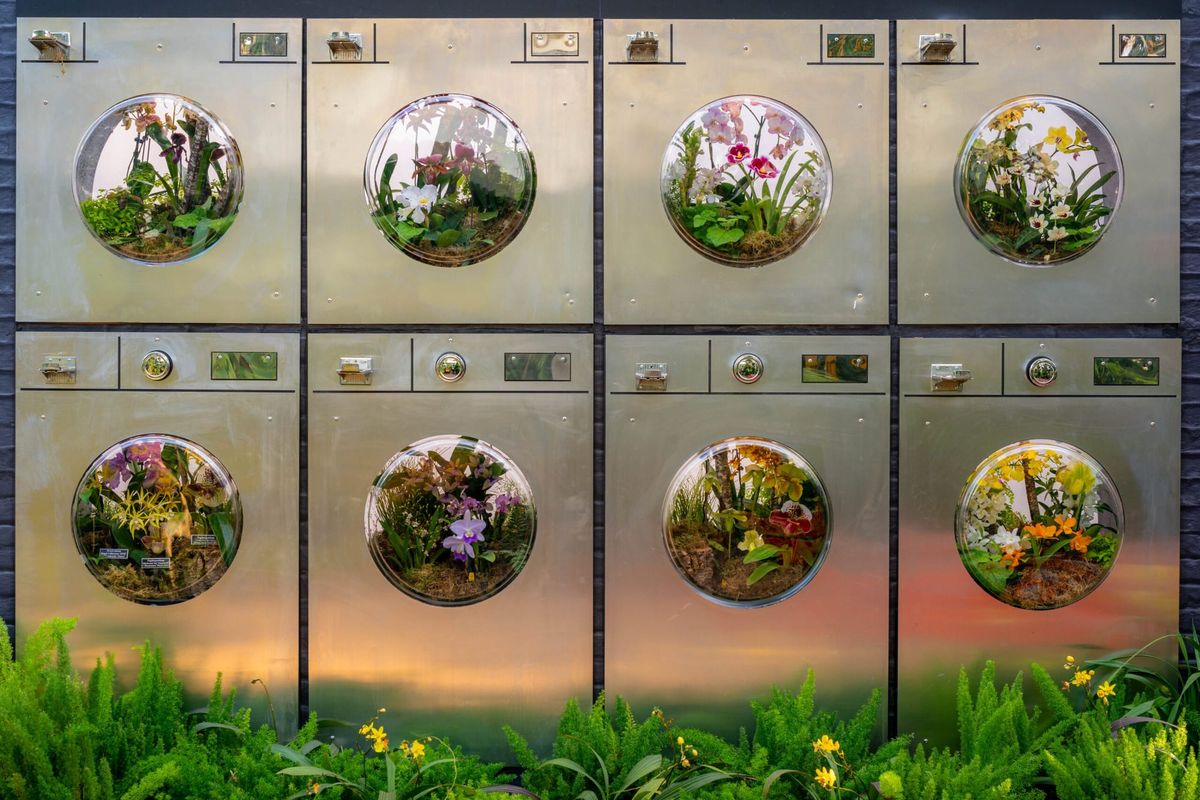
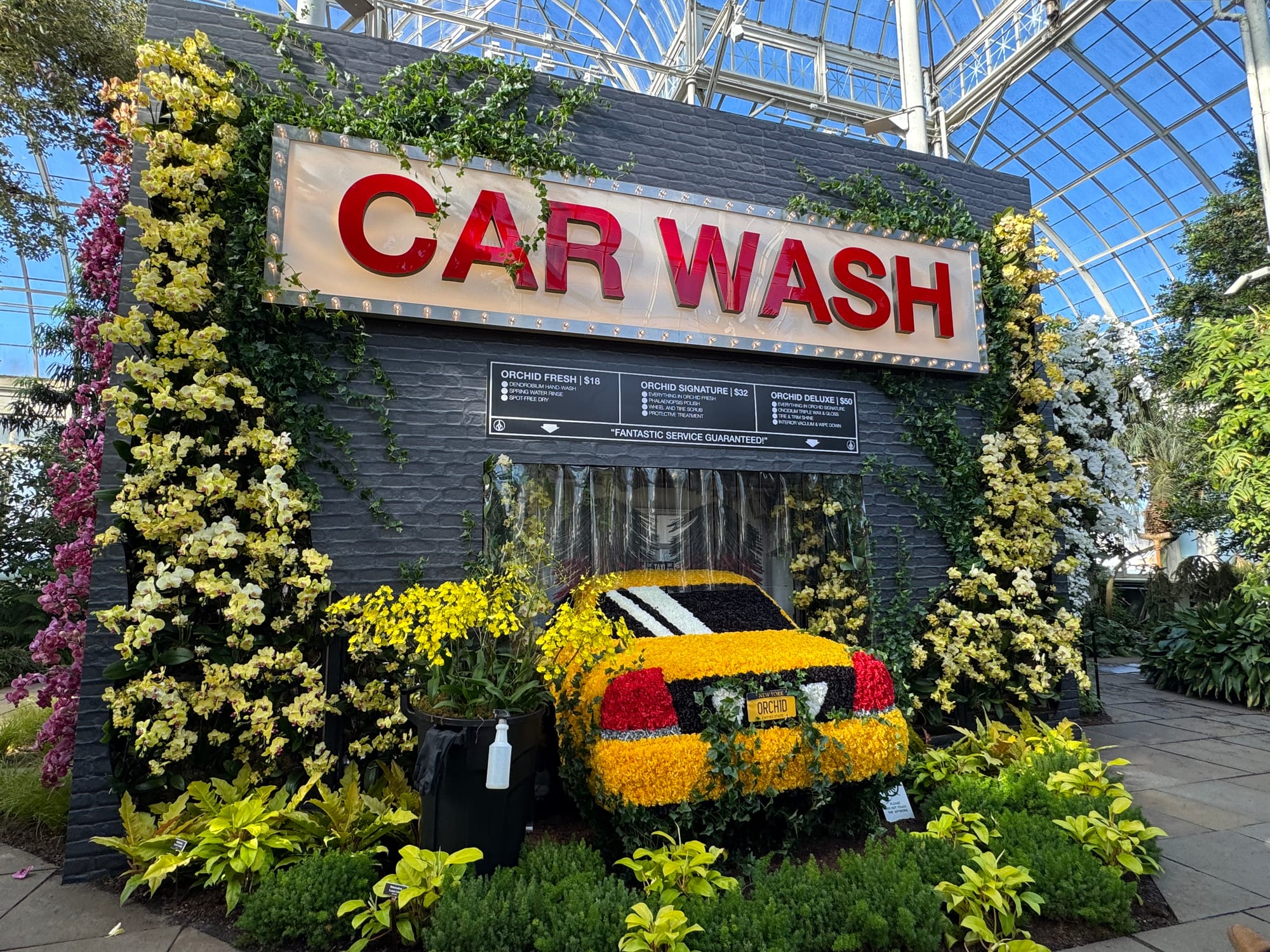
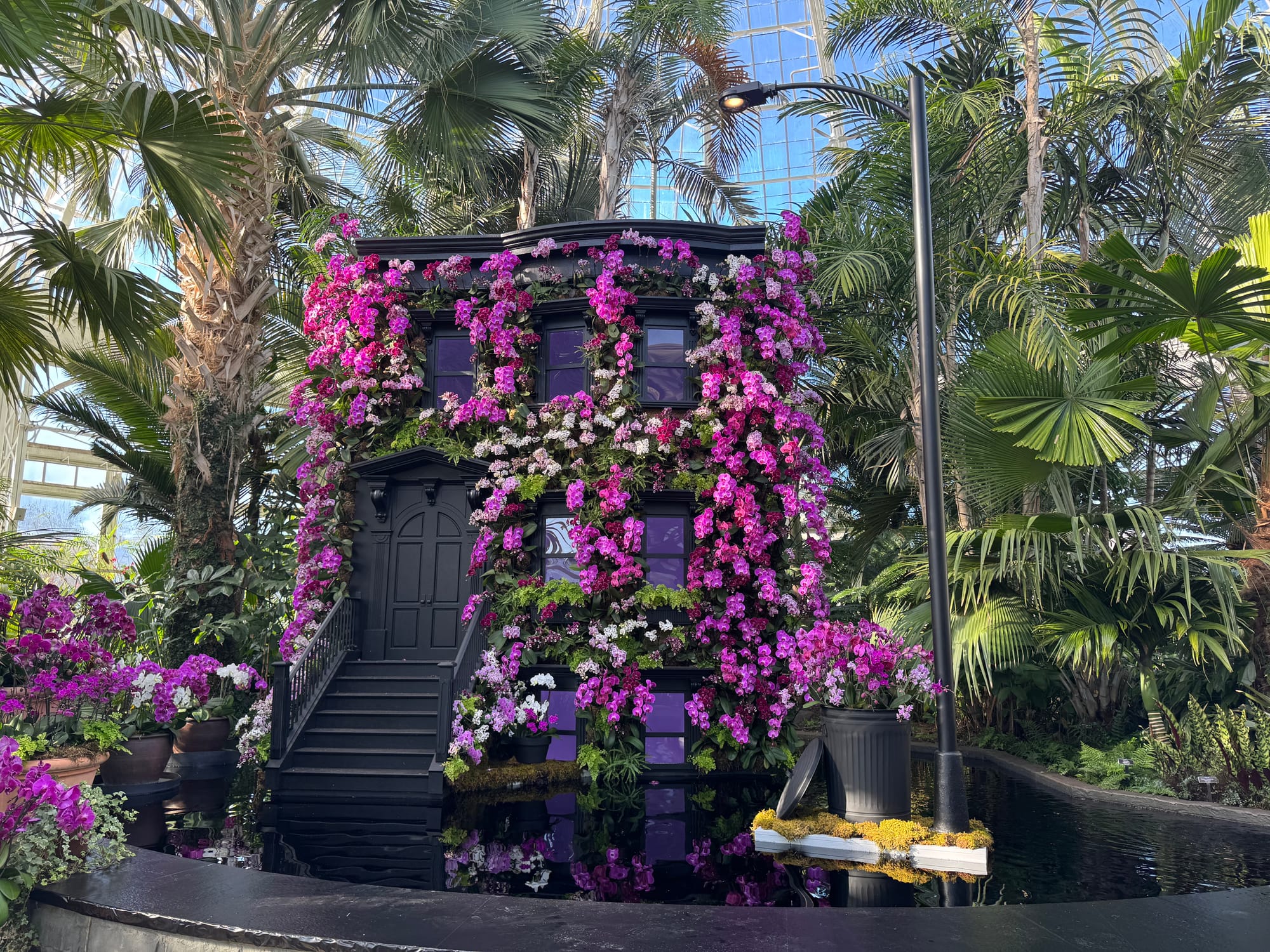
In fact, inside the Enid A. Haupt Conservatory, it’s a balmy 72 degrees. Visitors shed layers as they confront the first work by guest designer Mr. Flower Fantastic, an anonymous artist who wears a respirator to protect his identity and his nasal passages — he is, perplexingly, allergic to flowers. A replica of a brownstone facade overtaken by vibrant pink and purple blooms rests in a reflecting pool. Other big, hyper-literal pieces, which function as the most popular spots for a photo op, include a laundromat of washing machines turned terrariums, a sparkling car wash servicing a yellow cab whose vanity plate reads “ORCH1D,” and a pizzeria advertising vanilla seed and dendrobium stems toppings on slices that cost 99 cents (probably the most improbable detail of all).
Queens-born-and-based Mr. Flower Fantastic, who exploded in popularity after Serena Williams asked him to transform her Nike Air Max 97 into a floral sculpture for the US Open, has been in talks with NYBG about a potential collaboration for more than three years. When he pitched the New York City theme to curators, they knew they’d landed on a hit: a way to connect their admittedly far-out campus to the classic iconography people around the world associate with the Empire State.
According to Michaela Wright, NYBG’s director of Exhibition Content and Interpretation, the Garden sees visitors from all five boroughs and the tri-state area. “But at the end of the day, we’re a Bronx-based institution,” Wright told Hyperallergic. “We’ve been in the borough for 125 years.”
The show, she said, “marries the garden and the city, to remind people that cities are green spaces.”
“New York City has astounding biodiversity, not just in plant life but in animal life, and also in terms of the people who live here,” Wright continued. “We’re trying to reframe the city as a place where life thrives.”
The New Yorkers who ventured out on a frigid Super Bowl Sunday exemplify such an attempt.
“We bought these tickets a while ago, and I think we’re the type of people who commit to our plans, no matter the weather,” Carolyn Townsend, an account manager at a renewable energy consultancy, told Hyperallergic. “ If it was $10, maybe it’d be different. But for $40…”
“And I’m loving being here,” she added. “I’m personally interested in how to integrate nature into cities’ landscapes, so I’m obsessed with the show.” Townsend and a friend continued taking pictures of one another at a faux bus stop and a “post no bills” sign through which moth orchids, instead of a construction site, peep through.
The interplay between the urban and the natural is also an opportunity for NYBG’s urban conservation team to advertise their redesigned product Welikia, a historical ecology mapping tool that reveals what the landscape, plants, animals, and people might have been like on exact blocks in New York City, 400 years ago. My apartment? Apparently a former oak-tulip tree forest community.
Ultimately, Mr. Flower Fantastic’s Concrete Jungle celebrates a nice ideal. Even those who aren’t aesthetically obsessed feel positively.
“I’m more interested in the nature side. I live in the city, so I’m actually trying to escape the concrete jungle,” shared photographer Haley Varacallo. “But being here will inspire me to be more pleasant and grounded, and that makes my own work better. I’m already happier.”
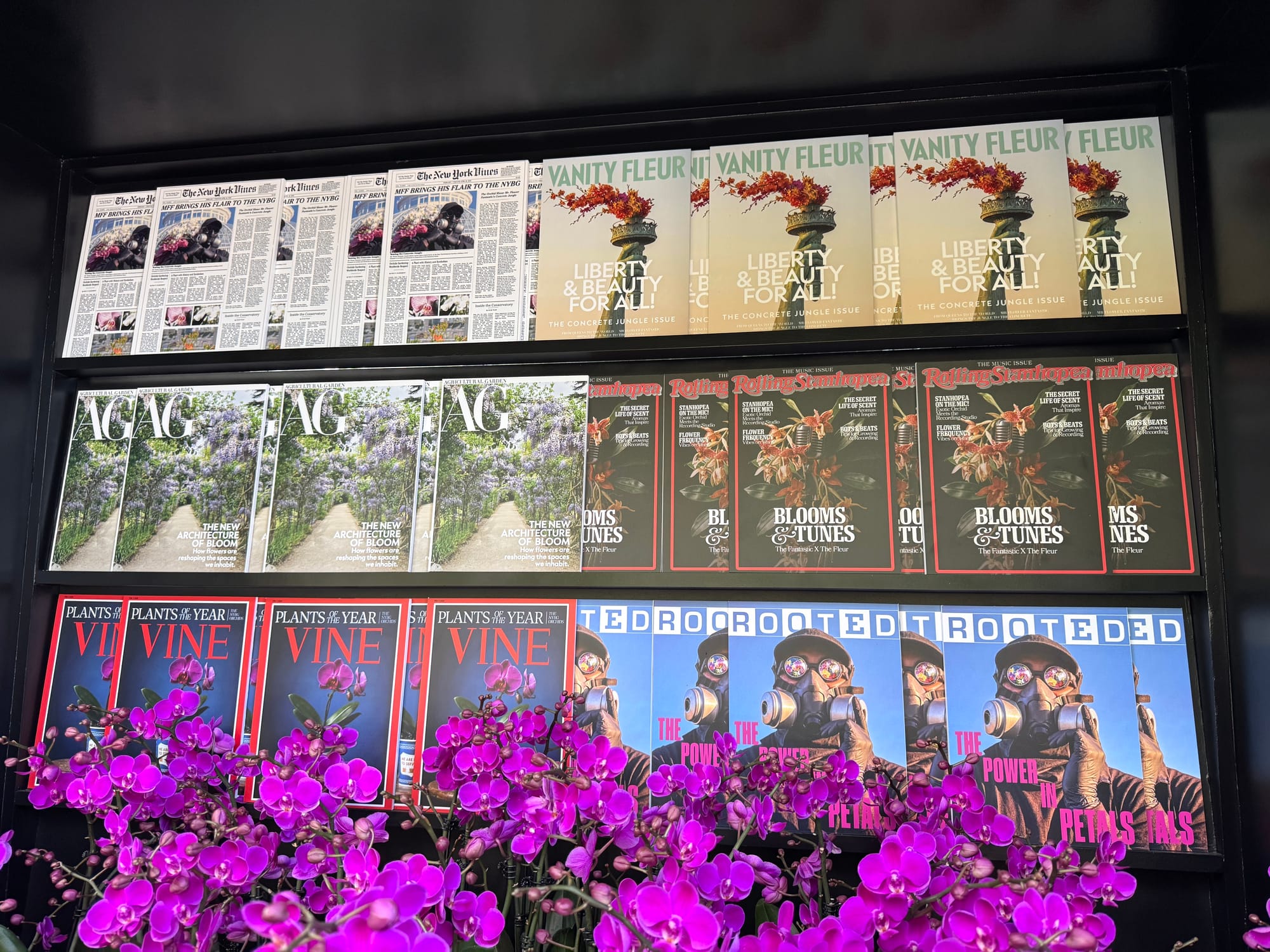
Mr. Flower Fantastic’s Concrete Jungle teases the sweet and simple concept of resilience despite the odds, a theory that applies to any living thing.
“People assume that orchids are done when they’re done blooming, and will throw their orchids out after the flowers drop. That’s kind of a common misconception,” Wright said.
“Orchids will keep blooming over and over again, but you have to give them a little TLC in between those bloom periods,” Wright continued. “Mr. Flower saw that as an important metaphor for life and for the city: we’re not always in bloom, but we’re always storing up the energy for our next one.” We might be in the throes of winter, but that means spring is on the way.