A View From the Easel
“I consider the studio to be a co-creator of my work, and the container for my actions.”

Welcome to the 249th installment of A View From the Easel, a series in which artists reflect on their workspace. This week, artists marvel at open spaces, listen to church bells toll, and create one-of-a-kind books.
Want to take part? Check out our submission guidelines and share a bit about your studio with us through this form! All mediums and workspaces are welcome, including your home studio.
Katerina Papazissi, Athens, Greece
How long have you been working in this space?
Sixteen years.
Describe an average day in your studio.
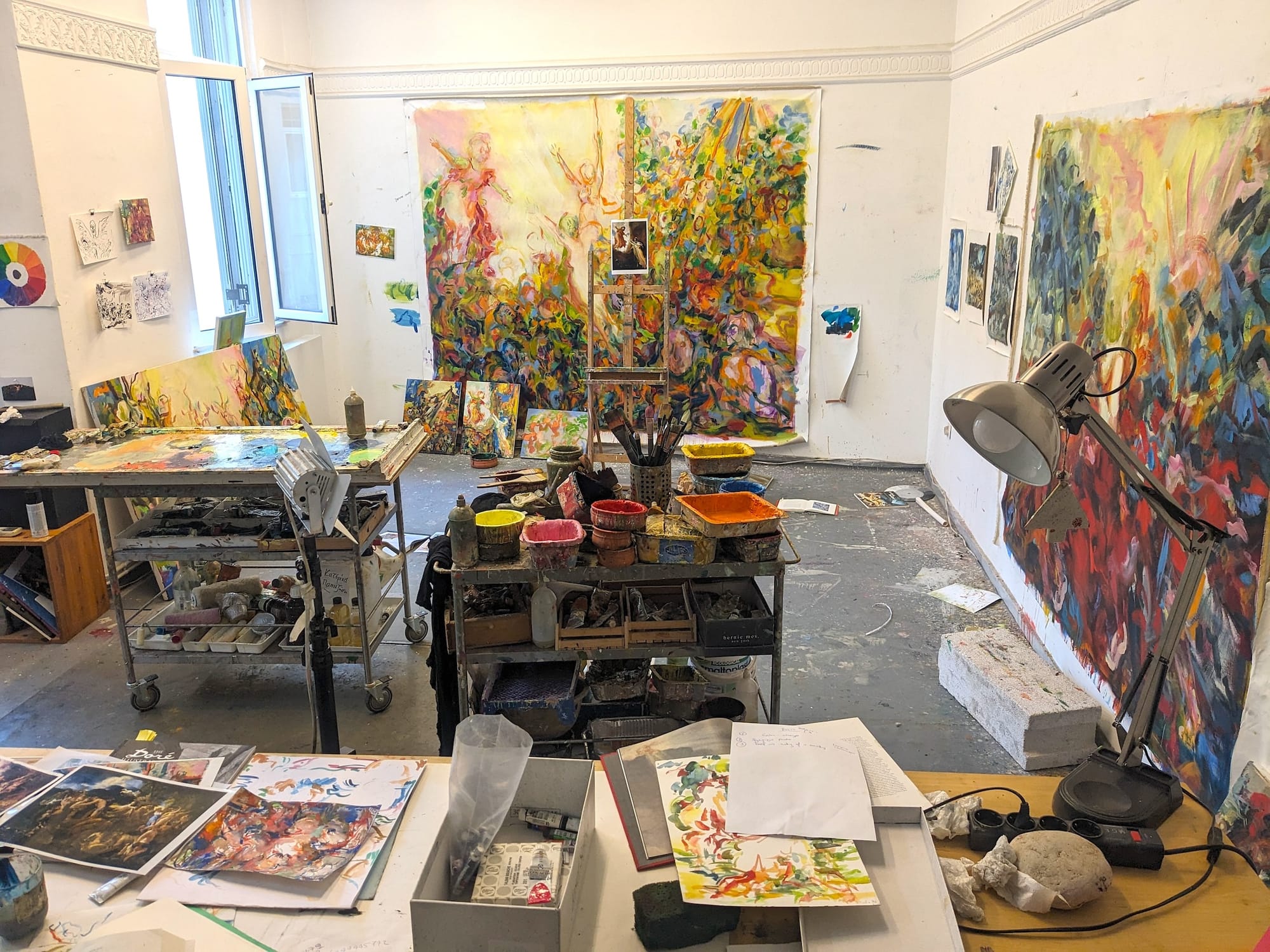
I arrive at the studio at noon every day after a 30-minute walk through the busy center of Athens. I make coffee and put on some music. I may start with drawing, reading, or searching for imagery on the internet, in the news, or in books. After 2pm I start working on my oil paintings. I work on several pieces of various sizes at the same time. I staple my supports on the wall, and work on stretched canvases and also on the floor. When I work I listen to music or artist interviews on the internet. My deepest work takes place between 4pm and 8pm, when I leave the studio.
How does the space affect your work?
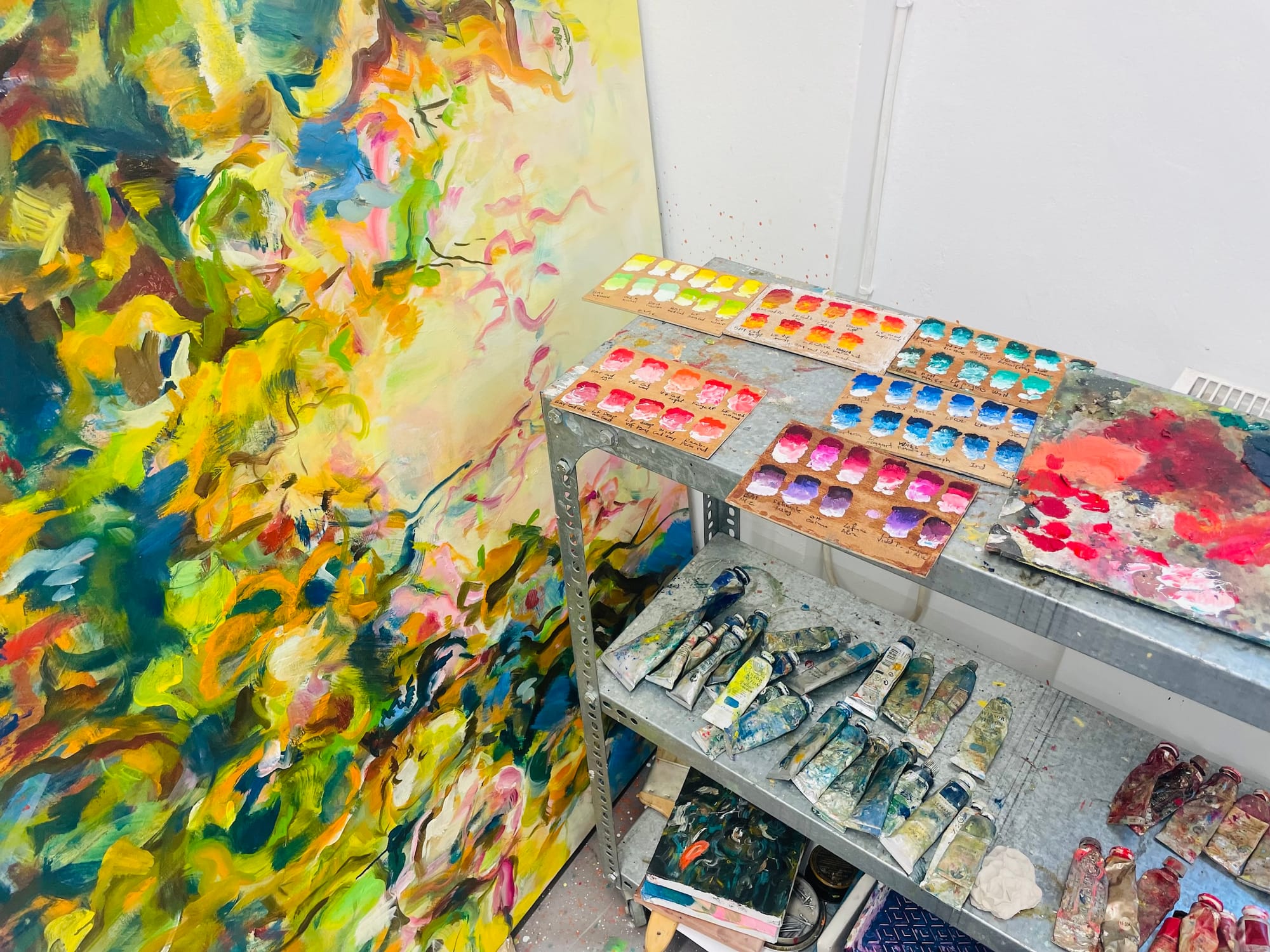
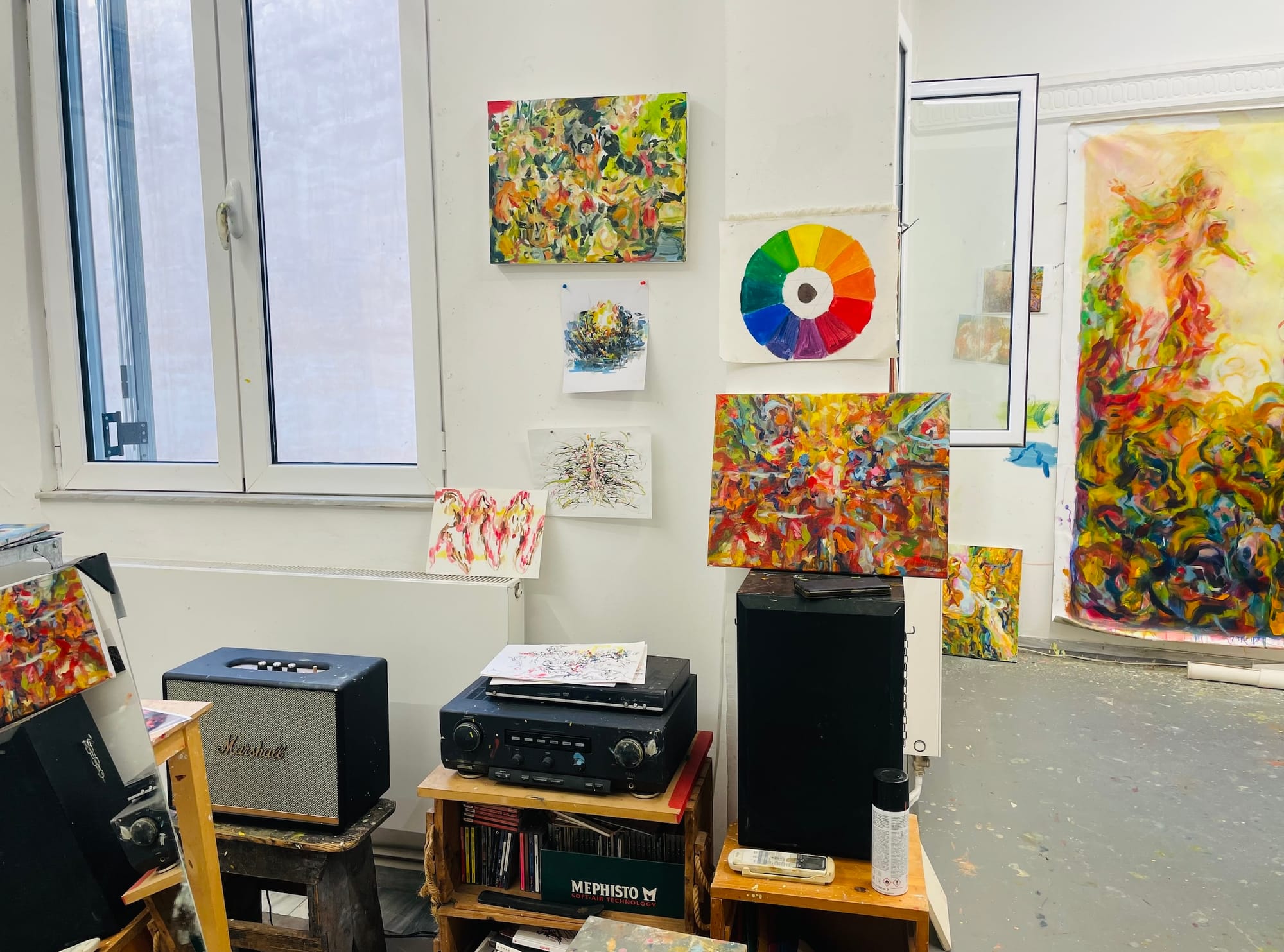
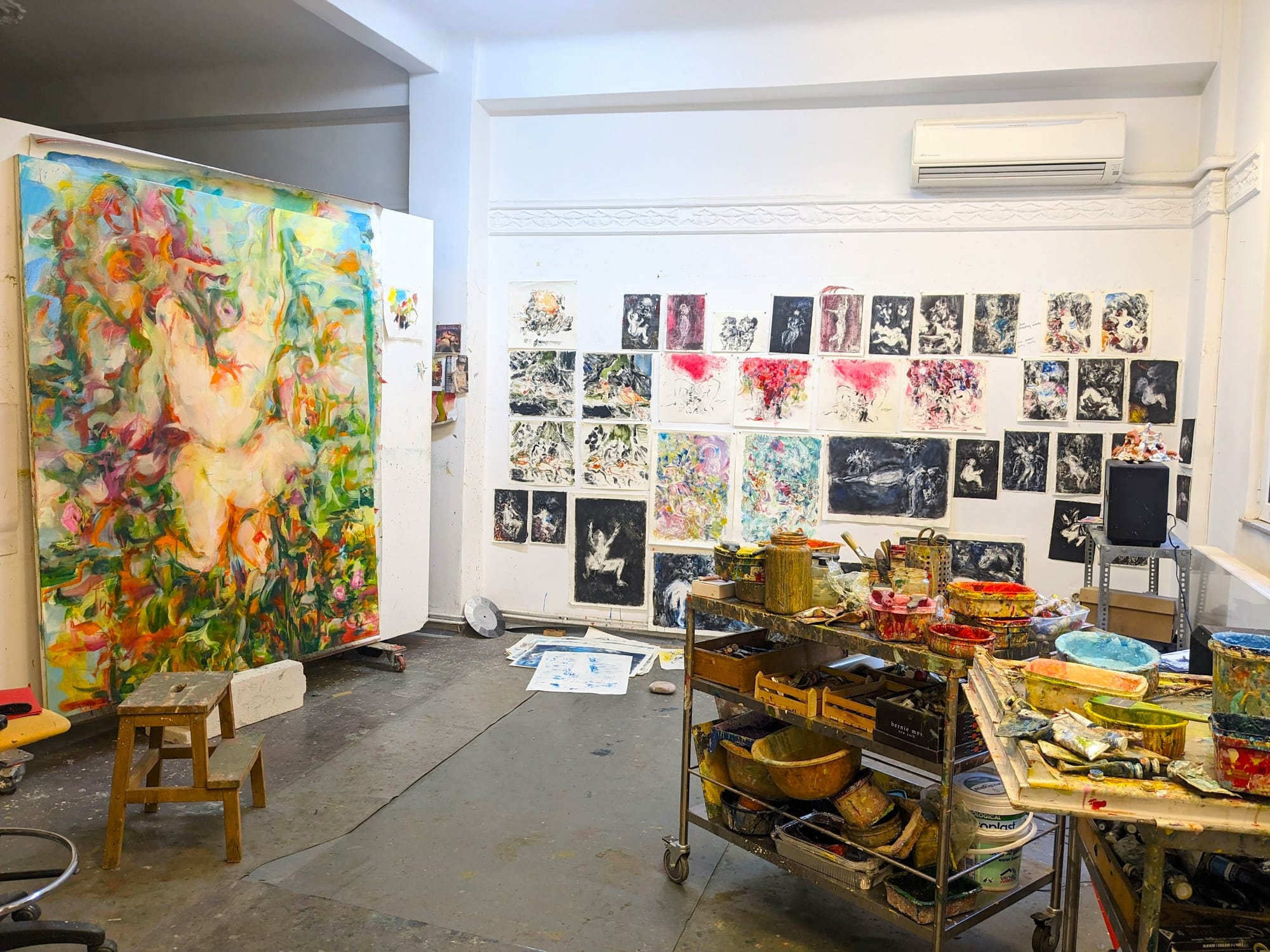
I consider the studio to be a co-creator of my work, and the container for my actions. There are two separate spaces with completely different dynamics, and their interaction reflects my work and process. The front room is where I draw, read, and relax. It is relatively tidy and quiet. I paint in the back room, where it's always messy and the energy is loud. I am constantly moving when I paint, zooming in and out of the works. The studio gets crammed so that one piece informs the other, and the boundaries between them become fluid.
How do you interact with the environment outside your studio?
The center of Athens has been my home for more than 20 years. The city and its relationship to my body was the theme of my practice for a long time. Especially during the years of the crisis, there was a lot of space for me to explore and I used to be out on the street a lot, gathering material through photographs and videos.
Since then, the neighborhood has transformed from a commercial center with small local businesses to a tourist hub full of cafes and restaurants. There used to be a vibrant artistic community, but now most artists have been driven out by rising rents and Airbnb. The neighbors I associated with have moved. Luckily, my building is still a small artist hub, with a graphic design company and an illustrator as the other residents. The highlight is the art store on the ground floor that I visit daily for supplies.
What do you love about your studio?
My studio is a quiet haven in the middle of the busy historical center of Athens. The neoclassical building, dating from 1920, has a lot of history. I love the large windows that open onto the pedestrian street, leading to an old church and a huge plane tree. I love how I can hear the church bell toll every hour, marking time and connecting me to the life of the city. I love the high ceilings and the light. Mostly, I love the universe I have created there.
What do you wish were different?
I wish there were an elevator. My studio is on the second floor, and carrying heavy materials and artwork upstairs can be difficult. I also wish parking in the area were easier. I wish my painting space were bigger so I could work on more paintings simultaneously. Sometimes I dream about a studio in the countryside.
What is your favorite local museum?
The Byzantine and Christian Museum.
Scott Teplin, Brooklyn, New York
How long have you been working in this space?
Three years.
Describe an average day in your studio.
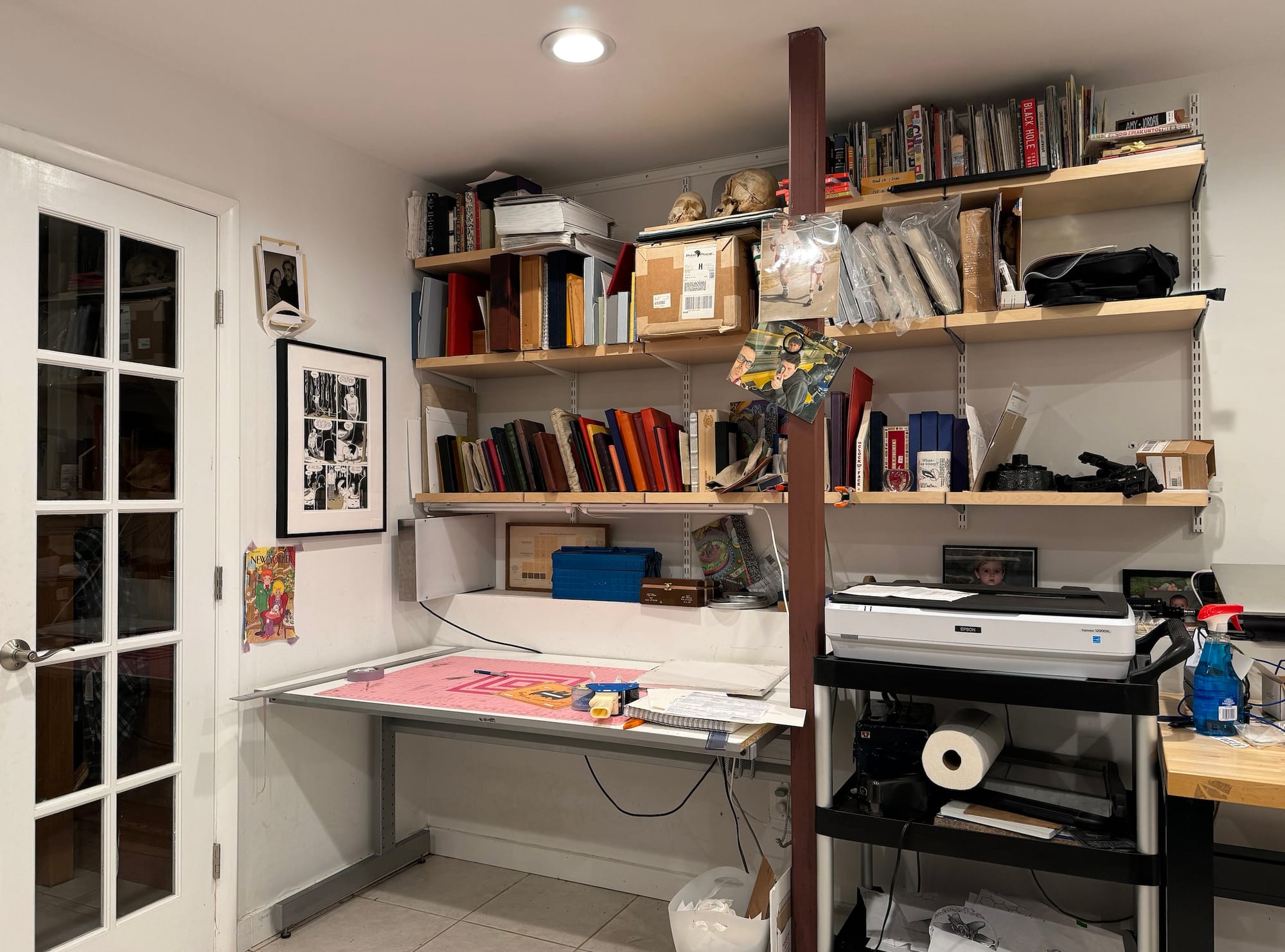
Every day of the week, I dedicate the first hour of my morning routine to drawing in my sketchbook while drinking a cup of coffee. After a run, I move to my studio in the basement of my home around 9 or 10am. Usually, I begin my day with a freelance photo editing task on my computer, which can last anywhere from 30 minutes to two hours. Once that is complete, I transition to whatever project is currently displayed on my wall or drafting table until 5 or 6pm. I also engage in bookbinding and creating unique artist books, which are typically one-of-a-kind pieces.
How does the space affect your work?
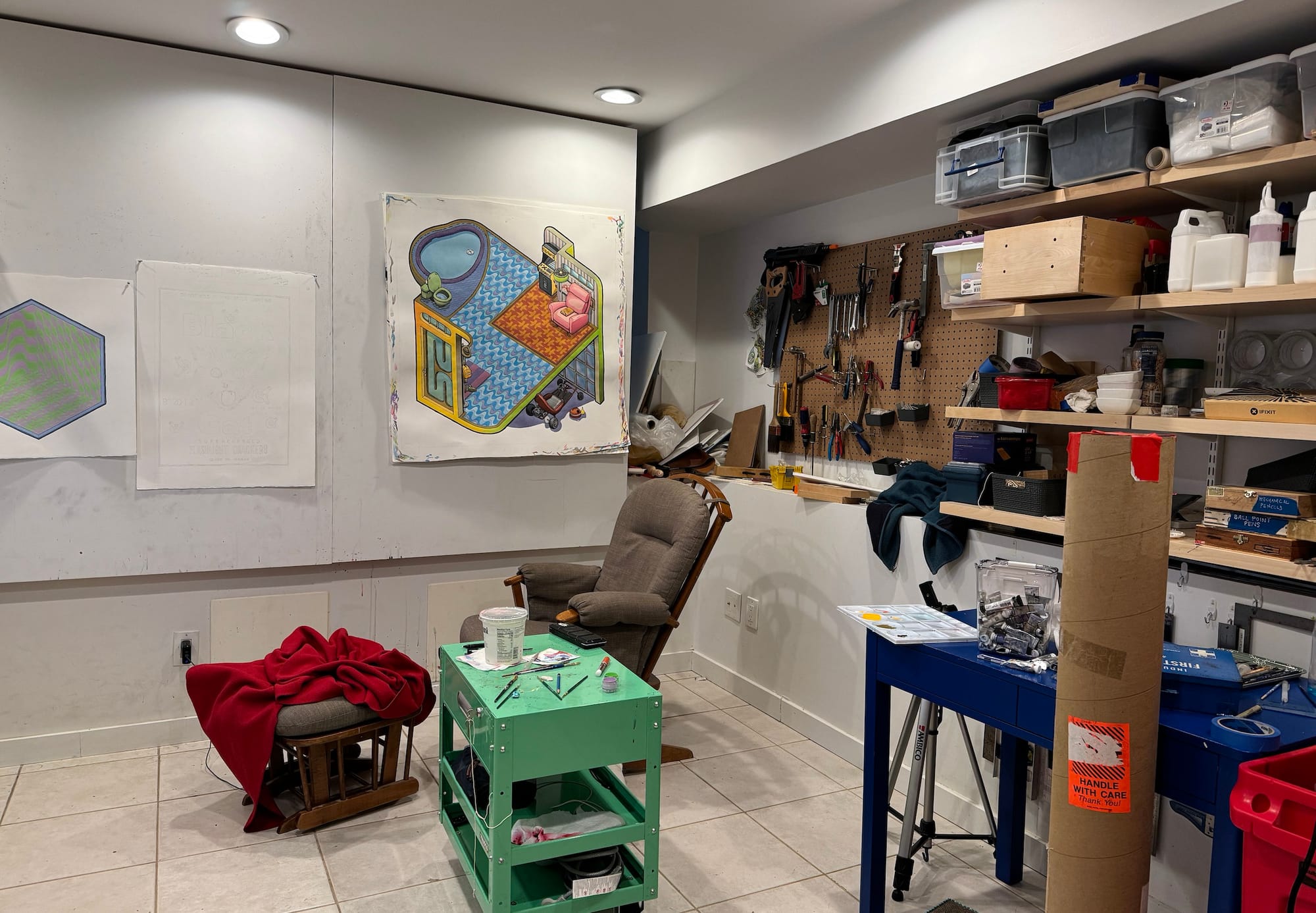
After residing in a Midtown Manhattan studio with extensive wall space for 22 years, I relocated to this smaller studio. The transition to this new, more confined workspace has posed some challenges. Despite the limitations, I continue to create larger works. I now divide them into smaller panels, which are subsequently displayed together in a grid arrangement. One big advantage is I save at least two hours a day not having to commute, which I use to work in my sketchbook and in my studio.
What do you love about your studio?
It's in my home, so I can use it 24/7 and I never have to look presentable.
What do you wish were different?
It's in the basement and it does flood occasionally — which I certainly wish didn't happen. I also miss working in the same building as 80 other artists, as I did in my last studio.
What is your favorite art material to work with?
India ink and a steel tip dip pen.
Jimmy Murray, Cambria, Iowa
How long have you been working in this space?
Around 20 to 25 years.
Describe an average day in your studio.
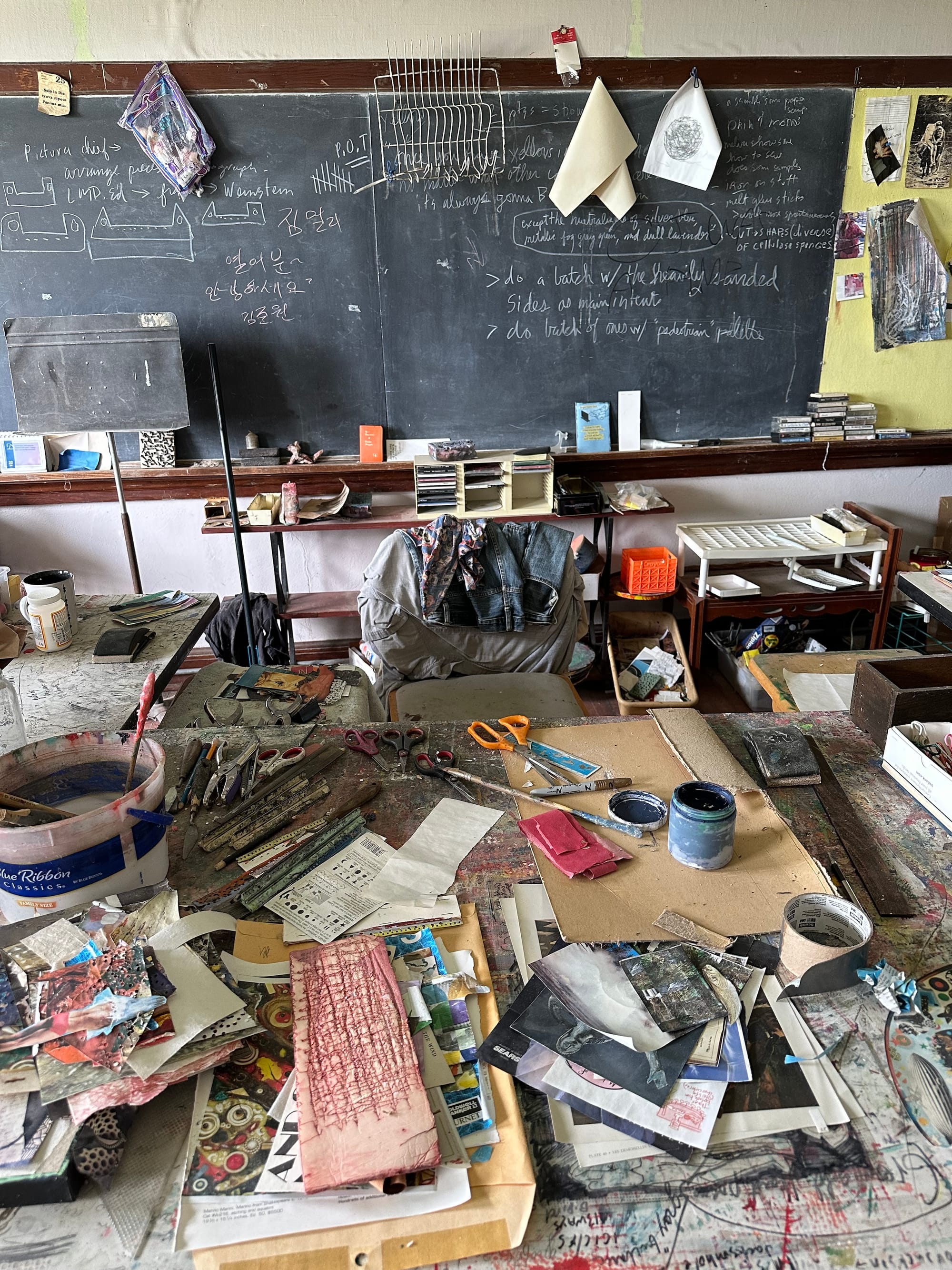
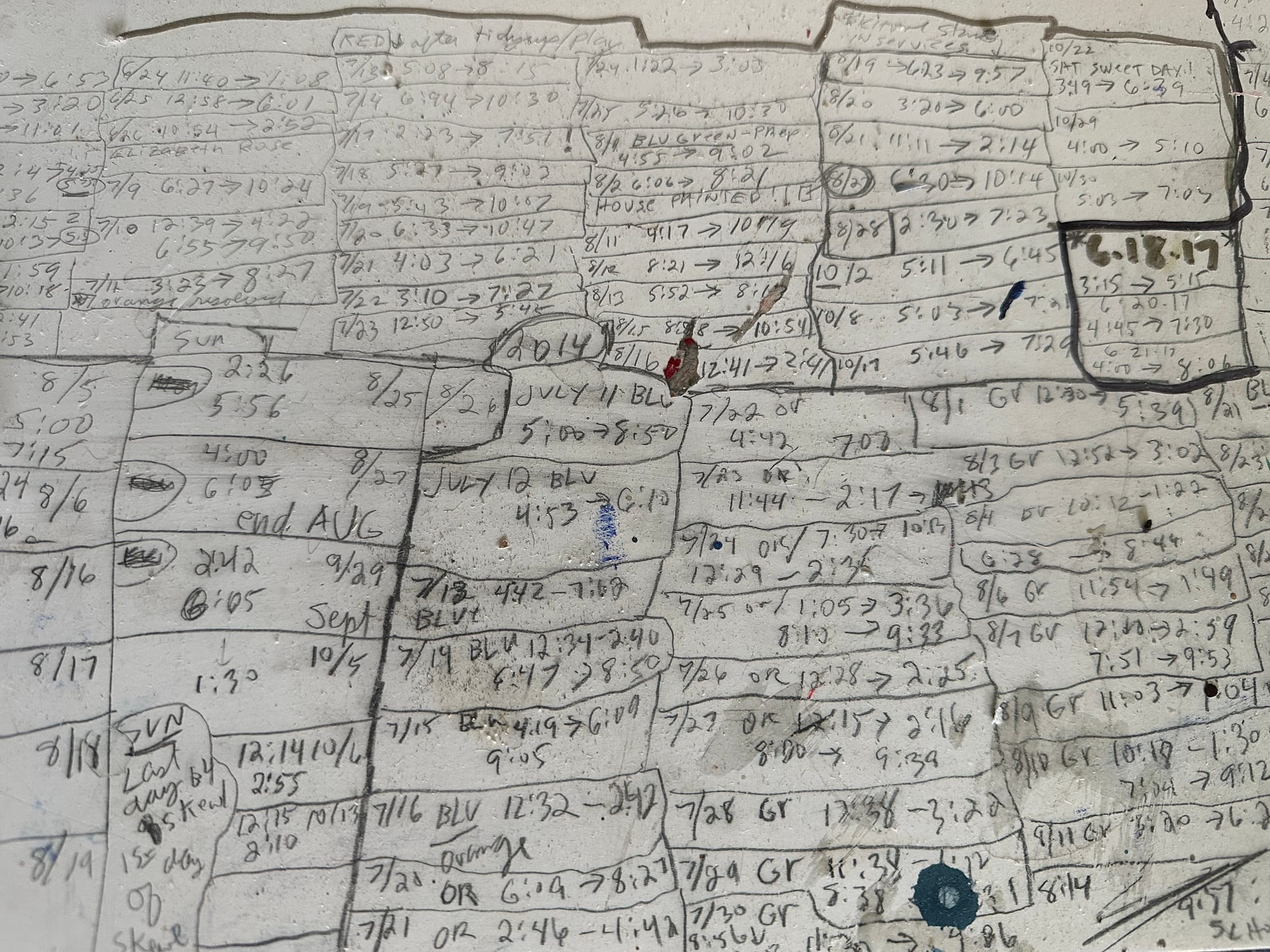
Some decades went over daily — see the photo of the date and hours worked written on a table — and I work on several pieces at a time. I typically listen to music turntable LPs: blues, jazz, rock, classic country.
How does the space affect your work?
It's a quiet, empty, falling-apart school. I'm alone, and it's pretty much on the edge of a cornfield with no urban visual color.
How do you interact with the environment outside your studio?
I drive backroads, I marvel at open spaces, and I have art friends but mostly in big cities and abroad.
What do you love about your studio?
Nobody cares what I do.
What do you wish were different?
I wish the building were not on its last leg, and I hope my room stays dry ...
What is your favorite local museum?
Des Moines Art Center.
What is your favorite art material to work with?
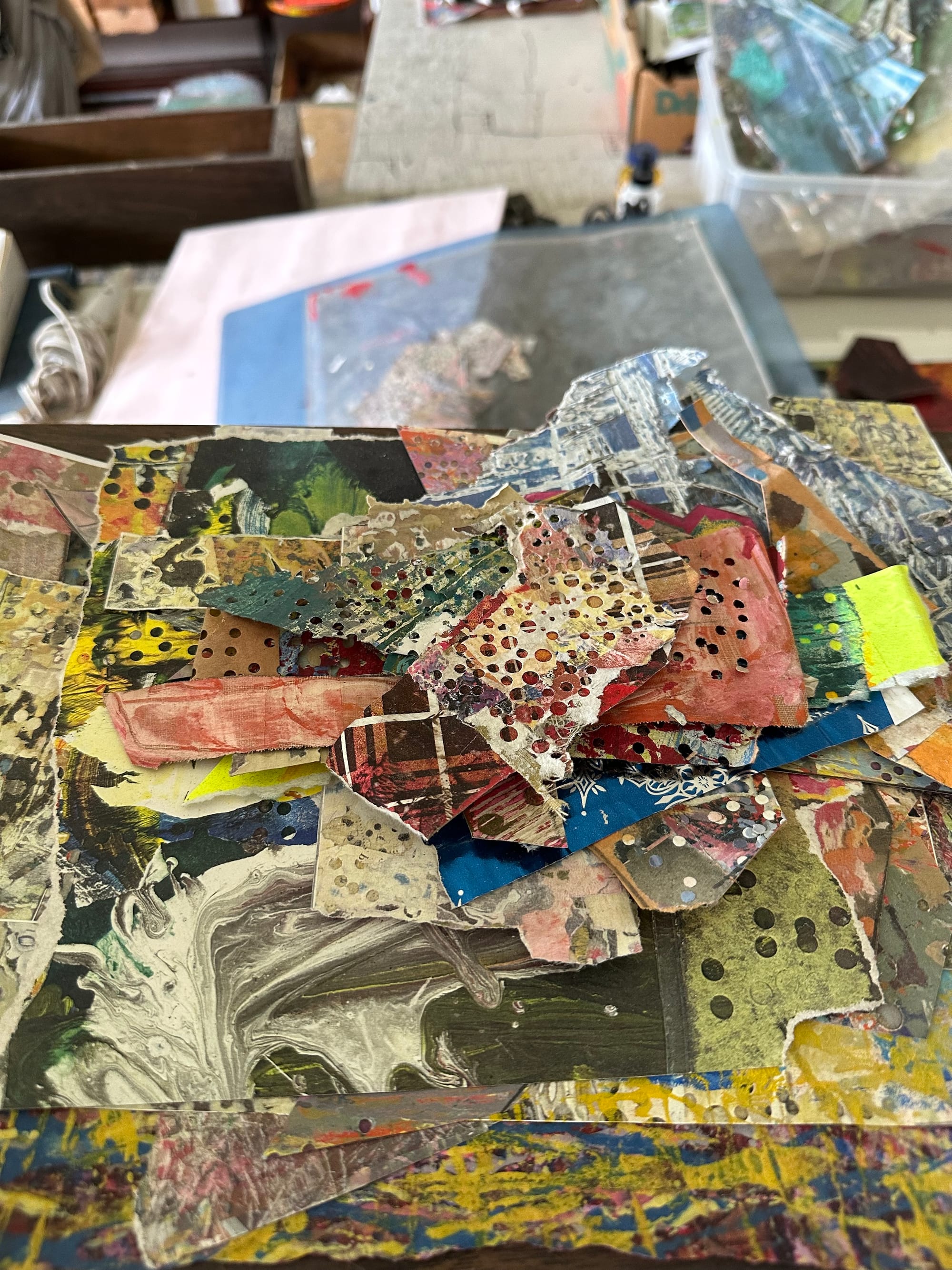
Cellulose, cocktail adhesives, a little pigment, and string. Like Lou Reed says, rock is about three chords and anything more than that is jazz, ha.