A View From the Easel
“If the landlord would allow me to install a shower, I would probably move in for real. Sadly, it's a no-go.”
Welcome to the 255th installment of A View From the Easel, a series in which artists reflect on their workspace. This week, artists treat their studios as extensions of their practice, venture through nature to capture the perfect photograph, and give thanks for the utility of tape.
Want to take part? Check out our submission guidelines and share a bit about your studio with us through this form! All mediums and workspaces are welcome, including your home studio.
Kathleen Frank, Santa Fe, New Mexico
How long have you been working in this space?
Over 20 years.
Describe an average day in your studio.
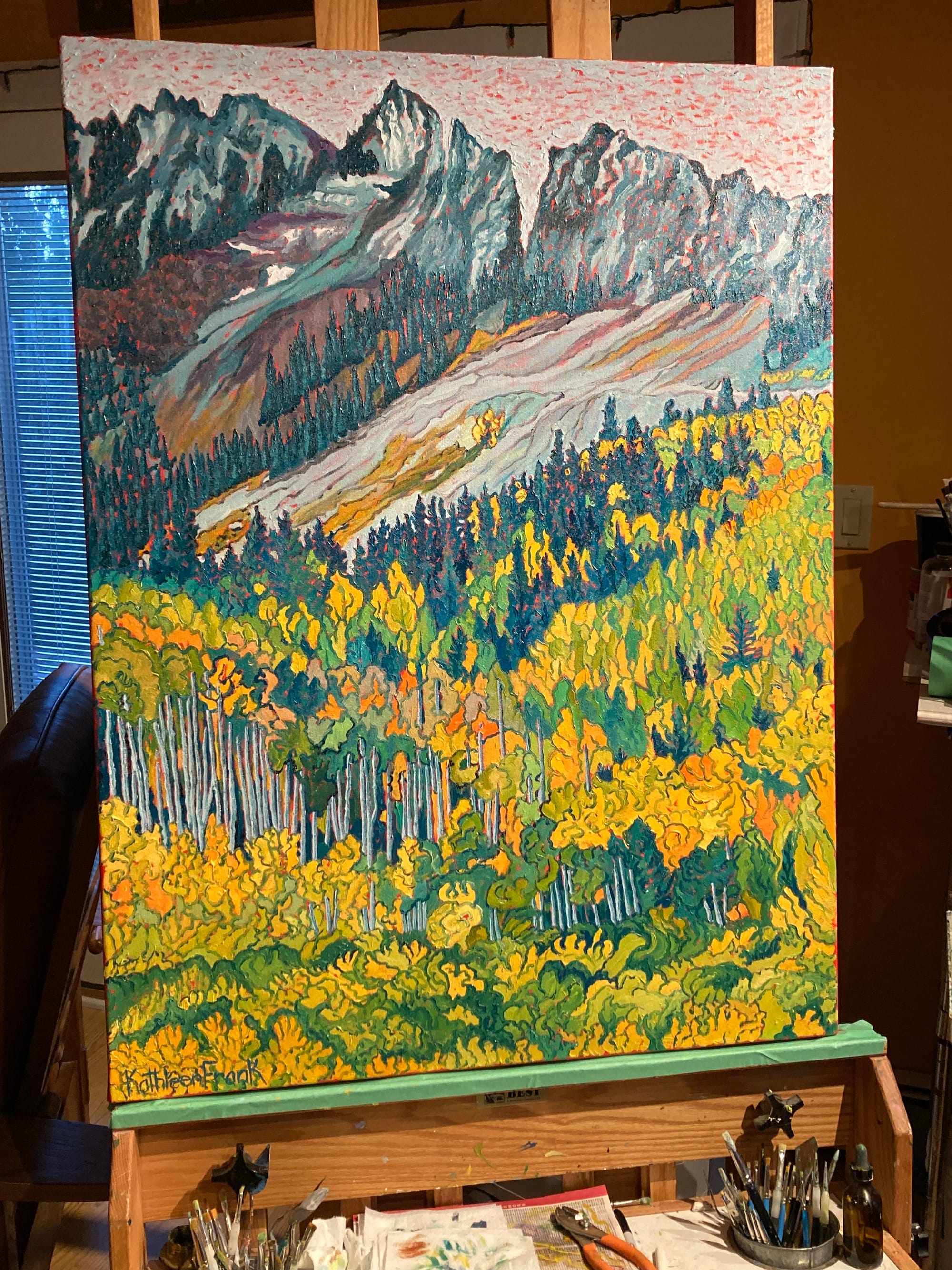
My move to Santa Fe, almost two decades ago, propelled me, through necessity due to space constraints, to narrow my focus to painting. I now had a corner in a large room that was used for gathering and entertainment. That corner holds my enormous easel, tall paint drawers, pallet stand, and air purifier. Throughout history, women artists have had to work in small spaces and produce small pieces. Luckily, I have been able to work on large canvases. I think of my studio as a blessing that has led me to concentrate on painting and to succeed as an artist.
How does the space affect your work?
I look for the splendor and gaiety of life around me through color. I catch the light and design in all its strangeness and beauty.
How do you interact with the environment outside your studio?
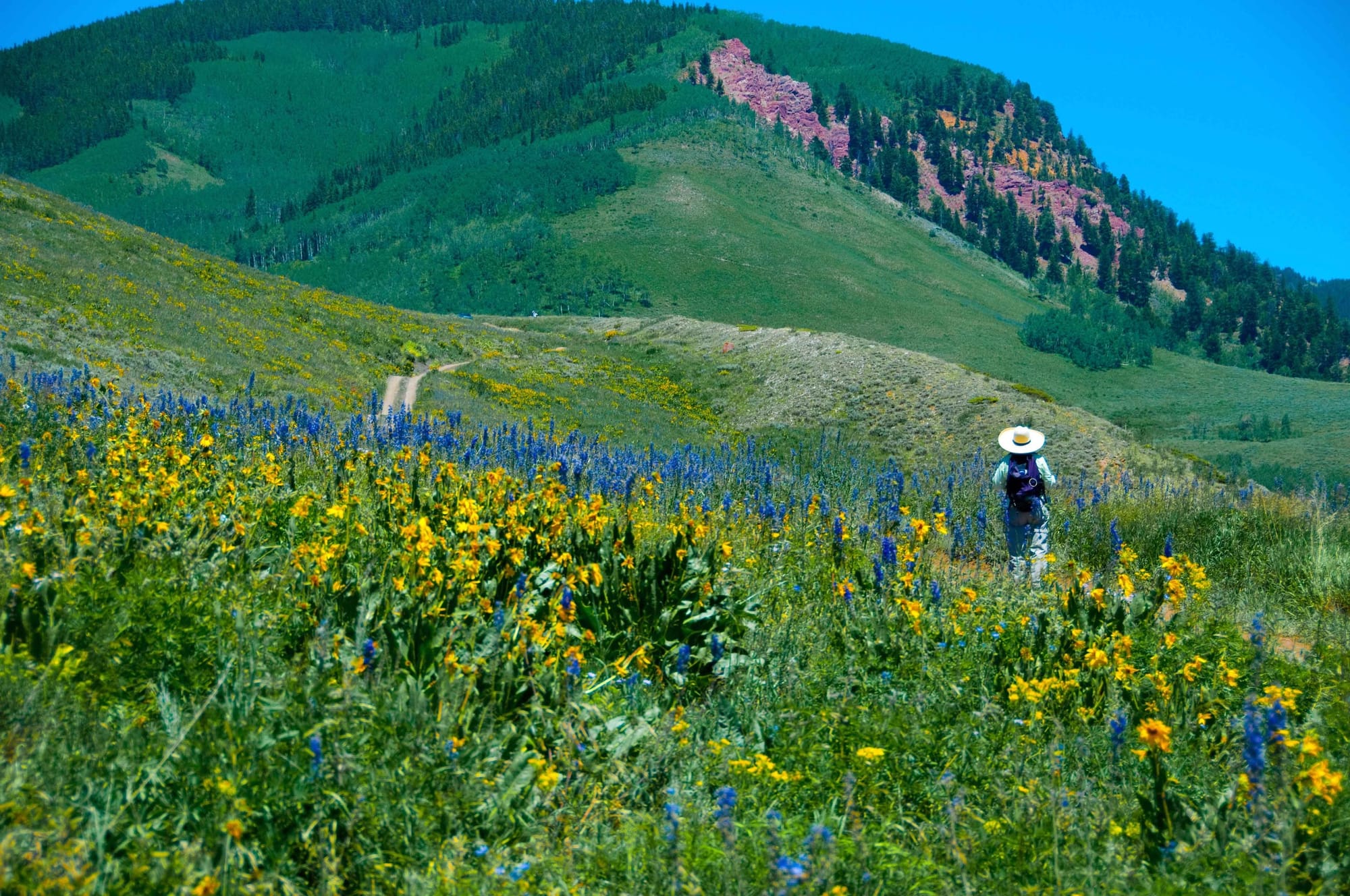
I have hiked hundreds of miles to paint the Southwest land around me, capturing images of the brilliance and vivaciousness of the natural world that beg to be painted. I am willing to go to any length to reach the magnificent vistas and the precise vantage point of what I want to depict. It may take some serious, long-distance hiking, up, down, and over rocky outcroppings, a plunge down an arroyo or a sprawl in sage bushes to capture exactly what I want, but I am never timid about climbing and trudging and scrambling to reach the sought-after sweep or bird’s-eye view of the colorful and uniquely rugged landscapes.
What do you wish were different?
That it were bigger!
What is your favorite local museum?
Fine Arts Gallery, University of New Mexico Valencia, Los Lunas, New Mexico.
Mark Kelner, Mount Rainier, Maryland
Where is your studio located?
Mt. Rainier, Maryland (about 300 feet from the Washington, DC, line). That border also impacts price. Rent essentially doubles per square foot the moment Eastern Avenue is crossed into DC.
How long have you been working in this space?
Two years. It's my third studio space. The first one was in a foreclosed-on condo in rough shape and I cut a deal to pay condo fees in exchange for keys. My second space was in a former motel that was redeveloped as "creative" spaces.
Describe an average day in your studio.
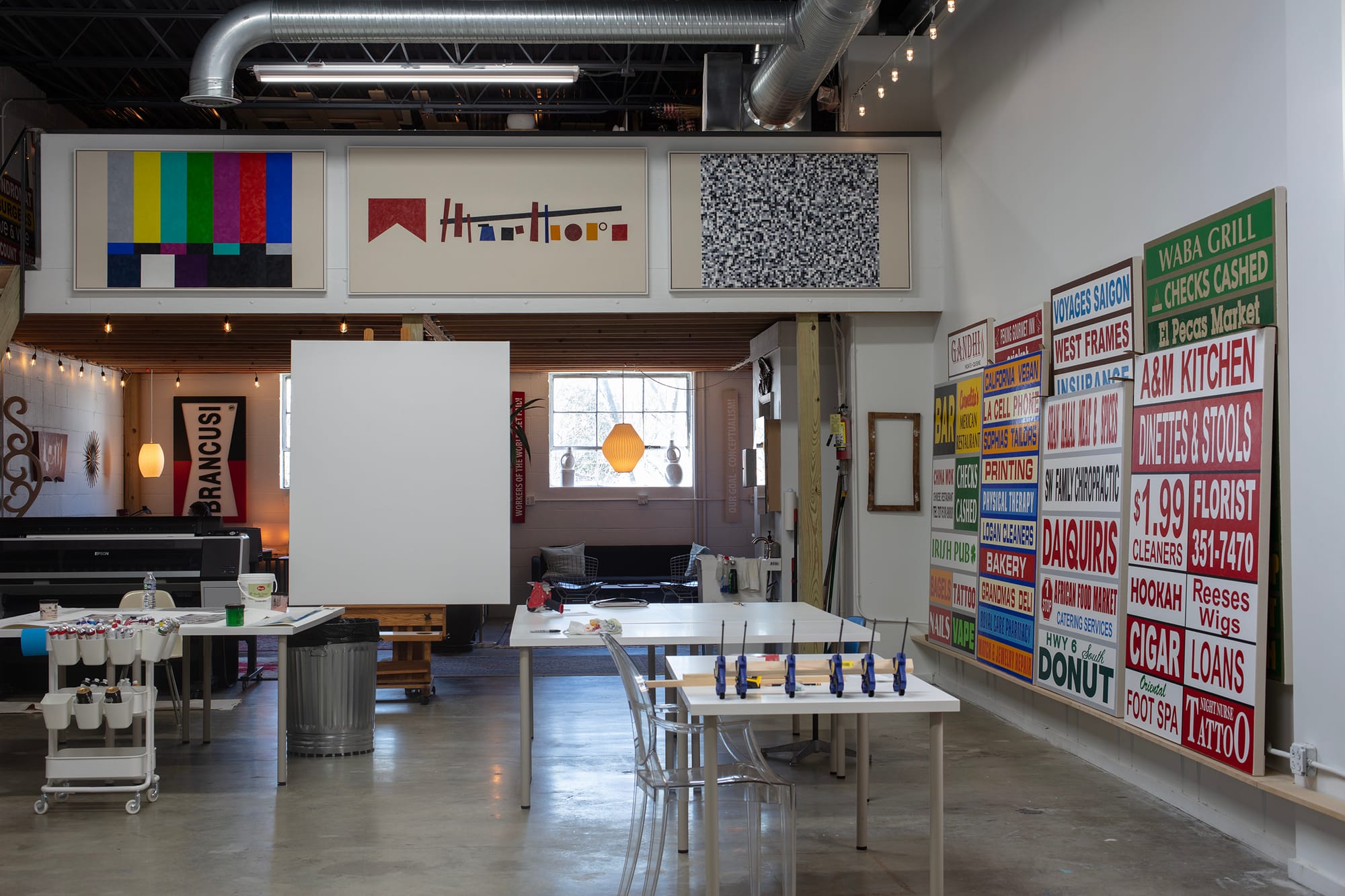
I have four tables that usually have about four projects or paintings residing on top of them at various stages of process and progress. I try and get in around 9am and keep going until 6pm at least three days a week and around 2pm on the days I don't. The routine of it is really important. My favorite rituals include turning on all of the lamps in the morning — there are 18 now — and I keep the radio mostly on a classical music station all day.
How does the space affect your work?
It's everything. Having a space this large allows for institutional-sized work to be created that was nearly impossible in my previous studio(s). It affects my thinking, my energy, and my potential. I feel guilty not coming here every day.
How do you interact with the environment outside your studio?
It's kind of great to have the neighbors I do. A woodworker, a couple of sculptors, some painters, and even a vintage poster dealer! We are all about 25 feet away from active train tracks and are sometimes referred to as "artists on the tracks." It gets loud for a few seconds about a dozen times a day. Everyone is chill and friendly, supportive and respectful.
What do you love about your studio?
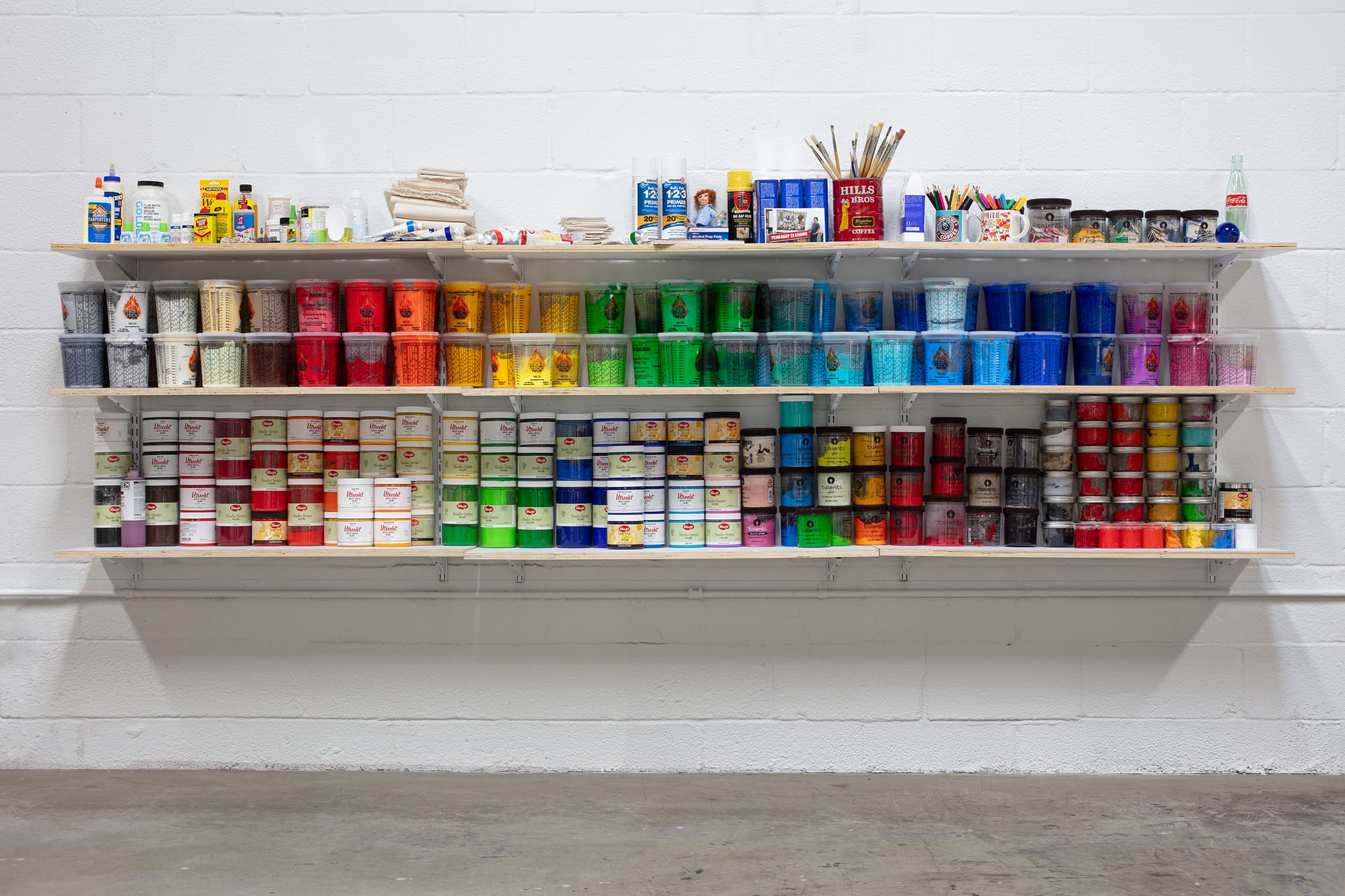
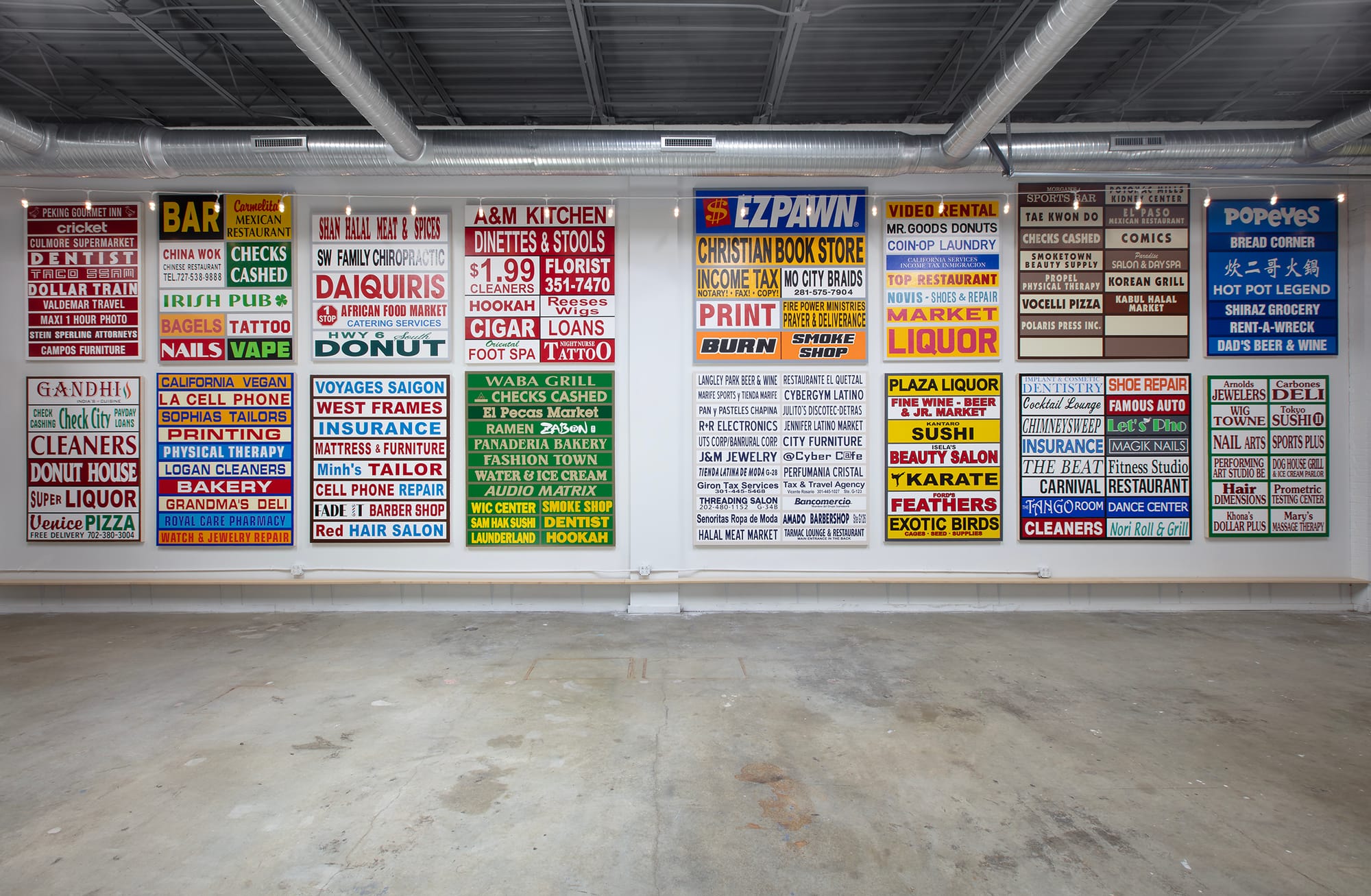
My studio represents freedom. It's a privilege to have. I do not take this for granted. My studio is not just an art-making production facility, but rather, the center of my cultural universe. I've my library here, a collection of kitsch, my storage space, a garage door, and a 40-foot wall that showcases the last three years of work.
What do you wish were different?
If the landlord would allow me to install a shower, I would probably move in for real. Sadly, it's a no-go.
What is your favorite local museum?
Glenstone, easily one of the best art destinations on the planet. Full stop.
What is your favorite art material to work with?
Tape. Everything for me starts as a collage, which becomes a working study for painting to be done later.
Brian Dailey, Woodstock, Virginia
How long have you been working in this space?
Fifteen years.
Describe an average day in your studio.
An average day usually starts at 9am and ends around 6pm unless there is a show, which requires me to work at night. I also work seven days a week when I’m not out of the country or on the road in the United States or New Zealand. I like to focus on a specific project, but I often work on several series at once.
How does the space affect your work?
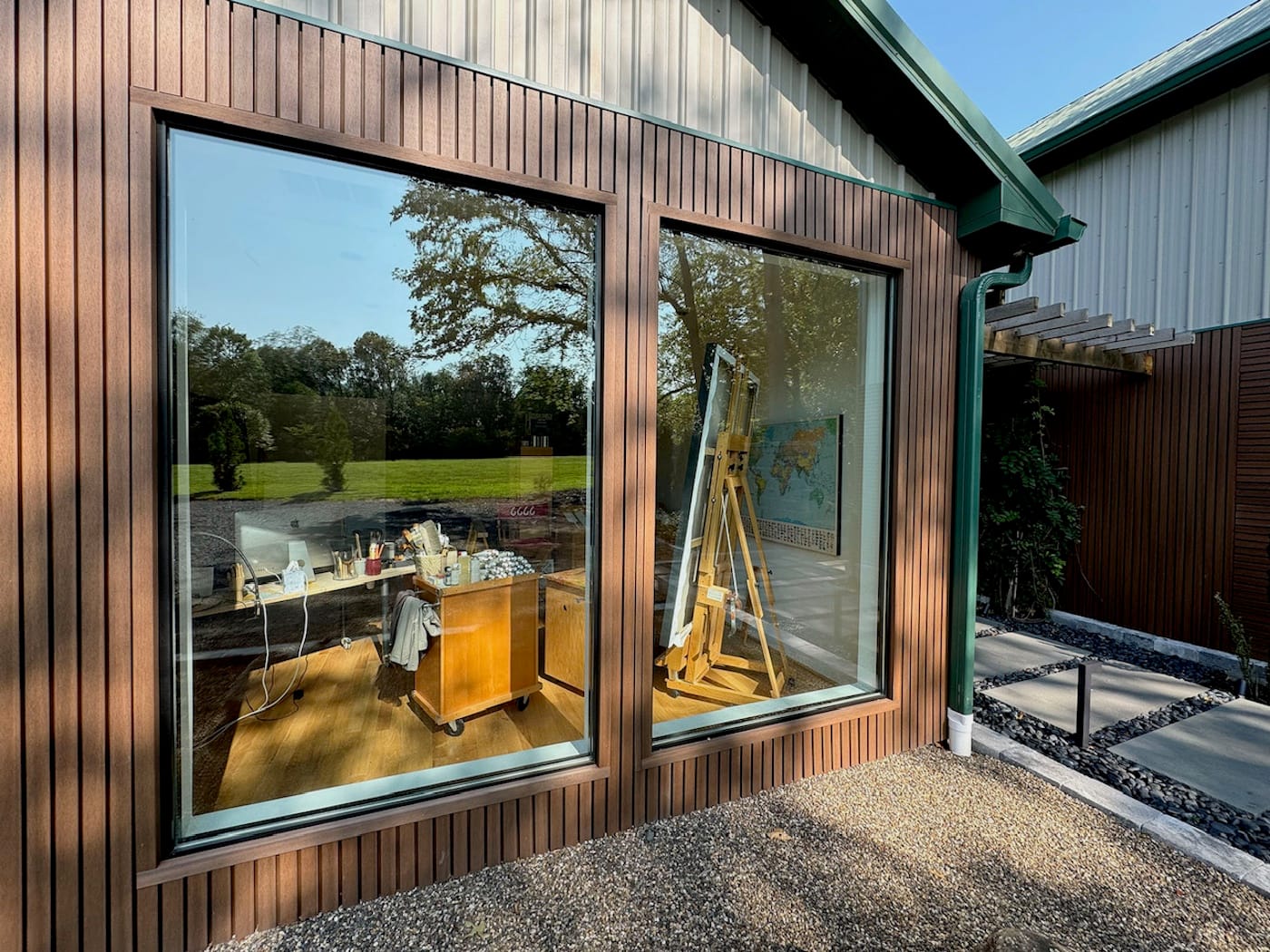
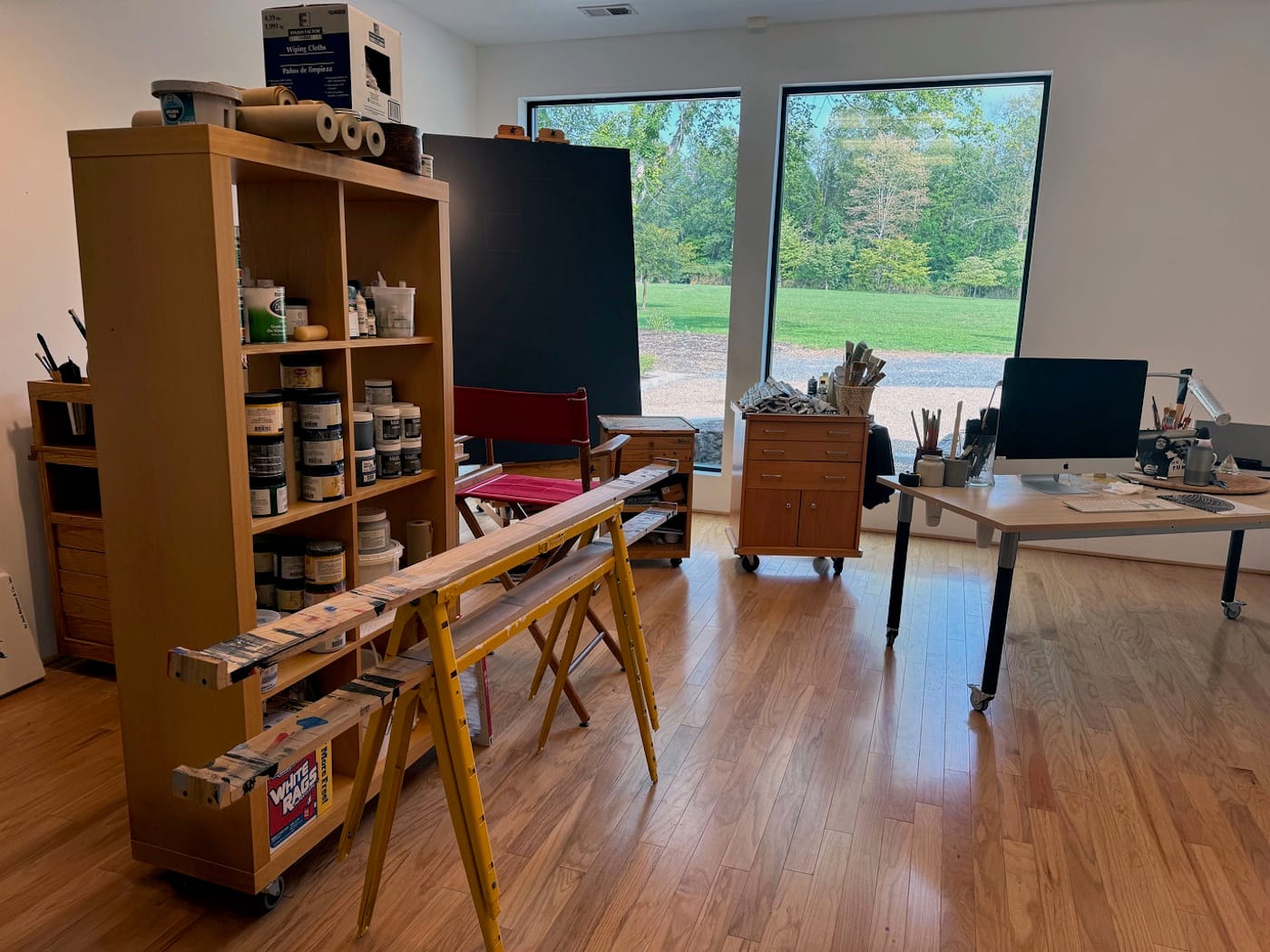
My studio is my temple, my mosque, my church, my place of solitude and meditation. My space inspires my work because it is an extension of my work. I have poured a lot of time and attention into ensuring that every inch of the studio, no matter how insignificant it may seem to the normal eye, reflects my values and encourages creativity.
How do you interact with the environment outside your studio?
I have lived in Woodstock for almost 30 years. It is near the DC area, so I have become involved with many art institutions and the community. It has provided me with the opportunity to intertwine myself within these intuitions. I have also been widely exhibited in the area, which was meaningful seeing that this is my community. It is important for me to be a part of a community that inspires me and allows for dialogue and collaboration with DC artists, collectors, and museum curators.
What do you love about your studio?
I love that my studio has history. It is one of the things that has stayed consistent in all of life’s changes. It has given me a place to anchor my creativity while promoting a space of inspiration that also encourages me to venture outside of it and explore, travel, and learn. I have put a lot of care into it, and I feel that effort every time I walk into the space; it is a place where I feel peace, inspiration, and solitude.
What do you wish were different?
I wish that there were a larger art community for the type of work that I do in the Shenandoah Valley. I love shared knowledge.
What is your favorite local museum?
It is hard to decide. My area has so many options. Museums are home to me and provide tranquility and inspirational thinking.
What is your favorite art material to work with?
It's difficult to say. I have gained experience working with several mediums such as ceramics, graphite charcoal, photography, digital mediums, and more. If I had to choose, I would say that working with technology best conveys the work I am inspired to do. I’ve never really focused on developing a brand through a specific medium. In particular, I leverage the technology that helps convey my political and social work to better relate to the public and lesser so to the institutions of art. My brand comprises experiences in the world which are extensive. To that end, I often use the viewer as the media or the art. People and culture are what matter to me.