A View From the Easel
“It’s a place to disappear and get lost in the process of doing.”

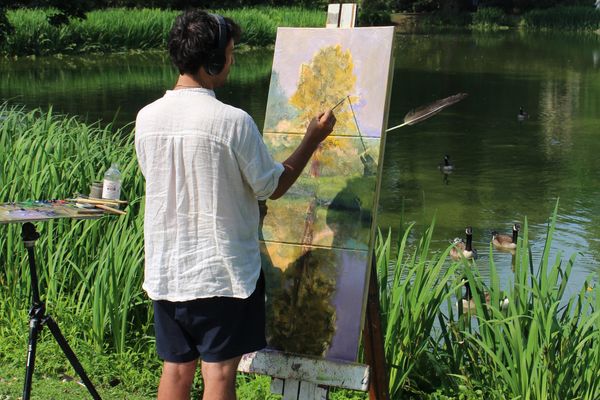
Welcome to the 326th installment of A View From the Easel, a series in which artists reflect on their workspace. This week, artists explore the personality of oil paint and find inspiration in conversations with strangers in Central Park.
Want to take part? Check out our submission guidelines and share a bit about your studio with us through this form! All mediums and workspaces are welcome, including your home studio.
Sofie Koenig, Bloomington, Indiana
How long have you been working in this space?
Seven months.
Describe an average day in your studio.
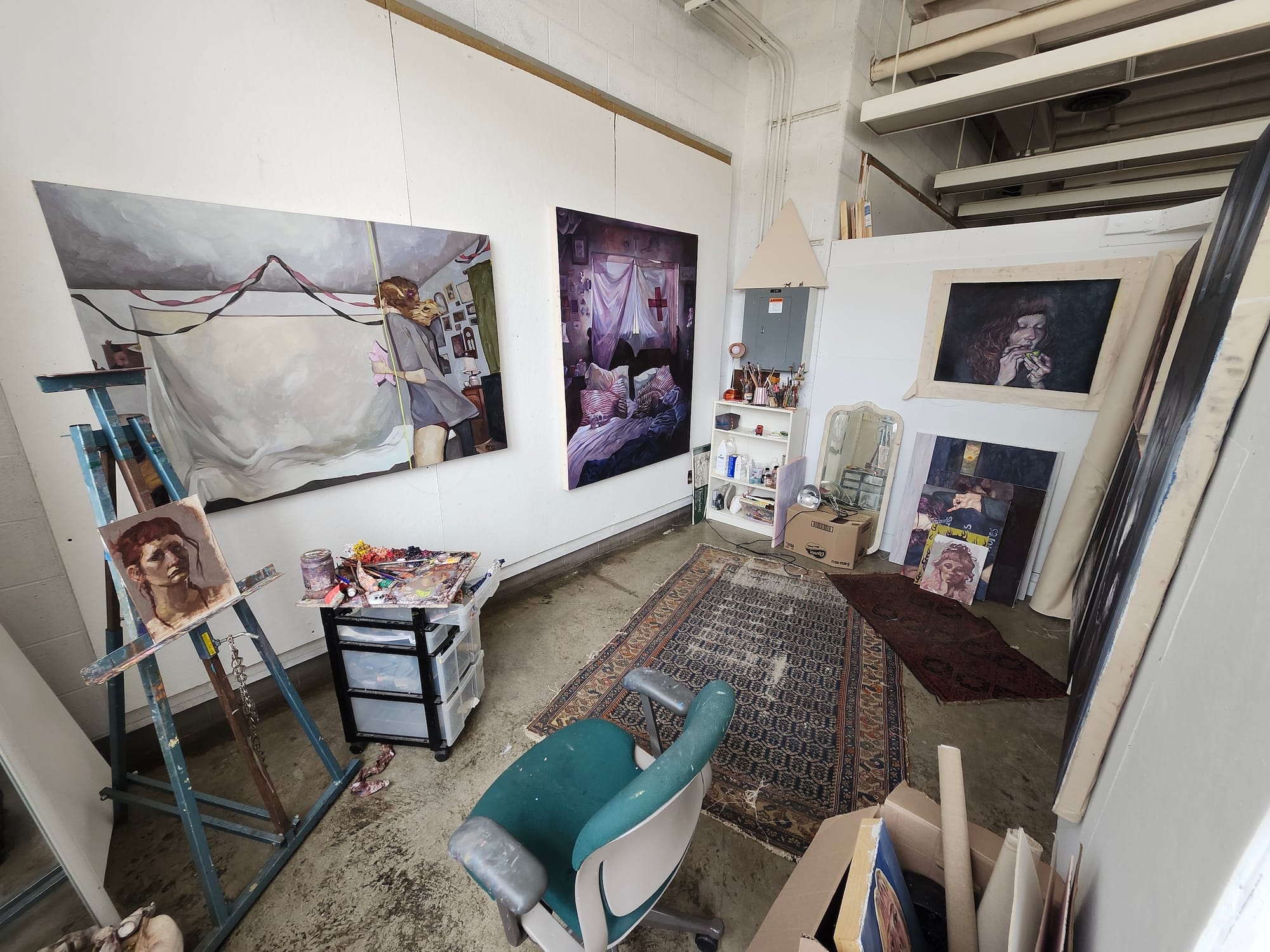
On an ideal day, I wake up around 8:30am and get to the studio before 10am. I find that my paintings suffer if I am working late at night, so I prefer to start early. If my schedule is clear, my sessions span anywhere from three to six hours with few breaks. Usually, I get so deep into my work that I don't realize how much time has passed. I am always listening to music in the studio and I advocate for standing sessions. I find that the movement generated from standing allows me to be more expressive in my painting. I usually have multiple projects to work on, so standing also helps me jump between them quickly.
How does the space affect your work?
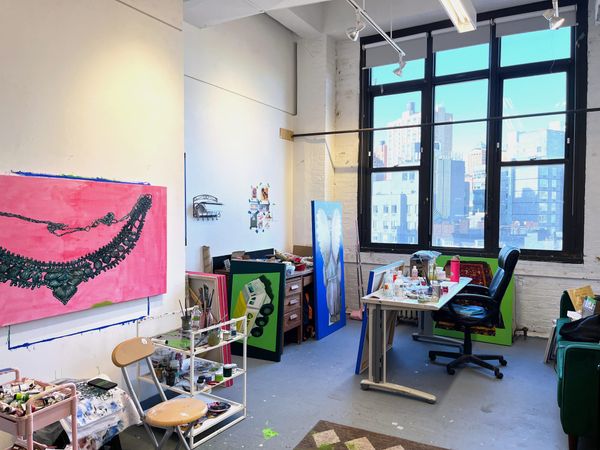
Well, to be frank, my space is a little cramped right now. The lack of space makes it inconvenient to paint on a large scale, stretch canvases, and have studio visits. However, the natural light provided is really wonderful. The studio is a shared space as well, which encourages me to bump shoulders with my colleagues.
How do you interact with the environment outside your studio?
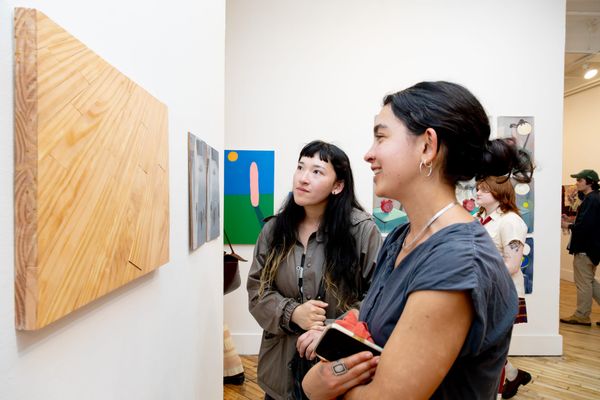
My studio is currently provided through Indiana University in Bloomington, so there is a thriving art community within my building. I love walking around the studio and peeking at what everyone is working on. It keeps me constantly inspired.
What do you love about your studio?
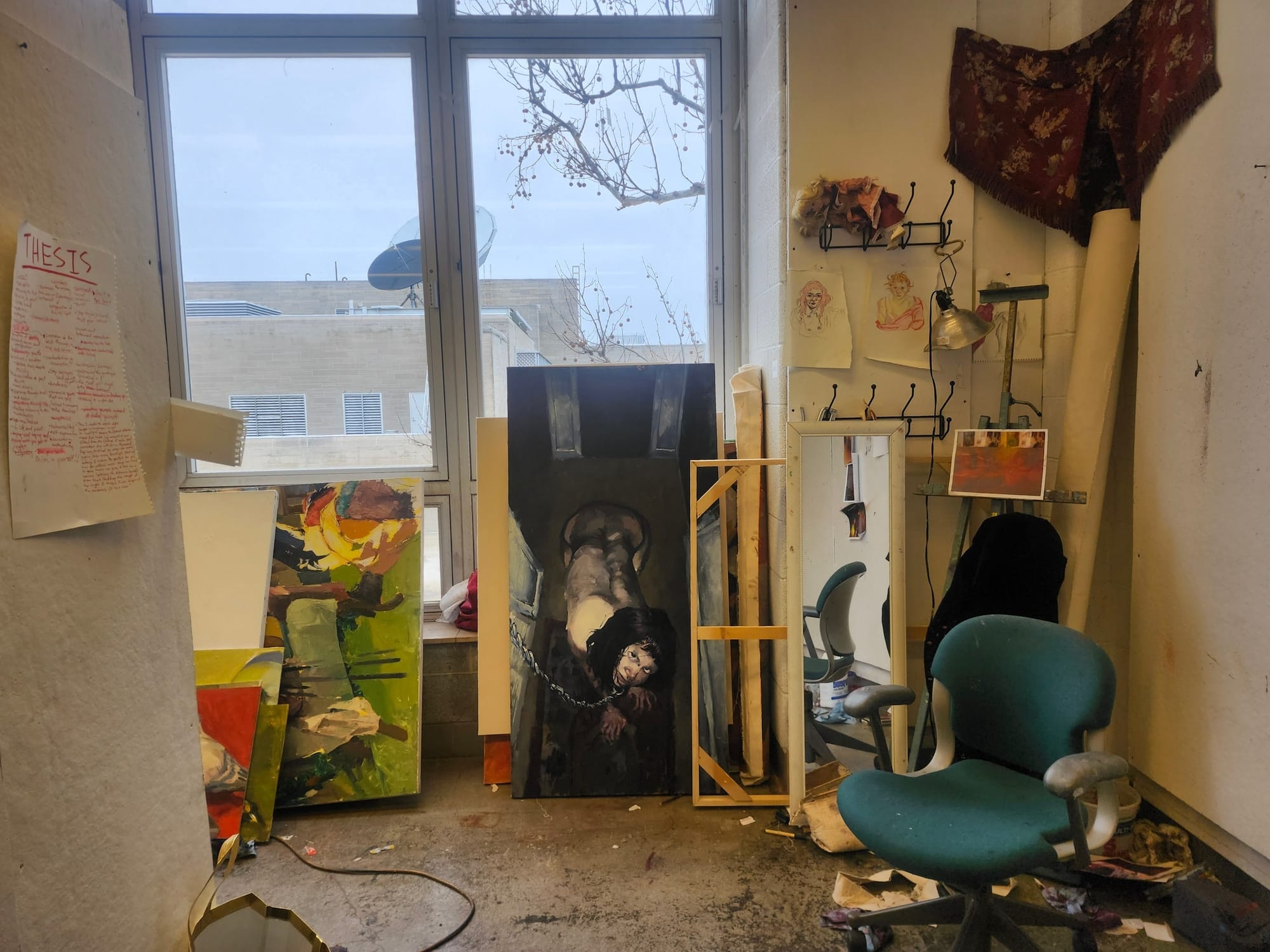
The community in our studio space is really magical. I can always rely on my colleagues to help me out when I get stuck on a painting. I have a lot of good memories in the space and am extremely grateful for it.
What do you wish were different?
We have beautiful windows flanking one wall, which are amazing for lighting, but they are horrible in the winter. These last couple of weeks have been bitter and our studios are frigid right now. One of my close friends in the program has to paint under a heated blanket because of the cold.
What is your favorite local museum?
It's a bit of a drive, but the Newfields Art Museum in Indianapolis is fantastic!
What is your favorite art material to work with?
Oil paint for sure. It's essentially my only medium right now and I just love the personality, texture, and luster of it.
Marissa Robin Abendano, Manhattan, New York
How long have you been working in this space?
Around eight years, though no matter what space I work in, my process remained very much unchanged.
Describe an average day in your studio.
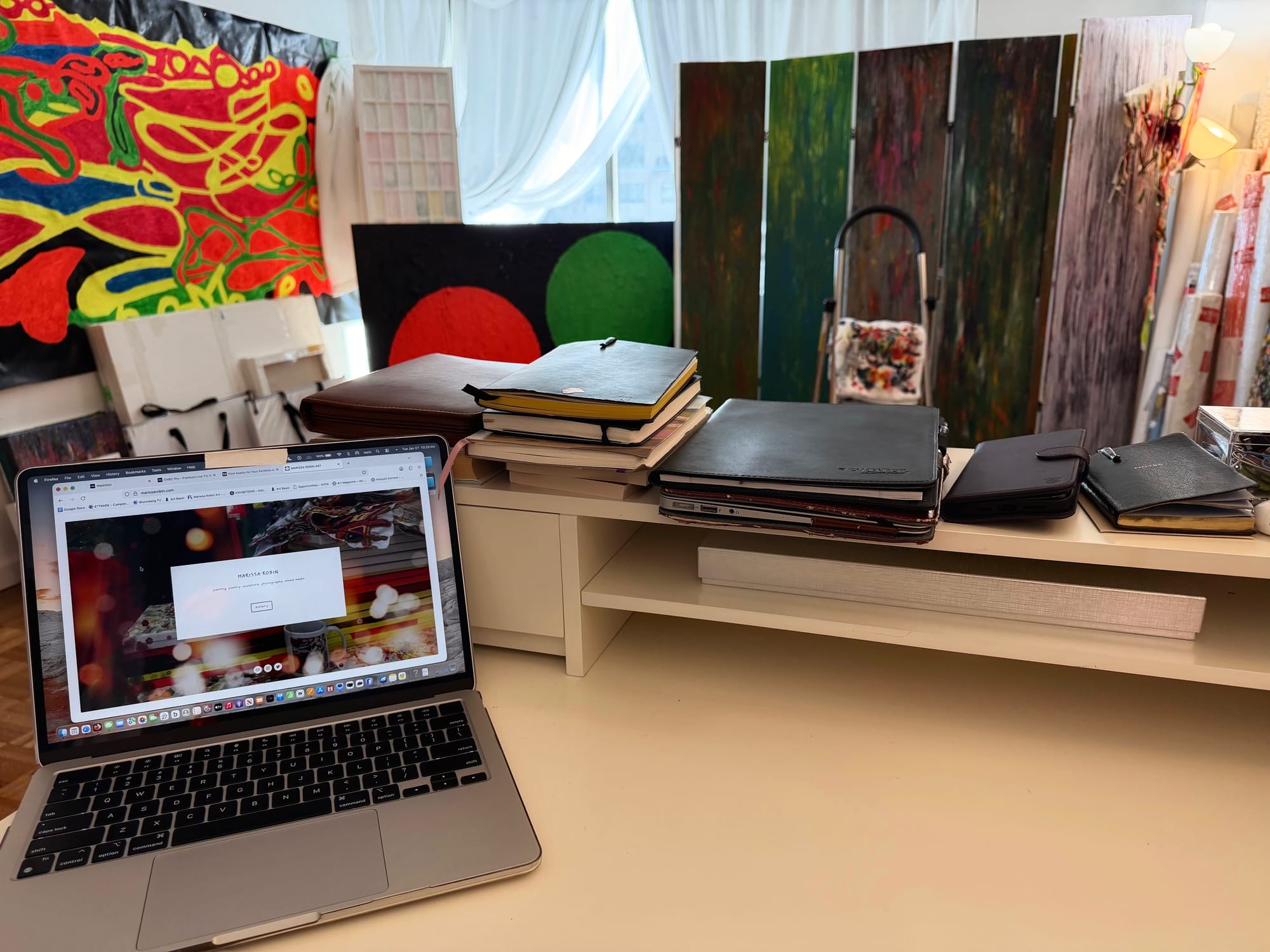
I’ve always taken to waking up early — around 4am — and then I’ll go about my morning routine. Black coffee and a bit of reading. I love poetry and stream-of-consciousness prose, and I’ll read (and reread) a lot of T.S. Eliot, Virginia Woolf, Keats, Blake, and Shelley, among others. After a quiet, calm morning, I’ll tidy things up around the house and begin to work.
I absolutely cannot work if there are things to be done around the house and absolutely refuse to start anything until all chores and household responsibilities are out of the way. Then, I’ll set a mug of green tea to steep and begin. For the most part, I’ll focus on one main piece in intricate detail, and occasionally stray into material experiments and studies while doing so. Sometimes I prefer quiet while I work, though I listen to a good deal of audiobooks. I’ve always loved audio recordings of my favorite books (Juliet Stevenson narrating everything from Austen to Woolf comes to mind), but recently I’ve taken to the format much more (age has not been very forgiving toward my eyesight).
How does the space affect your work?
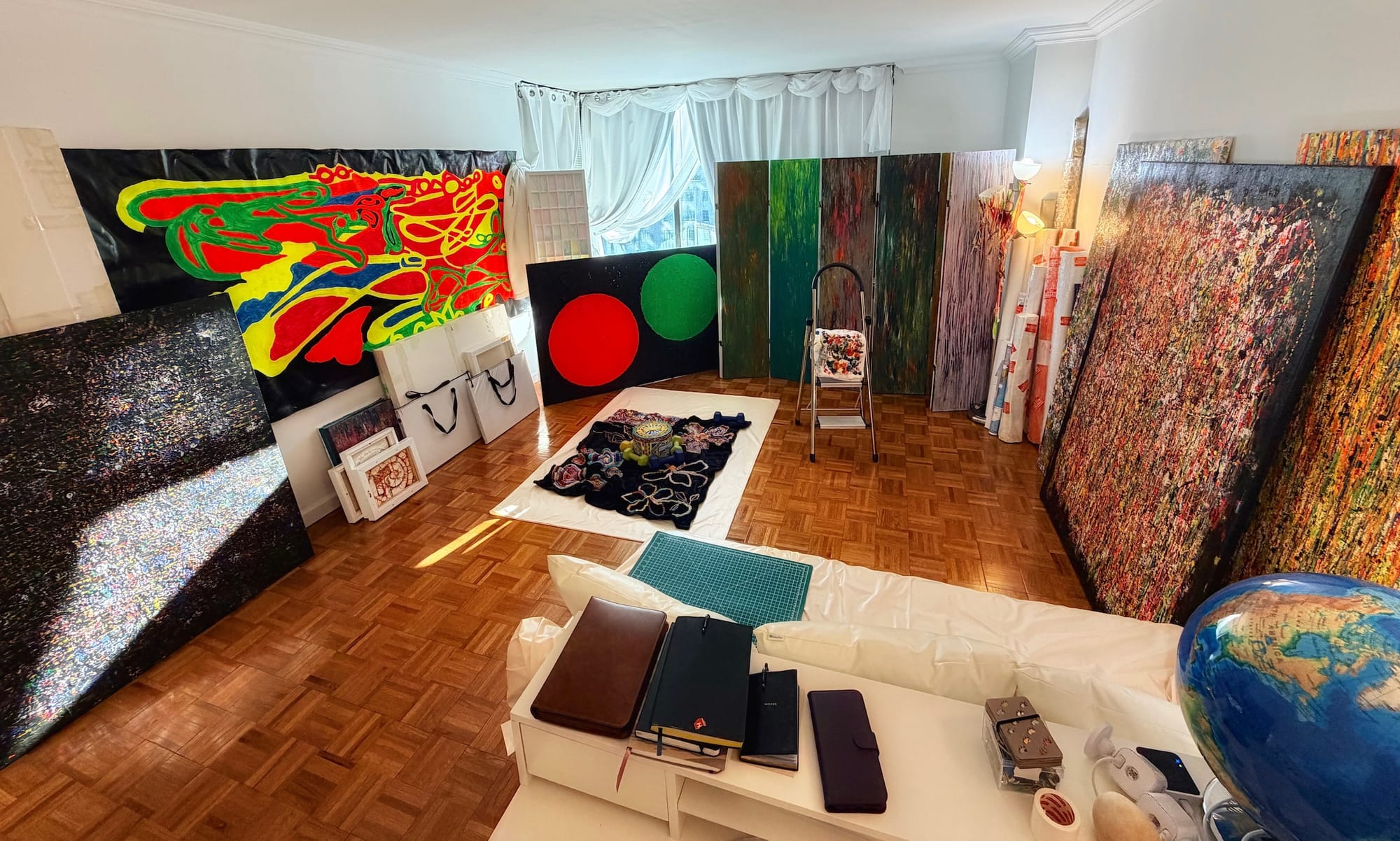
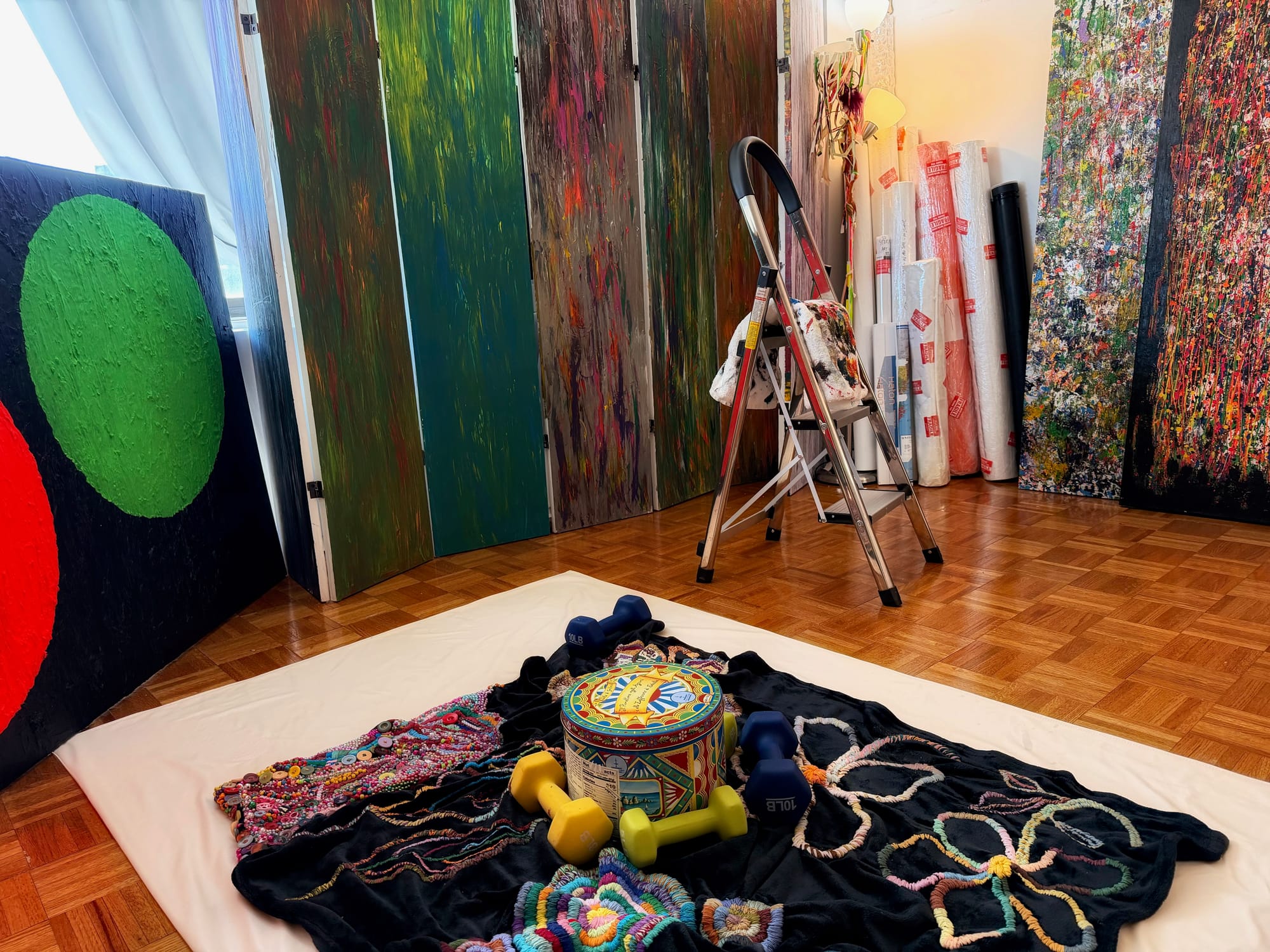
It is where I am most at home with myself: a piece of the world carved out of my thoughts and creations that is completely and entirely mine. I think that any space I work in takes on this identity — so it’s much less the space in particular but instead its presence in the first place.
How do you interact with the environment outside your studio?
My neighborhood is ripe with everything that an artist might need. Simply by walking to Central Park or along Fifth Avenue at random hours, one can easily find a concept, scene, or idea to incite a new line of thinking to inform a piece. I could grab a coffee and sit on one of the benches by the zoo, watching people come and go, or visit a bar or restaurant, talking to strangers, young and old, from all walks of life, learning all the different ways one’s personality and experiences are interwoven with duality and dissonance, which I explore in my work.
What do you love about your studio?
It’s a place to disappear and get lost in the process of doing — where a painting can be scraped away and made new over and over again, each short-lived iteration a piece in time no one will experience again, but will continue to inform the work until its last brushstroke leaves the canvas.
What do you wish were different?
Sometimes, when I’m especially disgruntled with all the things I’d like to do but can’t — or have to do but won’t — I dream of a sort-of liminal hotel room where nothing is mine or needs to be tended to, and where I can work and work and work and work with no interruption at all. Still, my studio is my home, and in reality there is very little I would change about it.
What is your favorite local museum?
The Museum of Modern Art — it’s just next door and makes for a very pleasant afternoon outing.
What is your favorite art material to work with?
Acrylic paint. Most of my work is mixed media, but underlying it is a foundation of paint: layers of paint that I build up and scrape away, and build up again in intricate detail, only to cover it all in black again. My creative process is interwoven with destruction, and I find that it’s in coming to a balance between the two when I can communicate the duality we exist in constantly — flourishing and withering, living and dying, giving and taking. Acrylic is, first and foremost, a tool I can use to express these concepts not individually, but in tandem, which I think reflects the way we navigate life and the world around us.