A View From the Easel
“Without the fabric there would be no painting.”

Welcome to the 341st installment of A View From the Easel, a series in which artists reflect on their workspace. This week, Daniel Correa Mejía fills his shared studio with seeds, family photographs, and music that puts him in a painting trance.
Want to take part? Check out our submission guidelines and share a bit about your studio with us through this form! All mediums and workspaces are welcome, including your home studio.
Daniel Correa Mejía, Berlin, Germany
How long have you been working in this space?
Thirteen years.
Describe an average day in your studio.
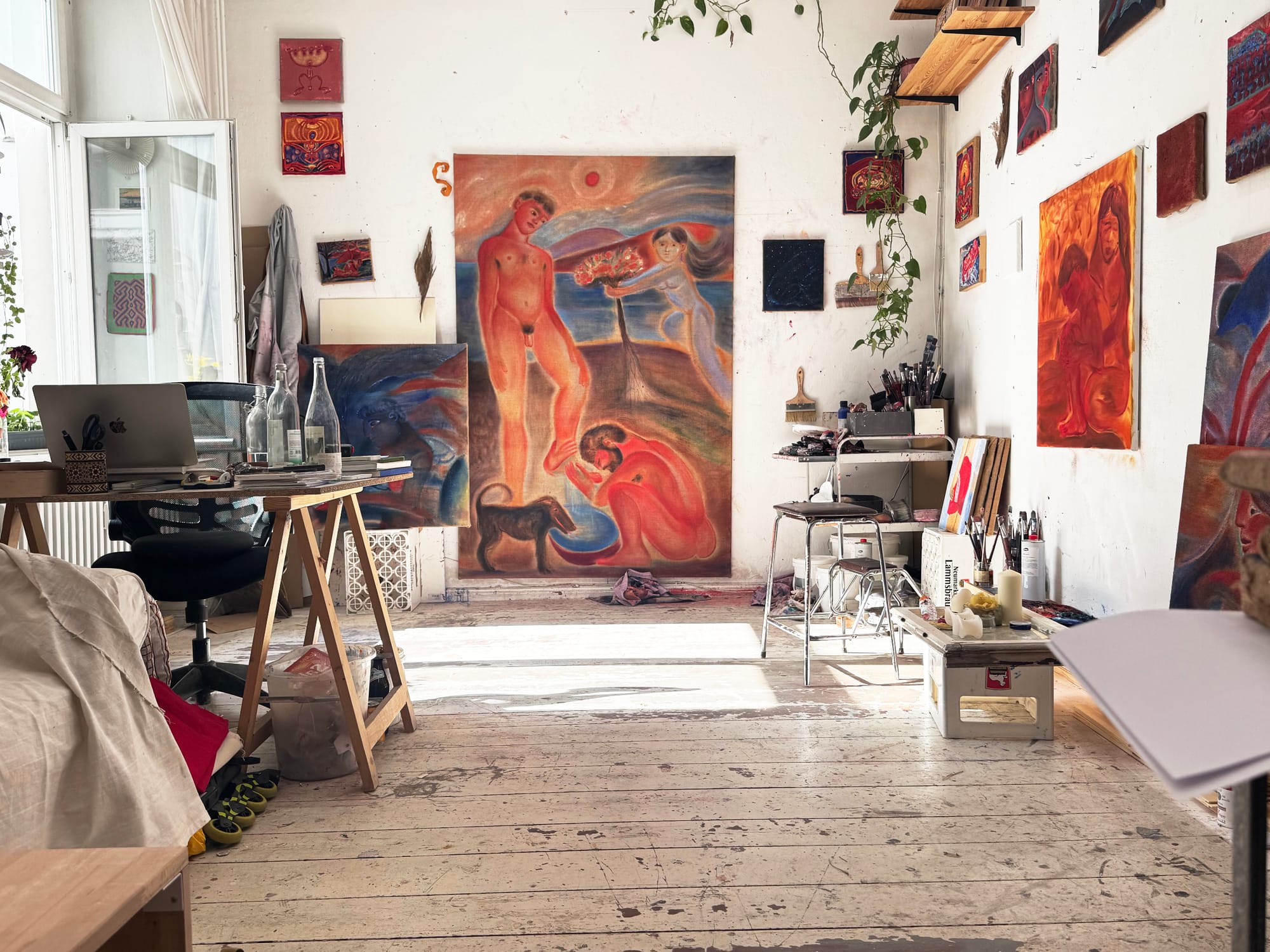
I come around 12pm to my studio and start painting almost right after lunch. Every day I paint for around four hours, and with the rest of the time I don't know exactly what I do — it's very intuitive, but I'm always doing something: moving through the studio, looking at works, seeing dialogues between them, reading, writing, drawing, moving things from here to there, lying on the sofa and thinking. Sometimes I find myself dancing, and other times scrolling on Instagram, which I don't like so much, but I think we all struggle a little with the digital world.
I try to start one new work every week, so that way I'm always adding something new to the studio. When it comes to choosing what image I want to work with, I go to my diaries and see if there's any drawing that speaks to me and reflects how I'm feeling that day. Music is always there — sometimes I play a song on loop that I really like at the moment, and that gives me a kind of good trance to paint in.
How does the space affect your work?
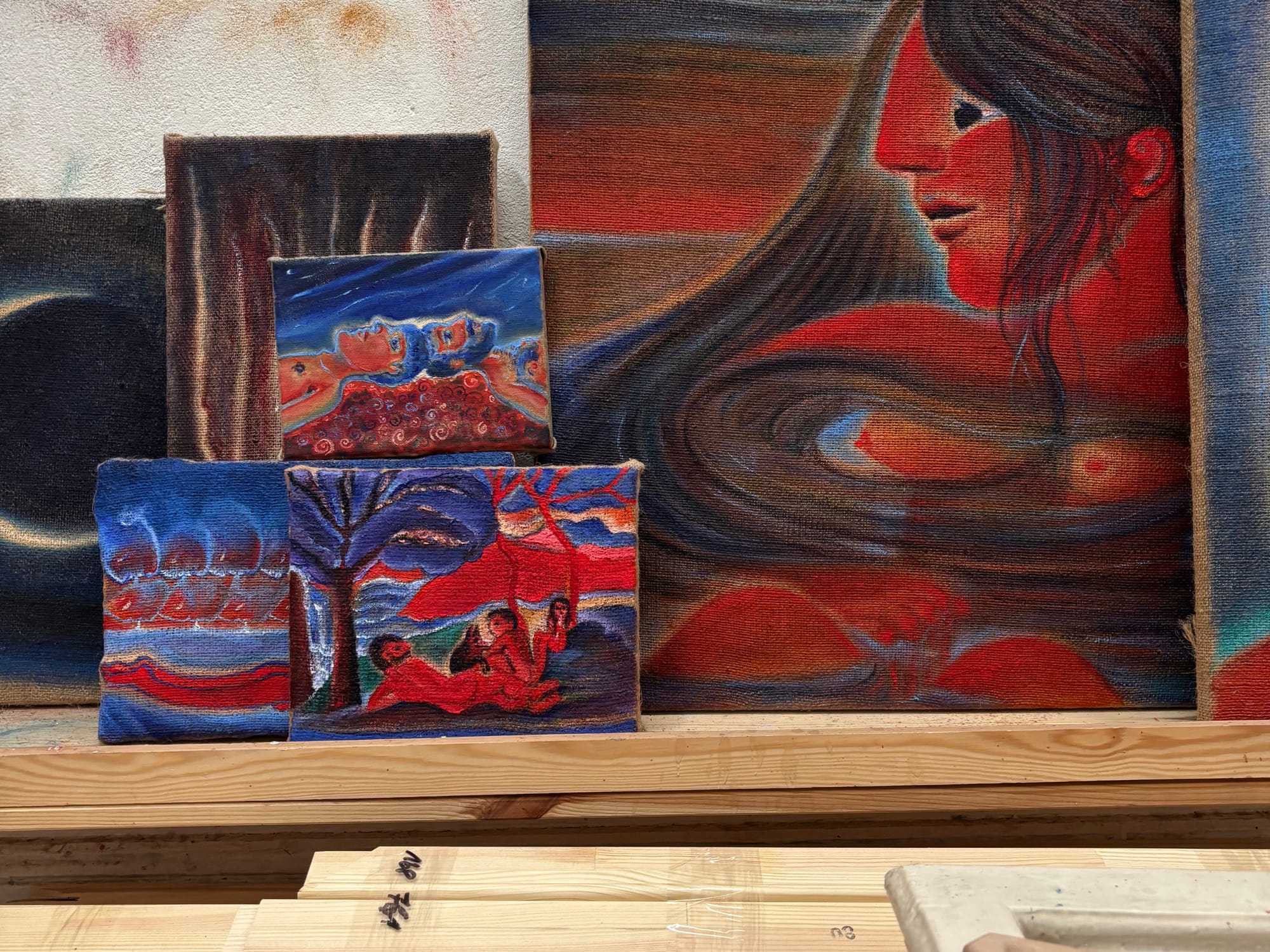
I feel really attached to this space. I think it has evolved with me through so many years that I can connect easily with it and with my practice. I feel part of my work has to do with being there — it's as if the space has a special energy for creating. Sometimes I wish I could be less attached to it, so that I could try to paint from other places, like going to visit my family in Colombia and painting there for some months during the winter. But I really like being in my studio, and winter feels perfect for painting, since life is calmer and there's no FOMO the way there is in summer. The space is full of works, from the past and from the present — there are images pinned up, photos of my family, natural objects I've collected like seeds or stones. The space has an atmosphere that feels like a dialogue with my work, as if it makes the studio part of it. Sometimes I look at how the works sit next to each other, mixing with the objects around them, and I see the work being shown as it truly lives — in the studio. I wish I could transmit that energy in exhibitions, but in the end the studio is a protected space for creating, and that cannot be translated into a neutral space. A studio develops over the years.
How do you interact with the environment outside your studio?
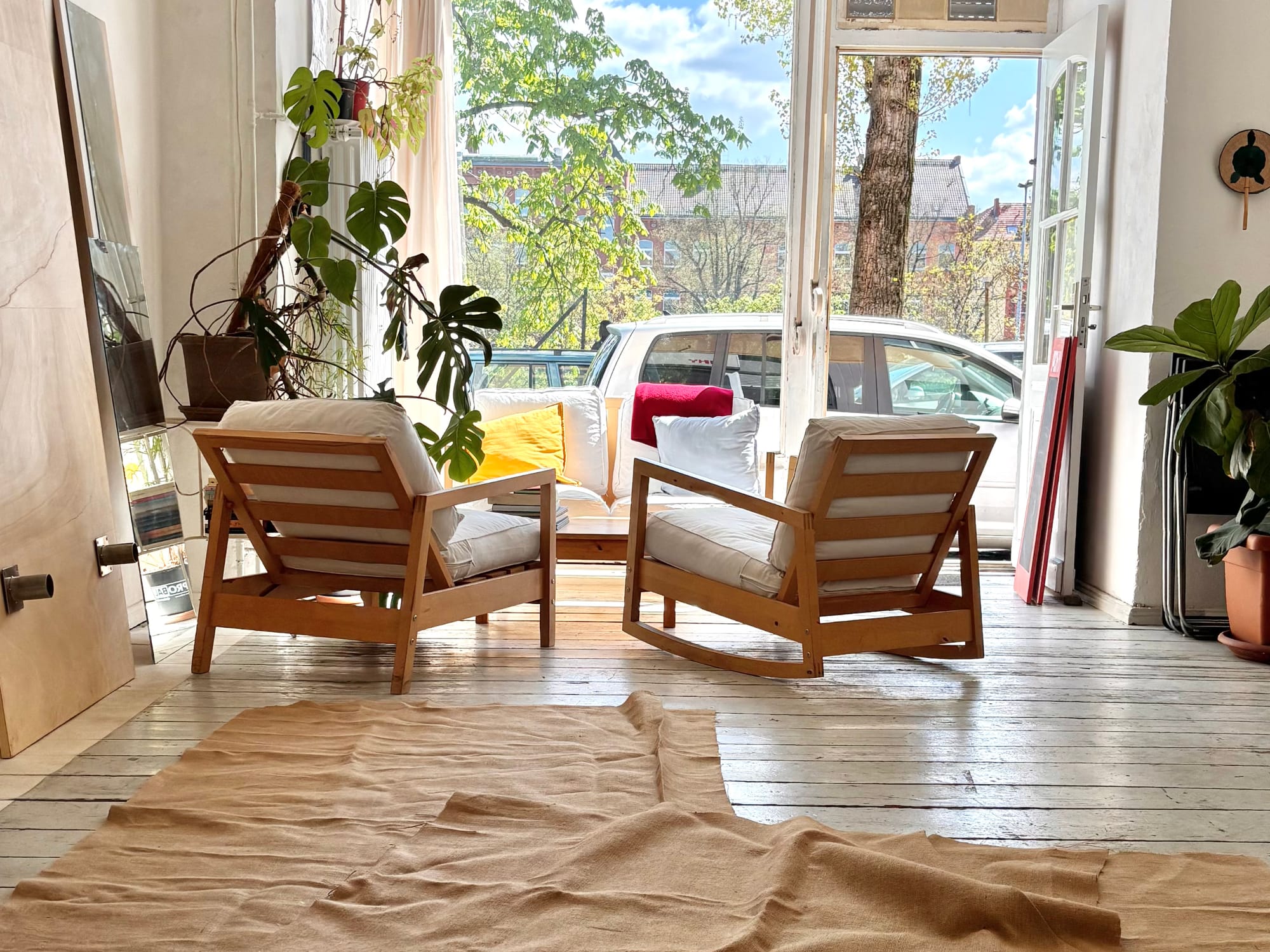
My studio is on the ground floor, with a big window and a door to the street, so I feel very connected to the outside world. I like to leave the door open, watch people passing by, and step outside now and then for fresh air and sunlight. I have a good relationship with the neighbors, so it feels very nice when I run into someone outside and we say hello. I also share the space with three other creative people — two artists and one writer — and they have been part of the space for many years, so it feels very familiar. So although my practice is solitary, I am never completely alone, and that feels good — otherwise I would be by myself all day.
What do you love about your studio?
It feels like an extended home, cozy and familiar. I live on the same street, so my house and the studio feel very connected; the studio is like an extension of my home, and that is a privilege that gives me a very good quality of life. I like that in the studio I can be messy, while at home I prefer to have order.
What do you wish were different?
Sometimes I also wish the studio were a little further away, so I could go by bike and see something new on the way to work. I used to live 20 minutes by bike from the studio and I really enjoyed cycling through Hasenheide Park every day, or catching the sunset at Tempelhof on the way back home. Sometimes I wish the studio were a little bigger too, but I don't want to move to an industrial space outside the city. I also like that the size keeps it cozy. I think limitations are good for creativity. Sometimes spatial constraints push you to find different ways of doing the same thing.
What is your favorite local museum?
I don't have a favorite and I don't go to museums as often as I'd like. But I try to visit museums and exhibitions every now and then. Sometimes I enjoy going to the Gemäldegalerie, listening to music and wandering through it intuitively. I also feel deeply moved every time I visit the pre-Columbian collection from the American continent at the Humboldt Forum. It feels strange to see those objects there, but they are so spectacular that they never fail to move me.
What is your favorite art material to work with?
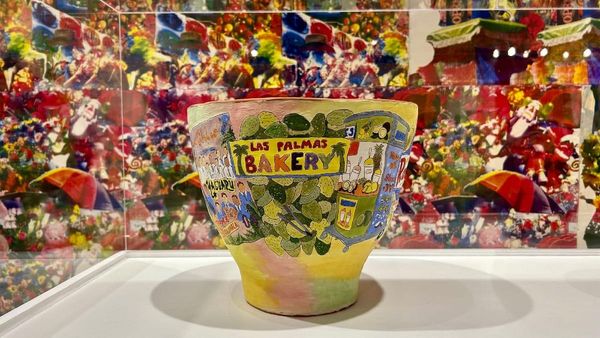
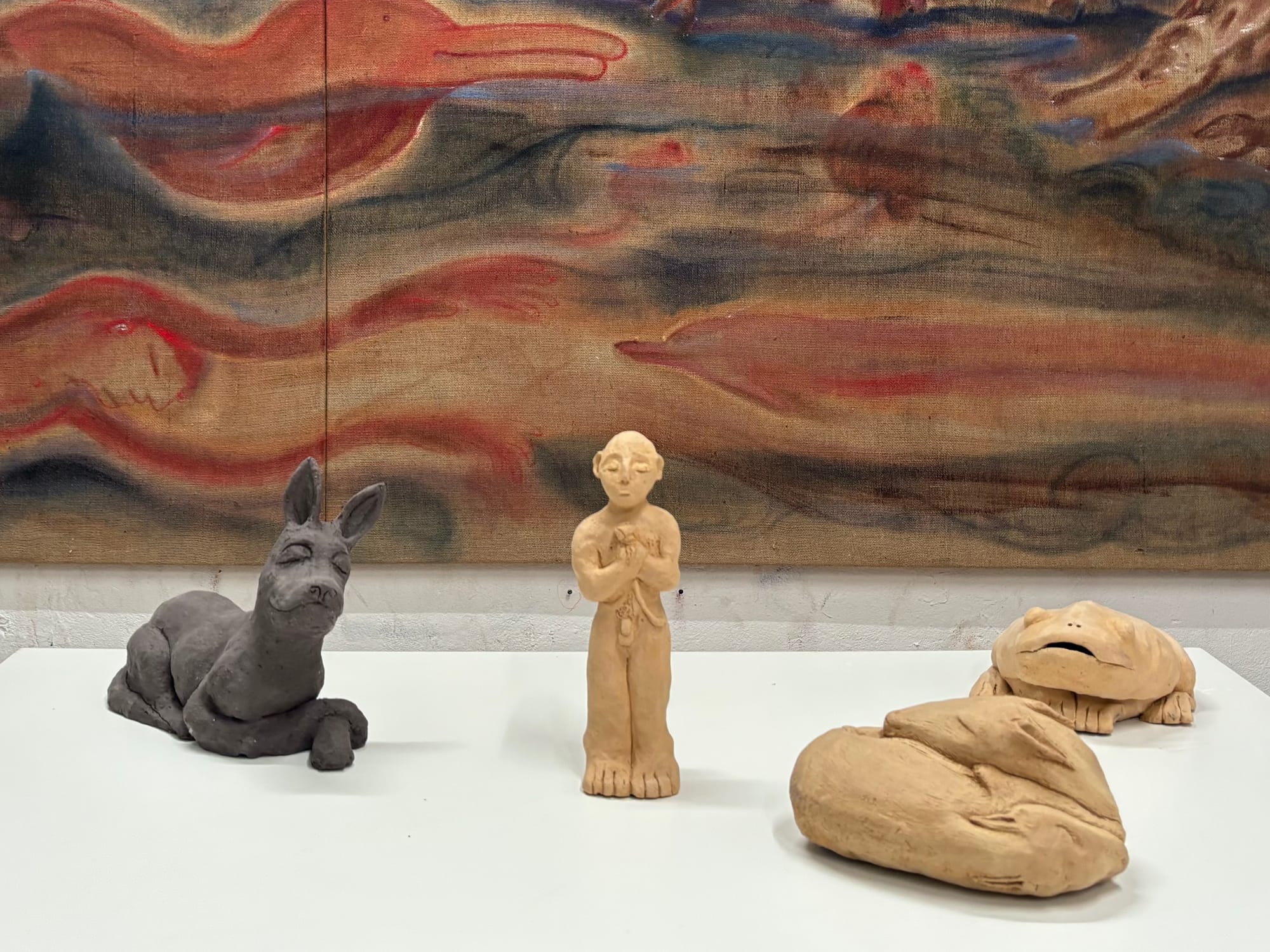
For me, painting on jute is a constant dialogue with the material. I love its texture and the way it interacts with oil, but I also love the color of the fabric itself and using it as the light source of the painting, so that the light comes from within the fabric. I find this very poetic, because without the fabric there would be no painting. It is always a question of what to paint and what to leave as bare fabric, letting the natural color carry the light. I also love working with clay. It feels so natural to work with earth, and I can sit for a long time just working with my hands.