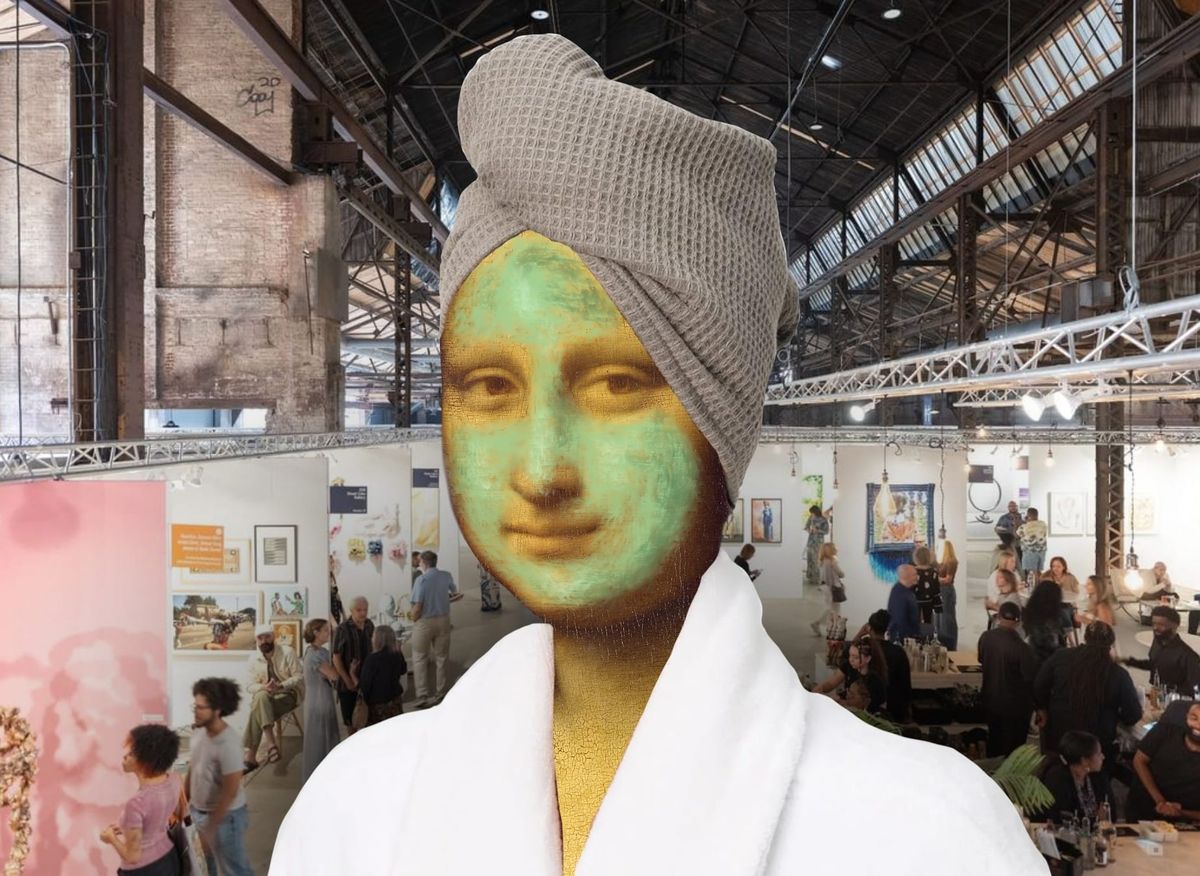
Art Problems: Do I Need to Go to Art Fairs?
Are the fairs worth the back pain and steep ticket prices? Paddy Johnson has the answer.
Do I need to go to art fairs? I don’t have gallery representation and galleries don’t seem very interested in new artists at those events. Should I just stay home? —home alone in Chicago
Nobody needs to go to an art fair. It’s optional. Art fairs are places to look at art, buy art, and meet professionals. If you’re not interested in those things, don’t go. Nobody will miss you if you decide it’s not worth it. They won’t even know you’re missing.
But that’s the problem, isn’t it? People only remark on the absence of galleries, not the absence of artists. You won’t be missed. You won’t be talked about either.
What you get out of any art fair experience depends on your ability to assess what you should get out of it. You have to know what you want. Networking? Looking at art? Both? Then you can figure out a plan. Usually, this means setting up coffee dates with pre-existing connections and reviewing fair events and programming.
This is the foundation of career strategy, even if nobody calls it that. Calendar management sounds too simple, and “strategy” is such a dirty word in the art world that nobody wants to use it. But every successful artist does, whether they name it or not. Art Professionals don’t find your work because your art is so great. They find it because you’ve gone out of your way to find them.
A relevant example: An artist I worked with was debating participating in Upstate Open Studios, which will run on May 16-17, the same weekend as Frieze New York and the Wassaic Project’s summer exhibition opening. He decided against it because he thought curators’ attention would be elsewhere.
Strategic thinking involves choosing the right fairs. Not all fairs are created equal. Tickets for Frieze’s opening day sell for $200, making it prohibitively expensive and probably not worth attending if you don’t have blue-chip representation. On the other end, artist-first fairs like Clio cater more to amateurs. Choose the fair and programming that suits you.
Even when you know which fairs to attend, showing up can still feel uncomfortable. If you want to sell your work and no gallery has offered, attending the fairs can feel like crashing a party you weren’t invited to. It hurts.
If that's the case, get over it. You're treating the main stage like it's the only stage.
The real value of art fairs isn’t networking — it’s information. Knowledge of the scene helps you make better decisions and expands your social currency.
Most artists believe that no dealer wants to talk to them while trying to sell another artist’s work. That’s true. I don’t normally see many studio visits set up at the fairs, but the point here is that you shouldn’t write off the possibility of these opportunities. Midway through Expo Chicago, which closed this weekend, I witnessed a gallerist set up a studio visit with an artist they’d met, simply because she enjoyed the conversation. She hadn’t even seen the work.
Meanwhile, the fair, flush with curators who came for the panel programming, buzzed with excitement. Granted, they probably didn’t come specifically for you, but new connections are always a win-win, and this kind of event makes access easy.
You never know what information you’ll need or use. At Expo Chicago, I learned that many blue-chip galleries were attending the fair with the hopes of placing art at the Obama Presidential Center; the Renaissance Society held a silent benefit where people could only speak to each other via notepads that went over like gangbusters; and Video Data Bank had two remaining staff due to cutbacks.
None of that impacts what I do (although it did help me write this paragraph). But I treat it like insurance — knowledge I can draw on if needed. You can do this, too.
I also got a few conversation starters: Everyone talked about Josh Kline's 19-page essay on how real estate costs and financialization have made New York unlivable for artists. No one had anything bad to say about the reduced scale of the Expo Art Fair, but it came up in virtually every conversation. Barely Fair, an auxiliary show of miniaturized versions of artworks, and Neighbors, an art fair inside a lavish Gold Coast apartment, got the lion’s share of attention.
There’s more, of course, but you get the idea. The more you know about what’s happening, the better. You don’t need to go to a fair to learn about the industry, but I can think of worse ways to spend a day.