Art Problems: How Do I Get Into the Whitney Biennial?
Conventional wisdom says there isn’t much you can do, but Paddy Johnson knows that’s not the whole story.

I’d love to be considered for the Whitney Biennial, but getting into it — even better! How does an artist get these curators into their studio? What can I expect after that? Can I do anything to improve my chances? —Longing for the Whitney
Many artists have these questions, but few share them with me. Conventional wisdom has such sway: Make good work. Hang out with the right people. Be charming in the studio and wait for your call from the curators.
In short, conventional wisdom says there isn’t much you can do beyond spending time in your studio and employing shrewd social calculation. While there’s a grain of truth in that, it’s not the whole story.
Before getting into what you can do, ask what the biennial means to you and how that aligns with your career. Do you want to participate because it is the most recognized exhibition in the United States? Most artists would concede that’s part of it.
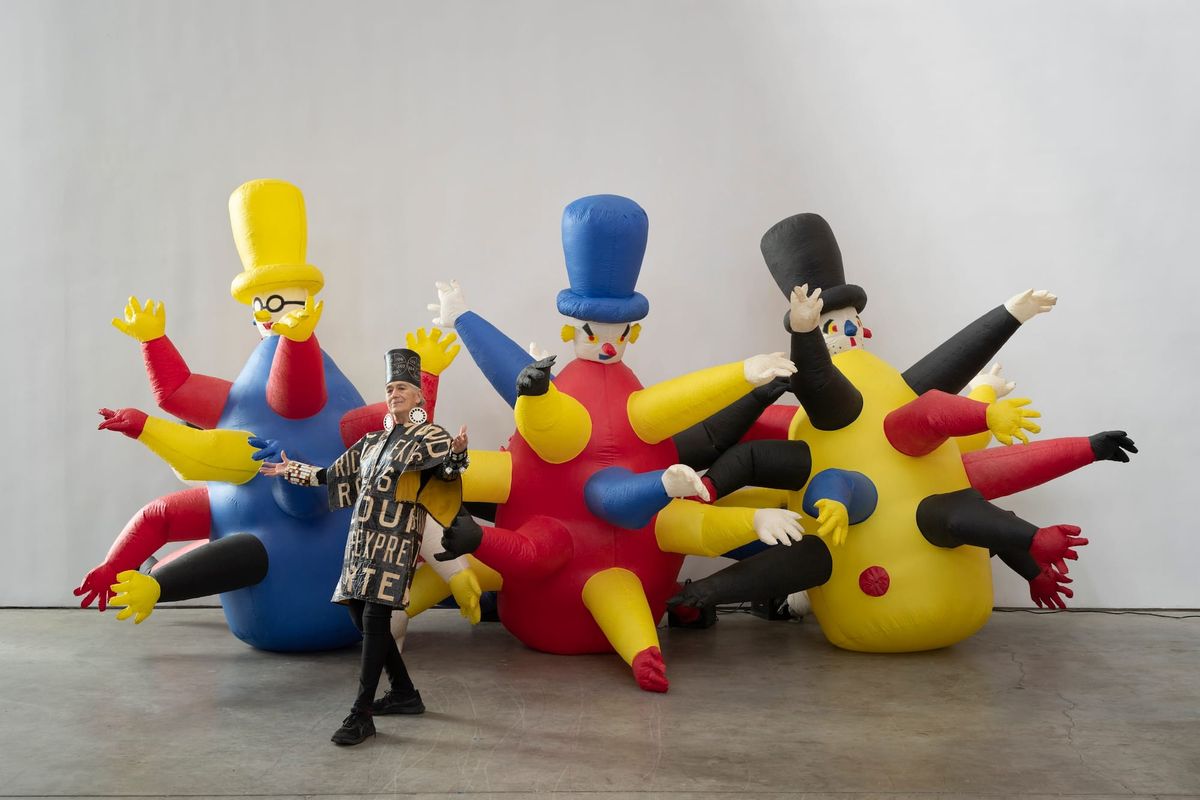
When I spoke with performance artist and 2026 Whitney Biennial participant Pat Oleszko, she described the event as one everyone knew of, even if they weren’t in the art world. To illustrate this, she described protestors at the No Kings rally in New York earlier this month who learned that the costumes she and her friends were wearing were made by a Whitney Biennial artist. She recalled, “I watched the wave of biennial recognition flow down the street” as people said, “Oh, she’s a biennial artist!”
Many assume inclusion is an endorsement of the work’s quality, which can further an artist’s career. But your art needs to speak to the biennial curators and align with cultural interests. Often, the work selected has a kind of buzz around it that is impossible to engineer.
You could say Oleszko is having a moment. This year, her show Fool Disclosure opens at the Sculpture Center on January 29. It will be the first solo exhibition of her work at a New York institution in over 35 years. This coincides with her inclusion in the Whitney Biennial and follows her first major solo show at a commercial gallery in 2024. She is 79 years old.
It can take a while to get noticed by the Whitney. Oleszko has been making art since 1966 and has lived in New York since 1970. She told me that, early on in her career, she saw a Gilbert and George show at Sonabend Gallery and approached the dealers, thinking she’d be a good fit. “I was literally laughed out the door,” she said, explaining that she felt humiliated by the experience. “It caused genetic damage,” she said.
When I asked her how she felt about being included in the Whitney Biennial, she replied, “It’s fucking extraordinary!”
In the 20th century, the biennial launched the careers of well-known artists such as Georgia O’Keeffe and Jackson Pollock. I wanted to know if it’s still realistic for artists to see the biennial as a career game-changer.
When I asked Bronx Museum Director and Chief Curator Shamim M. Momin whether the biennial’s influence remained as strong as it was when she co-curated the 2004 and 2008 editions, she conceded its influence had waned. She helped launch the careers of Ellen Harvey, Joe Bradley, and others by including them in the biennial, but told me it no longer carries the same weight. Why? "There are just many, many, many more shows of that nature now than there were 18 years ago," she explained.
There are also many more artists and ways to connect with those artists. Momin famously visited hundreds of studios across the United States for the 2008 Whitney Biennial. This year and in prior editions, some artists hosted Zoom studio visits with the curators.
I don’t want to trounce on anyone’s dreams, but it’s important to keep expectations about what the biennial can do for you in check. Michelle Grabner, who co-curated the Whitney Biennial in 2014, told me she regretted not clarifying to artists that the biennial might not transform their career trajectory. “That’s a conversation I never had with artists,” she said, “and I would like a broader conversation around it.”
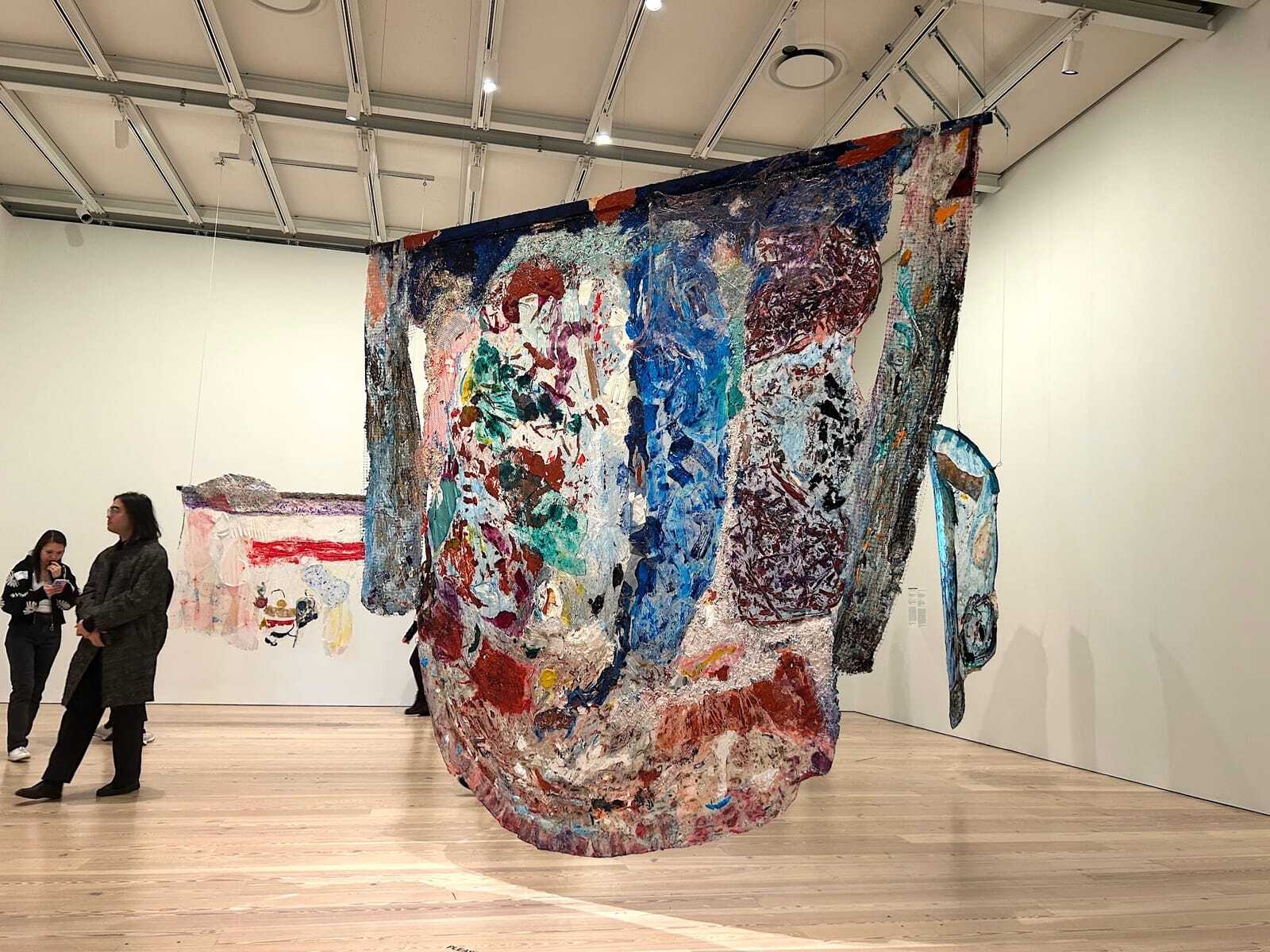
Still, Grabner broadened the conversation. In the 2014 edition of the exhibition, each curator organized a floor of their own to showcase different curatorial perspectives. "Because being a curator was not my primary occupation, I argued for the separation,” said Grabner, an artist who also maintains writing, teaching, and curatorial practices. This format allowed her co-curators, museum professionals Stuart Comer and Anthony Elms, to present their vision without being accountable for her less conventional approach. “The show is a responsibility,” she added. “It would be okay if my curatorial work was reviewed poorly."
That approach — curators working independently on separate floors — resulted in a very different show than the biennials whose curators collaborate more closely. Momin told me that she and her co-curator Henriette Huldisch worked exceptionally closely in 2008, while in 2004, her co-curators Debra Singer and Chrissie Iles had more distinct visions. These structural choices shape what each biennial becomes, and consequently, which artists are chosen to participate.
Grabner organized her floor around material and conceptual affinities rather than biographical narratives, focusing on fabric-based practices in particular. In 2014, that approach was novel. Today, it’s everywhere.
What the biennial means for artists informed Grabner’s approach. For the biennial’s only commissioned work that year, Tony Tasset installed “The Artist’s Monument” in Chelsea. The piece engraved over 350,000 artists' names on shipping containers, asking the question of who gets to participate in the biennial. As an off-site artwork, the piece garnered little mention. Grabner describes the work as significant but its reception paradoxical. “We need to perpetuate the myth that the biennial will elevate an artist’s career,” she commented. “We don’t always want to know the realities.”
The reality is that “How do I get into the biennial?” is the wrong question. Instead, the simple question that moves the needle forward is: “How do I contribute to the communities in which I participate?”
The Whitney Museum tries to do this with its biennial. Momin pointed to the shift from calling the exhibition The Whitney Biennial to giving each a title — acknowledging the show is a representation of one curatorial perspective, not an objective "best of" award.
Within this subjective system, curators have a duty to demonstrate integrity. “I’ve had that question about what an artist can do in a studio visit to make you like them. I don't think it's their responsibility,” said Momin. “It is mine to walk into their private space with the things that they care most about, and it's my problem to figure out how to get that information.”
One artist stood out for Momin. “I did this visit with someone who was so shy that he did the whole studio visit with his back to me,” she said. “I'm not gonna force you to be something you're not. Relax. I just wanna talk about your artwork, and I ask a lot of questions to help ease some of that awkwardness.”
That generosity — meeting artists where they are — seems to be part of what makes the biennial work at its best. So if you're still interested, knowing that the biennial's role has shifted but remains culturally significant, here's how the process works.
How do curators learn about your work? Oleszko's path shows one way: In 2024, her solo at David Peter Francis was reviewed by Will Heinrich in the New York Times. The publicity brought the curators to the gallery, where they saw the show and spoke with the gallerist. From there, they scheduled a studio visit and told her they'd get back to her. In August 2025, they called to let her know she would be included in the biennial.
But there's no single path. Some artists have worked with the biennial’s curators in the past. Grabner wouldn't invite anyone without a studio visit, and Momin relied on local curators’ recommendations for artists to seek out while traveling.
What happens during and after visits varies widely. Grabner invited some artists immediately, while others had to wait. Artists I spoke with in the 2026 Whitney Biennial learned of their inclusion after their studio visits. However, some weren't even sure that the visit had been about the biennial at all.
The timeline varies, too. Momin tried to inform artists they’d be included all at once to minimize leaks, but this year, one artist learned in March 2025, another in August. Even rejections differ: Grabner sent letters to everyone, while this year, some artists only learned they weren't included when the announcement went public last month.
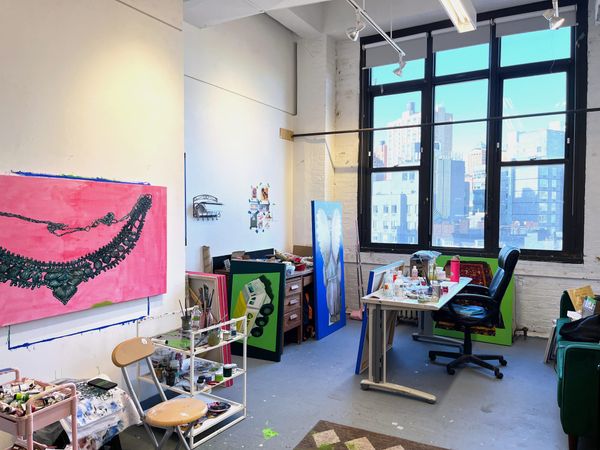
What can artists control? Artist Young Joon Kwak's experience offers some insight. They tried to be a good host — serving snacks, offering drinks, making curators comfortable. They came prepared to lead the visit rather than expecting curators to extract everything. They focused on key artworks and core ideas efficiently.
But Kwak is also clear-eyed about what is beyond an artist's control. "I think some of it really is luck — timing, circumstance, who you're in conversation with," they said. "At the same time, the timing felt meaningful. I had my first solo museum exhibition at BAMPFA in August 2024, followed shortly by a show at Leslie-Lohman during a period of intensified state-led efforts to erase trans existence. That context brought a strong sense of responsibility — to contribute something meaningful and sustaining for my community." Kwak frequently mentioned the 2024 Trellis Art Fund Milestone grant as another significant factor in their raised visibility.
Oleszko put it simply: "It's just something that happens like the cycles of the moon."
In other words, make ambitious work, show it, get visibility through exhibitions and press, and be prepared and hospitable during studio visits. Understand that timing matters, the cultural moment matters, and whether your work speaks to what these particular curators are looking for right now matters. When those things align, the opportunity is less about personal gain than about contributing to a larger conversation that brings us together.