Artist Julio Le Parc, Maestro of Light, Movement, and Defiance, Dies at 97
While his contemporaries focused on abstraction’s retinal possibilities, he viewed the liberation of the spectator as parallel to society's.

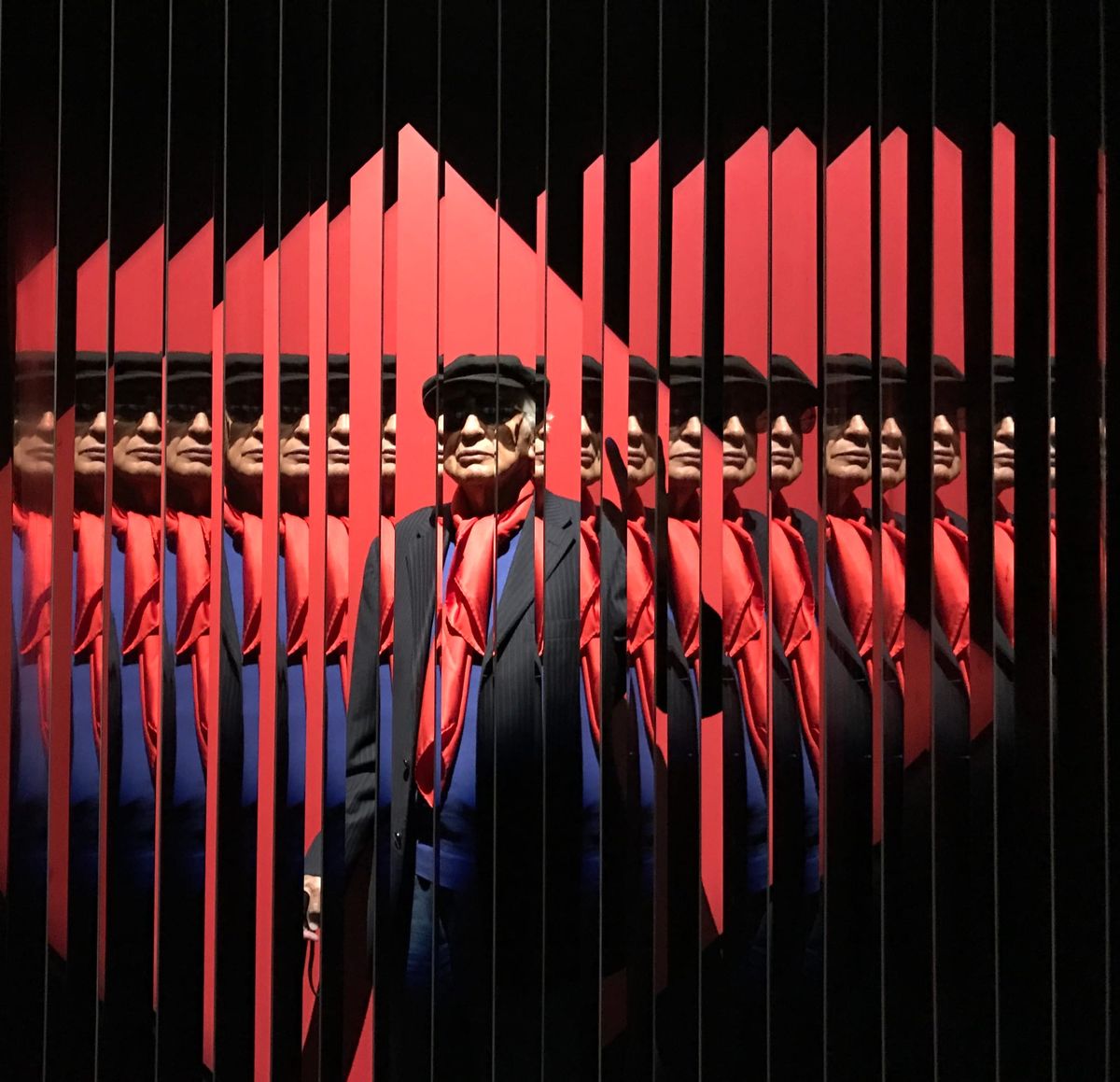
Julio Le Parc, the Franco-Argentine artist who transformed the spectator into an active participant and spent a lifetime dismantling art-world hierarchies, died in Paris on May 30 at the age of 97. His passing came just days before a major career retrospective at the Tate Modern in London, set to open June 11, that will now serve as a posthumous tribute to a career defined by movement, light, and unwavering political conviction.
Le Parc is widely recognized as a key figure of kinetic and Op art and was the last surviving founding member of the artist collective Groupe de Recherche d’Art Visuel (GRAV). While his contemporaries, such as Victor Vasarely and Carlos Cruz-Diez, often focused on the technical and retinal possibilities of abstraction, Le Parc viewed the liberation of the spectator as directly parallel to the liberation of citizens in society. To him, a museum was not a temple for passive contemplation but rather a gymnasium for democratizing experience.
“The upcoming exhibition crowns and reaffirms the significance of my father,” Le Parc’s son, Yamil Le Parc, told Hyperallergic. “His ideology, his rebellious and nonconformist spirit, are needed today more than ever.”
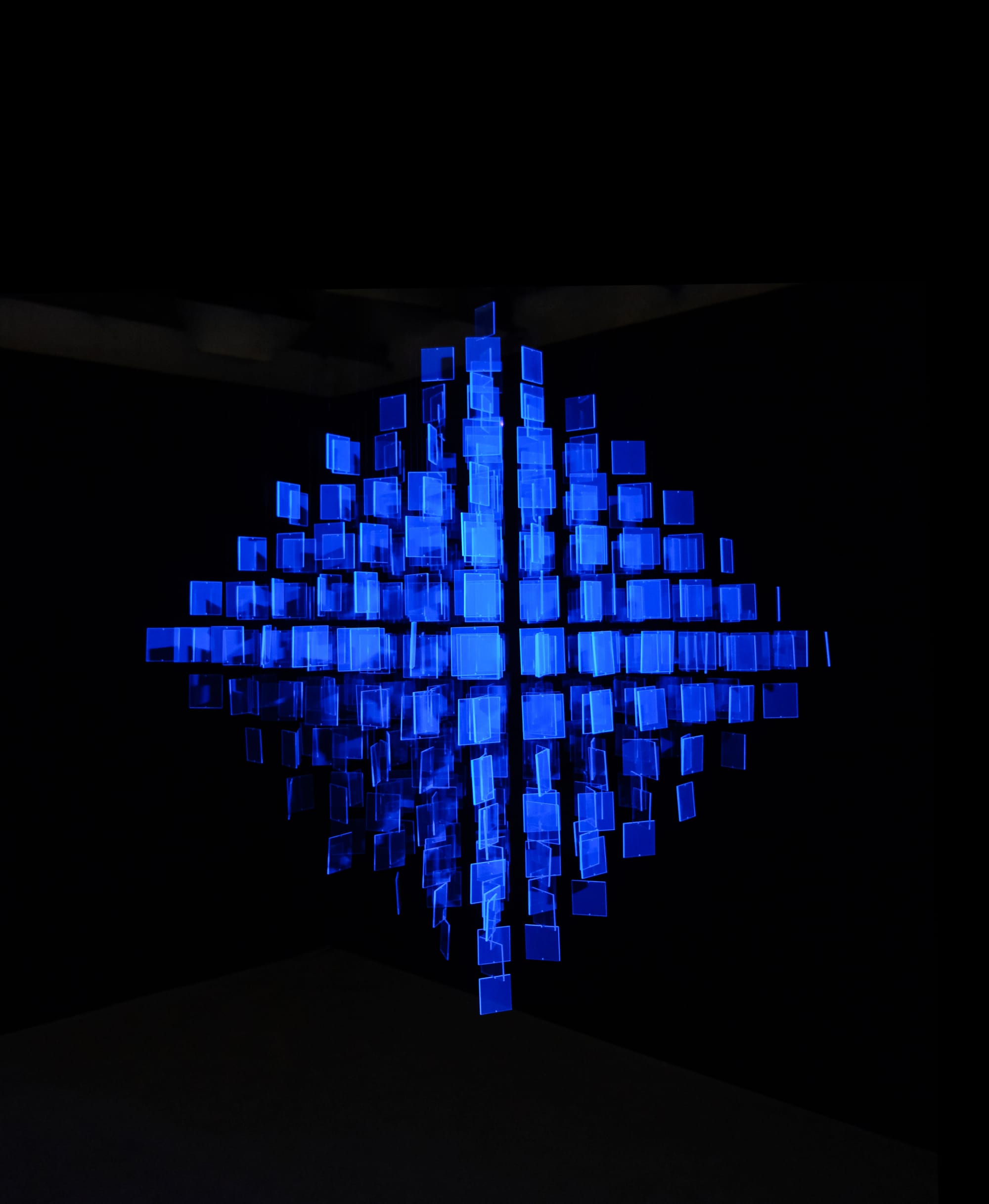
Le Parc is widely celebrated for his relentless pursuit of visual instability and pioneering use of mirrors, motorized light boxes, and interactive ludic devices that stimulated physical movement in the viewer. For him, if the viewer remained still, the artwork remained incomplete. His most profound kinetic experiments, however, took place outside the gallery walls.
Born in 1928 in Palmira, a town in the Argentine province of Mendoza, Le Parc’s path to the Parisian avant-garde was paved with early experiences in labor and student activism. After working odd jobs, he attended evening classes at the National School of Fine Arts Prilidiano Pueyrredón, where he participated in the 1955 student uprising that successfully ousted the school's conservative administration. This early distrust of institutional rigidity followed him to Paris in 1958, where, supported by a French government grant and the mentorship of Lucio Fontana, he began developing a visual language of simple geometric forms and primary colors.
By 1960, he had co-founded GRAV with artists such as François Morellet and Francisco Sobrino, with whom he collaborated until 1968. The group’s manifesto, printed as a pamphlet titled “Enough with the mystifications” (1963), was a radical departure from the mid-century cult of personality. They rejected the idea of the solitary genius and signed their works collectively. During the May 1968 protests in Paris, Le Parc abandoned his studio to join the Atelier Populaire at the École des Beaux-Arts, producing thousands of anonymous silk-screened posters that became one of the revolution’s visual expressions.
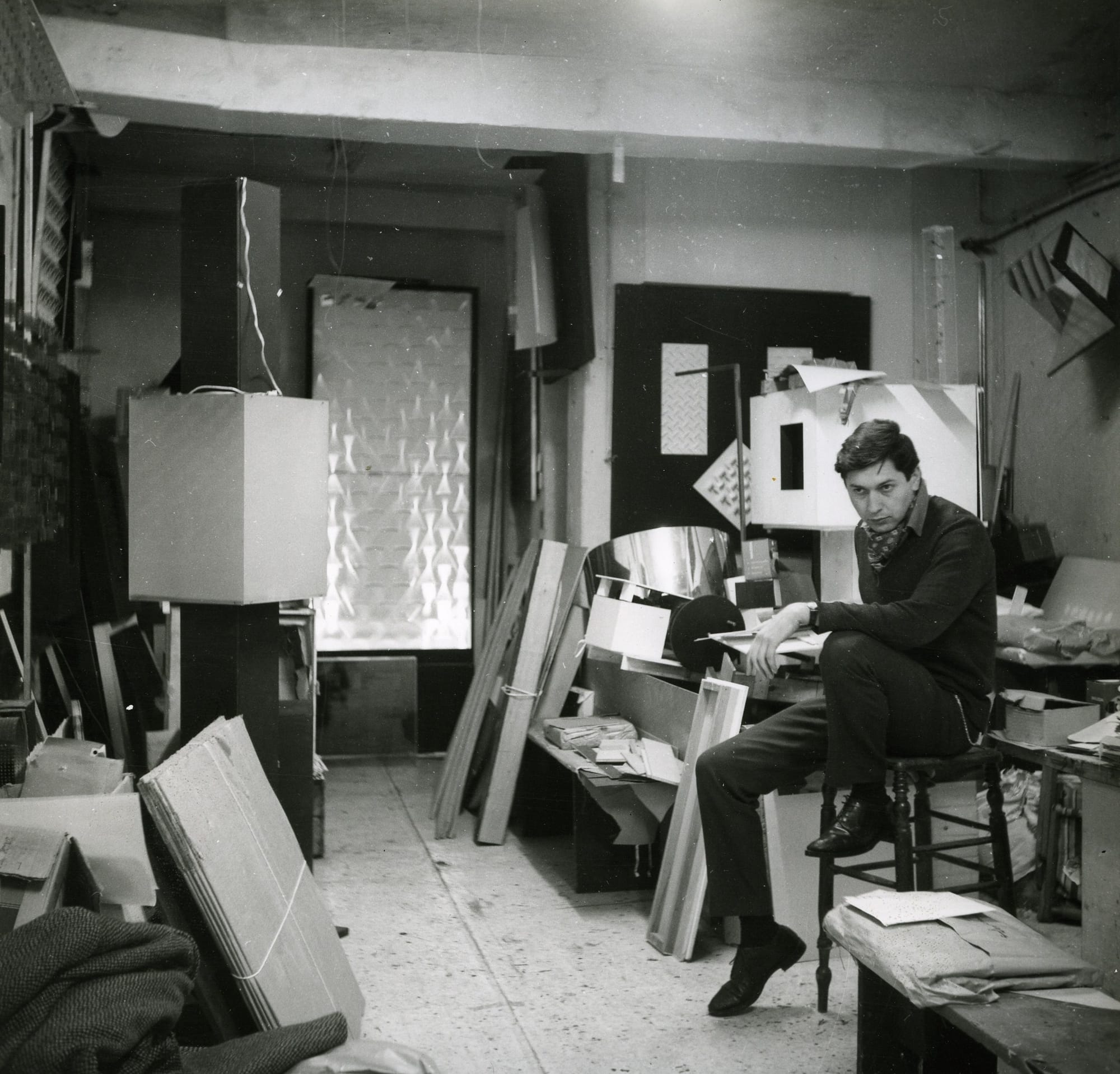
On June 7, 1968, the artist was arrested at the Renault factory in Flins while supporting striking workers. The French government, labeling him a foreign “agitator,” expelled him from the country. It was only after a fierce campaign by intellectuals like Jean-Paul Sartre and Simone de Beauvoir that the artist was allowed to return to his adopted home.
Le Parc defined his role as a “cultural guerrilla,” a term he described in a text in the journal Robho following the 1968 Cultural Congress in Havana. He viewed the artist as a saboteur whose duty was to highlight the contradictions of the system.
He was also a central figure in the international boycott of the 1971 São Paulo Biennial, refusing to provide cultural legitimacy to the Brazilian military dictatorship. Along with other Latin American artists, he organized the Contrabienal, a counter-project that documented state violence and censorship.
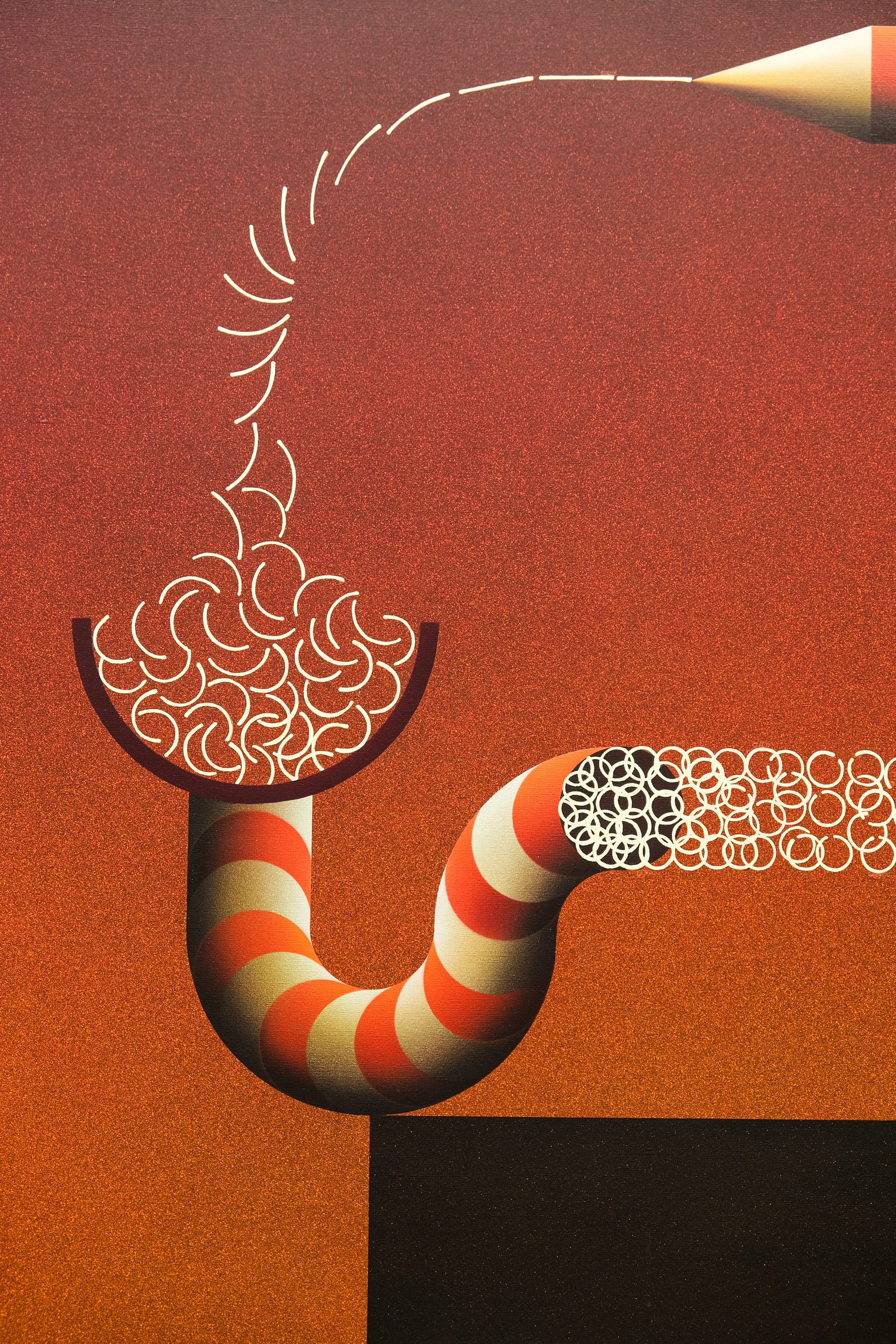
It was during this period that Le Parc embraced the "low" culture of comic books and political cartoons to bypass elite museum audiences. In works like the series La Tortura (1972), created in collaboration with Grupo Denuncia, he abandoned his signature geometric light boxes for visceral, high-contrast depictions of state repression. By utilizing the sequential narrative of the historieta (Spanish-language comic strip), he aimed to communicate the horrors of South American dictatorships with a clarity and urgency that mathematical abstraction could not provide.
Le Parc also transformed the survey into a tool for political agitation, using questionnaires to strip away the sacred status of the artist and challenge institutional authority. By forcing visitors to evaluate their own experiences and roles, he turned these surveys into exercises in mental activation. For Le Parc, this was a democratic act: It proved that the spectator's capacity for choice and action was equal to that of the creator, effectively moving the principles of direct democracy into the museum space.
Perhaps his most legendary act of defiance occurred in 1972, when the Musée d’Art Moderne de la Ville de Paris offered him a major solo retrospective — the ultimate achievement for any artist. Feeling that this honor clashed with his principles of non-hierarchy, Le Parc famously decided the show’s fate with a coin toss. He refused to let the institution "absorb" him at the height of his fame; when the coin landed on tails, he immediately canceled the exhibition.
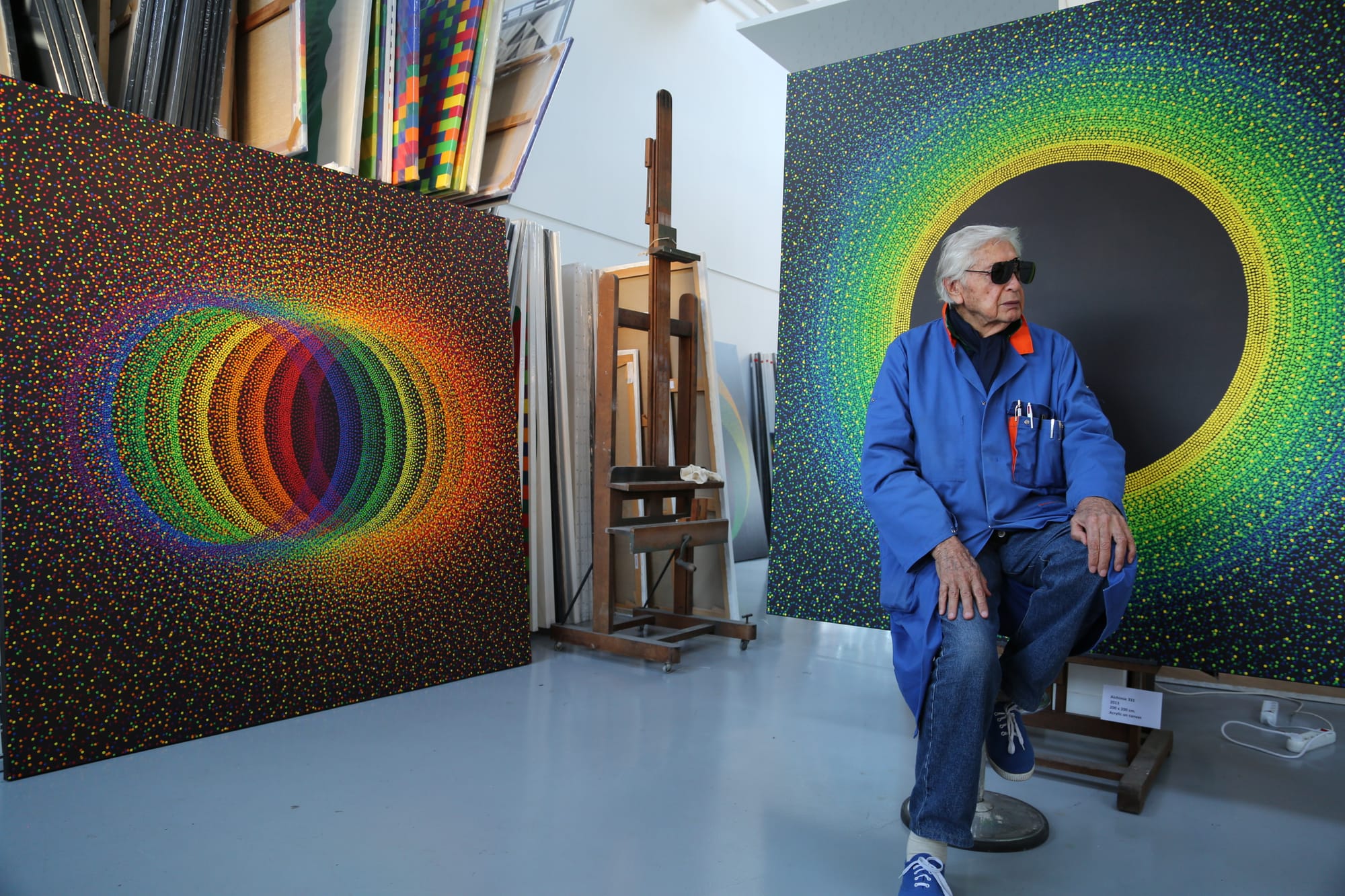
Even as his work gained institutional acclaim — with his first major United States retrospective at the Pérez Art Museum Miami (PAMM) in 2016, a show at the Metropolitan Museum of Art in 2018, and his upcoming Tate Modern show — Le Parc remained a fierce critic of power. Curator Estrellita B. Brodsky, who worked closely with him for decades and curated the exhibition at PAMM, recalled first meeting the artist three decades ago while working on her dissertation.
“Even then, there was a mischievous side to him — he would constantly play with the height of my chair, moving it up and down during our conversations. In many ways, that playful unpredictability defined both the person and his art,” Brodsky told Hyperallergic.
“We argued, and he insisted passionately on his positions, but through those exchanges we arrived at a deeper understanding and a profound mutual respect,” Brodsky said about curating the 2016 show. “Those conversations revealed the intensity of his convictions and the seriousness with which he approached every aspect of his practice.”
Curator of International Art at Tate Modern Val Ravaglia, who curated the upcoming show, described Le Parc as “a true original.”
“His ideas on the importance of embodied experience and viewer participation in art were ahead of their time and incredibly influential,” Ravaglia told Hyperallergic. “We will never forget his irrepressible optimism and the fierce passion that he so obviously had for his art, up until his very last days. He continued to work for as long as he was able to hold a pencil.”