Artists' Calendar Celebrates LA’s Everyday Landmarks
For 40 years, Nib Geebles and Abira Ali have chronicled the unspoken, day-to-day minutiae of their hometown in their beloved calendar.
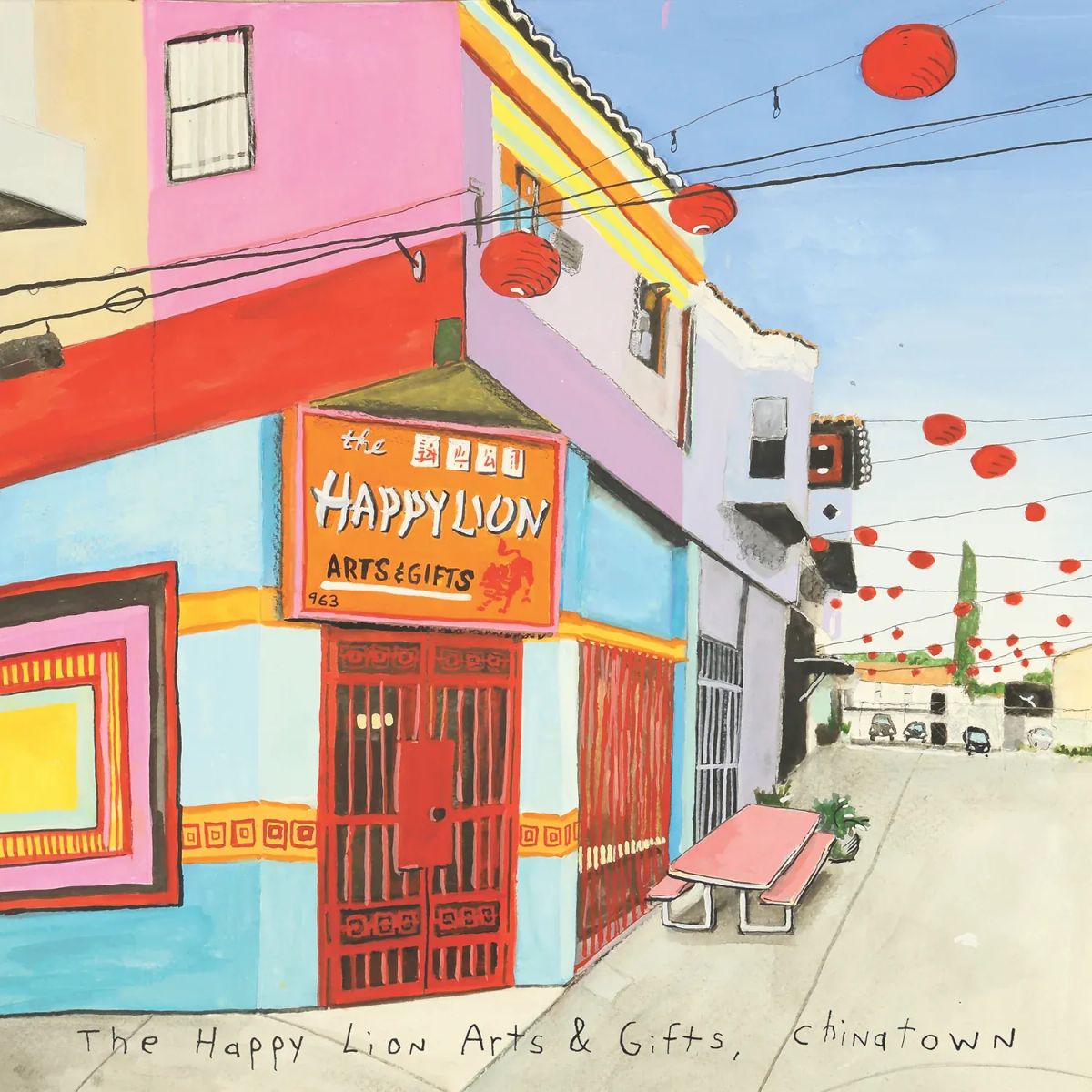
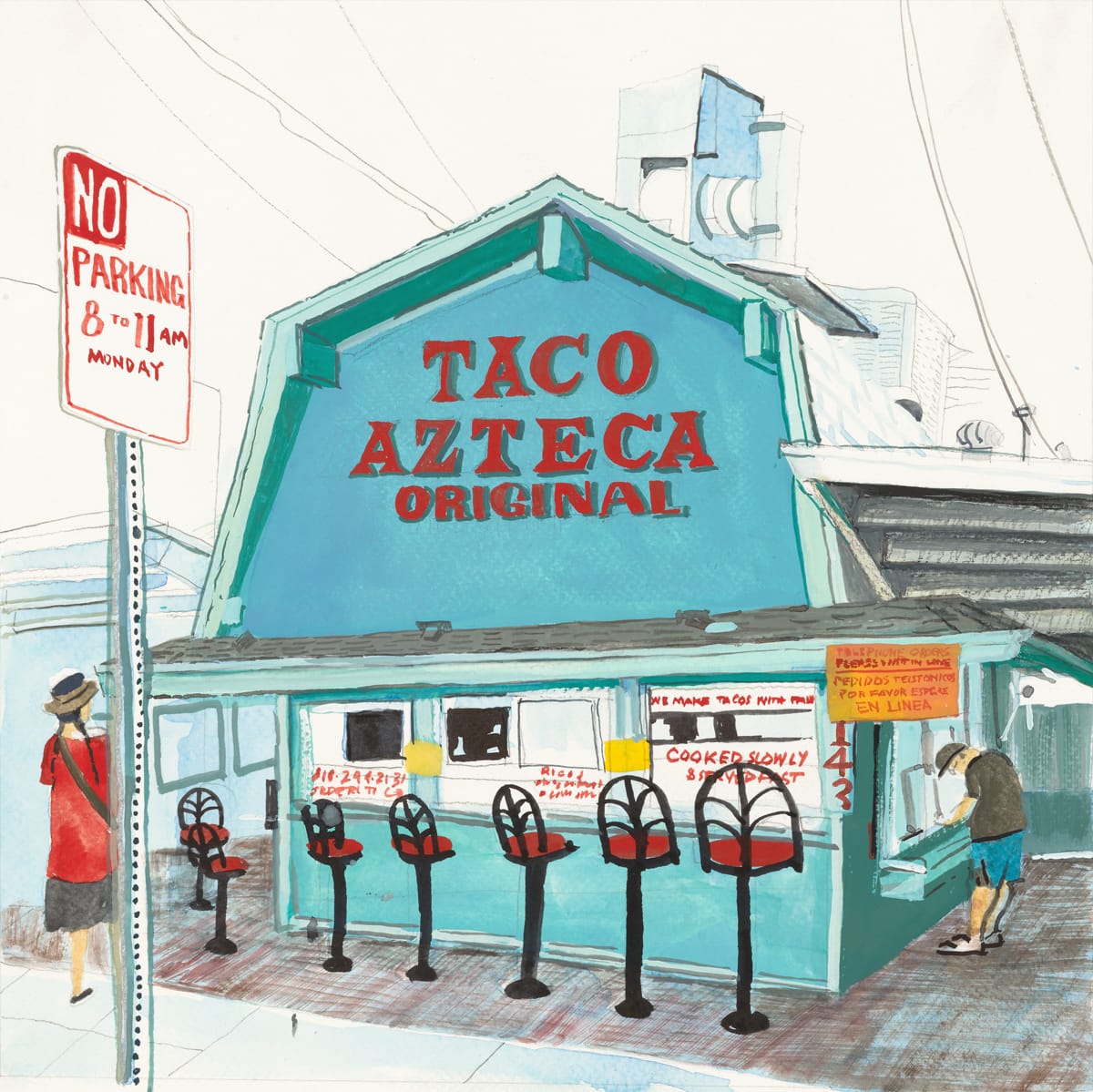
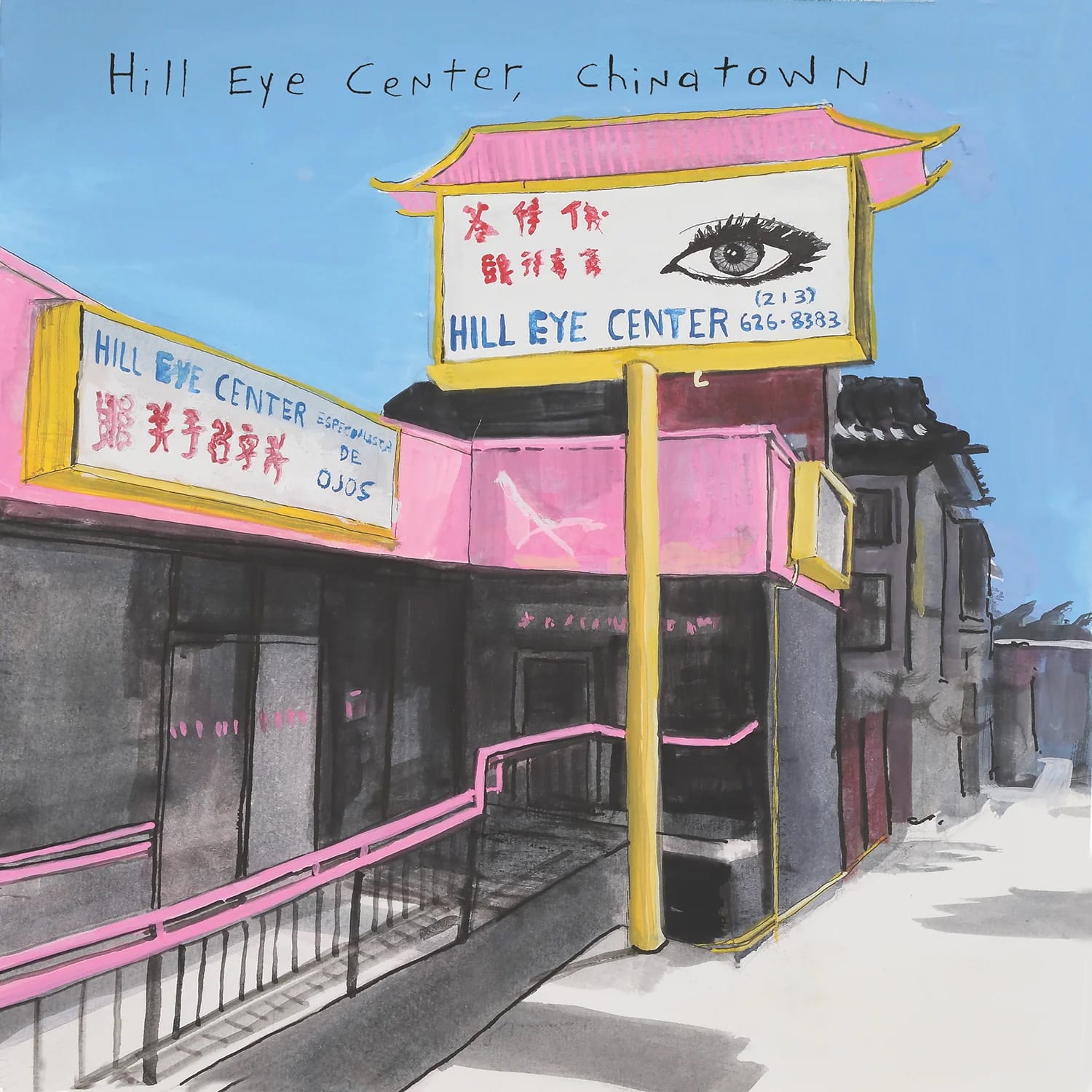
LOS ANGELES — Shuttered storefronts, parked cars, hand-painted advertising, power lines, graffiti, and bright signage are essential components of LA’s visual landscape, but what if they were the focal point?
Over the past 40 years, artists Nib Geebles and Abira Ali have platformed the unspoken, day-to-day minutiae of their hometown in their locally celebrated calendar, gesturing with tongue in cheek to the politics of urban space in a rapidly evolving city. Urban decay is the muse of the 2026 calendar, “Unknown Landmarks,” from strip malls in Highland Park to flower shops in Eagle Rock.
Gordon Henderson, who goes under the pen name Nib Geebles, and Ali began collaborating via letters exchanged when they were 17. Collages, shells wrapped in envelopes, and surrealist postcards served as their first collective works, paralleling a sustained, decades-long partnership staking their practice in everyday Northeast Los Angeles.
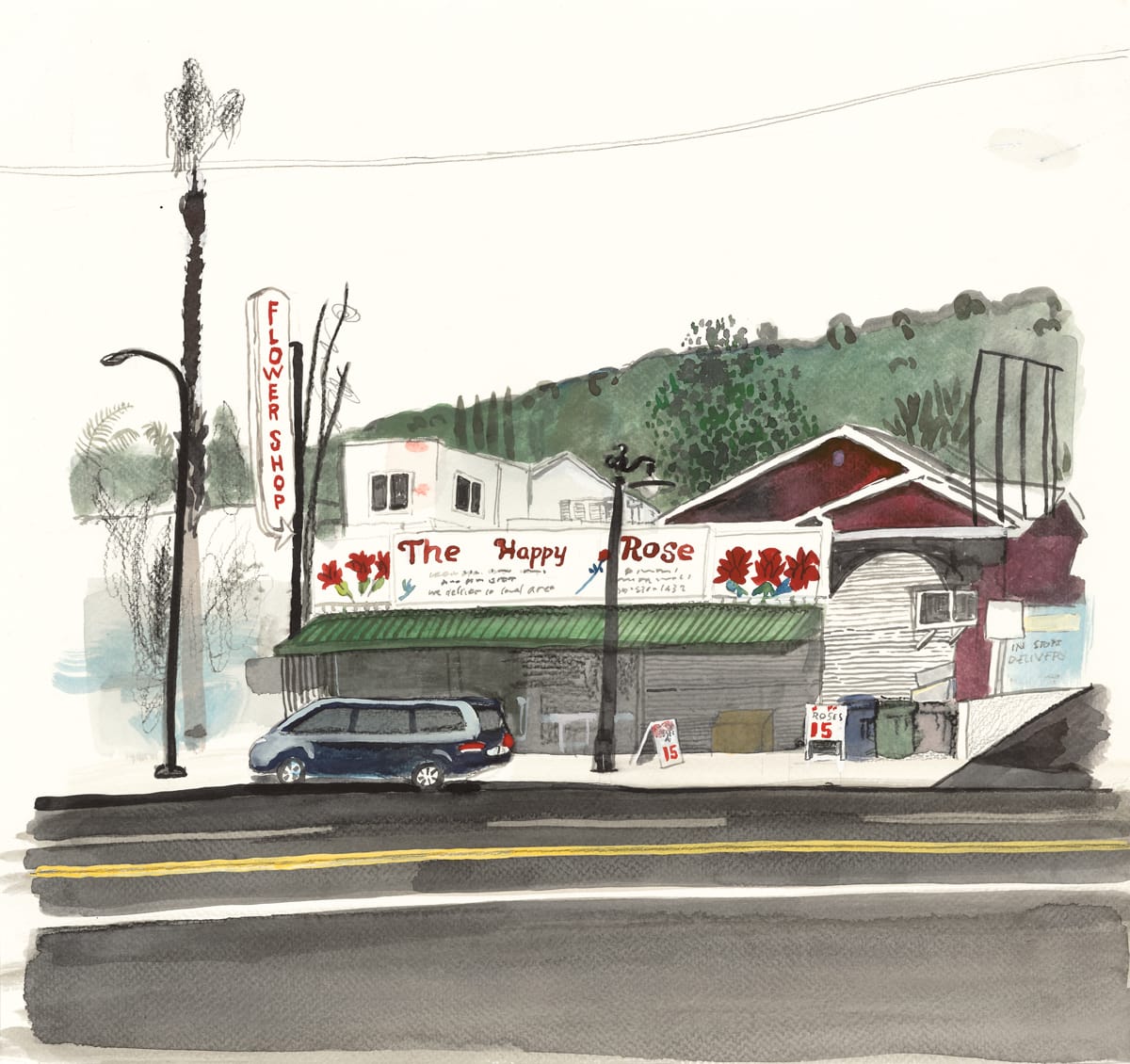
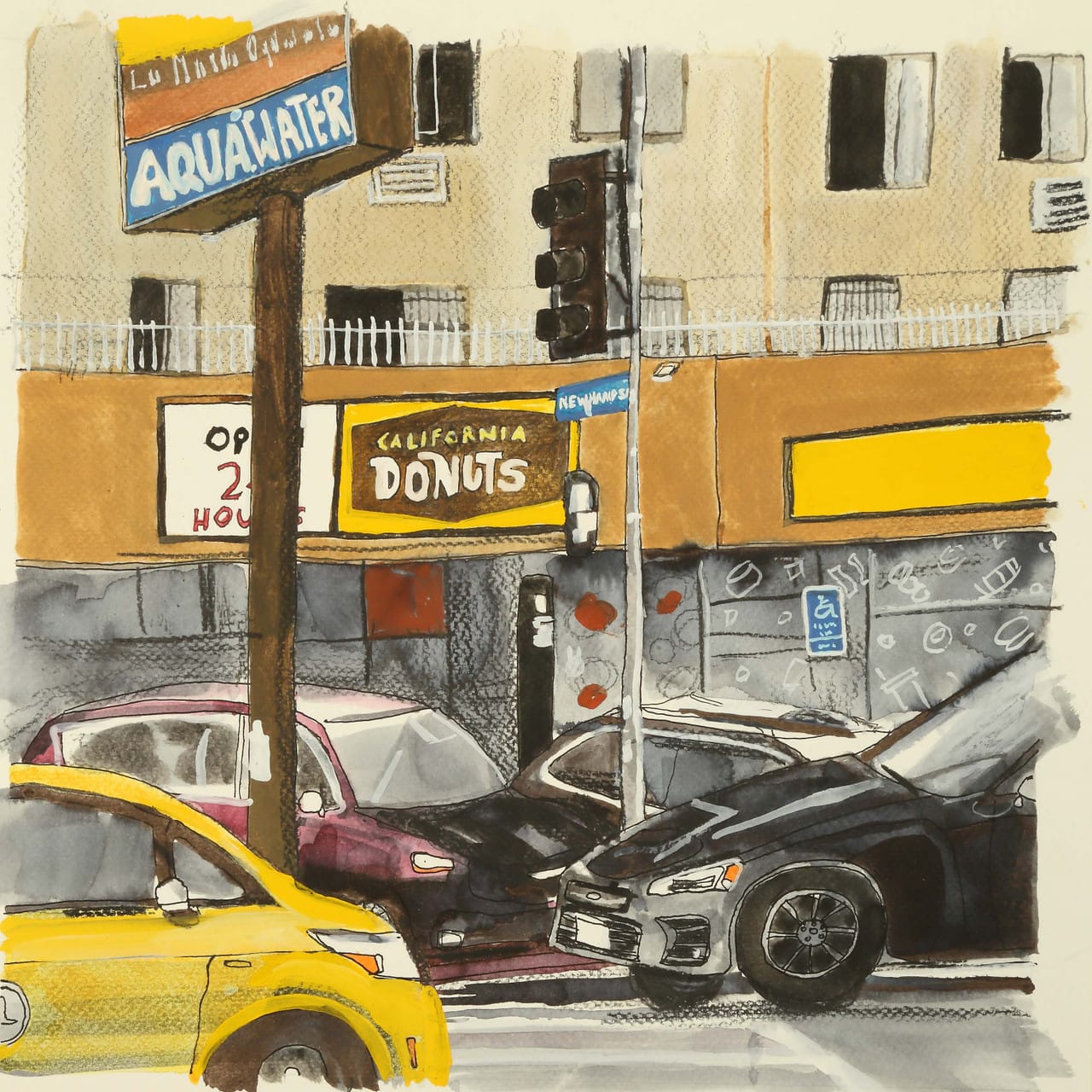
Both view documenting and preservation as a central component of their work. Flipping through the calendar’s pages, Hollywood and Sunset Boulevard recede from view, replaced by often immigrant-owned or enduring local establishments.
“It's transforming now, and there's gonna be a lot less of these mom and pop stores,” Henderson told Hyperallergic. “Stores that have a very personal expression, like handmade signs. It's still being done, and they still teach it, but it's valued less.”
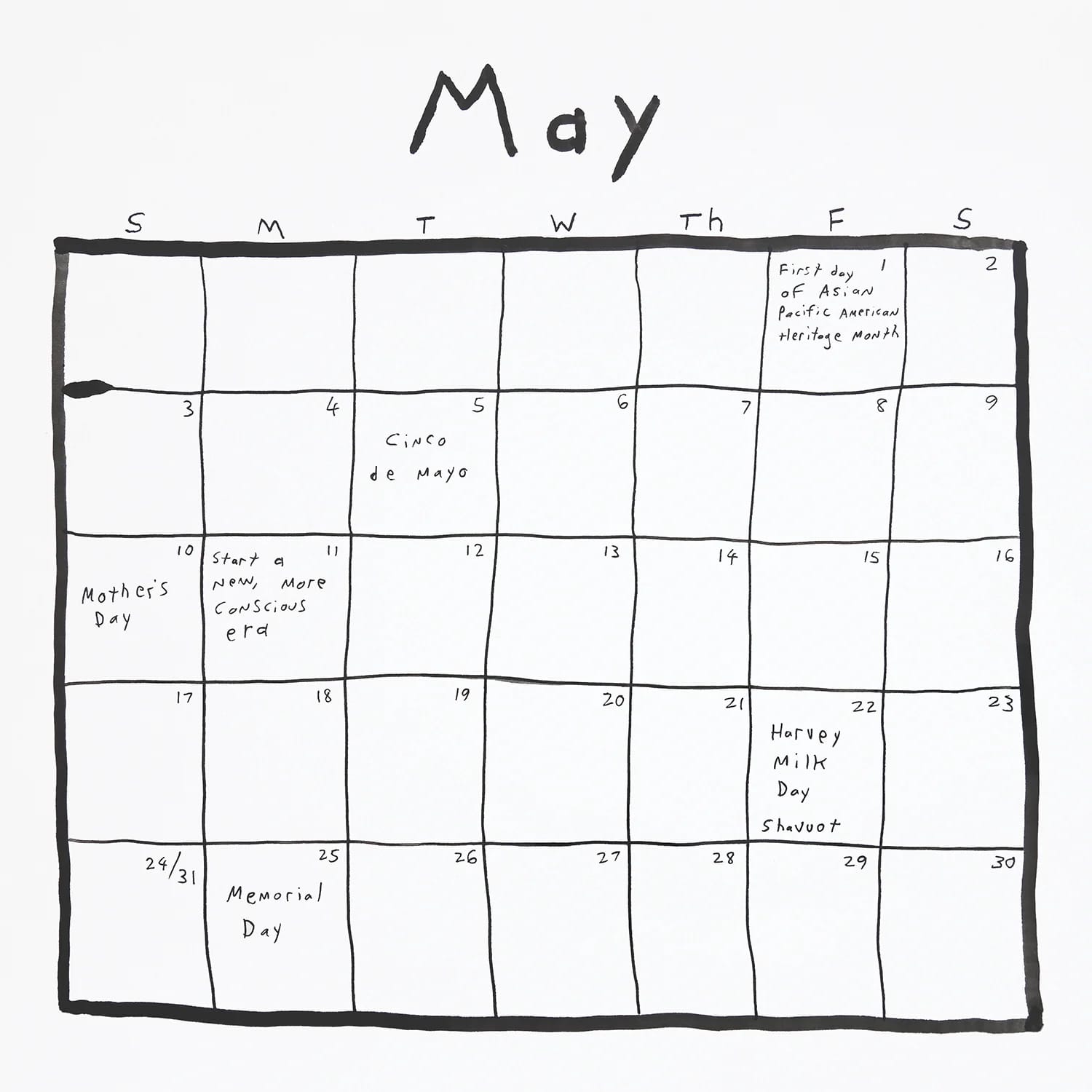
The pieces’ loose lines and selective imprecision are complemented by made-up “holidays” scribbled into days on the calendar: “Rethink your cherished stereotypes,” one reads. Many of these holidays have persisted throughout the decades since the calendar’s inception in 1985, where both the messages and the medium itself testify to the mundane absurdity of the passage of time.
“I was attracted to line drawings, and I liked the idea of it being subconscious-oriented,” Henderson said. “I developed this loose and free approach to drawing — I drew at first with a marker or a rapidograph, which was popular in the 1980s. But then, Abira said, ‘Why don't you try a dipping pen?’”
The idea for the calendar project developed when Henderson was a child drawing monsters over the illustrations in his father’s chemist trade calendar. The first year, he produced 25 copies and sold all of them, encouraging his pursuit to capture both the architecturally compelling and the comical. Along with their creative practice, Ali works as an illustrator and Henderson as an announcer for NPR’s LAist, labeling himself as both an artist and entertainer.
The pair distribute the calendars themselves amongst small businesses in the area, including North Figueroa Books, where they displayed pieces from the calendar for the past month. At their final showing, they promised the proceeds to the Coalition for Humane Immigrant Rights based in Los Angeles (CHIRLA).
Ali and Henderson see politics as integral to their calendar project, remaining protective of these establishments and the communities they serve.
“We have to stand up for the place that we've lived, the city we love, we live in,” Ali said.
Although described as an existentialist and slapstick art calendar, underlying the humor is both a commitment to collectivity and resistance to conformity. The artists view the act of observing as an act of care, incorporating these elements into the 2026 calendar and those to come.
“This unknown landmark series’ goal really is to try to get people to just go out for walks and take a look at their neighborhood,” Hendrson said, “and see how interesting it is.”