At Brooklyn Creative Reuse, Art Supplies Get a Second Life
The sustainable second-hand market for art materials in Industry City might give Blick a run for its money while helping you save some of yours.

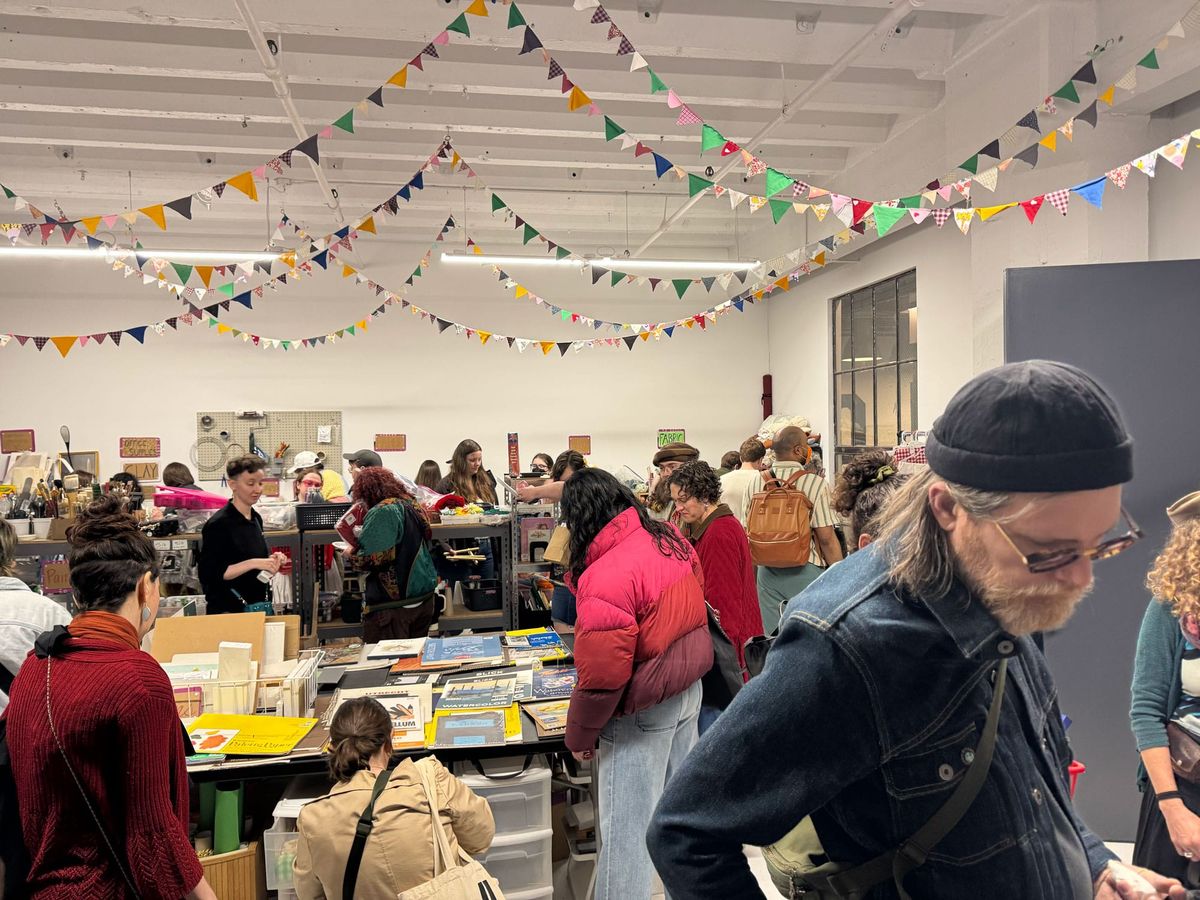
Somehow, somewhere, exists a place in New York City where one can buy a medium-sized pad of Yupo paper, a set of unopened Sennelier oil sticks, oodles of embroidery floss, and a mix-and-match encaustic paint set for under $20. That place is called Brooklyn Creative Reuse (BCR), and it recently opened its physical location in Industry City.
Created by jeweler and reuse enthusiast Stephanie O'Brien, BCR emerged as a pop-up events initiative in February 2025, working to sustainably divert used art supplies from landfills by cycling them back into new hands at an affordable price.
The organization opened its brick-and-mortar location in Building 2 earlier this month, coming in as a small but mighty replacement to Artist and Craftsman, which recently closed its short-lived location on the campus on April 12.
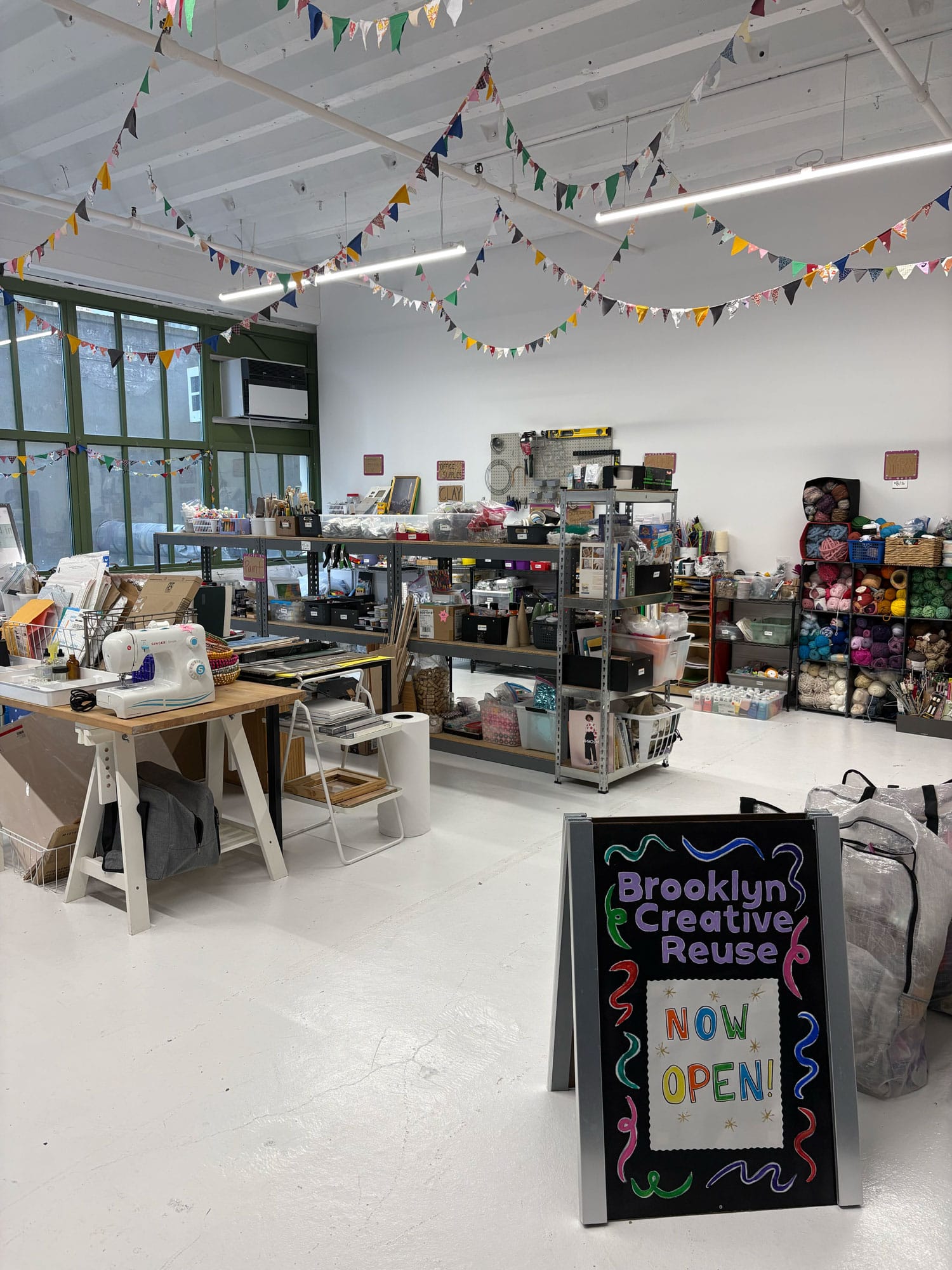
To celebrate its new physical space, BCR hosted a launch party on April 18, inviting the public to add to, peruse, and purchase from its donated inventory of pre-loved and unused art supplies across most media.
Categorized by art form, the second-hand materials are primarily sold at a modest price-per-pound rate, making them more accessible for low-income artists, devoted educators, and people looking to try a new medium without a major financial commitment. Considering that it operates in one of the world's most prominent art capitals, BCR boasts a wealth of supplies ranging from classroom-friendly staples to high-end materials.
O'Brien told Hyperallergic in an email that the price-per-pound philosophy helps get product out on the floor faster when BCR is receiving up to 300 pounds of material a month — a figure that's expected to grow with the physical location. According to its first annual report, BCR managed to divert over 1,000 pounds of art supplies from landfills within a year of its inception.
“We have found that it also keeps our materials affordable and reduces cost barriers to sustainable art-making,” O'Brien noted. She also explained that BCR relies on volunteers to accept, sort, and shelve the donated supplies. (Fun fact: Volunteers get to take home one tote bag's worth of free art supplies at the end of their shift!)
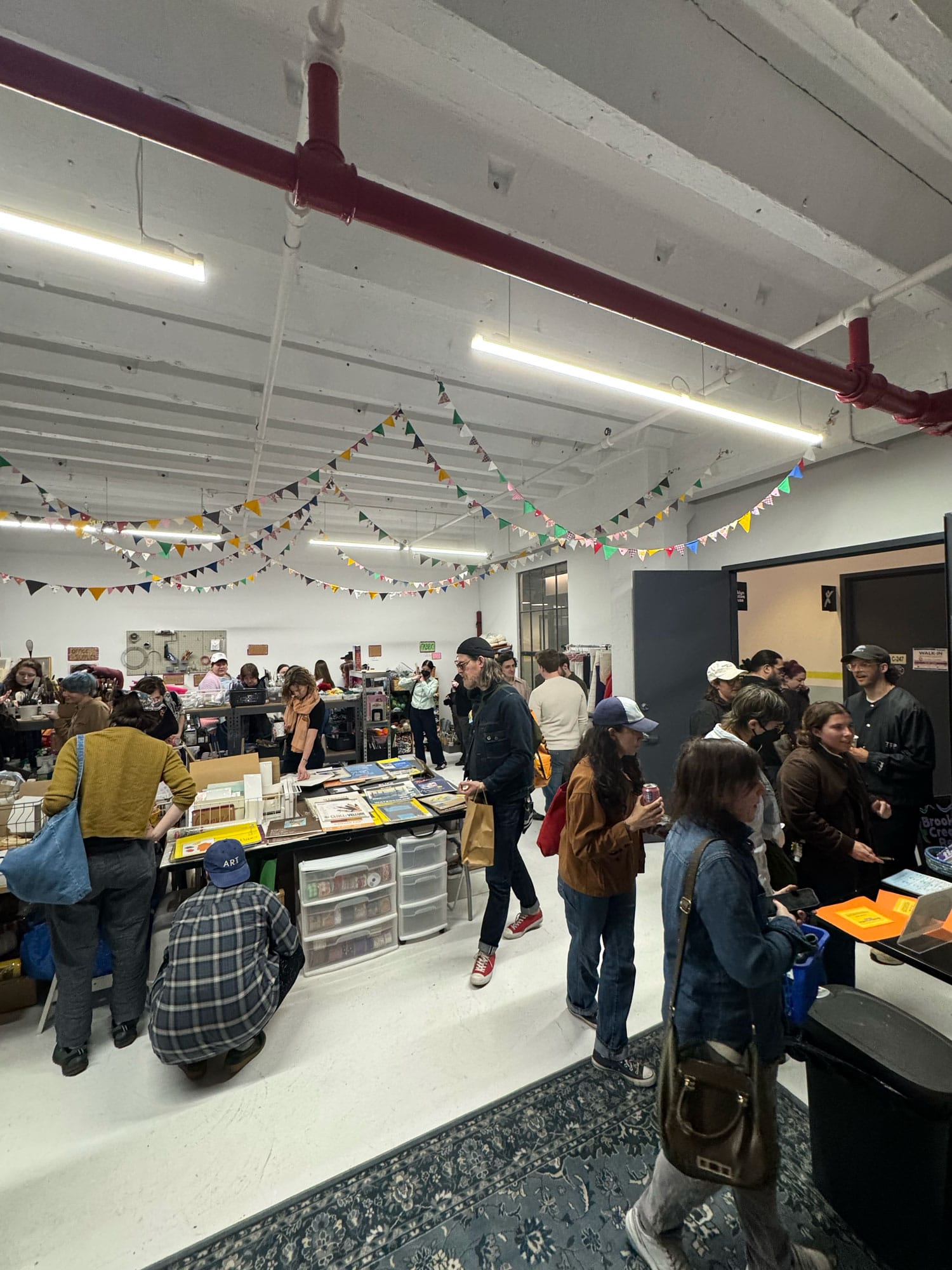
Swarms of people dropped by the space during its launch party. Many attendees came with donations to enhance BCR's inventory, but most of them relished in whatever had been already sorted and priced on the floor, leaving with colorful skeins of yarn, sketchbooks and canvases, paintbrushes and drawing supplies, and even a sewing machine.
The organization plans to expand its events and workshops programming, working with teaching artists whose practices embody the notion of creative reuse. Several previous workshops at partner locations have centered on mending and creating wearables with upcycled materials, while others convert disposable goods into decorative or usable wares.
“A big part of our mission is providing fair wages for creatives through paid teaching opportunities, and helping artists build portfolios through teaching and exhibition experience,” O'Brien said. “Therefore, we let the artists decide their fees and ticket prices, with our recommendation to include sliding scale pricing and making sure a number of workshops each month are free.”
Brooklyn Creative Reuse is open from Wednesday to Sunday to donors and buyers alike.