Art
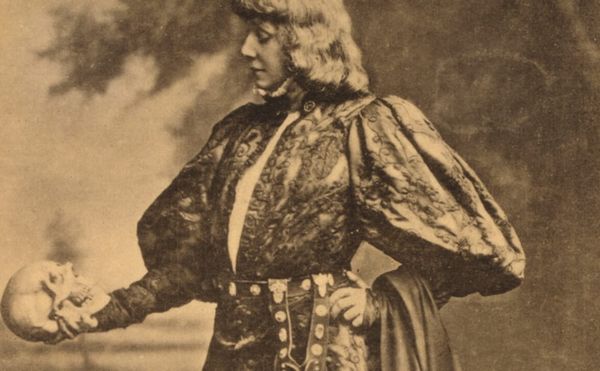
Actors Have Been Dying to Play the Skeletal Role of Yorick in 'Hamlet'
Reports last month suggested that the skull of playwright William Shakespeare was no longer in his grave.

Allison C. Meier is a former staff writer for Hyperallergic. Originally from Oklahoma, she has been covering visual culture and overlooked history for print and online media since 2006. She moonlights as a cemetery tour guide.

Art
Reports last month suggested that the skull of playwright William Shakespeare was no longer in his grave.
Books
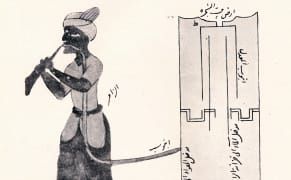
In the 9th century, the Banū Mūsā brothers in Baghdad designed a mechanical, hydraulic organ that was made to play endlessly by itself.

News
The University of Kansas Libraries recently acquired over 1,000 zines from the former Solidarity radical organization in Lawrence, Kansas.

Art
For all his money and power, Donald Trump couldn't force a widow from her New Jersey home back in the 1990s.
Art
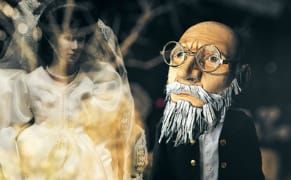
The fact that he slept for seven years with the corpse of a woman he loved is, for filmmaker Ronni Thomas, one of the least interesting things about Count von Cosel.
Art
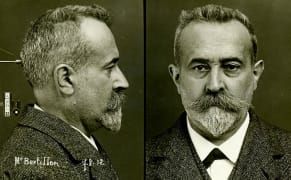
French criminologist Alphonse Bertillon believed each person's physical measurements were as distinct as their fingerprints, and devised the first modern mug shots as part of his classification system in the 19th century.
Art
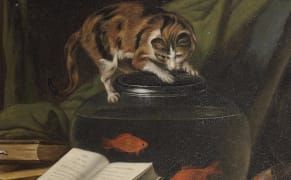
A cat that fell into a goldfish bowl in 1747 and subsequently drowned from her pyrrhic hunt inspired an unlikely series of artworks in the 18th century.

Art
In the 19th century, when photography was developing into a mass medium, a few intrepid early adopters pointed their glass plate cameras at one of the most intimidating natural forces on Earth: the tornado.
Books
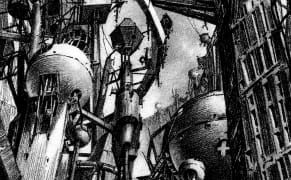
From 2007 to 2012, the late architect Lebbeus Woods kept a blog that offered a peek into the mind of one of our most visionary contemporary creators.
Art
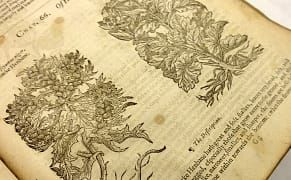
Potions, poisons, and symbolic herbs are frequent plot devices in the plays of William Shakespeare, and reflect the medical knowledge of his time.
Art
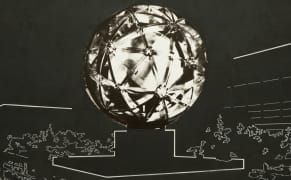
The "Positron" (1976–77) by Latvian artist Valdis Celms operated a bit like a disco ball, flashing various colors of light as the goliath metal orb rotated.
Art
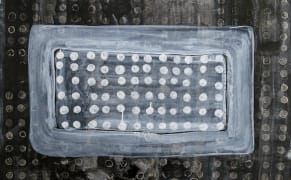
Minimalist abstraction of the 20th century often feels placeless. Tony Smith's angular, inky sculptures could have crawled out of a dimension void of organic life; Mark Rothko's repeating black canvases in a Houston chapel reflected the space's lack of specific religion.